Showing posts with label Government Legal Service For Scotland. Show all posts

Wednesday, July 29, 2015

SCOTS LAW PLC: Reality Check - Public cash bankrolls profits of ‘top name’ Scots law firms as Scottish Government award £44m contracts to nine legal service providers

Public cash – the ‘food bank’ for Scots law firms IN ADDITION to £1 billion provided in legal aid public cash handed over to lawyers since the financial crash of 2008, and hundreds of millions more taken by law firms from Scots local authorities & public bodies, the Scottish Government this week awarded an extra £44 million in public funds to nine private law firms to provide a range of services from litigation to debt recovery.

The four year Framework Agreement for the Provision of Legal Services contract, now a regular event and previously covered here in 2011: ScotGov legal services contracts link to law firm hospitality also reveals the soaring cost of the contract to taxpayers, now standing at £44 million in 2015, an increase of £24 million from 2011 when the contract was a mere £20 million.

And, as reported in 2011, again, law firms who feature in the latest list of winning bidders coincidentally also appear in lists of hospitality given to key civil servants who head the Scottish Government’s legal departments.

Among the firms to win large hand outs from taxpayers are Brodies LLP, who received free airtime earlier this week for ramping up their profits to £57.9 million.

However, publicity relating to the high profits notably failed to mention the very same law firm – Brodies – like so many others in the list of ScotGov legal provider contract winners – serve numerous Scottish local authorities and a host of Scottish public bodies - collectively earning millions more from the public purse for doing so.

The latest round of extra work for hard up ‘top notch’ Scots law firms on the taxpayer ticket comes on top of figures released by the Scottish Government in response to a Freedom of Information request which reveal a further £9 million (£9,043,617) was spent in the past year by the Scottish Government on 137 lawyers & staff employed at the Scottish Government Legal Directorate, Legal Secretariat to the Lord Advocate  and Parliamentary Counsel Office.

The tender process for latest round of provision of legal services to the Scottish Government - launched a year ago, was run by the Scottish Procurement and Commercial Directorate with the finalised framework available to over one hundred public bodies in Scotland, including NHS organisations, fire and rescue services, the Scottish police authority and the equality and human rights commission.

The former panel was renewed in 2011 and included eleven firms, namely Anderson Strathern; Biggart Baillie; Brodies; DLA Piper; Dundas & Wilson (now CMS); Harper Macleod; Ledingham Chalmers; Maclay Murray & Spens; MacRoberts; Morton Fraser and Pinsent Masons.

The current framework comprises:

Lot 1 – Value £3.6 million: Contracts, Commercial and Corporate: Anderson Strathern, Harper Macleod, MacRoberts, Morton Fraser and Thorntons

Lot 2 – Value £10 million: Debt Recovery: Anderson Strathern, Brodies, Harper MacLeod, Morton Fraser and Thorntons

Lot 3 – Value £10.8 million: Litigation, Reparation, Employment and Inquiries: Anderson Strathern, Brodies, Harper MacLeod, Morton Fraser and Weightmans

Lot 4 – value £8.8 Million: Major Projects: Anderson Strathern, Brodies, DWF, Harper MacLeod and MacRoberts

Lot 5 – Value £6.8 million: Property and Related Matters: Anderson Strathern, DLA Piper, Harper MacLeod, Morton Fraser and Thorntons

Lot 6 – Value £4 million: One Stop Shop: Anderson Strathern, Brodies, Harper MacLeod, Morton Fraser and Thorntons

Friday, September 02, 2011

HOSPITALITY WINS : Law firms who won £20 Million legal contract wined, dined & lobbied Scottish Government’s Legal Directorate for three years

Scottish GovernmentScottish Government was wined, dined & lobbied by law firms, lawyer regulators, lawyer lobby groups & universities. A HOST OF LAW FIRMS who secretly wined, dined & in some cases lobbied the Scottish Government over the past three years on areas of law & justice where in some cases, the legal profession’s interests are known to conflict with those of consumers, won valuable contracts in the latest recession busting taxpayer funded TWENTY MILLION POUND legal project by the current Scottish Government to rapidly enlarge its already burgeoning 225 plus lawyer strong legal department to include even more Scottish law firms who are to provide legal services outsourced by the Scottish Government's Legal Directorate (SLGD).

The as yet unpublished details now been revealed in a Freedom of Information response by the Scottish Government showing a host of law firms, regulators, lawyer lobby groups & even universities have offered so many dinners to officials from the Justice Directorate, one Government insider jokingly said it should be named the Justice Dining Directorate.

Hospitality Scottish Govt Legal DirectorateHospitality’s in for the Scottish Government’s Legal Directorate, as law firms who wine & dine officials win stake in 4 year £20 Million contract for outsourced legal advice. Some of the declarations of ‘hospitality’ include : 07/04/2008 Lunch Pinsent Masons, 18/04/2008 Lunch Dundas & Wilson, 26/06/2008 Meal Scottish Public Law Group, 29/05/2008 Lunch Dundas & Wilson, 20/08/2008 Meal and Edinburgh Festival Show Shepherd & Wedderburn, (No record held of date) Symposium and Dinner of the  In House-Lawyers Group of the  Law Society of Scotland Dundas & Wilson, 10/11/2008 invitation to In House Lawyers Dinner Burness (did not win a contract), Meal Glasgow University, 08/10/2009 Meal after Scottish Public Law Group Event, 13/11/2009 Invitation to WS Dinner LBC Wise Counsel, 3/11/2009 WS Society Dinner (invited as guest of Morton Fraser, Solicitors), 20/11/2009 Law Society of Scotland In House Lawyers Pinsent Masons, 20/11/2009 Dinner at In House Lawyers Group of Law Society of Scotland McGrigors, 15/01/2010 Meal provided by Glasgow University Law School Advisory Panel, 22/01/2010 Lunch Edinburgh University Law School, 25/02/2010 Meal after Scottish Public Law Group event Faculty of Advocates, 26/03/2010 15 lunch provided by Glasgow University Graduate Law School, 26/03/2010 Meal provided by Glasgow University Law School in connection with GLSS teaching to GU Diploma in Legal Practice students, 21/04/2010 Invitation Scotland PLC Dinner - Glasgow Hilton Hotel Law Society of Scotland, 17/08/2010 Attendance at Fringe show plus meal Shepherd & Wedderburn Solicitors, 27/10/2010 Dundas & Wilson Invitation to Chairman's Dinner, 11/03/2011 The Law Society of Scotland Dinner, 16/11/2010 Meal at Edinburgh University after Edinburgh Law School event "Scotland & Independence" 15/03/2011 Dundas & Wilson Invitation -Leadership Lunch.

Scrutiny of the above information released today reveal several law firms who wined & dined the Scottish Government over the course of the last three years, also managed to win tenders to provide the Scottish Government with additional legal services via the new framework agreement across five legal subject areas, complementing the work of the Scottish Government Legal Directorate (SGLD), which also manages the outsourcing of legal work. There is of course, absolutely no suggestion whatsoever the wining, dining or even any lobbying, helped win the law firms any contracts from the latest multi million pound subsidy offered by the Scottish Government to Scotland’s legal profession. It is merely, coincidence !

The full list of those law firms who won the tenders to provide extra legal advice to the Scottish Government are :

Contract, commercial and corporate – Dundas & Wilson CS; DLA Piper Scotland; Morton Fraser; MacRoberts; Pinsent Masons

Debt recovery: Harper Macleod; Maclay Murray & Spens; McGrigors; MacRoberts; Morton Fraser

Litigation, inquiries and employment: Anderson Strathern; Brodies; DLA Piper Scotland; Ledingham Chalmers; Morton Fraser

Major projects: Biggart Baillie; Dundas & Wilson CS; DLA Piper Scotland; MacRoberts; Pinsent Masons Property: Harper Macleod; DLA Piper Scotland; Ledingham Chalmers; McGrigors; Morton Fraser

The budget for this latest legal venture by the SNP Scottish Government to expand the numbers of lawyers working for the Scottish Government comes in at a whopping cost of an additional TWENTY MILLION POUNDS to taxpayers, bringing in a convenient taxpayer funded subsidy to some of Scotland’s hard pressed for profits law firms in the current recession.

The Scottish Government’s tender for the latest intake of law firms at vast taxpayer’s expense can be viewed online here :  CONTRACT AWARD NOTICE £20 Million for a panel of law firms for four years although many of the web links contained within the tender which link back to the Scottish Government's website go to non-existent pages.

Diary of Injustice revealed in an earlier article Scottish Government spending £8.1 million on 225 lawyers salaries as more Scots miss out on legal representation, access to justice although it now appears two hundred & twenty five lawyers are not enough of a legal army to cover legal advice to Ministers, the Scottish Parliament and other departments including well known over budget quangos.

The new, if costly agreement will also be used through the Office of the Solicitor to the Advocate General, to source advice on Scots law for UK Government departments, agencies and NDPBs.

Bodies within the Scottish Administration which obtain legal advice from Scottish Government Legal Directorate include : Accountant in bankruptcy, HM inspectorate of Education, General Register Office for Scotland, Historic Scotland, National Archives of Scotland, Registers of Scotland, The Rent Officer, Scottish Prison Service, Scottish Public Pensions Agency, Social Work Inspection Agency, Student Awards Agency for Scotland, Transport Scotland.

The Scottish Government added in their FOI response they did not keep a hospitality register for the Government Legal Services For Scotland (GLSS), possibly because there is so much hospitality & work going on between the GLSS, law firms & the Law Society of Scotland, it would be an embarrassment to publish it.

THOSE WERE THE DAYS : In 2009, FOI revealed the Scottish Government had ONLY 225 lawyers :

FOI on Scottish Government Lawyers SalariesFOI reveals MacAskill likes lawyers so much, he's employed over two hundred of them at our expense. Today it can be revealed the Scottish Government are spending a whopping £8.1 million pounds of public money on salaries alone of some 225 lawyers. The Scottish Government's FOI stated that : "The Scottish Government has 3 main offices which provide legal services to the Scottish Ministers and agencies for which they have responsibility: the Scottish Government Legal Directorate, the Office of Scottish Parliamentary Counsel and the Legal Secretariat to the Lord Advocate. These offices together employ 139 lawyers (as at 1 April 2009). The total annual salary for these lawyers (including national insurance contributions and superannuation) in financial year 2008-2009 was £8,146,000. In addition, a further 86 lawyers are seconded to other government offices and inquiries as part of the Government Legal Service for Scotland. Those lawyers’ salary costs are met by the host office or inquiry."

It is worth noting, nearly every day of every week of every month of every year, someone in Scotland writes to whoever happens to be the First Minister or Justice Secretary, seeking help on a usually complicated, irresolvable issue concerning Scotland’s justice system or legal profession.

As those who write these letters asking, pleading, even begging for help over long term legal difficulties will have realised as time goes on, no matter which political party occupies St Andrews House, the answers to such requests are always the same cold shoulder full of excuses offered by the massed ranks of civil servants who run the Scottish Government.

Clearly however, when it comes to lobbying, gaining favour, gaining changes to legislation which may affect business, or even wining Government contracts, the edge is gained by offering a few free lunches, rather than just a kind word or a letter. As the saying goes, you can get further with a kind word and a free lunch, than you can with a kind word …

Friday, November 13, 2009

Scottish Government spending £8.1 million on 225 lawyers salaries as more Scots miss out on legal representation, access to justice

SG lawyers salariesScottish Government now have hundreds of lawyers paid for by taxpayers. While thousands of ordinary Scots struggle trying to find or afford legal representation in our own country, documents released under Freedom of Information legislation reveal the Scottish Government has quietly authorised a multi million pound doubling of the numbers of lawyers employed by the current administration, at a total cost to taxpayers of well over the £8.1 million salary only figure released in response to information disclosure requests.

FOI on Scottish Government Lawyers SalariesFOI reveals MacAskill likes lawyers so much, he's employed over two hundred of them at our expense. Today it can be revealed the Scottish Government are spending a whopping £8.1 million pounds of public money on salaries alone of some 225 lawyers. The Scottish Government's FOI stated that : "The Scottish Government has 3 main offices which provide legal services to the Scottish Ministers and agencies for which they have responsibility: the Scottish Government Legal Directorate, the Office of Scottish Parliamentary Counsel and the Legal Secretariat to the Lord Advocate. These offices together employ 139 lawyers (as at 1 April 2009). The total annual salary for these lawyers (including national insurance contributions and superannuation) in financial year 2008-2009 was £8,146,000. In addition, a further 86 lawyers are seconded to other government offices and inquiries as part of the Government Legal Service for Scotland. Those lawyers’ salary costs are met by the host office or inquiry."

SLCC Marsh LSSScandal hit insurers Marsh & crooked regulators Law Society of Scotland & SLCC all get huge payments on the taxpayer. However, the Scottish Government failed to disclose in the FOI they also pay out huge bonuses to the legal staff as well as huge amounts of public money on their lawyers expenses claims, which include huge payments to the Law Society of Scotland for each lawyer's annual practising certificates, massive payments to Marsh UK for each of the lawyers indemnity insurance cover, and also a third gigantic payment to the Scottish Legal Complaints Commission to cover the complaints levy imposed on all solicitors working in Scotland who currently hold a practising certificate.

2006 pre SNP lawyer salaries SGPrevious totals of lawyers working for the Scottish Executive revealed half of today’s number. In a country where legal representation is becoming harder to obtain through cost, prejudice by the legal profession against particular cases or clients, and refusals by law firms to handle legal aid work, the huge increase in solicitors working for the Scottish Government from around 114 in late 2006 to today's 225 (also apparently on the rise) is an astounding slap in the face to people who find themselves locked out of the Scots legal system through no fault of their own, and also a sharp reminder to UK taxpayers that vast amounts of money are being needlessly wasted on legal teams working for the Government whose only real purpose seems to be to "gum up the works so the Government can get its way" - according to a former Justice Department employee.

Naturally, one might wonder what on earth over two hundred lawyers get up to, working for the Scottish Government. Why does the Scottish Government need to shell out so much of our money on lawyers when most of us cant get one to even write a letter without costing an arm & a leg ?

Well, taking a deeper look into the likes of the Scottish Government Legal Directorate, and the Government Legal Service for Scotland (GLSS), much of their work revolves around giving legal advice to Ministers on legal matters, legislation, policy, issues relating to the Scottish Parliament, relations with Local Government, and also on correspondence & dealings with tens of thousands of ordinary Scots who contact the Scottish Government for help & assistance when problems occur with public services and the like.

For instance, if you are someone who has fallen foul of a public service or a failure of regulation, have exhausted all methods of resolution and have now turned to writing to the relevant Scottish Government Minister for assistance, the chances are your pleas for help will be given the short sharp shrift by a rather uncaring member of the Government Legal Service For Scotland (employed at your expense as a taxpayer) to write Ministerial advice along the lines of “We cannot help this person as it would mean interfering with the running of a public body” or “I would recommend not replying to this individual” or something like that .. not the kind of response one would expect, being after all, a taxpayer who pays for the outlandish salaries, expenses & bonuses of these Government employed solicitors. One note of advice to a Minister which stuck in my mind over the years read : “The Law Society of Scotland have informed us this person will shortly no longer have legal representation therefore the case is not a threat to the Government. I suggest we simply reply saying we note their comments and close with that.”

I wrote an earlier report on how lawyers from the Government treat public pleas for Government & Parliament for help, which you can read here : Scottish Government's £10m in-house lawyers make their mark against legal reforms & public access to justice

In another example, with regard to the use of tainted blood products in Scotland, it seems the Government employed lawyers offered plenty advice to Ministers from the previous and current administration on how to escape liability for the infections and even deaths of those who were infected in Scottish hospitals by blood products which almost certainly many knew had serious risks attached .. and there stands these duty bound taxpayer lawyers working for the Government, clamouring over each other to suggest ideas to delay enquiries, avoid liability, and ignore pleas for help from those victims of the blood products scandal … which, surely, is a little disgusting to say the least. You can read my earlier report on that, here : Scottish blood infections inquiry will be 'another whitewash' as documents expected to be withheld to cover up public liability. Whether copies of that advice will turn up at the Inquiry is anyone’s guess .. but I’m betting not.

An example of inherent bias in the Government's Legal Service for Scotland can easily be displayed in the long and bitter battle to enact increased rights of audience in Scotland's courts, via Sections 25-29 of the Law Reform (Miscellaneous Provisions) (Scotland) Act 1990, which the GLSS and even the Civil Service wanted kept out of public reach.

While communications flew back & forth between Government Departments on how to stall or even repeal the little known legislation which would have helped tens of thousands of Scots over the years who have been unable to secure legal representation in Scotland's courts, lawyers working for the current and previous administrations continually put the boot in against allowing wider competition in the Scottish legal services marketplace, issuing advice to Ministers on ways to delay for decades, the implementation of laws first passed in 1990 but only enacted in 2007 after the media became interested.

The situation became so worry some for the Scottish legal establishment, Lord Hardie, who was serving as Lord Advocate in 1997, was apparently persuaded by legal teams working for the Government to actually advocate repeal of the 1990 access to justice laws, which I wrote about earlier, here : Former Lord Advocate Andrew Hardie revealed as major obstacle in removing lawyer-advocate monopoly on legal representation

MacAskill tight lippedJustice Secretary Kenny MacAskill has delayed reforming rights of audience in Scotland with the help of ‘legal advice’. Even after the 1990 rights of audience laws were finally enacted some 17 years later, by the previous Scottish Executive, lawyers at the GLSS and other Government Departments have fought a bitter battle to restrict applications from anyone else to practice law in Scotland, whispering in the ears of oh-so-willing-to-listen Ministers such as Justice Secretary Kenny MacAskill, that apparently, no one other than members of the Law Society of Scotland, should be allowed to practice Law and represent the public in the Scottish Courts, and today, only the Association of Commercial Attorneys have managed to secure a practising certificate, highly restricted in nature, and mostly, useless in terms of expanding competition in Scotland’s legal services sector … just it seems, as lawyers working for the Government always wanted …

At the end of the day, with access to justice in Scotland apparently being rationed only to those whose face fits with the legal establishment, why should taxpayers be shelling out millions of pounds for hundreds of lawyers to work for the Scottish Government, whose main aim seems to be to prevent the public from getting a fair hearing ?

Wednesday, February 25, 2009

Scottish Government's £10m in-house lawyers make their mark against legal reforms & public access to justice

ScottishGovernmentScottish Government – more lawyers than ever. While many in Scotland face access to justice restrictions or problems in obtaining legal aid, the SNP controlled Scottish Government has no such problems with the legal profession, as figures reveal the SNP administration has recruited a hugely expensive and all time high army of in-house lawyers & legal firms to work for the Government.

The Government Legal Service for Scotland, otherwise known as GLSS, boasts nearly two hundred in-house lawyers working across the full range of Government Departments and allegedly 'independent' institutions such as the Scottish Law Commission, the Scottish Legal Complaints Commission, even the Scottish Parliament, and many others.

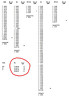
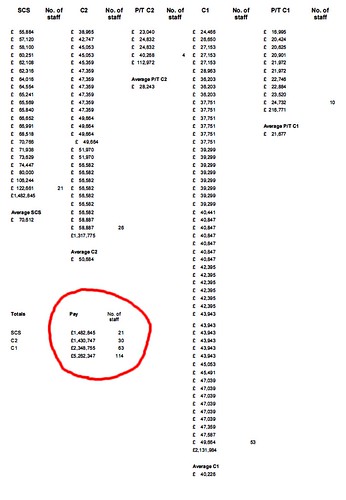
2007 GLSS salariesAccording to salary scales & statistics from 2007, the costs and numbers of lawyers involved in GLSS operations has risen sharply since the Scottish National Party took office, showing a rise from 114 posts to at least 175, and an almost doubling in cost to the Scottish taxpayer from £5 million to around £10 million pounds today. However, as if nearly two hundred strong army of lawyers weren't enough to defend the Scottish Government from all & sundry, it is also the case that additional legal teams & private legal firms are contracted in on almost "blank cheque" operations, as one Justice Department insider put it today.

From the GLSS own promotion, the current levels of salaries and posts for 2009 are as follows :

GLSS 2009The GLSS offers excellent working conditions and career prospects, supported by a commitment to training and development. Salaries are in the range of £27,153 to £32,583 for Legal Officers and £36,203 to £46,700 for Principal Legal Officers, the main recruitment grades. Appointments are permanent and pensionable. There are part-time and job-share opportunities as well as other flexible working arrangements. The current salary for trainees is £17,000 in the first year, rising to £18,955 in the second year.

However, a full range of unmentioned perks for these in-house lawyers exist, where for instance, each solicitor's professional indemnity insurance subscription (required by the Law Society for a valid practising certificate), which can vary up to several thousand pounds each, levied as a result on claims against 'crooked lawyers' to the Master Insurance Policy, is also paid out of public funds as an 'expense'.

A Scottish Government spokesman refused to comment on why the current administration felt it needed to waste many more millions of pounds of taxpayers money on yet more lawyers & legal affairs, however an insider to the Justice Department condemned the GLSS as an unaccountable costly branch of Government which has deliberately put the boot into many legal reforms over the years, and more so since the last election.

"There is little that can be done by Ministers, the Government, Parliament, you name it, if solicitors working at the GLSS issue advice opposing assisting an individual on something like seeking an inquiry into a sudden death, or a medical scandal, or even such things as reform of the legal profession or legal services."

"Everyone knows that much of the advice "not to act" on occasions where the public have asked for help to their MSP, comes solely as a result of professional bias against the issue being discussed".

The source went on to claim that many of the private legal firms brought in under contract by the Scottish Government operated without much worry over financial accountability :”When law firms are brought in to do contract work the costs of what they are doing go through the roof !”.

In professional circles, it is widely known the GLSS have been involved in many inquiries & scandals which have taken years to resolve in Scotland, ranging from the Shirley McKie fingerprint scandal, where advice from the GLSS prolonged the then Scottish Executive's cover up of why fingerprints were misidentified by the then Scottish Criminal Records Office, and onto other serious issues such as the contaminated blood products scandal, where to this day, the Government's in house legal teams are seemingly attempting to wait out the issue so those victims who were caught up in the affair die off.

Notably for the issues which I campaign on, it seems the GLSS have been 'very active' in opposing parliamentary and government assistance to those who fell victim to the Scots legal profession, and recent information shown to me by one MSP, which came from the GLSS and was marked "not for disclosure to the constituent" urged the politician "to find a way out of involvement in the constituent's case", which strangely enough, related to the Law Society of Scotland and several crooked lawyers.

Advice to MSPsAdvice to MSPs : ditch your constituents. An example of advice offered to one SNP politician who was told by a Government lawyer to ditch their constituent simply because the issue related to dealings with crooked lawyers and the Law Society of Scotland. To MSP : “I suggest you find a way out of any further involvement in your constituent’s case and do not reply to any further letters from him on this or any other matter.”. The lawyer in question, had not only ruined the constituent’s finances, he had conducted a long campaign of harassment allegedly even using contacts in the Police to hound his former client’s family out of their home.

The following is a description from the Scottish Government's website on the current state of the Government Legal Service for Scotland. No mention however of the role it plays in stymieing the public's access to justice, on everything from medical scandals, child abuse cases, construction & planning application scandals, scandals involving the legal profession, and even the revelations of material under Freedom of Information requests ....

Which part of helping Scots to gain access to justice and human rights does this lot play ? they seem little more than guardians for the professions, adept at preventing ordinary people getting help with problems involving vested interests rather than helping us all along ….

Government Legal Service for Scotland (Lawyers in Government)

The Government Legal Service for Scotland ( GLSS) is a professional community of lawyers in government in Scotland.

It exists in order to -

* raise awareness of the roles of public service lawyers and of the GLSS member offices
* promote contacts, share information and develop skills and knowledge among staff in its member offices
* provide shared services to member offices and their staff.

who we are

The member GLSS offices are -

* Office of the Solicitor to the Scottish Executive
* Legal Secretariat to the Lord Advocate
* Office of the Solicitor to the Advocate General
* Legal Secretariat to the Advocate General
* Scottish Parliament's Directorate of Legal Services
* Scottish Law Commission

The GLSS also provides legal staff to (for example) the Crofters' Commission, the Lord President's private office and the Scottish Land Court. It works closely with others, in particular with the Office of the Scottish Parliamentary Counsel ( OSPC), responsible for drafting most Scottish legislation.

uniqueness of GLSS work

Lawyers working with the GLSS and its related offices are engaged on a wide variety of interesting and intellectually challenging work, much of it unique to government. A central theme is the development and implementation of new law. Preparation of legislation for both the Scottish Parliament and Westminster forms a large part of the workload. It also includes handling high profile, sensitive litigation and dealing with novel devolution or other constitutional problems. The work of the GLSS is often newsworthy, and it is always necessary to consider political consequences and potential sensitivities or wider implications. Given the nature of the work, the GLSS lawyer has a very influential role and a real opportunity to make a difference.

GLSS lawyers are involved in almost all aspects of government - whether it be resolving legal problems in policy development, operational delivery of services to the public or the smooth running of corporate services. European Union, human rights and devolution law and practice form a constant background to government legal work.

GLSS lawyers may also be seconded to work in policy posts, particularly in areas which relate to legal policy such as the Scottish Executive's Justice Department or Constitutional Policy Unit. GLSS lawyers also provide support for public inquiries. Lawyers working at the Scottish Law Commission contribute directly to the Commission's aims of improving, simplifying and updating the law of Scotland and lawyers at the Scottish Parliament are central to the Parliament's work as a legislature.

Opportunities also exist for secondment to one of the EU institutions or a placement with an external organisation, whether in the public or private sector. This has, on occasions, involved temporary postings to places as far afield as Indonesia.

One aspect of working practice which differs markedly from many private sector firms is that lawyers in the GLSS tend to move between different areas of work over the course of their careers. They are viewed as specialist government lawyers, rather than specialising in a particular subject area for lengthy periods of time. This approach means that lawyers develop transferable skills and are able to deal with novel subjects which frequently arise.

Office of the Solicitor to the Scottish Executive

OSSE is the largest office in the GLSS, providing legal services to the Scottish Executive and its agencies. This covers a very wide spectrum including litigation and tribunal work, property and commercial law and procurement advice, instructing Bills and drafting subordinate legislation, including implementation of EC Directives. These responsibilities include the provision of legal advice to the Scottish Ministers. A major focus of OSSE's advisory and legislation work is in ensuring that Ministers act always within the powers conferred on them by the devolution settlement and that Executive Bills presented to the Scottish Parliament are within the legislative competence of the Parliament. This aspect of the office's work invariably involves consideration of human rights issues.

OSSE reports to the Lord Advocate and Solicitor General for Scotland who are the principal ministerial advisers to the Scottish Executive on legal matters. It currently has 109 lawyers, plus a range of support staff.

For more information see http://www.scotland.gov.uk

Legal secretariat to the lord advocate

The Lord Advocate and the Solicitor General for Scotland (formally known as the Scottish Law Officers) are the principal legal advisers to the Scottish Executive. One of their roles is to provide legal opinions to Scottish Ministers in cases where advice at the highest level is required. Both are members of the Executive and the Lord Advocate attends Cabinet.

The function of the Legal Secretariat is to support the Scottish Law Officers in this role, for instance by researching and helping to draft opinions and by providing advice on other matters referred to the Law Officers. The work very often involves complex issues of human rights and constitutional law. The Legal Secretariat also has an important role in maintaining close liaison with OSSE which provides most of the legal advice required by the Executive and with their UK counterparts.

The Legal Secretariat currently comprises three lawyers, plus support staff.

Office of the solicitor to the Advocate General

The Office of the Solicitor to the Advocate General for Scotland ( OSAG) is part of the Department of Constitutional Affairs, which is a Department of the UK Government. The Advocate General is the Law Officer responsible for advising UK Ministers on Scots law. OSAG is responsible for advising UK Government Departments operating in Scotland on all matters relating to Scots law. It instructs UK legislation applying in Scotland and represents its client Departments in litigation before the Scottish courts. It has special expertise in administrative law and in the division of legal powers between the devolved Scottish institutions and their UK counterparts.

The Office also provides support for the Advocate General in carrying out his statutory functions under the devolution settlement. Devolution issues arising in the Scottish courts are intimated to the Advocate General and OSAG staff co-ordinate their consideration in Whitehall and arrange for any intervention which the Advocate General considers appropriate. Legal staff also consider legislation which comes before the Scottish Parliament so as to identify any issues about competence which may arise. These issues are then considered in co-operation with Cabinet Office and other Whitehall legal advisers.

The Office comprises 18 lawyers, plus support staff.

legal secretariat to the advocate general

The Advocate General is one of the three UK Law Officers, along with the Attorney General and Solicitor General, and is the principal legal adviser to the UK Government on Scots law. The Legal Secretariat is a small team of three lawyers based in London. They assist the Advocate General in preparation of Law Officers' opinions (many of which are prepared jointly with the Law Officers for England and Wales), and support him in relation to Parliamentary business, Cabinet committee meetings, correspondence, speeches and other general business. The legal staff take part in Cabinet Office committees of officials and other Whitehall co-ordinating meetings on European law, human rights and devolution.

For more about OSAG and the Legal Secretariat see http://www.oag.gov.uk.

Scottish Parliament's directorate of legal services

GLSS staff in the Directorate gain experience as parliamentary lawyers. The work is diverse. Much of it is legislative - helping produce non-Executive Bills, advising the Presiding Office on legislative competence, scrutinising Minister-made subordinate legislation. There is also work on procedures and governance such as advising the Scottish Parliamentary Corporate Body which is responsible for providing the Parliament's property, staff and services. Most of the lawyers work not only with colleagues in the Parliament staff group but also with Members across the parliamentary political spectrum, in committees and other forums.

The Directorate has 13 lawyers, and four support staff.

For more information see

http://www.scottish.parliament.uk/corporate/organisation/directorates/ls.htm.

Scottish Law Commission

The Scottish Law Commission is an independent statutory body which recommends reforms to improve, simplify and update the law. Its recommendations, if accepted, are generally implemented through legislation in the Scottish or Westminster Parliaments. Lawyers seconded from the GLSS play an important role in managing and contributing to the development of legal policy on all of its reform projects.

There are currently five senior GLSS lawyers working at the Commission. The Commission also recruits legal assistants for assignment to particular projects. For more information about the Commission and its work see http://www.scotlawcom.gov.uk.

careers

opportunities for lawyers in the GLSS

Throughout some 175 legal posts in the various offices staffed by GLSS lawyers, the GLSS provides excellent opportunities for a varied and stimulating career.

GLSS lawyers are all civil servants and recruitment is by way of open competition. Vacancies are advertised on the Scottish Executive website as well as in the national press ( www.scotland.gov.uk) Assignment to a particular post takes place after recruitment and is determined by the business needs of the different offices, taking into account, so far as practicable, the experience and preferences of successful candidates.

trainee solicitors

The GLSS offers a varied legal trainee programme which is advertised on the Executive's website and in the national press, as well as through its participation in annual law fairs run by the main Scottish Law Schools. The training covers a wide range of government legal work, from core professional areas - such as contract, litigation and commercial law - to specialist advisory work for departments and associated agencies. Trainees have four six-month placements during their traineeship. There may therefore be opportunities to work with the Legal Secretariat to the Lord Advocate, the Office of the Solicitor to the Advocate General, the Scottish Parliament or the Scottish Law Commission as well as a short placement in the Legal Secretariat to the Advocate General in London. There is also an exchange scheme under which some trainees may spend six months with a private sector firm.

pay and conditions

The GLSS offers excellent working conditions and career prospects, supported by a commitment to training and development. Salaries are in the range of £27,153 to £32,583 for Legal Officers and £36,203 to £46,700 for Principal Legal Officers, the main recruitment grades. Appointments are permanent and pensionable. There are part-time and job-share opportunities as well as other flexible working arrangements. The current salary for trainees is £17,000 in the first year, rising to £18,955 in the second year.

summer placement scheme

The GLSS operates a summer placement scheme offering law students one month's paid work experience, normally between June and September. The scheme is open to students in the fourth year of their degree or currently completing their diploma and is advertised each year through the university Law Schools and Faculties.

for further information contact: Ann McKenzie, GLSS Secretariat, G B(N), Victoria Quay, Edinburgh EH6 6QQ Tel no. 0131 244 0815 or email ann.mckenzie@scotland.gsi.gov.uk

Tuesday, March 18, 2008

Funding argument over Scottish Legal Complaints Commission conceals lawyers interference in 'independent' complaints body

While in-house lawyers such as those working for the notorious Government Legal Service for Scotland (GLSS) and other public bodies hope to escape paying the bulk of the new levy of "around £400 a year" to fund the new Scottish Legal Complaints Commission, the remainder of the Scots legal profession will have to pay the full amount plus the practicing certificate which is currently £735 a year, if of course, lawyers want to remain lawyers.

However, while the Law Society of Scotland are grumbling over the amounts to be paid by various factions of the legal profession, attempting bargains based on the rate of complaints that the likes of in-house lawyers or members of the Faculty of Advocates receive, the true picture of how the formation of the new SLCC is taking place is being slightly skewed, it seems in the benefit for the legal profession itself.

For a start, most of the staff of the new SLCC are migrating over from the Law Society of Scotland itself, many of those staff being qualified lawyers or those studying to qualify for the LLB and thus gain a practicing certificate, which the Law Society itself controls via admissions exams and awards at it's whim.

I reported on that matter in an earlier article here : Law Society staff secretly migrating into 'independent' complaints commission will ensure continuing problems of regulating Scottish lawyers

One wonders the, why there is such a fuss over who pays for what when all that is really happening is a piece of 'musical chairs', where the legal profession is, yet again, getting its way with its members migrating into the new 'independent' body to carry on investigating complaints against fellow lawyers, in the very same manner they have been doing for years at the Law Society of Scotland.

The definition of independence of this new 'independent' complaints bodyu slightly wears thin when taking that prospect into account ...

Further, Justice Secretary Kenny MacAskill's 'appointees' to the new Commission are on around £300 plus a day for attendance which was envisaged as 2 or 3 days a month, but which it is now acknowledged by staff at the Justice Directorate that it will could be much more than a couple of days a month ...

Those highly paid £300 plus a day 'appointees' from Mr MacAskill. are ex-Police, lawyers and ex members of Law Society Complaints Committees who have tactically come out of the Law Society of Scotland to 'join' the new 'independent' SLCC.

Still think the new SLCC will be independent ?

Would anyone out there like £300 a day plus expenses to sit & look at complaints against fellow lawyers and friends in the legal profession ? Nice little earner isn't it .. getting £300 a day plus expenses to do a few inevitable whitewashes on crooked lawyers while leaving the poor client ruined as is usual at the Law Society of Scotland.

Even the new Chairman of the SLCC, Jane Irvine, the current Scottish Legal Services Ombudsman acknowledges she wasn't consulted on the backgrounds of some of those appointees, one of them being a lawyer whose legal firm has worked in key cases involving the notoriously corrupt Master Insurance Policy of the Law Society of Scotland, which saw revelations by Cabinet Secretary for Finance John Swinney of massive corruption by Law Society officials right up to the Chief Executive Douglas Mill.

You can read more about John Swinney's revelations on corruption in the Master Insurance Policy and at the very heart of the Law Society of Scotland here : Law Society boss Mill lied to Swinney, Parliament as secret memos reveal policy of intervention & obstruction on claims, complaints.

Another of the appointees, a former Policeman was in the Scotsman newspaper as being involved in serious internal investigations by his own Police Force against him, which are now being kept secret by Kenny MacAskill for fear of tainting the SLCC further, amid revelations this same ex Policeman sat on Law Society of Scotland Complaints Committees as a 'lay member' ...

I have reported on the sleaze in the SLCC's appointments process in previous articles here :

Call for MacAskill appointments 'sleaze investigation' as revelations show Legal Complaints Commission member was subject of Police inquiry

Calls for full disclosure on legal complaints commission members as Justice Department 'covers up' conflicts of interest in appointments scandal

It does seem that what was planned to be an 'independent' commission to consider complaints against crooked lawyers has actually been co-opted by the legal profession even before it has come into existence, such seems to be the power and influence of Scotland's legal establishment and its members, who are bent on keeping control of regulation, complaints, and the public's access to justice for themselves.

The current Justice Secretary, Mr MacAskill, as duly obliged his colleagues at the Law Society by following orders, despite the revelations from Mr Swinney in key areas which should have affected to a much greater extent the appointments and formation process of the SLCC which now looks little more than a "new" Law Society of Scotland, staffed by the same people, with many of it's allies and former members at the most senior levels of the Commission itself.

This is not what was envisaged as an 'independent' organisation to deal with complaints against the legal profession. This is just another corruption of the regulatory issue, and an insult to all Scots who are users of the poor legal services we are currently forced to take from closed shop Scots legal services market.

Lets hope someone has the guts to create a proper fully independent organisation to look into complaints against the legal profession and maintain regulation in an opened legal services market, not this half way house already infiltrated by the legal profession itself. That person who could create such an organisation, is not Mr MacAskill.

Here follows the Scotsman's take via an LLB hopeful, which also gives a take on Richard Keen, the Dean of the Faculty of Advocates who criticises the fact the Faculty has no representation on the new SLCC.

Well Mr Keen QC, you should have spoke up then for a place, shouldn't you ? I mean, why should Advocates let the Law Society of Scotland control the SLCC's staffing, appointments and budget plans while the Faculty is left out of everything .. tut tut ...

Just not Keen on 'taxation without representation'

By JENNIFER VEITCH

SOLICITORS can expect to pay a levy of around £400 a year to fund the new independent body being set up to handle legal service complaints, it has emerged. The Scottish Legal Complaints Commission (SLCC) is consulting the Law Society of Scotland and Faculty of Advocates on its budget proposals – including the levy that the professional bodies will have to collect from their members.

The figures, which have still to be finalised, would see most solicitors pay an annual levy, estimated at £420. Combined with the practising certificate fee – which is currently set at £735 a year – the cost of continuing to wear the badge of solicitor is likely to rise to more than £1,000 a year.

But it is likely that in-house solicitors, who make up around a quarter of the profession, will be offered a significant discount to reflect the fact that they rarely receive complaints. The In-House Lawyers Group has won support from the council of the Law Society of Scotland in recommending its members to pay a third of the levy, or around £140.

Newly qualified solicitors are also set to receive a 50 per cent discount, in line with the fact they pay only half the practising certificate fee during their first three years. As the commission is due to open in October, half-way through the financial year, all lawyers will be asked to pay a half-year levy to cover costs for its first six months.

Advocates will also have to pay the levy, at a rate being estimated at around £332 a year. But Richard Keen, QC, the dean of the Faculty, revealed he has written to Kenny MacAskill, the justice secretary, to express his "fundamental concern" about the prospect of "taxation without representation".

Keen points out that advocates have no member sitting on the commission, and have generated far fewer service complaints (just 26 a year) than solicitors (around 3,500).

"We are not represented on the commission, but we are being asked to pay its budget," he says. "We are being asked to pay an annual levy on a per capita basis. The illustrative figure is £166 per person (for six months]. That means the Faculty is going to have to pay around £160,000 a year to the commission. That is not so they can deal with 26 complaints, because they are only dealing with service complaints. We are talking about something of the order of ten complaints that are going to be dealt with."

He adds: "What concerns me is we may have created an enormous mallet to crack a very small nut as far as the Faculty is concerned. We are paying far, far more than solicitors in order to have this commission deal with service complaints and yet we are the ones with absolutely no representation on the commission. That appears to me to be inequitable."

Keen added the levy would end up being reflected in the fees charged to clients.

"We have to remember that every layer of bureaucracy has a cost, and someone has to meet that cost, and generally it ends up being the consumer," he says.

Philip Yelland, the Law Society of Scotland's director of client relations, says the rate of the levy would reflect the fact the commission was going to cost double what was originally forecast.

"The budget is still at a draft stage," he says. "One of the things we have been very conscious of is that the cost of the commission is significantly in excess of the original (estimate]. When this went through the finance committee of the Scottish Parliament, the figure was £1.5 million. It is now around double that.

"I think the commission will cost what the commission costs, and they have to set a budget that is fair and reasonable."

But he acknowledged its initial budget could not include what revenue might be generated by case fees – as it is not possible to forecast how many complaints it will deal with – and the commission will have an ongoing responsibility to consult the profession annually.

"They will have an additional source of income which will be case fees," he says. "That is something that clearly, in year one, they can't include in their budget." While the Law Society of Scotland will no longer handle service complaints, solicitors should not expect to see a reduction in the cost of their practising certificate, he adds.

"To say a levy at £400 per annum would mean £400 could come off the practising certificate would be an unrealistic expectation," he says. "If they start on 1 October, our role won't stop. We have still got conduct complaints to deal with (and] we are being given additional powers to deal with unsatisfactory professional conduct."

The society will also need resources to address the impact of the commission's decisions on standards, he says.

But Yelland adds the society is already working closely with the commission to ensure a "smooth transition" from the new complaints handling system.

"We have had a very good positive constructive discussion with them," he says. "They are setting up a new body and judging how many complaints they will get.

"They have clearly recognised that we have been dealing with service complaints since 1989 and they have been very keen to learn from us.

"They have been very keen to talk to us, and we have been very keen to pass on our experience and the information that we have."

Jane Irvine, chairwoman of the commission and the current Scottish Legal Services Ombudsman, says work is ongoing to set the levy and rates. But she adds that the commissioners recognise the need to "budget wisely".

"Members of the SLCC are currently working on setting a budget for the first year of our operation, and considering how case fees should be charged," she says.

"In doing this, we are extremely conscious that we owe duties to everyone who will use our service to create an efficient and effective body, so we must be adequately funded and operate a practical case fee system.

"We want to create systems that work effectively and lead to early resolution of complaints. We also recognise we owe duties to the legal profession and to their clients to use the independence we have to plan commercially and budget wisely, as ultimately our costs will be levied on the legal profession."

Janet Hood, chairwoman of the In-House Lawyers Group, says she is pleased the Law Society of Scotland is supportive of a substantial discount. She concedes the cost is "hardly a bank-breaker" for most employers, but argues that in-house lawyers rarely generate complaints.

"We are hoping to pay about a third of what the commission fees will be," she says. "I do hope the commission will listen to not only the In-house Lawyers Group but to the Law Society of Scotland. And if there are lawyers with the commission, they will be in-house lawyers too."

Thursday, September 20, 2007

Government Legal Service for Scotland - 'no help to victims of injustice'

If anyone wondered why the Scottish Executive, formerly the Scottish Office, and now renamed in it's latest incarnation, the Scottish Government, was always so shy to deal with people who, in desperation wrote to our 'governing administration' in Scotland because self regulatory bodies such as the Law Society of Scotland were and still are letting crooked lawyers off the hook on even the most serious of charges, they need to look at just how entrenched lawyers have become over the years in government & public services in Scotland.

The Government Legal Service for Scotland, which of course is supposed to serve government and the people in terms of keeping the actions of Government, and the implementation of legislation within legal compliance, seems to have been serving the legal profession itself too, advising continually over the years, that any effort on the part of politicians to assist complainers against solicitors, should be resisted.

The GLSS has also intervened in Parliamentary submissions by members of the public, censoring their content to withhold the names of solicitors identified in scandals & corruption, and notably, lawyers from the GLSS have also been involved in scandals from everything from the Dunblane Inquiry, to the Shirley McKie fingerprint scandal, to the Hep C contaminated blood products cover up, to just about every single scandal and inquiry you could think of which has happened in Scotland .... no surprise, that in most of these cases, even it seems, when some Ministers have been caught with dodgy mortgage expenses and other fiddles, legal advice from solicitors in the GLSS has been to delay, lose documents, filibuster, prevaricate, intimidate, seek records on people taking issue with government policy, and finding out information on critics with public standing, in efforts to weaken their case.

Slimy stuff .. perhaps, a well organised dirty tricks operation one could say ... and one would be correct in saying that .. but aren't these solicitors who work in public service supposed to be doing something else ? or are targeting the critics of public policy, and holding people in continual injustice just for political means, the stuff of public service these days ?

A few years ago I began to wonder what solicitors for the Scottish Executive Government, did, after constantly seeing some of their 'advice' on issues, ranging from my own correspondence with the Government over the Law Society's failure to investigate crooked lawyer Andrew Penman of Stormonth Darling Solicitors, Kelso and the crooked Borders accountant Norman Howitt

Advice from those giving it to Scottish Ministers & Departments, apparently ranged from "don't respond to this man" to comments such as "we have to get something on him to shut him up" .

It made me wonder ...if these solicitors & their colleagues were saying that about me, they were saying the same about the other 1000 plus people a year who were also writing to the Scottish Executive over just how corrupt the Law Society of Scotland was, and just how corrupt the Scottish legal system was in general .. and it turned out, they were doing just that ...

One particular piece of correspondence from a Solicitor at the Executive, a memo, went on at some length seeking answers as to why or how I was able to secure the attention of the Scotsman newspaper, which ran many stories on the crooked lawyer Andrew Penman scandal, and which also helped to publicise other people's cases of complaints against crooked lawyers, and the failings of self regulation by the Law Society of Scotland.

Attempts to put a stop to the Scotsman running stories on my case ranged from quiet words in the ear of some at the newspaper (and at other newspapers), to an organised attempt to eradicate my credibility with the media, which, thankfully, did not work. It seems no expense or effort was spared in this operation ... and given there are many people in the same boat as myself, I should imagine the GLSS have been running around for years, at taxpayers expense, making sure that victims of injustice, stay victims of injustice. Great work for the wicked ... and well paid too.

Solicitors who work for the GLSS, are of course, also, first & foremost, members of the Law Society of Scotland. Their duty to the Executive and public service, is only surpassed by their duty to their professional body, which if not carried out, will see the revocation of their practicing certificate.

Solicitors for the GLSS also pay into the Master Insurance Policy - the infamous Professional Indemnity Insurance scheme ran by Marsh UK, subsidiary to scandal laden Marsh & Mclennan of the US - which incidentally, is affiliated to virtually every single political party in the UK, even having had a former Scottish Secretary of State, and now Peer - Lord Lang of Monkton on it's Board of Directors You will all of course, remember what happened to the very same Ian Lang when he was an MP ... and errm .... an occasional scandal ...

However, the solicitors for the GLSS don't need to pay their subscriptions to the Master Insurance Policy themselves - they get it via an expenses claim submitted to the Executive, who cover the cost at your expense.

What a great perk - and thus, GLSS solicitors can be as dilatory and negligent as they want after that - because as we all know, no one can make successful claims against the crooked Master Insurance Policy of the Law Society of Scotland ... which has seen everything from the Police being used by lawyers to defeat public complaints & intimidate clients, to meddling from the likes of Law Society Chief Executive Douglas Mill in order to destroy negligence cases against his colleagues.

The new Justice Secretary will know about all this of course... so my concern is .. when are we to be told just how deeply the legal arm of Government in Scotland has held victims of injustice in perpetual injustice for so long, just so a few careers can be saved, a few people can make a lot of money, and of course, a few people can waste away in ruin, to ensure all this goes off smoothly.

Isn't that a bit like someone giving advise that an abuser should go on abusing their victims to keep them from getting help to stop the abuse ?

Well, just to show you how well traveled these GLSS solicitors are, conveniently, their boss, Richard Henderson, who was the GLSS Chief while also being Vice President of the Law Society of Scotland, has now become full President, after the carefully arranged resignation of John MacKinnon from the post a few weeks ago, on grounds of 'pressure of work'.

Needless to say the Law Society of Scotland, in it's darkest hour of need, required a government insider to take the albeit symbolic position of President, and give pointers on how to prevent too much reform in the public interest ... and I'd say they have the very man for that - since Mr Henderson has been in Government service for the past 23 years or so.

If that were for instance, a Government minister of a Department, say, the Secretary of Defence, resigning and going to Chair a Weapons company which had significant government contracts, ministerial rules would kick in and prevent it ... but because it's the legal profession, a well known law unto itself .. no one bats an eyelid .. and some are even engaged to re-write the history of the whole episode.

Don't worry too much about Mr Henderson's salary cut though .. he gets £80,000 a year just being in the 'figurehead' position of President of the Law Society ... well worth it to those who wish to stall any pro public interest reforms perhaps .. with all those connections still in government ...

For a look into the murky, unaccountable world of Government Legal Services for Scotland, and Mr Henderson's appointment as President of the Law Society, here is a story from the Scotsman earlier this week, followed by a brief on GLSS services and capabilities, which don't always act or operated in the public interest when it comes to the interests of the legal profession and other professional colleagues, being at odds with that same public interest, or indeed, with justice itself ...

You may of course, conclude that someone within the GLSS has 'spilled the beans' on some of the things I have written about here ... if you did, you would be correct of course, but it would of course not be proper for me to divulge anyone's name in that respect now, would it ....

New kid on the Law Soc's block

JENNIFER VEITCH

IF TIME does indeed fly, then Richard Henderson might feel that it is travelling at something approaching a supersonic speed. His first interview as president of the Law Society of Scotland was pencilled in for next May but, following the sudden resignation of John MacKinnon last month, Henderson stepped up to the plate.

When his predecessor clearly felt overwhelmed by trying to balance the presidential role with his workload as a solicitor, Henderson might have been forgiven for feeling a degree of trepidation about taking over.

The decision was made easier by the fact he recently retired as solicitor to the former Scottish Executive, but Henderson acknowledges there is something of a leap between the responsibilities of vice president and president, and he hints this may be a issue for the society to consider in the future.

"The question is to what extent the office-bearers can be involved because of the changing world we are in, particularly in the profession," he says. "One of the challenges for the future is the level of involvement."

However, he stresses he believes practising solicitors do want to be involved in setting strategy, rather than leaving the bulk of such work to chief executive Douglas Mill and his team. "I detect there is a desire to be involved in change and a recognition change is something that is with us, and it is an opportunity and not a threat," he adds.

Change has been a hallmark of his time on the society's council. Henderson's decision to become a co-opted member in 1998 came at a time of seismic political change and he wanted to make a contribution during the early years of devolution.

"I thought then that government lawyers had a lot to offer," he says. "Historically, we have not really been involved in the business of the Law Society, but it was the point at which devolution became a reality and I thought that they should be involved with the professional body."

While Henderson is not the first lawyer with an in-house background to be president, he is the first government lawyer to fill the post. Given the somewhat fraught relationship between the society and the former Executive over issues such as complaints handling and legal aid, his understanding of the workings of the civil service may help.

However Henderson (who was awarded the Companion of the Order of the Bath in the new year's honours list), acknowledges that much is different even in the short period since he stepped down.

"Quite obviously it is true to say the dynamics of government are somewhat changed," he says. "I don't think that will preclude the continuing involvement of government lawyers. Given the way the agendas of government and the Law Society often interact, there may be some advantage in my being a government lawyer - I don't see it as a disadvantage."

Henderson will certainly have a different perspective from the majority of past presidents, most of whom have been solicitors in private practice. After qualifying as a solicitor in 1972, Henderson joined the Scottish Office, rising to solicitor to the secretary of state for Scotland in 1998 and becoming solicitor to the Scottish Executive in 1999.

Except for a three-year stint on secondment to the Scottish Law Commission, Henderson has worked in government for his entire career. While he comes from a different background to MacKinnon, the short-term agenda is already set. He identifies three key strands as priorities: governance; education and training; and standards.

Work to set standards is probably top of the list and is closely linked to the imminent opening of the new "gateway" for service complaints, the Scottish Legal Complaints Commission. But Henderson insists the profession would have addressed this issue with or without the advent of the commission and points to existing "quality marking" schemes such as the society's accreditation of specialists. He also sits on the board of the new signet accreditation scheme launched by the WS Society.

"It has been a vexed question over the years," he says. "I don't think the commission is the sole driver but it is indeed a catalyst."

A working group has been formed to draw up options for consultation next year. It is a time-consuming process, and one critics might argue is long overdue: an "arid debate" as far as Henderson is concerned.

The fact the society won't have developed a set of standards before the commission starts looking at service complaints does not worry him, he adds: "The intention is we should be in a position to offer statements on standards to the commission, when it goes live, can have some indication of what the profession thinks."

The implications of the OFT's response to the recent Which? super-complaint and the advent of alternative business structures, which will be debated at a major Law Society of Scotland conference later this month, will also require the society to grapple with some difficult issues. Henderson recognises the need to balance the economic arguments for firms to be able to compete on a level playing field with their English counterparts with concerns about the impact on smaller firms serving rural areas.

As Henderson will remain president until May 2009, he will be in the unusual position of having almost double the normal length of time to make an impact, and is keen to get other members of council to play a greater role: "The important thing is the profession is able to respond to the future and anything I can do to assist that is what I am here for."

Government Legal Service For Scotland

The Government Legal Service for Scotland ( GLSS) is a professional community of lawyers in government in Scotland.

It exists in order to -

* raise awareness of the roles of public service lawyers and of the GLSS member offices
* promote contacts, share information and develop skills and knowledge among staff in its member offices
* provide shared services to member offices and their staff.

who we are

The member GLSS offices are -

* Office of the Solicitor to the Scottish Executive
* Legal Secretariat to the Lord Advocate
* Office of the Solicitor to the Advocate General
* Legal Secretariat to the Advocate General
* Scottish Parliament's Directorate of Legal Services
* Scottish Law Commission

The GLSS also provides legal staff to (for example) the Crofters' Commission, the Lord President's private office and the Scottish Land Court. It works closely with others, in particular with the Office of the Scottish Parliamentary Counsel ( OSPC), responsible for drafting most Scottish legislation.

Uniqueness of GLSS work

Lawyers working with the GLSS and its related offices are engaged on a wide variety of interesting and intellectually challenging work, much of it unique to government. A central theme is the development and implementation of new law. Preparation of legislation for both the Scottish Parliament and Westminster forms a large part of the workload. It also includes handling high profile, sensitive litigation and dealing with novel devolution or other constitutional problems. The work of the GLSS is often newsworthy, and it is always necessary to consider political consequences and potential sensitivities or wider implications. Given the nature of the work, the GLSS lawyer has a very influential role and a real opportunity to make a difference.

GLSS lawyers are involved in almost all aspects of government - whether it be resolving legal problems in policy development, operational delivery of services to the public or the smooth running of corporate services. European Union, human rights and devolution law and practice form a constant background to government legal work.

GLSS lawyers may also be seconded to work in policy posts, particularly in areas which relate to legal policy such as the Scottish Executive's Justice Department or Constitutional Policy Unit. GLSS lawyers also provide support for public inquiries. Lawyers working at the Scottish Law Commission contribute directly to the Commission's aims of improving, simplifying and updating the law of Scotland and lawyers at the Scottish Parliament are central to the Parliament's work as a legislature.

Opportunities also exist for secondment to one of the EU institutions or a placement with an external organisation, whether in the public or private sector. This has, on occasions, involved temporary postings to places as far afield as Indonesia.

One aspect of working practice which differs markedly from many private sector firms is that lawyers in the GLSS tend to move between different areas of work over the course of their careers. They are viewed as specialist government lawyers, rather than specialising in a particular subject area for lengthy periods of time. This approach means that lawyers develop transferable skills and are able to deal with novel subjects which frequently arise.

Office of the Solicitor to the Scottish Executive

OSSE is the largest office in the GLSS, providing legal services to the Scottish Executive and its agencies. This covers a very wide spectrum including litigation and tribunal work, property and commercial law and procurement advice, instructing Bills and drafting subordinate legislation, including implementation of EC Directives. These responsibilities include the provision of legal advice to the Scottish Ministers. A major focus of OSSE's advisory and legislation work is in ensuring that Ministers act always within the powers conferred on them by the devolution settlement and that Executive Bills presented to the Scottish Parliament are within the legislative competence of the Parliament. This aspect of the office's work invariably involves consideration of human rights issues.

OSSE reports to the Lord Advocate and Solicitor General for Scotland who are the principal ministerial advisers to the Scottish Executive on legal matters. It currently has 109 lawyers, plus a range of support staff.

For more information see http://www.scotland.gov.uk

Legal secretariat to the lord advocate

The Lord Advocate and the Solicitor General for Scotland (formally known as the Scottish Law Officers) are the principal legal advisers to the Scottish Executive. One of their roles is to provide legal opinions to Scottish Ministers in cases where advice at the highest level is required. Both are members of the Executive and the Lord Advocate attends Cabinet.

The function of the Legal Secretariat is to support the Scottish Law Officers in this role, for instance by researching and helping to draft opinions and by providing advice on other matters referred to the Law Officers. The work very often involves complex issues of human rights and constitutional law. The Legal Secretariat also has an important role in maintaining close liaison with OSSE which provides most of the legal advice required by the Executive and with their UK counterparts.

The Legal Secretariat currently comprises three lawyers, plus support staff.
office of the solicitor to the Advocate General

The Office of the Solicitor to the Advocate General for Scotland ( OSAG) is part of the Department of Constitutional Affairs, which is a Department of the UK Government. The Advocate General is the Law Officer responsible for advising UK Ministers on Scots law. OSAG is responsible for advising UK Government Departments operating in Scotland on all matters relating to Scots law. It instructs UK legislation applying in Scotland and represents its client Departments in litigation before the Scottish courts. It has special expertise in administrative law and in the division of legal powers between the devolved Scottish institutions and their UK counterparts.

The Office also provides support for the Advocate General in carrying out his statutory functions under the devolution settlement. Devolution issues arising in the Scottish courts are intimated to the Advocate General and OSAG staff co-ordinate their consideration in Whitehall and arrange for any intervention which the Advocate General considers appropriate. Legal staff also consider legislation which comes before the Scottish Parliament so as to identify any issues about competence which may arise. These issues are then considered in co-operation with Cabinet Office and other Whitehall legal advisers.

The Office comprises 18 lawyers, plus support staff.

Legal secretariat to the advocate general

The Advocate General is one of the three UK Law Officers, along with the Attorney General and Solicitor General, and is the principal legal adviser to the UK Government on Scots law. The Legal Secretariat is a small team of three lawyers based in London. They assist the Advocate General in preparation of Law Officers' opinions (many of which are prepared jointly with the Law Officers for England and Wales), and support him in relation to Parliamentary business, Cabinet committee meetings, correspondence, speeches and other general business. The legal staff take part in Cabinet Office committees of officials and other Whitehall co-ordinating meetings on European law, human rights and devolution.

For more about OSAG and the Legal Secretariat see http://www.oag.gov.uk.

Scottish parliament's directorate of legal services

GLSS staff in the Directorate gain experience as parliamentary lawyers. The work is diverse. Much of it is legislative - helping produce non-Executive Bills, advising the Presiding Office on legislative competence, scrutinising Minister-made subordinate legislation. There is also work on procedures and governance such as advising the Scottish Parliamentary Corporate Body which is responsible for providing the Parliament's property, staff and services. Most of the lawyers work not only with colleagues in the Parliament staff group but also with Members across the parliamentary political spectrum, in committees and other forums.

The Directorate has 13 lawyers, and four support staff.

For more information see

http://www.scottish.parliament.uk/corporate/organisation/directorates/ls.htm.

Scottish law commission

The Scottish Law Commission is an independent statutory body which recommends reforms to improve, simplify and update the law. Its recommendations, if accepted, are generally implemented through legislation in the Scottish or Westminster Parliaments. Lawyers seconded from the GLSS play an important role in managing and contributing to the development of legal policy on all of its reform projects.

There are currently five senior GLSS lawyers working at the Commission. The Commission also recruits legal assistants for assignment to particular projects. For more information about the Commission and its work see http://www.scotlawcom.gov.uk.

Careers opportunities for lawyers in the GLSS

Throughout some 175 legal posts in the various offices staffed by GLSS lawyers, the GLSS provides excellent opportunities for a varied and stimulating career.

GLSS lawyers are all civil servants and recruitment is by way of open competition. Vacancies are advertised on the Scottish Executive website as well as in the national press ( www.scotland.gov.uk) Assignment to a particular post takes place after recruitment and is determined by the business needs of the different offices, taking into account, so far as practicable, the experience and preferences of successful candidates.

Trainee solicitors

The GLSS offers a varied legal trainee programme which is advertised on the Executive's website and in the national press, as well as through its participation in annual law fairs run by the main Scottish Law Schools. The training covers a wide range of government legal work, from core professional areas - such as contract, litigation and commercial law - to specialist advisory work for departments and associated agencies. Trainees have four six-month placements during their traineeship. There may therefore be opportunities to work with the Legal Secretariat to the Lord Advocate, the Office of the Solicitor to the Advocate General, the Scottish Parliament or the Scottish Law Commission as well as a short placement in the Legal Secretariat to the Advocate General in London. There is also an exchange scheme under which some trainees may spend six months with a private sector firm.

Pay and conditions

The GLSS offers excellent working conditions and career prospects, supported by a commitment to training and development. Salaries are in the range of £27,153 to £32,583 for Legal Officers and £36,203 to £46,700 for Principal Legal Officers, the main recruitment grades. Appointments are permanent and pensionable. There are part-time and job-share opportunities as well as other flexible working arrangements. The current salary for trainees is £17,000 in the first year, rising to £18,955 in the second year.

summer placement scheme

The GLSS operates a summer placement scheme offering law students one month's paid work experience, normally between June and September. The scheme is open to students in the fourth year of their degree or currently completing their diploma and is advertised each year through the university Law Schools and Faculties.

for further information contact: Ann McKenzie, GLSS Secretariat, G B(N), Victoria Quay, Edinburgh EH6 6QQ Tel no. 0131 244 0815 or email ann.mckenzie@scotland.gsi.gov.uk

Sunday, April 01, 2007

Scottish Executive budget on lawyers salaries revealed at over £5 million pounds while public face restrictions on legal representation

While the ranks of Scotland's 'Family Lawyers' happily use strike action & case boycotts to get their way with the legal aid budget - and the Law Society of Scotland makes sure that anyone trying to use a lawyer to sue a lawyer can't get into court, the Scottish Executive has no such apparent problems in securing legal representation, as a Freedom of Information disclosure to Mr Duncan Shields reveals.

The response from the Scottish Executive, reveals that 114 lawyers work for the Scottish Executive at a cost of £5,262,347 per annum - showing that while the taxpayer finds it hard to get a lawyer to do anything competently - and those who can't afford a lawyer can't even get one to work on legal aid - the Executive certainly has quite a little army of lawyers ready to do their bidding.

So, if you want a lawyer - why bother going to the Law Society of Scotland or consulting the Yellow Pages, when you would be as well to phone up the Scottish Executive and ask for one of theirs !

Just who these lawyers are, remains to be seen, as the Scottish Executive has not revealed any identities within the FOI disclosure, although questions are now surfacing as to the regulatory records of those lawyers recruited by the Scottish Executive, with suspicions that some business contracted out, has seemingly went to legal firms embroiled in bitter negligence cases with clients, which have also been raised with the Scottish Executive by constituents & their elected representatives.

These revelations make for interesting reading, given the Executive have held off from implementing sections 25-29 of the Law Reform (Miscellaneous Provisions) (Scotland) Act 1990 - which would have allowed the public a wider choice in legal representation than the currently required choice - that of either a lawyer or an advocate, or typically both, at great expense, and severe restriction.

The Salary Table released from the Scottish Executive on lawyers salaries :

FOI response from Executive on lawyers salaries

I would point out that the Executive have only released a general note on salaries in this case - and it may well be that when other benefits & perks are included, the final salary bill will certainly be over £6 million pounds. Further extravagance at the taxpayers expense perhaps ? .. so we certainly need to know the rest if we are all paying for it !

The following is the Scottish Executive's covering letter to Mr Duncan Shields who made the FOI inquiry, which proves for interesting reading, and will no doubt, give all of you some constructive ideas.

Dear Mr Shields

Thank you for your request dated 9 February 2007 for information under the Freedom of Information (Scotland) Act.

You ask whether Mr Paul Cackette is a member of the Law Society of Scotland. Under section 25 of the Act, we are not required to provide information in response to a request if it is already reasonably accessible to you. The information you requested is available from the Law Society of Scotland's website at http://www.lawscot.org.uk

You request the names of all members of the Law Society of Scotland working for the Executive who have access to your correspondence, and also the names of all members of the Society acting for the Executive in connection with the implementation of sections 25-29 of the Law Reform (Miscellaneous Provisions) (Scotland) Act 1990.

We do endeavour to provide information whenever possible. However, in this instance we consider that exemption under sections 30(c) , 38(1)(b) and 39(1) of the Freedom ofInformation (Scotland) Act applies.

These exemptions cover information the disclosure of which would be liable to prejudice substantially the conduct of public affairs; information which constitutes personal data the disclosure of which would contravene the data protection principles contained in the Data Protection Act 1998 and information the release of which would be liable to endanger the health and safety of an individual.

You request the names of all members of the Law Society of Scotland acting for the Scottish Executive in house, together with details of the salaries and benefits paid to each member.

The names of all members of the Society working for the Office of the Solicitor to the Scottish Executive are available from the Society's website at the address supplied above, as are members working for the Legal Secretariat to the Lord Advocate and Office of the Scottish Parliamentary Counsel. A number of members of the Society work in policy posts for the Scottish Executive Justice Department, and their names are also available from this website.. We therefore consider that we do notrequire to provide this information.

We consider that information relating to individuals' salary and benefit details is exempt under sections 30(c) , 38(1)(b) and 39(1). However, I attach a list which contains details of the pay bands within which Scottish Executive lawyers are employed, the salariesapplicable to those bands and the staff numbers within each band.

You also request minutes and memorandums of meetings where discussion has taken place as regards implementing sections 25-29 of the Law Reform (Miscellaneous Provisions) (Scotland) Act 1990. We have now completed our search for the information yourequire, and copies of the following documents are enclosed:-

1. Note of meeting between the Executive and the Department for Constitutional Affairs on 22 February 2006;
2. Note of meeting between the Executive and the Law Society of Scotland on 13 March 2006;
3. Note of meeting between the Executive, the Chartered Institute of Patent Attorneys and the Institute of Trade Mark Attorneys on 23 May 2006;
4. Note of telephone conference between the Executive and the Office of Fair Trading on 27 July 2006;
5. Note of meeting between the Executive and the Scottish Consumer Council on 2 August 2006.

We consider that exemption under section 29(1)(a) and 30(b) applies to the notes of two meetings between the Executive and the Lord President's office in February and August 2006. These exemptions cover information relating to the formulation or development of Scottish Administration policy and information the release of which would inhibit the free and frank provision of advice to Ministers or the free and frank exchange ofviews for the purposes of deliberation. We believe that these exemptions apply on the basis that these notes constitute the preparation of advice to Ministers.

We also consider that exemption under sections 29(1)(a), 30(b) and (c) and 38(1)(b) applies to the minute of a meeting with a member of the public in 2001. This meeting involved discussion of the personal views of an individual relevant to the formulation ofgovernment policy. We consider that there is a need to protect the free and frank exchange of such views, and not to release information relating to them withoutthe consent of the individual concerned.

We believe that exemption under sections 30(b) and 38(1)(b) applies to the note of a meeting with representatives of a stakeholder organisation in 1997. This is because the note records the personal views and intentions of individuals, and we consider thatdisclosure of these would be liable to prejudice the free and frank exchange of views.

In reaching our decision about the release of information under sections 29(1)(a), 30(b) and (c) and 39(1) (exemptions which are not absolute) we have applied the "public interest" test, where we carefully weigh up the balance between whether it would be inthe public's best interest to either release or withhold the information. We believe that it would not be in the public interest to release the information because this would discourage the development of policy and the preparation of advice to Ministers in afree and frank way.

In the case of the material relating to individual civil servants which we consider to be exempt under sections 30(c) and 39(1), disclosure could lead to the harassment or intimidation of individual employees with detrimental consequences for the effective conduct of public affairs.

If you believe that our decision not to release all the information we consider to be exempt is wrong, you do have the right to request us to review it. Your request should be made within 40 working days of the date of this letter, and we will reply within 20working days of receipt. If our decision is unchanged following a review and you remain unsatisfied with this, you then have the right to make a formal complaint to the Scottish Information Commissioner.

If you require a review of our decision to be carried out, please write to Robert Gordon, Head of the Scottish Executive Justice Department, St Andrew's House, Regent Road, Edinburgh EH1 3DG, explaining why you wish a review to be carried out.

Access to Justice Division
Scottish Executive Justice Department