Showing posts with label Court of Session Rules Council. Show all posts

Friday, May 31, 2013

Quango’s new rulers for our courts : Access to civil justice ‘up for grabs’ as Lord President and ‘usual suspects’ make up new Scottish Civil Justice Council

New justice quango to make rules for Scotland’s unfit for purpose Court of Session, Sheriff Courts. EARLIER this week the latest attempt to improve Scotland’s unfit for purpose, “Victorian” civil justice system was announced by Scotland’s top judge, Lord President Lord Brian Gill, in the form of the new Scottish Civil Justice Council (SCJC), the latest quango from Scotland’s antiquated courts system loaded with lawyers, judges and a mere two consumer representatives, which is charged with improving the rules governing civil justice in Scotland.

The new SCJC, which some legal insiders have jokingly dubbed “mad cow disease for the justice system”, replaces the existing Court of Session Rules Council and the Sheriff Court Rules Council both of which did precious little for Scots access to justice over the decades of their existence, so little in fact, the current Lord President Lord Gill published the Scottish Civil Courts Review in 2009, a two year project which resulted in heavy criticism of Scotland’s civil justice system over which the former two rules councils presided.

The new Scottish Civil Justice Council will take over the rule drafting functions of the former two rules councils and will also have a new, wider, role to advise and make recommendations on the civil justice system. However, any improvements over the earlier arrangements are expected to be measured at a glacial pace, expected to take years, rather than provide immediate relief to Scots stuck in litigation for years, even decades.

Announcing the appointment of members to the Scottish Civil Justice Council, established under the Scottish Civil Justice Council and Criminal Legal Assistance Act 2013, the Lord President, Lord Gill, said: “I am delighted to announce the appointment of members of the Scottish Civil Justice Council. The new Council will be responsible for delivering vital improvements to the civil justice system.

Lord Gill continued : “Each member will bring valuable skills and personal experience to the Council and I am confident that collectively, will be more than capable of meeting the significant task ahead in the implementation of the forthcoming civil courts reforms. An open and competitive recruitment exercise was held for the non-judicial members and I am grateful to all those who applied.”

The composition of the council is provided for by section 6 of Scottish Civil Justice Council and Criminal Legal Assistance Act 2013. The Act states that the Lord President is to appoint at least 4 judicial, 2 advocate, 2 solicitor, 2 consumer representative members and may appoint up to 6 LP members (these are appointments made at the Lord President’s discretion).The Lord President, the Chief Executive of the Scottish Court Service and the principal officer of the Scottish Legal Aid Board are members of the Council by virtue of their respective offices.  One member of Scottish Government staff is appointed by the Scottish Ministers. Judicial, advocate, solicitor, consumer representative members and LP members hold office for three years.

List of Council members:

The Lord President, Mr Eric  McQueen, Chief Executive of the Scottish Court Service, Mr Lindsay Montgomery CBE, Chief Executive SLAB, Miss Jan Marshall, Scottish Ministers’ appointee, Lord Menzies (judicial member), Lord Tyre (judicial member), Sheriff Principal Stephen (judicial member), Sheriff Abercrombie (judicial member), Mr James Wolffe QC (Advocate member), Mrs Sarah Wolffe QC (Advocate member), Mr Eric Baijal (Solicitor member), Mr Duncan Murray (Solicitor member), Mr Ian   Maxwell (Consumer representative member), Miss Lauren Wood (Consumer representative member), Mr Joseph d'Inverno (LP member), Professor Frances Wasoff (LP member)

About the Civil Justice Council

The creation of a single civil rules council for Scotland was one of the recommendations of the Scottish Civil Courts Review.  Many of the review recommendations will need new rules of court and the Scottish Civil Justice Council, which will have oversight of the entire civil justice system, will be responsible for taking these forward.  It will also be responsible for keeping the civil justice system under constant review.

Thursday, July 26, 2012

Scottish Courts overstepped powers on requirements for ‘speaking’ lay assistants say msps, Justice Committee asked to investigate

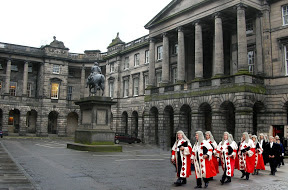
Parliament_House,_EdinburghBlame Game : Did Scottish Government blunder over wording of ‘talking’ lay assistants laws, or did courts become too protective of lawyers vested interests? ACCUSATIONS of court interference & counter claims of blunders by the Scottish Government over the wording of legislation passed by Holyrood in 2010 which conferred the right of lay assistants (otherwise known as McKenzie Friends) to address the court on behalf of party litigants have prompted a series of exchanges between msps, various court rule making bodies & the Lord President over claims the reforms intended to allow lay assistants to address courts are unworkable in their current state.

The widely praised ‘talking’ McKenzie Friend reform, was put forward in 2010 by the then Communities Safety Minister Fergus Ewing & reported by Diary of Injustice Scotland to get ‘talking’ McKenzie Friends as consumer pressure on court access & rights of audience prompts new proposals for Legal Services Bill, with the Legal Services (Scotland) Act 2010 as it was later passed at Holyrood, giving the Court of Session powers in Sections 126 & 127 of the Act to make rules permitting a lay person to make oral submissions to the court on behalf of a party litigant. 

A short consultation was then launched for views on how lay assistants with the ability to address the court, reported by Diary of Injustice HERE and the provisions for ‘talking’ lay representatives came into force on 1 September 2011.

The actual rules giving lay representatives the right to speak in the Court of Session only came into force earlier this month, after lengthy discussions between the various court bodies over ensuring McKenzie Friends could not charge for their services, a move which seems to have more to do with blocking any competition between McKenzie Friends & lawyers for business and thus sheltering lawyer’s profits, than ‘protecting’ the rights of party litigant. 

However, somewhere in the mess of discussions between the courts which focussed too heavily on protecting their colleagues in the legal profession from losing out materially & financially to McKenzie Friends,  it now transpires the courts have added some conditions of their own, over and above those contained in primary legislation.  effectively blocking the rights of lay assistants to address the court.

A meeting of the Holyrood Subordinate Legislation Committee held on 26 June has now taken issue with the courts own version of the rules,  which requires “the prospective lay representative to make five different declarations relating to financial interests, confidentiality, convictions and whether or not the prospective lay representative has been declared a vexatious litigant. It is then within the discretion of the Court to decide whether the lay representative may appear. It may permit that appearance only if it is of the opinion that it would assist the Court.”

The Committee wrote to the then Lord President, Lord Hamilton, asking for further details which generated a response that “the requirement on a prospective lay representative to declare previous convictions was intended to require the disclosure of all convictions, including those which are spent for the purposes of the Rehabilitation of Offenders Act 1974.”, a condition which appears the courts have inserted themselves far & above what was allowed or envisaged via the Legal Services Act (Scotland) 2010.

The Committee, not being satisfied with responses received from the Lord President, has remitted the matter back to the Scottish Parliament’s Justice Committee for further consideration, after it’s Convener, Nigel Don made it plain he felt the courts had overstepped the mark in enforcing stricter than necessary requirements for McKenzie Friends to address Scottish courts.

However a new problem for lay assistants being able to address the court has arisen, after a lay member of the Sheriff Court Rules Council apparently spoke out to the media, accusing the Scottish Government of making a mess of the wording of the Act, not the first time such accusations have been made about poorly thought out & weak or vague worded legislation concerning so-called ‘reforms’ in the justice system.

Asked for a comment on accusations made against the Scottish Government, a spokesperson for the Sheriff Court Rules Council declined to comment and the Scottish Government have not responded to queries over the matter.

Legal insiders have since speculated the wording of the Legal Services Act (Scotland) 2010 may have been purposely framed so vaguely as to allow members of the judiciary to refuse to allow lay representatives to be able to address the court on behalf of party litigants.

An insider said : "Given the recommendations contained in the civil courts review and the campaign at Holyrood to bring McKenzie Friends to Scotland's courts, it is at the very least, suspicious that the Scottish Government's legal directorate failed to get the wording right on a key reform which the legal profession did not support.”

He went onto say : "With the worries of some in the legal profession that litigants may turn to using lay assistants rather than expensive legal teams who may end up generating large legal bills with little to show for it, one could perhaps speculate the badly worded sections are no accident, and were indeed designed to impede lay assistants, or McKenzie Friends from addressing the court"

Speaking to Diary of Injustice this afternoon, a solicitor based in England said he was appalled over the wrangle in Scotland over lay assistants. He said : "Only Scotland could manage to screw up McKenzie Friends with rights of audience features no one really wants. Was it done on purpose to discredit their use as time went on ? I think this could be a possibility."

Diary of Injustice was involved in the campaign to bring McKenzie Friends to Scotland, more of which can be read here : Bringing McKenzie Friends to Scotland's Courts

The discussion of the Holyrood Subordinate Legislation Committee follows : Holyrood Subordinate Legislation Committee 26 June meeting

Act of Sederunt (Rules of the Court of Session Amendment No. 3) (Miscellaneous) 2012 (SSI 2012/189) (Justice Committee)

45. This instrument amends the Rules of the Court of Session by inserting a new Chapter 12B which makes provision for lay representation before the court. It also revokes the Parts of Chapter 41 which relate to applications for permission to appeal against decisions of the Upper Tribunal.

46. The instrument is not subject to any parliamentary procedure and comes into force on 9 July 2012.

47. As part of its scrutiny of the instrument the Committee asked for clarification of various points from the Lord President’s Private Office (“the LPPO”). The correspondence is reproduced in Appendix 5.

48. The Court of Session (“the Court”) has power to make rules regulating the procedure and practice to be followed in that Court, in terms of section 5 of the Court of Session Act 1988 (“the 1988 Act”). These Rules are made under that power and they modify the Act of Sederunt (Rules of the Court of Session 1994) 1994 (“the Rules of the Court of Session”).

49. This instrument makes two separate amendments to the Rules of the Court of Session: paragraph 2 inserts the new Chapter 12B on lay representation, and paragraph 3 revokes certain of the Parts of Chapter 41 which the Court declared to be ultra vires in the case of KP and MRK v Secretary of State for the Home Department. This report is concerned with new Chapter 12B only.

50. Section 126 of the Legal Services (Scotland) Act 2010 amended section 5 of the 1988 Act to insert section 5(ef) which confers power on the Court to make rules “to permit a lay representative, when appearing at a hearing in any category of cause along with a party to the cause, to make oral submissions to the Court on the party’s behalf”.

51. Chapter 12B prescribes that the party who wishes to have a lay representative make oral submissions must enrol a motion accompanied by Form 12B.2. This form must be completed by the party and by the prospective lay representative. It requires the prospective lay representative to make five different declarations relating to financial interests, confidentiality, convictions and whether or not the prospective lay representative has been declared a vexatious litigant. It is then within the discretion of the Court to decide whether the lay representative may appear. It may permit that appearance only if it is of the opinion that it would assist the Court. It appears that the Court, in exercising that discretion, will take into account the declarations made on Form 12B.2.

52. In its response of 21 June 2012, the LPPO confirmed that the requirement on a prospective lay representative to declare previous convictions on Form 12B.2 was intended to require the disclosure of all convictions, including those which are spent for the purposes of the Rehabilitation of Offenders Act 1974 (“the 1974 Act”).

53. The Committee observes that section 4 of the 1974 Act relieves persons whose convictions are spent from the ongoing consequences of having to declare a conviction. It notes in particular that section 4(1)(b) of the 1974 Act provides that such a person must not, in any proceedings before a judicial authority, be asked or required to answer any question relating to his or her past “which cannot be answered without acknowledging or referring to a spent conviction or spent convictions”. It further notes that section 4 of the 1974 Act is subject to the limitations on rehabilitation set out in section 7 of that Act, and to the exclusions set out in the Rehabilitation of Offenders Act 1974 (Exclusions and Exceptions) (Scotland) Order 2003, which is made by the Scottish Ministers in exercise of the powers conferred by section 7(4) of the 1974 Act.

54. It accordingly appears to the Committee that Form 12B.2, in so far as it requires persons to declare convictions which are otherwise spent, purports to disapply section 4(1) of the 1974 Act. The LPPO was asked to explain the basis on which such provision might lawfully be made. The LPPO takes the view that the rule-making powers of the Court in section 5(a), (b) and (ef) of the 1988 Act, when read in conjunction with section 7(3) of the 1974 Act, confer power upon the Court to make provision of this nature.

55. The Committee observes that the Parliament expressly conferred the power to make rules permitting lay representation before the Court when it enacted section 126 of the Legal Services (Scotland) Act 2010, inserting section 5(ef) of the 1988 Act. The Court, in its judicial capacity, has held that section 5(a) of the 1988 Act cannot be relied on to supplement any of the specific powers otherwise conferred in that section. As the Lord President (Hope) commented in Taylor v Marshalls Food Group, “[h]ad Parliament taken the view that para. (a) was as general as counsel suggested, then it would not have found it necessary to insert the new paragraph […] to allow the court to make acts of sederunt in relation to expenses.” In light of this judgment of the Court the Committee takes the view that neither paragraph (a) nor (b) of section 5 enables the Court to make provision which, properly construed, is ancillary to the power to make rules permitting lay representation conferred by paragraph (ef).

56. Furthermore, in the Committee’s view there is nothing in paragraph (ef) which permits the Court to make rules which override primary legislation, in particular the prohibition on requirements to disclose spent convictions established by section 4(1) of the 1974 Act. It appears to the Committee that the Court is seeking, in its legislative capacity, to specifically override provision enacted by the UK Parliament in a manner which is not subject to the Parliament’s supervision. It observes that such a power exists but that it is a power exercisable, post-devolution, by the Scottish Ministers and only with the express approval of the Parliament.

57. So far as the LPPO seeks to rely on section 7(3) of the 1974 Act, the Committee accepts that this is a power exercisable by a “judicial authority” (a term which includes the Court) to require the disclosure of spent convictions. However, it notes that this power is subject to significant restrictions. First, and fundamentally, there is nothing in section 7(3) to suggest that it may be exercised by the Court in its legislative capacity. In the Committee’s view, it is quite clear from the reference to that power being exercisable “at any stage in any proceedings” that it is exercisable by the Court in its judicial capacity when dealing with individual cases. It is unpersuaded by the suggestion that the exercise of the Court’s legislative functions could be taken to constitute a stage in proceedings: the very nature of the rule-making function is that the resulting rules apply in all cases, and there would be no exercise of the section 7(3) power in each individual case. The Committee also notes that this power is exercisable only where the authority, in relation to the proceedings, considers that justice cannot be done without admitting evidence of spent convictions. The LPPO has not identified why it would invariably be the case that justice could not be done, where a lay representative is involved, unless that lay representative discloses spent convictions.

58. The Committee accordingly considers that the LPPO has not been able satisfactorily to explain how the Court may, by Act of Sederunt, disapply the provisions of section 4 of the 1974 Act. It does not consider that section 5 of the 1988 Act confers any such power. Furthermore, it is unpersuaded that section 7(3) of the 1974 Act is capable of being exercised in a blanket fashion by the Court in its legislative capacity. It appears to the Committee that section 7(3) is intended for use by any court when exercising its judicial functions on a case-by-case basis in individual court proceedings.

59. For these reasons, the Committee considers that it is doubtful whether this instrument is intra vires in so far as it inserts Form 12B.2 into the Rules of the Court of Session when that form is intended to require prospective lay representatives to disclose spent convictions. That provision appears to be of doubtful vires because it purports to disapply the effect of section 4(1) of the 1974 Act in the absence of any power enabling the Court of Session to make rules to that effect.

60. The Committee therefore draws the instrument to the attention of the Parliament on reporting ground (e) as there appears to be a doubt about the vires. There appears to be a doubt whether the instrument is intra vires in so far as it inserts Form 12B.2 into the Rules of the Court of Session, when the purported effect of that form is to require a prospective lay representative to make a declaration disclosing spent convictions. That provision appears to be of doubtful vires because it purports to disapply the effect of section 4(1) of the Rehabilitation of Offenders Act 1974 in the absence of any identifiable power enabling the Court of Session to make provision to that effect.

61. Furthermore, the Committee draws this matter to the attention of the Justice Committee as lead committee on the instrument. This instrument is not subject to any further parliamentary procedure but purports to make substantive provision which modifies the rights and protections of individuals and disapplies primary legislation. The Committee accordingly considers that this raises an important constitutional point about the respective functions of the Parliament and the rule-making authority, and recommends that the Justice Committee consider the matter further.

APPENDIX 6

Act of Sederunt (Rules of the Court of Session Amendment No. 3) (Miscellaneous) 2012 (SSI 2012/189)

On 19 June 2012, the Lord President’s Private Office was asked:

Form 12B.2, as inserted by the Schedule to this instrument, requires the prospective lay representative to make certain declarations. In particular, paragraph (d) requires that person to declare that he or she has no previous convictions, or alternatively to list those previous convictions. However, section 4 of the Rehabilitation of Offenders Act 1974 provides, inter alia, that a person who has become a rehabilitated person “…shall be treated for all purposes in law as a person who has not committed or been charged with or prosecuted for or convicted of or sentenced for the offence or offences which were the subject of that conviction…” and in particular that such a person shall not, in any proceedings before a judicial authority, be asked or required to answer any question relating to his or her past “…which cannot be answered without acknowledging or referring to a spent conviction or spent convictions…”. The Lord President’s Private Office is asked:

(a) Is it intended that a person who has become a rehabilitated person (and whose convictions are spent) should be required to disclose those convictions notwithstanding section 4 of the Rehabilitation of Offenders Act 1974?

(b) If that is the case, to identify the power which is relied upon to make such provision; or

(c) If that is not the case, to explain why it is considered that Form 12B.2 makes it sufficiently clear (in particular having regard to the likelihood that the form will be completed by those who are not legally qualified) that the prospective lay representative need not declare spent convictions.

The Lord President’s Private Office responded as follows: (a) Yes.

(b) The powers to make the court rules are contained in sections 5 and 5A of the Court of Session Act 1988. In particular, paragraphs (a), (b) and (ef) of section 5 are relevant for these purposes. The Lord President’s Private Office takes the view that the court’s rule-making powers also require to be read against the background of section 7(3) of the Rehabilitation of Offenders Act 1974, which enables the court, at any stage in any proceedings, to require evidence relating to a person’s spent convictions, notwithstanding the terms of section 4(1) of the 1974 Act, where the court is satisfied in the light of any considerations which appear to it to be relevant that justice cannot be done except by admitting or requiring the evidence relating to those spent convictions. Other exclusions of section 4(1) of the 1974 Act (including exclusions relating to certain types of proceedings in the Court of Session) are set out in the Rehabilitation of Offenders Act 1974 (Exclusions and Exceptions) (Scotland) Order 2003.

(c) In light of the answer to question (a), question (c) does not require to be answered.
Wednesday, June 02, 2010

Questions remain over access, costs & funding of McKenzie Friends in Scottish Courts as Rules Council minutes reveal ‘devil in the detail’

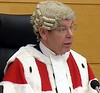
Lord Hamilton 2Scotland’s Lord President Lord Hamilton. As the minutes of the most recent meeting of the Court of Session Rules Council were published earlier this week, further details emerged on the discussions between members of Scotland’s judiciary & legal profession over the now confirmed introduction of McKenzie Friends, or as the Lord President prefers to call them “Lay Assistants” to Scotland’s courts. Details of the meeting included how the now signed Act of Sederunt allowing McKenzie Friends would take shape, although mention of exactly why it has taken forty years and a petition to the Scottish Parliament) to bring lay assistants to Scottish Courts was unsurprisingly avoided.

Lord GillThe Lord Justice Clerk, Lord Gill who recommended McKenzie Friends with a right of audience be introduced to Scotland was present at Rules Council meeting. During the Court of Session Rules Council meeting which took place on 10 May 2010, those present, Lord Hamilton & Lord Reed, Ronnie Clancy QC, Graeme Hawkes (Advocate) from the Faculty of Advocates, along with four members of the Law Society of Scotland, Gordon Keyden (Solicitor), Robin Macpherson (Solicitor), Duncan Murray (Solicitor) & Sydney Smith (Solicitor) discussed the McKenzie Friend issue, going onto acknowledge the significant alteration to lay courtroom assistance in Scottish courts had ‘been inspired’ by a public petition at the Scottish Parliament. Others present included the Lord Justice Clerk, Lord Gill (who earlier recommended McKenzie Friends be introduced to Scottish Courts via his Civil Courts Review), & Colin McKay of the Scottish Government’s Constitution, Law and Courts Directorate.

The published minutes (pdf) reflected the following discussions :

6.1 The Council considered a draft set of rules relating to “McKenzie Friends”. The Council was advised that the draft rules had been inspired by a petition which is currently being considered by the Public Petitions Committee at the Scottish Parliament. The petition urges the introduction of a facility in the Scottish courts whereby a party litigant may be assisted by a lay supporter.

6.2 The Council noted that the draft rules before it did not seek to confer any rights of audience on lay persons. It also noted that the Civil Courts Review Report had included a recommendation for the conferral of such a right. The Council was advised that it was not thought that this recommendation would be capable of implementation by rules of court without further primary legislation. However, the Council noted that it was understood that this recommendation was under consideration for early implementation by the Scottish Government.

6.3 In relation to the provision of lay assistance to party litigants through means other than addressing the court, the Council noted the terms of correspondence between the Public Petitions Committee and the Lord President. It was noted that the Lord President had invited Lord Reed and Lord Hodge, as judges with responsibility for administration of Court of Session business, to consider the matter and make recommendations. Following on from recommendations made by Lord Reed and Lord Hodge, the Lord President had agreed that it would be appropriate to make an Act of Sederunt amending the rules in certain respects to acknowledge and regulate lay assistance. The draft provisions before the Council sought to achieve this.

6.4 The Council noted that the Public Petitions Committee at the Scottish Parliament had indicated that it was content for the Lord President to proceed to make the court rules on this matter. It was noted that the latest draft of the rules had been adjusted to take into account points that had been recently been raised by the Committee in correspondence.

6.5 The Council discussed the extent to which the provisions should be included in the body of the rules or by declaration in a form. It also discussed the extent to which the draft rules would discourage or prevent the provision of lay assistance by persons who might be unsuitable for the role. It was agreed that the Private Office would consider the Council’s discussions on these matters in finalising the Chapter which is to be inserted into the Rules.

I reported on the above meeting in an earlier article, published here : McKenzie Friend ‘success’ for Scotland as Court of Session Rules Council signals June 2010 implementation after 40 years of Law Society opposition and you can read more on the rules in the Act of Sederunt, which resulted from the Court of Session Rules Council meeting in a further article here : McKenzie Friend ‘Act of Sederunt’ published, Lord President enforces strict conditions, calls Scots non-lawyer courtroom helpers “Lay Assistants”

For further reference, readers should also consider Scotland’s First McKenzie Friend in a Civil Court, granted by Lord Woolman in M.Wilson v North Lanarkshire Council & Others (Case ref : A1628/01) which I reported on here : First use of McKenzie Friend in Scotland as Court of Session sweeps aside 40 years of lawyers monopoly over public access to justice

While the Act of Sederunt on ‘Lay Assistants’ is due to come into force around 15 June 2010, according to legal insiders, there are still many questions remaining over what will happen if McKenzie Friends are refused, and particularly in which types of cases McKenzie Friends, or “Lay Assistants” may be refused, together with what rights of appeal party litigants will have over a judge’s decision to refuse the use of a McKenzie Friend, or “Lay Assistant”.

A solicitor said this afternoon there should be a properly laid down procedure for right of appeal if a litigant’s request for a lay assistant is refused, as not having one will inevitably tie up court time and confuse party litigants even further.

It has also emerged today that the cost of applying for a McKenzie Friend (Lay Assistant) in a Scottish court could be at least £45, being the price of a motion in the Court of Session. However, according to litigants with cases already in the Court of Session, party litigants may well be looking at about £100 (including the motion fee) if travelling to & from the Court of Session in Edinburgh is required, with additional costs of another £150 up to as much as £750 if a party litigant is required to pay the other sides costs, depending on how long the hearing lasts.

An official with one of Scotland’s Consumer organisations expressed her fears the costs of McKenzie Friend applications may be an obstruction to unrepresented litigants obtaining the necessary help in Scotland’s Civil Courts.

The official said : “Given the use of a McKenzie Friend would greatly speed up the court process in cases where the party litigant is often unrepresented due to a lack of funds and therefore an inability to obtain legal representation, I believe there should be a review of the charges on lay assistance, to encourage the wider use of McKenzie Friends in Scotland’s courts.

She continued : “However, if the report of £45 is accurate, I think the Scottish Court Service could do some good by halving this figure at least, to lessen the burden on party litigants who are already struggling in civil court cases which could be progressed much faster if a McKenzie Friend were there to help.”

While the issue of the cost of applying for a McKenzie Friend in Scotland has been raised, there also remains the thorny issues of McKenzie Friends or ‘Lay Assistants’ in Scotland being allowed to charge for their services, a right which is supported by case law in England & Wales.

While the Lord President has been adamant in his Act of Sederunt that McKenzie Friends or “Lay Assistants” cannot charge for their services, legal insiders have condemned Lord Hamilton’s proposals on the remuneration question as “unenforceable”, with MSPs raising the issue in the Scottish Parliament, particularly given the terms of the non-remuneration policy, which may incur significant disadvantages, to the point of exclusion, of any lay assistants who may be employed by a Non Governmental Organisation or a Charity.

The Petitions Committee of the Scottish Parliament will again discuss Petition 1247 later in the summer.

You can read my earlier coverage of the campaign to bring McKenzie Friends to Scotland, here : McKenzie Friends for Scotland : The story so far

All written submissions for the McKenzie Friend petition at the Scottish Parliament can be read here : Written submissions for Petition 1247, McKenzie Friends for Scotland

Thursday, May 13, 2010

McKenzie Friend ‘success’ for Scotland as Court of Session Rules Council signals June 2010 implementation after 40 years of Law Society opposition

Lord Hamilton judicialScotland’s Lord President passes McKenzie Friends hurdle. Confirming my report earlier in February of this year on the Lord President, Lord Hamilton’s plans to formally introduce McKenzie Friends to Scotland’s courts, it has been announced the Court of Session Rules Council, the body which oversees rules regarding any matters which the Court could regulate by an ‘Act of Sederunt’, has discussed the issue of McKenzie Friends at its Monday meeting of earlier this week, and is now in the process of drawing up the rules which will allow & govern the use of McKenzie Friends in the Court of Session by the end of June 2010.

A spokeswoman for the Scottish Courts Service said yesterday : “I can confirm that the Rules Council met on Monday and agreed to draw up rules in relation to McKenzie Friends. I expect these to be drafted within a few days and I anticipate that they be be formally adopted by the end of June.”

While the Lord President's Office had no further comment to add to this statement, campaigners & consumer organisations expressed their hope the rules to be drawn up for Scots McKenzie Friends will mirror that of the guidance used in the English courts system, and not prove as restrictive as the Lord President’s initial proposals announced in February, which were criticised by consumer groups as being too strict.

An official with one of Scotland’s consumer organisations said : “I am delighted Scottish consumers will shortly have the invaluable assistance a McKenzie Friend can provide in court for those who cannot obtain or afford legal representation."

He continued : “I look forward to reading the details of the rules by which Scotland’s courts system will treat those acting as a McKenzie Friend and would hope there is a strong presumption in favour of a litigant having the right to a McKenzie Friend as is the case in England & Wales.”

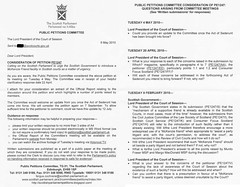
Petitions Committee writes to Lord President  Lord Hamilton 6 May 2010Scottish Parliament asked Lord President ‘to keep them updated on McKenzie Friend law. Questions which were raised late last week over the Scottish Parliament’s Petitions Committee’s recent letter to the Lord President have now also been resolved with the release of documents from the Parliament, confirming the Committee had asked the Lord President for “an update once the Act of Sederunt has come into force”, rather than choosing to raise specific key points which came out of last Tuesday’s meeting of the Petitions Committee, namely those of remuneration of a McKenzie Friend, usage of the term “McKenzie Friend” and the involvement, or interest of a McKenzie Friend in the case in which they are assisting. The Petitions Committee indicated they would next consider the McKenzie Friend petition on 7 September 2010.

I reported on last week’s Petitions Committee discussion on Petition 1247 (McKenzie Friends for Scotland) along with video footage of the Committee’s deliberations, here : Questions over Holyrood's exchanges with Lord President as Scots McKenzie Friend law to be heard at Court of Session Rules Council meeting

The Court of Session Rules Council, who are now drafting the rules on McKenzie Friends, consists of the Lord President ex officio, two other judges of the Court of Session appointed by the Lord President, five members of the Faculty of Advocates appointed by the Faculty and five solicitors appointed by the Council of the Law Society of Scotland. Members hold office for three years and are eligible for reappointment provided that they retain the qualifications for membership.

Court of Session Rules Council Current Membership :

  • The Rt. Hon. Lord Hamilton, Lord President (Chair)
  • The Rt Hon Lord Reed
  • The Hon. Lady Dorrian
  • Mr. Ronnie Clancy, Q.C., Faculty of Advocates
  • Mr. Gerry J.B. Moynihan, Q.C., Faculty of Advocates
  • Ms. Lesley Shand, Q.C., Faculty of Advocates
  • Mr. Eugene P. Creally, Faculty of Advocates
  • Mr. Graeme Hawkes, Faculty of Advocates
  • Mr. Gordon Keyden, Law Society of Scotland
  • Mr. Robin Macpherson, Law Society of Scotland
  • Mr. Duncan Murray, Law Society of Scotland
  • Mr. Sydney Smith, Law Society of Scotland
  • Mr. Fred Tyler, Law Society of Scotland

It should be noted the Faculty of Advocates & the Law Society of Scotland in written submissions to the Scottish Parliament both opposed the introduction of McKenzie Friends to Scotland’s Civil courts. You can read my coverage of the Faculty of Advocate's objections HERE and the Law Society of Scotland’s objections HERE.

However, despite both the major power blocks of the Scottish legal profession obstructing & opposing the introduction of McKenzie Friends to Scottish Civil courts, the issue seems to have cleared the Court of Session’s Rules Council, and we now have an apparent success which should benefit all Scots who require access to justice and our courts.

The draft rules are expected to be available soon, and will be published as I receive them.

In the meanwhile you can read my earlier coverage of the campaign to bring McKenzie Friends to Scotland, here : McKenzie Friends for Scotland : The story so far and all written submissions for the McKenzie Friend petition at the Scottish Parliament can be read here : Written submissions for Petition 1247, McKenzie Friends for Scotland

Saturday, May 08, 2010

Questions over Holyrood's exchanges with Lord President as Scots McKenzie Friend law to be heard at Court of Session Rules Council meeting

Debating chamberHolyrood Committee’s exchanges with Lord President questioned. QUESTIONS have been raised over the outcome of Tuesday’s Petitions Committee hearing on Petition 1247 (McKenzie Friends for Scotland) after it emerged late yesterday that while two members of the Petitions Committee had raised important points to be clarified with Scotland’s Lord President, Lord Hamilton, over the proposed Act of Sederunt to allow McKenzie Friends in Scottish courts, the actual letter sent from the Petitions Committee to the Lord President simply stated "Could you provide an update to the Committee once the Act of Sederunt has been brought into force".

This latest extraordinary turn of events in the campaign to bring McKenzie Friends to Scotland’s courts, a non-lawyer courtroom helper which unrepresented party litigants have been successfully using in England & Wales for the past forty years, comes after last Tuesday’s Petitions Committee hearing concluded its latest deliberations on the McKenzie Friends petition by stating on the Scottish Parliament’s Petition 1247 web page : “4 May 2010 : The Committee agreed to write to the Lord President of the Court of Session seeking a response to specific points.” after two of the Petitions Committee members, MSPs Nanette Milne & Nigel Don raised the thorny issues of the usage of the term “McKenzie Friend” and the question of whether a McKenzie Friend could be remunerated for their services – both key points the Lord President has proved highly resistant to discuss or implement.

Scottish Parliament Petitions Committee 4 May 2010 : McKenzie Friends should remain McKenzie Friends in Scotland (click video to watch)

The transcript of Tuesday’s proceedings on McKenzie Friends :

nigel_donNigel Don MSP (SNP) Nigel Don, member of the Petitions Committee & Parliamentary aide to Justice Secretary Kenny MacAskill raised two significant points the Lord President had failed to resolve over the year long battle to bring McKenzie Friends to Scotland’s courts. Mr Don initially praised Lord Hamilton “for getting on with things”, going onto firstly tackle the question of a ‘certificate’ which Lord Hamilton initially proposed should be required for all potential McKenzie Friends to sign prior to their acceptance by the court – a move heavily criticised by politicians, law reform campaigners and even several consumer bodies including Which? & Consumer Focus Scotland.

Nigel Don said : “I am probably not the only one who feels slightly confused about where we have got to. The issue seems to be moving so fast that I am not sure on which side of the net the ball has ended up. However, we should commend the Lord President for getting on with things and for explaining, in his most recent letter, some points that we did not get round to discussing during our previous meeting due to shortness of time.

“I want to raise two points about the suggested rules in the Lord President's letter of 19 February, which predates our previous meeting. Paragraph 5 of that letter states: "The certificate should ... confirm that the lay assistant has no interest in the case".

“I get the impression from the Lord President's subsequent letter that he sees no problem with the lay assistant being a family member or friend of the litigant. Therefore, I draw the conclusion that the suggestion that the lay assistant should have "no interest" should be translated as "no greater interest than the litigant". That is what I would have expected, so I have no problem with that. However, I thought that I had better put that on record in case I am wrong.”

Mr Don went onto raise the equally thorny issue of whether a McKenzie Friend can be paid for their services, an issue I reported on in mid-April, revealing actual case law from the English Family Courts division, which supports a McKenzie Friend’s entitlement to charge for their services. Nigel Don at the April hearing appeared to support the Lord President’s resolute position that no McKenzie Friends should receive money for their services, however Mr Don now appears to have changed his position substantially.

Nigel Don continued : “Secondly, the Lord President's letter of 19 February states immediately thereafter that the McKenzie friend—or lay assistant, as we should perhaps now describe him—is "to receive no remuneration for his or her services in any form".

“I can quite understand why the Lord President should take that view, but there is good reason to believe that that might not be the best view. Given that many of those who might act as lay assistants might be paid by a charity such as a citizens advice bureau to help those who need help, it seems a step too far to assert that the lay assistant should receive no remuneration from anywhere. I can well understand that the Lord President and his colleagues do not want, as it were, second-class lawyers hawking themselves around as McKenzie friends, but I am slightly concerned that the suggested rules go a bit too far.”

“Can we ask the Lord President to consider that point, so that those with experience of the subject who could well help people are not required to act completely for nothing when a charity might support them ?”

nanette_milneNanette Milne MSP (Scottish Conservative) Nanette Milne, the Conservative MSP member of the Petitions Committee joined the debate, raising the highly contentious issue of the Lord President’s stubborn resistance to using the term “McKenzie Friend” in his plans for bring in the Act of Sederunt to allow, “Lay Assistants”, as Lord Hamilton would rather call “McKenzie Friends” into Scottish courts. Nanette Milne said : “In addition, the petitioner obviously still has concerns about the terminology of "lay assistant" rather than "McKenzie friend". Given that Which? magazine and Consumer Focus appear to use only the term "McKenzie friend", can we perhaps press for the retention of that term ?”

Lord Hamilton judicialScotland’s Lord President, Lord Hamilton. Lord Hamilton’s hostility against using the term “McKenzie Friend” – which is accepted in most international jurisdictions where the McKenzie Friend is used, has left many involved in the Scottish debate on McKenzie Friends questioning why the Lord President apparently feels even after forty years, that Scotland should, not join the rest of the world in allowing what is a uniquely named and internationally recognised courtroom helper to assist the growing numbers of unrepresented court users in Scotland who find themselves unable to obtain legal representation.

McKenzie Friends Which researchWhich? reported that 85% of Scots would like to see McKenzie Friends allowed in our courts. In an earlier report on the McKenzie Friend petition, I revealed the Lord President had put forward several reasons to the Petitions Committee why he felt the term “McKenzie Friend” should be swapped with the term “Lay Assistant”, where Lord Hamilton alleged Scots were too ignorant to know what a McKenzie Friend actually is, this despite research & polls taken by consumer organisations such as Which? who reported that 85% of those questioned during recent research carried out by Which? on Scottish Legal Services thought it would be a good idea to allow McKenzie Friends in Scotland’s courts.

Petitions Committee Convener Frank McAveety attempted to draw the debate to a close with a continuance of the petition, although one important issue raised by the Committee Clerk remained, namely that of whether the Committee “should push the Lord President to defer consideration of the issue.”

Replying to the Convener, Nigel Don said he was against deferring the planned enacting of the Act of Sederunt at Monday’s Court of Session’s Rules Council meeting.

Nigel Don said : “My instinct is not to defer anything at all. I am sure that the Lord President has the good of the system at heart, as people do not get to be Lord President without having a pretty good idea of what goes on in the courts. I think that we should trust him to get on with it. If, one way or another, he and others come to the conclusion that they did not get it quite right first time round, I suspect that the speed with which he is now acting demonstrates that he will be swift to amend things. I do not think that we should defer anything for the sake of it.”

The Committee agreed to continue Petition 1247, and write to the Lord President on the issues raised during the hearing, however as revealed by Holyrood insiders late yesterday, the Committee had apparently changed their mind and simply asked Lord Hamilton to update them once the Act of Sederunt has been brought into force, leaving many questions over whether the Lord President had amended any of his ‘overly protective’ plans announced in February, which have formed the bunk of debate & criticism since being proposed by Lord Hamilton as a way forward.

Mr MacKenzie, the petitioner said this afternoon : “I find it strange the Committee has proceeded in this way, apparently letting the Lord President off the hook on some very serious points of contention. They are not asking for a response to the specific points raised by the two MSPs on the Committee last Tuesday and their own minutes confirm that is indeed what was agreed to be done.”

A Holyrood insider also joined in criticising the Petitions Committee, expressing concern the Lord President had not been called in to be questioned on the issue. He said : “It appears the Committee said one thing then did something completely different. Not a very satisfactory outcome given the Lord President is to act on the McKenzie Friend issue at Monday’s Court of Session Rules Council meeting.”

He continued : “I would also have to say for what is a fundamental shift in the rights of court users to have a McKenzie Friend accompany them as never before in Scotland, it has been a significant failure of the Petitions Committee not to have invited Lord Hamilton in to be questioned over the issue. People must be left wondering why Lord Hamilton or the Petitions Committee have dodged such an open debate on the issue, preferring to exchange what can only be described as series of bizarre exchanges by letter.”

No one from the Scottish Parliament was available for official comment late yesterday, nor were enquiries acknowledged on exactly what the Committee had asked of the Lord President after their meeting last week.

You can read my earlier coverage of the campaign to bring McKenzie Friends to Scotland, here : McKenzie Friends for Scotland : The story so far

All written submissions for the McKenzie Friend petition at the Scottish Parliament can be read here : Written submissions for Petition 1247, McKenzie Friends for Scotland