Showing posts with label MacRoberts. Show all posts

Tuesday, February 02, 2010

Guidance on Freedom of Information requests issued after case involving legal services provider ‘damages’ FOI legislation on documents disclosure

Kevin Dunion Information Commissioner ScotlandScotland’s Information Commissioner, Kevin Dunion. GUIDANCE on the validity of FREEDOM OF INFORMATION REQUESTS has been issued by Scotland’s Information Commissioner, Kevin Dunion, after the Scottish Government began using a recent judgement in Scotland’s Court of Session involving a challenge by two Scottish Councils to the Information Commissioner’s powers, to label FOI requests received by Government departments as “invalid”, thus denying access to information. The judgement, handed down by Lord Reed in Scotland’s Court of Session last year, effectively narrowed the meaning of the term “information” and defined who or what exactly is an “applicant” under Scotland’s Freedom of Information legislation.

The case in question, which has to some extent lessened the power of FOI legislation in Scotland, concerned the well known Glasgow Law firm, MacRoberts (the law firm who were involved in the censoring of Scotland Against Crooked Lawyers website on behalf of the Scottish Court Service) sent in multiple FOI requests on behalf of their [at the time] undisclosed clients Millar & Bryce to Glasgow City Council and Dundee City Council, seeking copies of statutory notices served under various building and planning legislation since 17 February 2005.

Glasgow City Council failed to reply to MacRoberts within 20 days concerning their original FOI requests, then failed to respond to MacRoberts request for a review. In the case of Dundee City Council, they refused MacRoberts FOI requests under section 33(1) of FOISA on the basis that it would substantially prejudice its commercial interests.
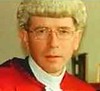
Lord ReedLord Reed – Ruled against FOI Commissioner. In both cases, MacRoberts appealed to Scotland’s Information Commissioner, Kevin Dunion, who ruled the information should be disclosed in both cases, however, both Councils appealed Mr Dunion’s decision, which was duly overturned by Lord Reed in the Court of Session on 30 September 2009. Lord Reed’s opinion, which is highly critical of Mr Dunion’s decisions in connection with MacRoberts requests, stating the Commissioner errd in law (several times) can be viewed here : Dundee City Council & Glasgow City Council v Scottish Information Commissioner

It should be noted that MacRoberts clients, Millar & Bryce are a service provider to the legal profession, and describe themselves on their website as being “the largest of the private search firms in Scotland, supplying legal services to over 1000 firms of Lawyers, Accountants, Banks and other organisations, providing the legal profession with a modern and user-friendly web engine, storing data to minimise administration and keep track of your search requests.”

Scottish GovernmentScottish Government were eager to deploy court obstacles against FOI requests. A typical Scottish Government FOI response example of recent weeks reads : “As you may be aware, the recent Court of Session judgment - Glasgow City Council and Dundee City Council v Scottish Information Commissioner [2009] CSIH 73 (issued on 30 September 2009) - clarified that the Freedom of Information (Scotland) Act 2002 (FOISA) gives a right to information, not documents, and that information requests must identify precisely the information sought. A request is not valid if it does not, in accordance with section 8(1)(c) of FOISA, describe the information requested. As your request is a general request for copies of minutes or meeting notes and does not clearly identify the particular information you are looking for, in line with the Court of Session decision, we do not consider it to be a valid request. Accordingly, we are not obliged to respond to it. However, if you wish to rephrase your request to clearly describe the specific information, rather than documents, you are looking for we would be able to consider your request and respond in accordance with FOISA. If you need any further advice and assistance to rephrase your request, please contact **.”

To deal with such responses handed out by the Scottish Government to FOI requests here follows the Information Commissioner’s Guidance, which should be read by anyone intending to make Freedom of Information requests from now on, in Scotland.

Requests for documents, or copies of documents

* The Freedom of Information (Scotland) Act 2002 (FOISA) provides a right of access to information and not a right of access to copies of specific documents.

* Authorities should not automatically refuse requests for copies of documents, as long as it is reasonably clear from the request that it is the information recorded in the document that the applicant wants.

* Requesting a document (e.g. a report, a minute or a contract) is a commonplace way to describe information. Where it is reasonably clear that a request is for the information contained in a document, the authority should respond to the request as one properly made under FOISA.

* If a request is for a document, but it is not reasonably clear what information is being requested, the authority should contact the applicant to seek clarification.

Requests on behalf of other people

* There is nothing to stop someone making a request on behalf of another person.

* An information request must contain the name of the applicant. Requests on behalf of someone else must name the third party (the 'true applicant').

* Authorities must advise and assist applicants to make requests. If a request is made on behalf of an unnamed person, the authority should provide reasonable advice and assistance to the applicant to explain what needs to be done in order for a valid request to be made.

If an authority rejects a request as being 'invalid', it is important that the authority advises the applicant of the right to request a review and, if still dissatisfied, to make an application to the Commissioner for a decision.

Authorities are urged to read the Commissioner's detailed guidance, which can be downloaded below, and review their procedures in the light of it. In the event that an authority has determined any requests invalid on either ground following the Court of Session Opinion, the Commissioner advises the authority to review those requests and satisfy itself that it has complied with its responsibilities under the legislation, including advice about the right to request a review.

Contact the Information Commissioner’s Office you have any enquiries on this guidance, or any other aspect of freedom of information law, by email on enquiries@itspublicknowledge.info or call 01334 464610.

Download the full Guidance on validity of requests following Court of Session Opinion (Pdf - 119Kb)

An important excerpt from the full guidance document states :

If you want to see information which is held in the form of documents, you should try to make your information request as clear and precise as possible so that the public authority can identify and locate the information you want.

You are not entitled to be given copies of specific documents under FOISA but this does not mean that any requests you make for documents or copies of documents are automatically invalid. Indeed, you may need to refer to documents in describing the information you want. However, to reduce the possibility of any doubt, your request may be dealt with more quickly if you ask for the information contained in the documents rather than for the documents or records themselves.

So, instead of writing: “Please let me have copies of correspondence between the Council and Company A …” you could write: “Please let me have the information contained in the correspondence between the Council and Company A …” & Instead of writing: “I would like the contract between the Health Board and Company X…” you could write: “I would like the information contained in the contract between the Health Board and Company X …”

Happy FOI’ing, everyone … and remember, keep maintaining the pressure for organisations currently exempt from Freedom of Information legislation, such as the Law Society of Scotland, to be made FOI compliant, even if they have to be dragged, kicking & screaming into the compliance with the public interest, and the public’s right to know.

You can read more about the campaign to make the Law Society of Scotland FOI compliant HERE, paying particular attention to the Scottish Government’s apparent wish to fight any idea of making Scotland’s self regulator of solicitors more transparent & accountable under FOI legislation, here : Scottish Ministers 'will fight' disclosure of secret legal advice ordering Law Society immunity from Freedom of Information laws

Tuesday, June 02, 2009

‘It’s all about money, not justice’ as lawyers greed on legal fees spills over at Law Society AGM

Law SocietyLaw Society of Scotland won vote delaying practising fees row for now. PROTESTS from lawyers at last week's annual general meeting of the Law Society of Scotland over the 'high cost' of an annual practising certificate which allows solicitors to work, were insufficient to sway enough of the votes for an immediate reduction in the current annual practising certificate levy on solicitors of £665, raising the threat that many solicitors will increase their already exorbitant fees for legal work carried out on behalf of clients.

Instead, the Law Society won a five month delay to consider how it will react to members unwillingness to pay £665 a year to fund the huge salaries of staff and officials at the Law Society of Scotland's Drumsheugh Garden headquarters in Edinburgh, where as we saw in an earlier report, the current Chief Executive, Lorna Jack's salary along with the costs of her office which now stand at £326,000 a year.

Eileen Masterman & Philip YellandLaw Society’s Philip Yelland & SLCC’s Eileen Masterman do similar jobs on £1,350 a week. With solicitors already having to fork out £400 or so a year to fund the Scottish Legal Complaints Commission, where Commission members are on up to £350 a day plus expenses, and officials such as the Law Society’s Director of Standards, Philip Yelland, and SLCC Chief Executive Eileen Masterman, are both doing the same job on salaries of £1,350 a week - all paid for out of solicitors pockets.

No doubt, the grumbles within the profession over these legal fat cat salaries will continue, but some legal firms are seemingly using their imagination to recover from clients, what they perceive to be the high costs of being a solicitor.

In several examples of accounts sent out to clients which have been brought to my attention, legal firms across Scotland are recouping their running costs and issues such as the cost of the practising fee, by issuing false fee demands to clients for legal work which has never been done.

I have reported on this subject earlier, here : Lawyers stealing from clients to earn 'double fees' while Law Society looks the other way in vast network of legal aid fraud & embezzlement & here : Lawyers fraudulent fee demands must be curbed by independent fee watchdog as culture of greed prohibits public access to justice

It is now becoming commonplace for legal firms to send out accounts to clients, falsely claiming they owe money on case work, some examples of which date back to over 10 years, where solicitors and their firms are regularly claiming to clients that “accounts have been overlooked and must now be settled”, with little or no explanation being provided for what work was actually done on the clients behalf.

Examples I have seen of some of these purely fake fee demands to clients have run into tens of thousands of pounds, the bills usually being accompanied with a seven day threat of legal action if payment is not made immediately, although when the legal firms are asked for specification & evidence as to exactly what work the solicitor did, the accounts are ‘reduced’ to in some cases, about a tenth of what was originally sought from the client, on threat of recovery.

A legal insider today admitted he was well aware many firms were sending out inflated bills. He said : “Many solicitors feeling the pinch have decided to look back through their work to see if they have missed sending out bills to clients.”

“Several of my colleagues are aware of a rising tide of complaints to the Law Society where clients are alleging they are in receipt of accounts from their solicitors for work which was never authorised or agreed to, and which there is no evidence even took place.”

He went on to claim that lawyers were being protected from criminal charges over the false fee demands, simply because of self regulation of the legal profession in Scotland : “If it were not for the fact the profession self regulates, I have no doubt the Police could be called in and fraud charges laid against several legal firms & individual solicitors.”

Of course, none of these issues were discussed at last week’s annual general meeting, although most or all of those legal firms attending are currently engaged in such practices, inspired by weak & corrupt self regulation, carefully maintained by the Law Society of Scotland, with any legislative reforms stifled by political allies to the legal profession.

Arguing about the cost of a practising certificate, while complaints, corruption, negligence, criminality and fraud spirals out of control among Scottish legal firms, will not repair the damage that lawyers have done to themselves, and their own business, and to public access to justice in Scotland.

The Scotsman reports :

No fireworks, but membership costs the burning issue

Tuesday, May 26, 2009

'Penman Levy' leads to civil war within Scotland's legal profession as solicitors battle Law Society on fat cat salaries & wasted millions

Law SocietyLaw Society of Scotland 'takes huge salaries & expenses perks from lawyers subscriptions to fund lavish lifestyles of top executives'. THE EXPENSE of the Law Society of Scotland's policy of shielding the likes of Borders solicitor Andrew Penman of Stormonth Darling solicitors, Kelso, from prosecutions before Discipline Tribunals and almost certain separate investigations into the Law Society’s own report that Penman and his legal firm deceived both the Royal Bank of Scotland & HM Inland Revenue, has led to a bitter civil war brewing among members of Scotland's legal profession, concerned their spiralling obligatory annual subscriptions, resulting from costly cover ups of scandal upon scandal involving crooked lawyers stealing from clients, are being wasted by Law Society chiefs, who some solicitors now claim are wasting millions on themselves with little return to the profession.

Scotsman coverage of some of the stories relating to Andrew PenmanThe Law Society’s shielding of Andrew Penman from prosecution before the SSDT led to new & costly legislation on regulation, coupled with lost business. One solicitor, incensed at the way the Law Society's Client Relations team handles complaints against colleagues, spoke on condition of anonymity this morning, saying :"The way the Law Society handled the scandal surrounding Andrew Penman in the 1990s, and derailed his prosecution before the SSDT has cost us all dearly."

He went on :“Saving Private Penman has led to a slew of media coverage of cases involving rogue solicitors and huge corruption scandals within the profession which has tarnished us all for life, ultimately costing all members our reputations and incalculable lost business while the staff within the Society award themselves promotions and huge salaries out of our contributions. They have obviously caused the profession much more harm than good and now be forced out."

Eileen Masterman & Philip YellandSLCC Chief Executive Eileen Masterman & Law Society Chief Executive Philip Yelland on £80k+ p.a. but both do same job. The dual cost to Scotland's 10,000 solicitors of paying for expensive self regulation carried out by the Law Society of Scotland and 'quasi-independent' regulation handled by the new Scottish Legal Complaints Commission, highlights the huge financial burdens on solicitors, which are in turn being passed down to clients through hugely increased and in some cases, artificially inflated legal fee demands.

Jane IrvineSLCC Chief Jane Irvine announced reduced complaints levy for solicitors this year but no repayment of £2 million of taxpayers money for quango's start up costs. While the Law Society of Scotland are reluctant to reduce the cost of solicitors contributions, the Scottish Legal Complaints Commission did make some reductions to the complaints levy, dubbed the Penman Levy by many in the legal profession, which solicitors must also pay annually, initially at a cost of £400 a year each, to fund the new commission.

However, the new 'independent' law complaints body is itself dogged by now well proven allegations of the same cronyism & lack of impartiality in its operation & policies which the Law Society of Scotland has made itself famous for over the decades, leading to the current state of ruin of Scotland's legal services market.

I have written some previous articles on the costs of the SLCC and where members minds seem to lie (on perks, rather than the work) here : Complaints Commission 'unfit for purpose' as secret meetings with insurers & pensions take focus over consumer protection against crooked lawyers

A solicitor from a leading Glasgow law firm condemned the repetition of costs of regulation at the Law Society of Scotland and Scottish Legal Complaints Commission.

He said "How two people, Yelland & Masterman can do ostensibly the same job, and get paid over £1300 a week out of our pocket, should not be allowed to continue.”

“If that's not bad enough, the SLCC’s Chair and Chief Executive are on more than £300 a day and board members claim over £350 a day in expenses. What kind of a regime is that when we also have to pay even more to fund the same people doing the same work at the Law Society."

He went on : "In this financial climate solicitors and clients cannot afford for these treats to continue, just to satisfy the lifestyles of a few at the top of the profession who regularly run roughshod over members interests. I will therefore be supporting proposals due to be aired at the Law Society's annual general meeting by David Flint of MacRoberts"

The proposals put forward by solicitor David Flint, of the Law Firm, MacRoberts solicitors, which come from letters circulated to solicitors across Scotland, are also reported today in the Scotsman newspaper, where the paper reports that "Mr Flint questioned the increased cost of the chief executive's office, a figure that includes the salary of Lorna Jack, who took the helm in January. The latest draft accounts show that this increased by £90,000 to £326,000 in 2008.

He also highlighted the £98,000 spent on an abortive attempt to relocate the Society's offices in Edinburgh, abandoned in light of a reduction in property values.

Mr Flint also asked whether solicitors paying £665 for the certificate should benefit from the large surplus the Society holds. The 2008 accounts show cash reserves of £1.229 million."

Given the damage the Law Society of Scotland has done to both the legal profession and the interests of the client, there is cause enough for solicitors, and also the public to be angry at the way in which the legal profession's governing body has not only wasted members contributions, but also continues to defy transparency & independent accountability in its operation, while spending millions of pounds in attempts to maintain its sole right to regulate & discipline lawyers in Scotland.

Douglas Mill 4Ex Law Society Chief Executive Douglas Mill was on at least £120k a year and did huge damage to Scots lawyers reputations. A former Council member of the Law Society speaking this morning claimed that in the wake of the Society's now ex Chief Executive Douglas Mill's resignation over the memo scandal, where Mill was brought down after a determined & admirable campaign by Cabinet Secretary for Finance John Swinney to expose corruption at the Law Society, many of the executives on huge salaries at the Society's Drumsheugh Gardens office should either be sacked or forced to resign immediately.

He said : "Many senior officials at the Law Society I know personally, have ended up doing more harm than good for the Scots legal profession.”

“If the membership actually had a vote and a say in things which they are paying for anyway, most of that crowd who are being paid far too much for what they do, would have been gone years ago.”

He went to accuse the Law Society of greed and direct harm to public access to justice : "The ineptitude of officials at the Law Society is not only causing harm to the legal profession, they are, through their waste millions from solicitors annual contributions, and disgraceful mismanagement of client relations, causing direct harm to the public's ability to access legal services in smaller communities, where say for instance, small legal firms and sole practitioners are being forced out of business because they cannot afford to fund the likes of £300,000 salaries for executives at the Law Society to prattle on in a fantasy world like idiots."

An official from a consumer organisation this morning said he found dealing with the Law Society of Scotland to be "rather like trying to bargain with the devil."

He said "The Law Society seem resistant to any change unless it is proposed by the Council itself and even then any such proposals will only address benefits to the profession as long as those changes will directly benefit officials at the Law Society itself."

"This all comes back to a profession being allowed to regulate itself, and as we have just seen with the Banking sector, and the financial calamity its collapse has caused the entire country, professionals in positions of trust, or with access to huge financial power, or those working in the area of law, cannot be trusted to regulate themselves because they make up the rules as they go along, and inevitably something will crack, either from outside, or within."

While the Law Society of Scotland are intensely campaigning against David Flint's proposals to lower the cost of the practicing certificate and questions over the huge salaries of officials, they apparently do not wish to speak to parts of the media they cannot exert control over final versions of reports.

So, splits within the legal profession itself, but this is to be expected, given the way the Law Society of Scotland has treated its own members, and clients alike - spending millions of pounds on shielding the bad apples among Scotland's 10,000 solicitors, and attempting to maintain its position of power of dictating the pace of legal reform in Scotland, while the rest of the profession has to pay for it, with costs ultimately being passed onto the public who also have to suffer poor choice of legal services and lack of access to justice.

It is time for a change, and to begin that change, control of the Law Society of Scotland must be taken away from its Council and the select few at the top of the legal establishment who have no care or general interest in either the welfare of their own members, or the public at large.

The Scotsman reports :

Law Society is 'wasting money of its members', critics claim

Published Date: 26 May 2009
By Christopher Mackie

A ROW over the cost of practising as a solicitor has intensified after the Law Society of Scotland was accused of wasting its members' money.

In a letter circulated throughout the profession, David Flint, a partner in MacRoberts, claimed the Society operated as though it had "an open cheque book" funded by the subscriptions paid to it by Scottish solicitors.

Mr Flint has already tabled a motion at the forthcoming Law Society AGM demanding that the cost of the lawyers' practising certificate be cut from £665 to £400, in the face of the harsh economic climate. The motion was accompanied by a letter to all Scots lawyers asking for support and criticising the Society. It accused the organisation of being a growing bureaucracy that failed to adequately represent the interests of members.

Following a campaign by the Society to rebut the claims, Mr Flint has circulated a second letter, detailing specific areas of waste and urging lawyers to vote for his proposal at the AGM.

In the latest document, Mr Flint said the Society had "demonstrated a singular inability to operate within any reasonable budgetary constraints: they have an open cheque book from the members and they operate accordingly."

Mr Flint questioned the increased cost of the chief executive's office, a figure that includes the salary of Lorna Jack, who took the helm in January. The latest draft accounts show that this increased by £90,000 to £326,000 in 2008.

He also highlighted the £98,000 spent on an abortive attempt to relocate the Society's offices in Edinburgh, abandoned in light of a reduction in property values.

Mr Flint also asked whether solicitors paying £665 for the certificate should benefit from the large surplus the Society holds. The 2008 accounts show cash reserves of £1.229 million.

Mr Flint told The Scotsman: "My concern is members' money is being spent on the administration, rather than on services to members. If you have a surplus being run on a members organisation the surplus belongs to the members and it should be used for their benefit."

The Society said the decision to retain cash was approved by a vote of its members and said the increase in the cost of the chief executive office was misleading as the cost was artificially low in 2007 because of unfilled vacancies. It defended its decision to cancel the relocation of its offices, and described the incurred costs as "reasonable" for a transaction of that size.

The Law Society intends to reduce the cost of the practising certificate, but only after a review is complete. Ms Jack said: "There is a commitment to making a material reduction at this year's SGM in September and we would hope that the profession is prepared to allow the full planning process to be completed and make its decision then."