Showing posts with label Act of Sederunt. Show all posts

Wednesday, June 02, 2010

Questions remain over access, costs & funding of McKenzie Friends in Scottish Courts as Rules Council minutes reveal ‘devil in the detail’

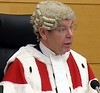
Lord Hamilton 2Scotland’s Lord President Lord Hamilton. As the minutes of the most recent meeting of the Court of Session Rules Council were published earlier this week, further details emerged on the discussions between members of Scotland’s judiciary & legal profession over the now confirmed introduction of McKenzie Friends, or as the Lord President prefers to call them “Lay Assistants” to Scotland’s courts. Details of the meeting included how the now signed Act of Sederunt allowing McKenzie Friends would take shape, although mention of exactly why it has taken forty years and a petition to the Scottish Parliament) to bring lay assistants to Scottish Courts was unsurprisingly avoided.

Lord GillThe Lord Justice Clerk, Lord Gill who recommended McKenzie Friends with a right of audience be introduced to Scotland was present at Rules Council meeting. During the Court of Session Rules Council meeting which took place on 10 May 2010, those present, Lord Hamilton & Lord Reed, Ronnie Clancy QC, Graeme Hawkes (Advocate) from the Faculty of Advocates, along with four members of the Law Society of Scotland, Gordon Keyden (Solicitor), Robin Macpherson (Solicitor), Duncan Murray (Solicitor) & Sydney Smith (Solicitor) discussed the McKenzie Friend issue, going onto acknowledge the significant alteration to lay courtroom assistance in Scottish courts had ‘been inspired’ by a public petition at the Scottish Parliament. Others present included the Lord Justice Clerk, Lord Gill (who earlier recommended McKenzie Friends be introduced to Scottish Courts via his Civil Courts Review), & Colin McKay of the Scottish Government’s Constitution, Law and Courts Directorate.

The published minutes (pdf) reflected the following discussions :

6.1 The Council considered a draft set of rules relating to “McKenzie Friends”. The Council was advised that the draft rules had been inspired by a petition which is currently being considered by the Public Petitions Committee at the Scottish Parliament. The petition urges the introduction of a facility in the Scottish courts whereby a party litigant may be assisted by a lay supporter.

6.2 The Council noted that the draft rules before it did not seek to confer any rights of audience on lay persons. It also noted that the Civil Courts Review Report had included a recommendation for the conferral of such a right. The Council was advised that it was not thought that this recommendation would be capable of implementation by rules of court without further primary legislation. However, the Council noted that it was understood that this recommendation was under consideration for early implementation by the Scottish Government.

6.3 In relation to the provision of lay assistance to party litigants through means other than addressing the court, the Council noted the terms of correspondence between the Public Petitions Committee and the Lord President. It was noted that the Lord President had invited Lord Reed and Lord Hodge, as judges with responsibility for administration of Court of Session business, to consider the matter and make recommendations. Following on from recommendations made by Lord Reed and Lord Hodge, the Lord President had agreed that it would be appropriate to make an Act of Sederunt amending the rules in certain respects to acknowledge and regulate lay assistance. The draft provisions before the Council sought to achieve this.

6.4 The Council noted that the Public Petitions Committee at the Scottish Parliament had indicated that it was content for the Lord President to proceed to make the court rules on this matter. It was noted that the latest draft of the rules had been adjusted to take into account points that had been recently been raised by the Committee in correspondence.

6.5 The Council discussed the extent to which the provisions should be included in the body of the rules or by declaration in a form. It also discussed the extent to which the draft rules would discourage or prevent the provision of lay assistance by persons who might be unsuitable for the role. It was agreed that the Private Office would consider the Council’s discussions on these matters in finalising the Chapter which is to be inserted into the Rules.

I reported on the above meeting in an earlier article, published here : McKenzie Friend ‘success’ for Scotland as Court of Session Rules Council signals June 2010 implementation after 40 years of Law Society opposition and you can read more on the rules in the Act of Sederunt, which resulted from the Court of Session Rules Council meeting in a further article here : McKenzie Friend ‘Act of Sederunt’ published, Lord President enforces strict conditions, calls Scots non-lawyer courtroom helpers “Lay Assistants”

For further reference, readers should also consider Scotland’s First McKenzie Friend in a Civil Court, granted by Lord Woolman in M.Wilson v North Lanarkshire Council & Others (Case ref : A1628/01) which I reported on here : First use of McKenzie Friend in Scotland as Court of Session sweeps aside 40 years of lawyers monopoly over public access to justice

While the Act of Sederunt on ‘Lay Assistants’ is due to come into force around 15 June 2010, according to legal insiders, there are still many questions remaining over what will happen if McKenzie Friends are refused, and particularly in which types of cases McKenzie Friends, or “Lay Assistants” may be refused, together with what rights of appeal party litigants will have over a judge’s decision to refuse the use of a McKenzie Friend, or “Lay Assistant”.

A solicitor said this afternoon there should be a properly laid down procedure for right of appeal if a litigant’s request for a lay assistant is refused, as not having one will inevitably tie up court time and confuse party litigants even further.

It has also emerged today that the cost of applying for a McKenzie Friend (Lay Assistant) in a Scottish court could be at least £45, being the price of a motion in the Court of Session. However, according to litigants with cases already in the Court of Session, party litigants may well be looking at about £100 (including the motion fee) if travelling to & from the Court of Session in Edinburgh is required, with additional costs of another £150 up to as much as £750 if a party litigant is required to pay the other sides costs, depending on how long the hearing lasts.

An official with one of Scotland’s Consumer organisations expressed her fears the costs of McKenzie Friend applications may be an obstruction to unrepresented litigants obtaining the necessary help in Scotland’s Civil Courts.

The official said : “Given the use of a McKenzie Friend would greatly speed up the court process in cases where the party litigant is often unrepresented due to a lack of funds and therefore an inability to obtain legal representation, I believe there should be a review of the charges on lay assistance, to encourage the wider use of McKenzie Friends in Scotland’s courts.

She continued : “However, if the report of £45 is accurate, I think the Scottish Court Service could do some good by halving this figure at least, to lessen the burden on party litigants who are already struggling in civil court cases which could be progressed much faster if a McKenzie Friend were there to help.”

While the issue of the cost of applying for a McKenzie Friend in Scotland has been raised, there also remains the thorny issues of McKenzie Friends or ‘Lay Assistants’ in Scotland being allowed to charge for their services, a right which is supported by case law in England & Wales.

While the Lord President has been adamant in his Act of Sederunt that McKenzie Friends or “Lay Assistants” cannot charge for their services, legal insiders have condemned Lord Hamilton’s proposals on the remuneration question as “unenforceable”, with MSPs raising the issue in the Scottish Parliament, particularly given the terms of the non-remuneration policy, which may incur significant disadvantages, to the point of exclusion, of any lay assistants who may be employed by a Non Governmental Organisation or a Charity.

The Petitions Committee of the Scottish Parliament will again discuss Petition 1247 later in the summer.

You can read my earlier coverage of the campaign to bring McKenzie Friends to Scotland, here : McKenzie Friends for Scotland : The story so far

All written submissions for the McKenzie Friend petition at the Scottish Parliament can be read here : Written submissions for Petition 1247, McKenzie Friends for Scotland

Thursday, May 27, 2010

McKenzie Friend ‘Act of Sederunt’ published, Lord President enforces strict conditions, calls Scots non-lawyer courtroom helpers “Lay Assistants”

Lord Hamilton judicialScotland’s Lord President Lord Hamilton. The rules governing the use of McKenzie Friends in Scotland’s courts, which are set to come into force by the end of June of this year, have finally been published on the Office of Public Sector Information website, confirming that for the first time in Scotland, some four decades after McKenzie Friends came into existence in the now famous English court case McKenzie v McKenzie (1970), the internationally acclaimed non-lawyer courtroom helper will finally be available to unrepresented party litigants in Scottish civil courts.

However, while the Act of Sederunt, signed last Tuesday by the Lord President will finally allow McKenzie Friends to be used in Scotland, the terms of the Lord President’s language in the guidance have confirmed the fears of many that the usage of the internationally acclaimed non-lawyer courtroom helper will be subject to strict conditions & restrictions in Scottish courts, apparently after demands from representatives of the Law Society of Scotland & Faculty of Advocates to limit the spread & availability of McKenzie Friends in civil law cases.

Scotland’s legal establishment are thought to have intervened against the full implementation of McKenzie Friends out of fear that law firms would lose business to the much cheaper, and sometimes free non-lawyer McKenzie Friend, or as the Lord President prefers to use in Scotland a “Lay Assistant”, after Lord Hamilton claimed Scots were too ignorant to understand the meaning of the term “McKenzie Friend”.

It has emerged from the published guidance the Lord President intends to forbid McKenzie Friends in Scotland from receiving any payment for their service, this despite the fact that case law exists in England & Wales, allowing a McKenzie Friend to receive remuneration for their services. This issue had come in for severe criticism by campaigners, consumer organisations, experienced McKenzie Friends from English courts, and even MSPs at the Scottish Parliament, where recently, the SNP’s MSP Nigel Don (North East Scotland) criticised Lord Hamilton’s protectionist block on McKenzie Friends receiving payment for their services.

nigel_donNigel Don MSP criticised Lord President over ‘non-payment’ of Scottish McKenzie Friends. As I reported in an earlier article on the latest Petitions Committee debate of the McKenzie Friend petition, Committee member Nigel Don criticised Lord Hamilton’s restrictions over paying McKenzie Friends, saying : “… the Lord President's letter of 19 February states immediately thereafter that the McKenzie friend—or lay assistant, as we should perhaps now describe him—is "to receive no remuneration for his or her services in any form.I can quite understand why the Lord President should take that view, but there is good reason to believe that that might not be the best view.”

Mr Don continued : “Given that many of those who might act as lay assistants might be paid by a charity such as a citizens advice bureau to help those who need help, it seems a step too far to assert that the lay assistant should receive no remuneration from anywhere. I can well understand that the Lord President and his colleagues do not want, as it were, second-class lawyers hawking themselves around as McKenzie friends, but I am slightly concerned that the suggested rules go a bit too far.”

During the same Petitions Committee hearing, another thorny issue arose, over the Lord President’s apparent hostility to using the term “McKenzie Friend” in Scottish Courts, which has resulted in Lord Hamilton’s published rules using the term “Lay Assistant” instead of “McKenzie Friend”.

nanette_milneNanette Milne MSP (Scottish Conservative) Nanette Milne, the Conservative MSP member of the Petitions Committee criticised the Lord President’s refusal to use the term McKenzie Friend in Scotland, instead preferring to apply the term “Lay Assistant. Nanette Milne said : “In addition, the petitioner obviously still has concerns about the terminology of "lay assistant" rather than "McKenzie friend". Given that Which? magazine and Consumer Focus appear to use only the term "McKenzie friend", can we perhaps press for the retention of that term ?”

A third, even more restrictive condition has also made its way to the published Act of Sederunt which has already resulted in significant criticism from consumer groups, that of requiring a potential McKenzie Friend, or “Lay Assistant” to sign a certificate and give details about themselves which are generally not required in most other jurisdictions where McKenzie Friends operate.

Chapter 12A Lay Support for Party LitigantsLord Hamilton’s Act of Sederunt – Overly restrictive and forty years too late. The terms of the Act of Sederunt, allowing McKenzie Friends to operate in Scotland’s Court of Session are as follows : 12A.1.—(1) At any time during proceedings a party litigant may apply to the court for permission to have a named individual assist the litigant in the conduct of the proceedings by sitting beside or behind (as the litigant chooses) the litigant at hearings in court or in chambers and doing such of the following for the litigant as he or she requires—

(a) providing moral support;
(b) helping to manage the court documents and other papers;
(c) taking notes of the proceedings;
(d) quietly advising on—
(i) points of law and procedure;
(ii) issues which the litigant might wish to raise with the court;
(iii) questions which the litigant might wish to ask witnesses.

(2) It is a condition of such permission that the named individual does not receive from the litigant, whether directly or indirectly, any remuneration for his or her assistance.

(3) The court may refuse an application under paragraph (1) only if—

(a) it is of the opinion that the named individual is an unsuitable person to act in that capacity (whether generally or in the proceedings concerned); or

(b) it is of the opinion that it would be contrary to the efficient administration of justice to grant it.

(4) An application under paragraph (1) is to be made by motion and accompanied by a document, signed by the litigant and the named individual, in Form 12.A-A.

(5) Permission granted under paragraph (1) endures until the proceedings finish or it is withdrawn under paragraph (6); but it is not effective during any period when the litigant is represented.

(6) The court may, of its own accord or on the motion of a party to the proceedings, withdraw permission granted under paragraph (1); but it must first be of the opinion that it would be contrary to the efficient administration of justice for the permission to continue.

(7) Where permission has been granted under paragraph (1), the litigant may—

(a) show the named individual any document (including a court document); or

(b) impart to the named individual any information, which is in his or her possession in connection with the proceedings without being taken to contravene any prohibition or restriction on the disclosure of the document or the information; but the named individual is then to be taken to be subject to any such prohibition or restriction as if he or she were the litigant.

(8) Any expenses incurred by the litigant as a result of the support of an individual under paragraph (1) are not recoverable expenses in the proceedings.”.

Act of Sederunt proposal for McKenzie Friend certificateLord President’s proposed certificate to be signed by McKenzie Friends - “Too Protective”. A Scottish Parliament source said that members were unhappy with the tone of the Act of Sederunt, considering the amount of meetings the Petitions Committee had devoted to the McKenzie Friend Petition. Among the questions asked on the certificate are payment, relationship to the applicant, legal experience, and confidentiality : “Does the named individual have relevant experience (e.g. acted as authorised lay representative in the sheriff court, acted as a McKenzie Friend in England and Wales, legal qualification, experience as a lay adviser on legal matters)? If so, please briefly describe that experience.”

Those wishing to apply to the court to assist a party litigant as a McKenzie Friend in Scotland must also declare whether they are related or not to the litigant, or whether they have a financial interest in the outcome of the case, also confirming they are not receiving remuneration from the litigant, directly or indirectly, for their assistance and will not receive any such remuneration. Additionally, they must accept that documents and information are provided to them by the litigant on a confidential basis and undertake to keep them confidential.

One Holyrood MSP dubbed Lord Hamilton’s plans “Too protective of the courts system and designed to put members of the public at a disadvantage when using a McKenzie Friend against experienced legal teams.” He went onto criticise the focus on ensuring a McKenzie Friend received no payment , saying “it looked like the legal profession had played their hand to protect their business interests.”

A senior official with one of Scotland’s consumer organisations said the plan to force the signing of certificates would put many people off being a McKenzie Friend and queried whether this was the intention all along. The official said : “This requirement of a certificate will limit McKenzie Friends from developing into a service which Scots consumers could use or rely on where they cannot secure often costly legal representation. There’s no reason why Scots court users shouldn’t have the same exact rights for a McKenzie Friend as are used in England. This proposal should be dropped.”

An experienced litigant condemned Lord Hamilton’s restrictions over Scottish McKenzie Friends, saying : “It is absurd to require a person to give details of any previous legal experience, qualifications or family relationships, and I see that Lord Hamilton is still insisting - regardless of existing case law - that no payment (not even expenses) can be claimed. I hope and expect that the Justice Committee will be pushed to see the necessary amendments included.”

It was indicated today Lord Hamilton’s Act of Sederunt will not be the final word on bringing McKenzie Friends to Scotland, as the Petitions Committee have indicated they will look again at the issue later in the year, and there are still plans by the Scottish Government to bring an Amendment to their beleaguered Legal Services Bill at its Stage Two hearing at the Scottish Parliament.

You can read my earlier coverage of the campaign to bring McKenzie Friends to Scotland, here : McKenzie Friends for Scotland : The story so far

All written submissions for the McKenzie Friend petition at the Scottish Parliament can be read here : Written submissions for Petition 1247, McKenzie Friends for Scotland