Showing posts with label Paul Wheelhouse. Show all posts

Saturday, March 07, 2020

NO, MINISTER: Justice Secretary claims Holyrood transparency legislation for register of judges’ interests - would undermine top judge who refused to meet Justice Committee on EIGHT YEAR judicial register petition

Justice Sec. Humza Yousaf opposes judicial transparency. SCOTLAND’S Justice Secretary has attempted to block further action in an EIGHT YEAR Holyrood judicial transparency probe – by claiming any primary legislation created by MSPs to require judges to declare their interests – could undermine Scotland’s top judge – who is also opposed to Petition PE1458: Register of Interests for members of Scotland's judiciary.

Writing in a letter to Margaret Mitchell MSP - Convener of the Scottish Parliament’s Justice Committee – Justice Secretary Humza Housaf claimed: “I would caution however that if such a register were to be established by way of legislation, rather than through the powers of the Lord President, this may be perceived as undermining the principle of judicial independence and the separation of powers between the judiciary and other branches of government.”

The cross party backed judicial register petition filed at the Scottish Parliament in 2012 – calls for the creation of a publicly available register of judicial interests – containing information on all judges’ backgrounds, figures relating to personal wealth, undeclared earnings, business & family connections inside & outside of the legal profession, membership of organisations, property and land, offshore investments, hospitality, details on recusals and other information routinely lodged in registers of interest across all walks of public life in the UK and around the world.

Mr Yousaf also told the Justice Committee that recent details of Scottish judges working in the Gulf States while serving in Scotland were not relevant because since the judge was allegedly acting as a judge on a temporary basis – the rules did not apply to him.

However court opinions previously provided to MSPs confirm Scottish judges heard cases in the Court of Session while also working in the United Arab Emirates.

The Justice Committee previously considered material in relation to Scottish judges serving in the Gulf States & United Arab Emirates – reported in further detail here: JUDICIAL REGISTER: Justice Committee to hear evidence from ex-Judicial Investigator, top judge on judicial interests register, MSP says Scottish judges should not be involved with Gulf States implicated in unlawful wars, mistreatment of women's rights

John Finnie MSP - Scots Judges serving in Gulf States - Justice Committee 28 May 2019

During a hearing on 28 May 2019, Justice Committee member John Finnie MSP said “I do not agree with the idea that anyone connected with the Scottish judiciary could have any role whatsoever in the United Arab Emirates.”

“I looked yesterday at the Human Rights Watch world report, which does a country by country breakdown. The United Arab Emirates is a country that is intolerant of criticism, which has played a leading role in unlawful acts in Yemen, and whose treatment of migrant workers’ rights and women’s rights is shocking. It is a country that permits domestic violence.”

I do not think that any reasonable examination of the role of a public official—and I get the point about the separation of the judiciary—would say that involvement in such a country is acceptable.”

“I believe that we need to do something and I am not content with the cabinet secretary’s response, which is just playing out the same line as before—that there is nothing to see here and we should move on.”

“I do not think that this issue will move on until we have the openness and transparency that people rightly expect of public office.”

Earlier in April 2019, Mr Yousaf wrote to the Justice Committee, claiming ““no further evidence has been provided to the Justice Committee that strengthens the arguments already put forward in favour of the introduction of the register.”

However, the 2019 letter from the Justice Secretary was found to have copied much of it’s content from a letter dated April 2014 – from the then Justice Secretary Kenny MacAskill to the Public Petitions Committee – reported in more detail here: COPY MINISTER: ‘Copied’ content from ex Minister sent by Justice Secretary Humza Yousaf to Holyrood MSPs - Public must rely on judges judging judges for transparency, Scottish Government will not create register of judges’ interests

The latest attempt by the Scottish Government to scupper the eight year probe of a cross party supported petition to create a register of judges’ interests comes after a previous Minister for Legal Affairs - Paul Wheelhouse told the Public Petitions Committee in 2014 the judiciary were concerned gangsters could see their interests.

It later transpired Mr Wheelhouse was accused of misleading MSPs after files obtained via Freedom of Information revealed there was no basis for such claims, and Ministerial advisers had attempted to hunt down any leads to back up Mr Wheelhouse - without success.

And, despite Mr Wheelhouse misleading claims of gangsters & judges – a probe by journalists uncovered instances of members of Scotland’s judiciary representing some of the country’s top gangsters in the same courts in which they serve as judges.

Former Legal Affairs Minister Paul Wheelhouse evidence to the Public Petitions Committee can be found here: TOO MANY SECRETS: Legal Affairs Minister ‘anti-transparency’ evidence to MSPs a ‘poor substitute for top judge’ as Scottish Parliament Petitions Committee consider next move on proposal to create a register of interests for judges

Mr Wheelhouse’ evidence to MSPs came during a concerted attempt by Scotland’s then top judge – Brian Gill – to block MSPs from continuing to investigate plans to create a register of judges’ interests – which – later in October 2014 – saw a full debate at the Scottish Parliament, resulting in cross party support for Petition PE1458.

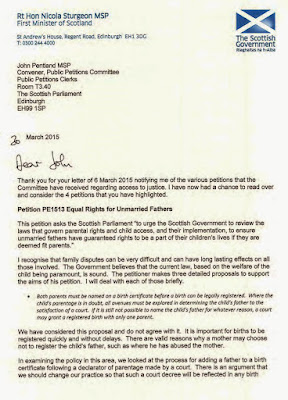
In 2015, First Minister Nicola Sturgeon also intervened in the petition, demanding the petition be closed due to the judiciary’s concerns of media and public scrutiny of judges interests – reported in further detail here: INTERESTS INTERVENE: First Minister joins top judge in bid to block register of judicial interests as MSPs consider recalling Legal Affairs Minister over dodgy evidence & private meeting with Lord Gill

Despite a barrage of opposition from Scotland’s judiciary and vested legal interests, the Public Petitions Committee continued work on Petition Pe1458 for a number of years, concluding a register of judges’ interests could, and should be created.

The decision by the Public Petitions Committee to endorse the petition was reported in further detail here: JUDICIAL REGISTER: Holyrood Petitions Committee calls for legislation to require Scotland’s judges to declare their interests in a register of judicial Interests

MSPs on the Public Petitions Committee also looked at a model used by Norway for declarations of judges’ interests, supporting the introduction of a similar register in Scotland.

In Norway, judges must complete a register of interests listing honorary posts, investments, memberships of political parties, companies, religious communities and charities among others.

The Norwegian model of judicial interest disclosure was hailed by the Public Petitions Committee as model for Scotland’s judges to follow.

More on Norway’s register of judges’ interests can be found here: NORWAY, M’LORD: Judicial interests register of Norway cited as example to follow for Holyrood MSPs six year investigation to create a register of judges’ interests in Scotland

And in November 2019, the Convener of the Justice Committee wrote to Lord Carloway informing the top judge MSPs were minded to support the petition as the judiciary had not put forward any convincing arguments against the creation of a register of judges’ interests p reported here: JUDGES MUST DECLARE: Holyrood Justice Committee back cross party supported proposal to require Scotland’s judges to declare all financial interests and other links in a publicly available register of judicial interests

Scotland’s top judge Lord Carloway also wrote to the Justice Committee in late January, refusing a second request from the Justice Committee to face questions on his opposition to the creation of a register of judicial interests.

Lord Carloway’s most recent refusal to give evidence and his letter are reported in further detail here: JUDGE JUDGES: Scotland’s top judge refuses to face MSPs on judiciary’s EIGHT YEAR battle against register of judges’ interests – Lord Carloway says he will not attend Holyrood to ‘rehearse the same arguments which have not apparently found favour’

Letter from Justice Secretary Humza Yousaf to Margaret Mitchell, Convener Justice Committee 07 February 2020

Public Petition PE 1458: Register of interests for members of Scotland’s judiciary

Thank you for your letter of 22 November asking me to review the evidence you heard on 19 November and the previous evidence taken regarding this petition and to then set out in detail why I do not think it is necessary to establish a register.

The evidence of 19 November: Written Evidence

On the 19 November, the Committee considered written evidence in the form of a letter from the petitioner. I think it is important to address a number of issues with the evidence contained in his letter. The Lord President does not appoint judges or sheriffs to the bench. Judicial appointments are made by the Scottish Ministers on the recommendation of the Judicial Appointments Board for Scotland (JABS). JABS are an independent statutory body and carry out a rigorous recruitment process which involves written application, tests, interview, references and background checks carried out before recommendations are made based on merit from candidates who meet statutory criteria.

The petitioner highlights the press coverage of two former Scottish judges sitting in other jurisdictions. One of these judges was retired, the other was still a temporary judge at the relevant time. Once a member of the judiciary has retired, the individual would not be included in any proposed register of interests. Temporary judges are not full time salaried judiciary. These are judges who can be called on to cover gaps in the court rota and therefore not covered by the restrictions on other employment which full time judiciary are. Whilst a register of interests would have disclosed this additional work, it would not have prevented it being carried out.

Since the Petition was originally introduced to the Parliament, a register of recusals was introduced in 2014 and, I understand, is being used by both the judiciary and those appearing in court. From 1 February 2018, the register was extended to also include members of the Scottish Tribunals. The reasons for recusal tend to relate to personal knowledge of a litigant or witness or previous involvement in another relevant case. The register of recusals does not appear to have highlighted the sort of problems with conflicts of interest of the nature that the petitioner is concerned about. For clarification also, there are 277 justices of the peace, rather than 450.

The proposed reforms to the law of corroboration in Scotland, which the petitioner refers to, were aimed at addressing the difficulty in prosecuting certain types of criminal cases . These proposals were based on detailed research and analysis conducted by Lord Carloway and set out in a published report. It is difficult to see the relevance of this as evidence in support of a register of judicial interests.

The petitioner cites extensive written submissions of evidence in relation to this petition and the Committee have asked that I review all previous evidence. In doing so, I can see that almost half of those submissions are from the petitioner and over one third are either correspondents declining to make a submission or from the Scottish Government, the Scottish Courts and Tribunals Service or the Lord President and present evidence which is not in support of the register. The petitioner’s submissions do not always raise new evidence and cover some matters that would be outwith the scope of this petition.

Oral evidence: In terms of the oral evidence taken, a considerable part of this discussion focussed on the system for complaints about members of the judiciary. I note the point raised that Scotland differs from other jurisdictions in that upheld complaints are not published. I agree that this is a matter that consideration could be given to as it is transparent and consistent with the complaint process for many professions, however complaints against the judiciary are the responsibility of the Lord President and there may be valid reasons why complaints are not published. I also note the distinction that was explained by Ms Ali between judicial decisions and service complaints about the judiciary. This was followed by discussion on independence and accountability.

I have also considered the written and oral submissions from Professor Alan Paterson, the academic who has contributed views on this petition. I note that Professor Paterson told the Public Petitions Committee that he had not reached a concluded opinion on a register of interests for the Scottish judiciary. He explains that this question comes back to the role of the judiciary in a democracy and there is a need to balance judicial independence and accountability. Professor Paterson told the Public Petitions Committee that he considers transparency as part of accountability. I would agree with this point and I’m of the view that the judiciary’s decision making is transparent and subject to appeal.

International factors: At the time the Petition was lodged, and in a number of the petitioner’s subsequent written submissions, reference is made to the New Zealand Parliament’s consideration of a judicial register of interests. By a large majority, the New Zealand Parliament voted down a Bill to create a register after considering the whole issue and its difficulties. Few analogous jurisdictions to Scotland have legislated for a judicial register of interests, and those that have did so in response to evidence of challenges specific to those jurisdictions. South Africa, for example, created one as part of cementing its new democracy.

The Council of Europe Group of States Against Corruption (GRECO) is an independent international body tasked with monitoring and advancing anti-corruption measures in countries across the world. It has examined the need for a judicial register of interests twice in Scotland and the most recent report of the Fourth Evaluation Round concluded that there was no evidence of corruption in relation to the judiciary in Scotland or of judicial decisions being influenced inappropriately. They do not recommend the introduction of an asset declaration scheme.

Ways to introduce a scheme: Your letter also asked for the Scottish Government’s view of what would be involved in establishing such a register and whether this would require primary legislation or could be achieved by some other means.

At present, and in line with the requirement to uphold the continued independence of the judiciary, set out in section 1 of the Judiciary and Courts (Scotland) Act 2008, Scottish Ministers do not have existing powers to establish such a register, whether voluntary or mandatory. Accordingly primary legislation would be required to implement any such register.

I would caution however that if such a register were to be established by way of legislation, rather than through the powers of the Lord President, this may be perceived as undermining the principle of judicial independence and the separation of powers between the judiciary and other branches of government.

Conclusion: My predecessors set out in detail in earlier correspondence the safeguards in place. These safeguards are the judicial oath, the statement of principles of judicial ethics and the various rules made under the Judiciary and Courts (Scotland) Act 2008 which concern complaints about the judiciary and judicial conduct. I would draw particular attention to the statement of principles of judicial ethics. This is some thirty five pages long and sets out clearly the standards judicial office holders are expected to meet. Breach of the ethics can result in serious consequences for a judicial office holder. Having considered the evidence, I share the views of both of my predecessors that there are sufficient safeguards in place to ensure the impartiality of the judiciary.

As mentioned previously, in the time since this petition was lodged with the Parliament, further measures have been introduced for, and by, the judiciary; such as the register of recusals and publication of judicial expenses and overseas travel. I believe that these measures have increased the transparency of the judiciary.

I am also mindful of the statutory requirement within the Judiciary and Courts (Scotland) Act 2008, that Scottish Ministers and Members of the Scottish Parliament must uphold the continued independence of the judiciary.

I have given further consideration to the matter and have considered the evidence before the Justice Committee. I remain of the view that it is not necessary to establish a register of interests. I hope the detail of this letter explains my reasons for that

EIGHT YEAR JUDICIAL INTERESTS PROBE:

The judicial register petition - first debated at the Scottish Parliament’s Public Petitions Committee in January 2013 – calls for the creation of a publicly available register of judicial interests.

A full debate on the proposal to require judges to declare their interests was held at the Scottish Parliament on 9 October 2014 - ending in a motion calling on the Scottish Government to create a register of judicial interests. The motion was overwhelmingly supported by MSPs from all political parties.

The lengthy Scottish Parliament probe on judicial interests has generated over sixty two submissions of evidence, at least twenty one Committee hearings, a private meeting and fifteen speeches by MSPs during a full Holyrood debate and has since been taken over by Holyrood’s Justice Committee after a recommendation to take the issue forward from the Public Petitions Committee in March 2018.

A full report containing video footage of every hearing, speech, and evidence sessions at the Scottish Parliament on Petition PE1458 can be found here: Scottish Parliament debates, speeches & evidence sessions on widely supported judicial transparency petition calling for a Register of Interests for Scotland's judiciary.

The Scottish Parliament’s Justice Committee has consistently supported calls for a judicial interests register over multiple hearings – where MSPs have spoken out on Scottish judges involvement in the Gulf States, reported here: JUDICIAL REGISTER: Justice Committee to hear evidence from ex-Judicial Investigator, top judge on judicial interests register, MSP says Scottish judges should not be involved with Gulf States implicated in unlawful wars, mistreatment of women's rights

A report on the Justice Committee’s consideration of the Judicial Interests Register Petition in May 2019 – where MSPs backed the petition - can be found here: JUDICIAL REGISTER: Justice Committee investigate approach to judges’ interests in other countries – MSPs say ‘Recusals register not comprehensive enough’ ‘Openness & transparency do not contradict independence of the judiciary’

A report on the Justice Committee’s consideration of the Judicial Interests Register Petition in February 2019 – where evidence in relation to Scottish judges swearing dual judicial oaths and working for Human Rights abusing Gulf States dictatorships - can be found here: JUDICIAL REGISTER - MSPs urged to take forward SEVEN year petition to create a Register of Judges’ Interests as Holyrood Justice Committee handed evidence of Scottish Judges serving in Gulf states regimes known to abuse Human Rights

TWO TOP SCOTS JUDGES FAIL IN HOLYROOD JUDICIAL TRANSPARENCY PROBE:

Both of Scotland’s recent top judges failed to convince MSPs that a register of interests is not required for judges – even after both Lord Presidents attempted to press home the existence of judicial oaths and ethics – which are both written, and approved by – judges.

Video footage and a full report on Lord Brian Gill giving evidence to the Scottish Parliament in November 2015 can be found here: JUDGE ANOTHER DAY: Sparks fly as top judge demands MSPs close investigation on judges’ secret wealth & interests - Petitions Committee Chief brands Lord Gill’s evidence as “passive aggression”

Video footage and a full report on Lord Carloway (Colin Sutherland) giving widely criticised evidence to the Scottish Parliament in July 2017 can be found here: REGISTER TO JUDGE: Lord Carloway criticised after he blasts Parliament probe on judicial transparency - Top judge says register of judges’ interests should only be created if judiciary discover scandal or corruption within their own ranks

Previous articles on the lack of transparency within Scotland’s judiciary, investigations by Diary of Injustice including reports from the media, and video footage of debates at the Scottish Parliament’s Public Petitions Committee can be found here : A Register of Interests for Scotland's Judiciary.

Tuesday, June 19, 2018

COURT FRACKING: Scottish Government ban on fracking does not exist says Lord Pentland - Court of Session throws out INEOS challenge as Judge says Ministerial claims “did not accurately express the legal effect of the decisions”

Scottish Govt fracking ban does not exist – judge. SCOTLAND’S top court has ruled that claims by Ministers that fracking is banned, are not consistent with current law, and therefore the forced extraction of extracting shale gas from subterranean  rocks - has not been banned in Scotland.

The Court of Session’s decision also hits out at numerous “mistaken” statements by SNP ministers of a ban on what many regard as an environmentally damaging process which uses water and chemicals pumped at high pressure into underground shale beds to release methane gas.

Earlier today, the Judiciary of Scotland published Lord Pentland’s ruling on the INEOS challenge to the Scottish Government’s claims of a ban on fracking – in which the court threw out the challenge, on the grounds there was and is no existing prohibition against shale gas extraction in Scotland.

Despite claims of a ban on fracking by numerous Scottish Government Ministers, including the First Minister herself Nicola Sturgeon, Lord Pentland ruled that no such ban exists, and that in reality there is little more than an evolving planning policy.

Revealing there is no existing legal basis for claims by the First Minister & others that a ban on fracking is in force - Lord Pentland said statements by ministers including Paul Wheelhouse MSP and First Minister Nicola Sturgeon that a ban existed “did not accurately express the legal effect of the decisions” involved.

The statement issued by the Judicial Office notes that [despite numerous claims by Ministers] “the Lord Advocate, on behalf of the Scottish Ministers, made it clear to the court that such statements were mistaken and did not accurately reflect the legal position”.

Lord Pentland’s judgement concludes that “as a matter of law, there is no prohibition against fracking in Scotland”.

The ruling issued today followed statements by the Scottish Government to the Scottish Parliament during October 2017 that fracking had effectively been banned through the use of new guidance on planning consent.

Energy minister Paul Wheelhouse – who once made false claims to a Holyrood Committee that fictitious gangsters made transparency in the judiciary impossible - told MSPs last year that “fracking cannot and will not take place in Scotland”.

Similarly, First Minister Nicola Sturgeon said “fracking is being banned in Scotland - end of story”.

Earlier this year, and after the continued claims by the Scottish Government and it’s supporters of a ban on fracking, Ineos Upstream Ltd and Reach CSG sought a judicial review of the effective ban, the Scottish Government began t changed its tune.

When the case was called in court, the Scottish Government’s own lawyer - James Mure QC  - claimed the legal challenge by Ineos was premature as SNP ministers had “not yet adopted a position” and that in effect Ministers had merely announced a preference for a ban.

James Mure QC was forced to admit to the court that his client the Scottish Government had merely spun the issue of a preference of a ban, into an actual ban.

The QC was forced to tell the court in the earlier hearing: “The concept of an effective ban is a gloss. It is the language of a press statement.”

However, in the Court of Session opinion issued today, Lord Pentland’s judgement rubbished Ministerial claims of a ban on fracking, concluding that “as a matter of law, there is no prohibition against fracking in Scotland”.

In the judgment, Lord Pentland also rejected Ineos and Reach CSG's case on the basis that no ban exists.

The Herald newspaper reported on the court’s decision today, and also reported - “After the judgment was released, the SNP rewrote the environment section of its website, deleting the words "The Scottish Government has put in place a ban on fracking in Scotland".

Ineos, which runs the Grangemouth refinery and already imports US shale gas as a precursor for petrochemical works, would like to frack gas in the Central Belt.

It has previously accused the government of an “Alice in Wonderland” position on fracking.

Ineos said it now expected all planning applications for fracking to be considered on merit, not "prejudice and political expediency" and ministers of wasting public money by not being clearer earlier.

Mr Wheelhouse, who told MSPs there was a ban, welcomed the Court saying there wasn’t.

He said: “This decision vindicates the extensive process of research and consultation which the Scottish Government has undertaken since 2015.

“As I set out in October, our preferred position is not to support Unconventional Oil and Gas extraction in Scotland, and that position remains unchanged.

“I have repeatedly set out to parliament that we would undertake a Strategic Environmental Assessment (SEA) ahead of finalising that position and that approach has been endorsed by the overwhelming majority of the Scottish Parliament.

“The work to complete the SEA and a Business and Regulatory Impact Assessment is currently underway and the findings will be carefully considered.

“In the meantime, a moratorium is in place which means no local authority can grant planning permission and Ministers would defer any decision on any planning application that did come forward until the policymaking process is completed.

“The practical effect of the current moratorium and the policymaking process which is underway to finalise our position is that no fracking can take place in Scotland at this time.”

In his judgement published earlier today, Lord Pentland quoted First Minister Nicola Sturgeon and Mr Wheelhouse’s statements in parliament about there being a ban.

However, in what seems an attempt at appeasing the misleading statements by Ministers, Lord Pentland was forced to add that the accuracy of such misleading ministerial statements was not the core issue – even though the existence of the misleading claims by the First Minister & Scotish Government led to the Ineos legal challenge in the first place.

Lord Pentland said: “The legal question is not whether ministers have accurately described or commented on their understanding of the legal effect of the various steps they have taken or authorised to be taken under the planning system, but the fundamentally different question of what the legal effect of those steps really is.

He added: “The ministerial comments reflecting the opinion that there was an effective ban on fracking are (a) irrelevant to the legal question before the court; (b) not binding on the court; (c) in any event, not determinative of the question of construction that the court has to address; and (d) to the extent that they did not accurately express the legal effect of the decisions taken must be left out of account when it comes to answering the legal question.”

“To the extent that some sections of the ministerial statements made to the Scottish Parliament were capable of being read as suggesting that the policy would amount to a ban on fracking, Mr Mure QC accepted on behalf of the Lord Advocate that such statements did not accurately reflect the legal position; they were to that extent mistaken.”

The full statement issued by the Judicial Office for Scotland

Ineos Upstream Ltd and another v Lord Advocate

A petition seeking judicial review of certain acts and decisions of the Scottish Government in implementation of what was purportedly an indefinite ban on “fracking” has been refused. The Court of Session held that the legal effect of certain statements and planning directions made by the Scottish Ministers to the effect that the Scottish Government will not support the development of unconventional oil and gas extraction in Scotland, and a subsequent decision that the directions should continue in force indefinitely, is that there is in fact no prohibition against fracking in force. The following is a summary of the detailed opinion issued by Lord Pentland.

On 28 January 2015 the Scottish energy minister, Mr Fergus Ewing MSP, made a statement to the Scottish Parliament on the development of unconventional oil and gas extraction in Scotland (“UOG”) to the effect that there was to be work on planning and environmental regulation, a health impact assessment, and a consultation process on UOG. He stated that given the importance of this work it would be inappropriate to allow any planning consents in the meantime. He therefore announced what he described as a “moratorium” on the granting of planning consents for all UOG developments, including the method of oil and gas extraction known as hydraulic fracturing or “fracking”. The moratorium was to continue until such time as the work referred to had been completed. The minister stated that a direction would be sent to all Scottish planning authorities to give immediate effect to that policy. A similar direction would be issued to SEPA.

The 2015 Planning Direction and the 2015 SEPA Direction gave legal effect to the moratorium, by requiring planning authorities to intimate the receipt of planning applications for any UOG developments to the Scottish Ministers, prohibiting planning authorities from granting planning permission within 28 days of notification to ministers, and giving ministers the power to call in applications for determination by them. The power of the Scottish Government to call in planning applications for determination by them, coupled with the 2015 Planning Direction and the 2015 SEPA Direction gave Scottish Ministers the means to control two of the essential legal requirements for onshore extraction of UOG. By refusing planning permission or authorisation of controlled activities, the Scottish Government could prevent onshore UOG development extending beyond drilling of core samples. To date, the notification requirements under the 2015 Planning Direction have not been triggered. No application has been remitted to ministers by SEPA under the 2015 SEPA Direction.

Following further research into the impact of onshore UOG development in Scotland and a public consultation, the Minister for Business, Innovation and Energy, Mr Paul Wheelhouse MSP made a statement to the Scottish Parliament on 3 October 2017 in which he confirmed the Scottish Government’s “preferred position”, namely that it would not support the development of UOG in Scotland and that it would use planning powers to deliver its position; that it had written to local authorities across Scotland to make it clear that the directions that give effect to the moratorium would remain in place indefinitely; and that this action was sufficient to “effectively ban” UOG in Scotland.

On 5 October 2017 at First Minister’s question time, in reply to an observation that there was concern that the ban was not yet legally watertight, the First Minister said that: “What Paul Wheelhouse outlined to the chamber earlier this week is an effective way of banning fracking and … is the quickest way of banning fracking.” 

At a debate on UOG in the Scottish Parliament on 24 October 2017, Mr Wheelhouse said that the Scottish Government was honouring the commitment it had previously given to allow MSPs an opportunity to “endorse our carefully considered and robust position on unconventional oil and gas”.  An amended motion was passed endorsing the Scottish Government’s decision to introduce an immediate and effective ban on UOG and noting that this position would be subject to a strategic environmental assessment before being finalised.

In December 2017 Ineos Upstream Limited and Reach Coal Seam Gas Limited, which both hold interests in petroleum exploration and development licences (“PEDLs”) in respect of certain onshore areas in Scotland raised the present proceedings, seeking judicial review of the acts and decisions of the Scottish Government in relation to UOG in Scotland. The basis of the petitioners’ case was that in 2017 the Scottish Government unlawfully imposed an indefinite ban on fracking. 

The Lord Advocate on behalf of the Scottish Ministers maintained that, on a correct understanding of its acts and decisions, the Scottish Government did not impose any such ban. He contended that since there was no ban the petitioners have no case; the petition for judicial review was based on a series of fundamental misunderstandings of the Scottish Government’s position and should accordingly be refused.

Refusing the petition, the judge held that, as a matter of law, there is no prohibition against fracking in Scotland. The fact that the emerging policy position was expressed as being a “preferred” one shows that the Scottish Government understood that unless and until the strategic environmental assessment was completed, a policy on UOG could not lawfully be finalised and adopted. Ministerial comments reflecting the opinion that there was an effective ban on fracking were (a) irrelevant to the legal question before the court; (b) not binding on the court; (c) in any event, not determinative of the question of construction that the court had to address; and (d) to the extent that they did not accurately express the legal effect of the decisions taken must be left out of account when answering the legal question. 

Lord Pentland’s opinion stated: “The petition is predicated on the proposition that the Scottish Government has introduced an unlawful prohibition against fracking in Scotland. Whilst acknowledging that there have been a number of ministerial statements to the effect that there is an effective ban, the Lord Advocate, on behalf of the Scottish Ministers, made it clear to the court that such statements were mistaken and did not accurately reflect the legal position. The stance of the Scottish Government before the court is that there is no legally enforceable prohibition. For the reasons set out in this judgment, I consider that the Government’s legal position is soundly based and that there is indeed no prohibition against fracking in force at the present time. What exists at present is an emerging and unfinalised planning policy expressing no support on the part of the Scottish Government for the development or extraction of UOG in Scotland. The process of policy development is not yet complete; the important stages of a strategic environmental assessment and a business and regulatory impact assessment have still to be carried out. There is no basis on which the court should interfere with those procedures; the petitioners will have a full opportunity to contribute to and participate in them. I conclude that since there is no prohibition against fracking, the petitioners’ case is unfounded; their application for judicial review of the alleged ban must accordingly fail.”

The full opinion can be accessed online here: Ineos Upstream Ltd and another v Lord Advocate

The Top judge who said court lawyers & judiciary should profit from & serve shale gas extraction & fossil fuel interests:

THREE years ago, Scotland’s now former top judge - Lord Brian Gill spoke on the very same day the Scottish Government announced the ‘moratorium’ on fracking, expressing his desire – and ultimately judicial policy - that fracking for shale gas should go ahead, and will increase business in the courts.

In a speech given at a Holyrood digital media conference on the same day that Minister Fergus Ewing MSP announced the moratorium on fracking, Lord gill also said he wanted to turn Scotland's legal system into a mediation haven for big business, big oil, shale gas barons & bankers, according to a speech he gave on the theme of “Digital Justice” last week.

Lord Gill’s plans for fracking & big oil mediation was hoped to draw in millions for lawyers and judges - without the need to declare any interests.

During the fourteen page speech – Gill (72) also urged the legal sector to better exploit Scotland’s “natural resources” and renewable energy for their own profit.

Speaking on the issue of fracking, and taking aim squarely at the Scottish Government’s alleged policy on a moratorium, Lord Gill told conference delegates: “Our resources of energy may be increased by the retrieval of shale gas, if that should be allowed. It seems to me therefore that the opportunity that our natural resources present should be served by the court system.”

Speech by Lord Gill on Digital Justice, Fracking & Big Oil. During the speech, Lord Gill also chastised his own judicial colleagues & lawyers for missing out on exploitation of Scotland’s oil boom.

Lord Gill said: “In the 1960s and 1970s the economy of Scotland was transformed by the discovery of North Sea oil. The judges and lawyers of that time were not alert to the opportunity that Scotland could be an international forum for resolving disputes in the oil and gas industry. We paid a price for our complacency when the international oil and gas industry passed us by.”

Gill continued: “Half a century on we should look at Scotland's economic opportunities and see how the courts can best serve them. In recent years a commitment to renewable energy has brought wind power to the fore as an energy source. Other forms of renewable energy may follow.”

The top judge also claimed Scotland can be made an international centre for litigation and mediation.

Gill said "Our legal system should be a driver for economic progress in Scotland. Our courts and our judges can and should contribute to the prosperity of our country. We can do that if, by the excellence of our judges, and our legal profession and the efficiency of our courts, we make Scotland a forum of litigation that not only retains litigations that at present go elsewhere but also becomes a forum of choice for litigations from abroad.."

Lord Gill’s own speech on the issue of fracking, and personal desire for shale oil gas extraction to go ahead, as a matter of judicial policy – was at complete odds with the statement issued by Scottish Government Minister Fergus Ewing on the same day to MSPs at Holyrood.:

While Gill gave his ‘fracking is good for the legal profession, courts & judiary’ lecture, Mr Ewing told the Parliament: "I want to ensure that the voices of the communities likely to be most affected are heard, and are heard in a more formal and structured way.I am therefore announcing today that in addition to the technical work I've referred to on planning, environmental regulation and upon assessing the impact on public health, Scottish ministers will also launch a full public consultation on unconventional oil and gas extraction."

An earlier report on Lord Gill’s speech on the issue of fracking can be found here: FRACKING JUDGES: Scotland’s top judge promotes shale gas extraction, big oil and renewable energy as profit incentive for courts on same day Scottish Government announce ban on fracking

Wednesday, April 05, 2017

ECO-JUNKETS: Scotland’s Environment regulator SEPA spends £53k & more time on overseas trips, hospitality & junkets in one year - than going after corporate polluters & illegal dumping

Green regulator spends more time in air than going after polluters. SCOTLAND’S ‘guardian of the environmental’ spends more time in the air on overseas trips and forking out public cash for junkets & air travel than going after polluters & construction companies caught dumping highly contaminated material across sites including housing estates and farmland across Scotland.

Records obtained via Freedom of Information reveal the Scottish Environment Protection Agency (SEPA) spent £53k in just one year on overseas air travel and expenses associated with the trips, on destinations all across the globe for ‘some’ of the agency’s 1,200 staff.

Additional records disclosed to a media investigation, and now published in this article include a lengthy hospitality register, with entries detailing dinners and events on offer from industries, companies and lobby groups often accused of damaging the environment such as Whisky distilleries.

SEPA staff also attended dinner & hospitality events provided by an alcohol industry lobby group – the Scotch Whisky Association – who bitterly fought against the Scottish Government’s plans for minimum alcohol pricing.

While SEPA staff were being wined, dined & given hospitality by Whisky producers, the green watchdog condemned seven Scotch whisky distilleries for their failure to meet pollution guidelines.

SEPA – Documents reveal Overseas flights & expenses: SEPA - Overseas Expenses 2011 to 2016

SEPA – Documents reveal Gifts & Hospitality:  SEPA - Gifts & Hospitality Register 2011-2016

A report in the Sunday Herald revealed : Diageo, the £11 billion drinks giant and world-leading whisky producer, has admitted breaching seven out of eight of its environmental targets to cut pollution and waste.

One of Diageo’s most polluting plants - with some of the highest emissions of any industrial site in Scotland - is the Cameronbridge grain distillery at Leven in Fife. The plant’s carbon dioxide pollution has risen in recent years to a record high.

SEPA’s latest pollution inventory shows that the distillery belched out 134,211 tonnes of carbon dioxide in 2013. Emissions were the highest they had been for ten years, rising every year from 2009 to 2013.

The high mileage hospitality ridden environmental regulator once came under the responsibility of former Environment Minister, Paul Wheelhouse MSP.

Mr Wheelhouse, who later moved to a legal affairs portfolio, attended an evidence session at the Scottish Parliament’s Public Petitions Committee. Mr Wheelhouse went onto claim judges should not declare their interests claim judges should not declare their interests because SEPA staff had allegedly faced threats from gangsters.

However, an investigation by the Sunday Herald newspaper debunked the gangster claims by Wheelhouse – after documents passed to journalists revealed no instances of gangster threats, although one SEPA official had faced a farm gate being slammed shut.

SEPA also faced widespread criticism in the media after environmental journalist Rob Edwards revealed the Scottish Environment Protection Agency had kept the locations of 87 polluters a secret, enabling mistakes to be covered up.

In an assessment of environmental performances for 2013, SEPA had refused to identify 1,187 water suppliers and 287 sites handling radioactive materials "for reasons of national security". But it has rated 83 of the water suppliers and four of the radioactive sites as “poor” or “very poor”.

An ongoing media investigation into the dumping of contaminated waste by Advance Construction Ltd in areas covered by North Lanarkshire Council, has established the Scottish Environment Protection Agency appears to have turned a blind eye to multiple instances of fly tipping and dumping by a variety of companies including Advance.

Papers passed to journalists appear to include warning letters from SEPA on the dumping of material by the firm, yet no action appears to have been taken.

The Scottish Sun on Sunday reports on expenses junkets, & overseas trips of SEPA:

GLOBEROTTERS: Quango blasted over green junket flights

SEPA racks up 420,000 miles in jets in 3 years: Staff travel same as journey to moon and back

Exclusive By RUSSELL FINDLAY Scottish Sun 05 April 2015

JETSETTING civil servants racked up 420,000 air miles in just three years flying on international jaunts to discuss green issues.

Scottish Environment Protection Agency staff took hundreds of trips to destinations like Nairobi in Kenya, Dubai, Thailand, New York and Canada — often to talk about climate change.

And they flew to European conferences held in the likes of Paris, Dublin, Rome, Malta and Copenhagen — covering enough ground to fly to the Moon or 17 times around the earth.

Campaigners blasted the taxpayer funded quango for its globetrotting. Green MSP Alison Johnstone, far right, said: "Sepa do an important job but I'd urge them to think carefully about whether such extensive air travel is necessary to carry out their work.

"I'd be interested to see a breakdown of what these flights were for. "Government agencies should be leading by example if they're serious about reducing transport emissions."

Staff travelled to pow-wows such as the "Strategic meeting towards an enhanced coordination of environmental crime prosecutions across the EU" in Amsterdam, and the European Reservoir Safety Regulation forum in Trondheim, Norway.

Eben Wilson, of Taxpayer Scotland, said: "Sepa is finding things to do abroad when it should focus on the local environment in Scotland.

"Overseas jollies which may seem valuable to Sepa really don't gel with what the public think environmental protection should be about."

The green watchdog has a £40million annual budget for carrying out duties including monitoring of air and water, enforcing green regulations on businesses and issuing flood warnings.

The agency's 1,200 staff are led by outgoing £110,000-a-year chief exec James Curran, below left.

Its annual statement says: "It is our duty as an agency promoting low carbon growth to set a good example. "We have continued to look for ways to reduce greenhouse gas emissions from our business travel.

"Our success in reducing the use of domestic flights by 96 per cent since 2006 was praised during the year in a report by Transform Scotland."

But the report does not mention international flights taken between April 2011 and March 2014 uncovered by The Scottish Sun.

Sepa insisted the mileage was only 352,000 and added: "In order to protect the wider environment and tackle environmental crime, staff have to work with other countries.

"Our experience and expertise are held in high regard internationally.

"Overseas travel is authorised by senior management and the decision balances environmental benefits of the work with the impact of travel."

and all for the environment DUBLIN - Common Implementation Strategy (CIS) Working Group C - WFD Groundwater AMSTERDAM - Strategic Meeting "Towards an enhanced coordination of environmental crime prosecutions across the EU: the role of Eurojust" PARIS - Carbon Capture and Storage (CCS) Interest Group of NEPA (CCSIG) MALTA - 5th IMPEL conference on implementation and enforcement of environmental legislation: "Working together to improve and innovate" COPENHAGEN - Citizen Science Workshop GOTHENBURG - Scotland/Sweden District Heating Mission NAIROBI - Interpol Environmental Compliance and Enforcement Committee (ECEC) TRONDHEIM - European Reservoir

SEPA: Junket ridden agency puts freebies before environment

In material published on their website, SEPA claims to be a “high performance organisation”

The regulator states: “We will continue to transform our approach to environmental protection, with an aspiration of delivering world- leading services for the people of Scotland. This will be enabled, in part, by the Regulatory Reform (Scotland) Act and we will continue to work closely with the Scottish Government on regulatory reform. We will be making some significant improvements to how we set ourselves up to deliver our services, informed by work we have carried out on organisational design. This will help us to improve delivery and provide better value for money.”

“We will continue to improve our own business processes, so that our services are recognised as excellent. Our new digital strategy will ensure that technology helps us improve our customers’ experience. We will also help communities to participate in the key decisions that affect them.”

“Our people are at the heart of our success as their knowledge and expertise is our greatest asset. Our goal is to transform into an organisation that people are clamouring to work for. We value diversity in our workforce as it brings a range of talents and perspectives. Over the next few years our key focus will be on developing our staff to create an organisation that lives our six Organisational Characteristics.”

“As we change our ways of working, our estate needs to be flexible; as we modernise our estate we will continue to provide the best working environment we can for our staff and we will seek to share our buildings with partners wherever possible.”

SEPA priorities for this year

• Enabling delivery of high quality, consistent and customer-focused services

• Developing and retaining high performance people

SEPA ON CLIMATE CHANGE, NO MENTION OF JUNKETS:

Further promotional material on the SEPA website states: “Scotland is preparing for a sustainable future and is taking steps to limit climate change Society on earth has progressed to the point where we live as if we had three to four planets to exploit. We don’t have three to four planets; we have one planet with a growing population and depleting resources. For everyone to be able to enjoy a good standard of living, now and in the future, we need to ensure that we do not develop in ways that destroy our ecosystems, because that will undermine our potential for future development.”

“The three pillars of sustainable development are the economy, society and the environment. The role of a 21st century environment protection agency is to find ways to advance the goals of all three at the same time. To achieve this we will increase our engagement with businesses and communities to understand their goals, and to show them how focusing on sustainable development can help them achieve those goals. We want to play our part in helping communities see the environment as an opportunity to create social and economic success. We also want to work with our partners to help businesses realise the benefits of taking an approach that reduces carbon, water use,materials use, and waste production.”

“Through our leadership role, we will do everything in our power to help Scotland address climate change to ensure its environment, economy and communities flourish. Our advice and regulatory activity is based on sound scientific evidence allowing us to help Scotland both reduce and adapt to the effects of climate change. Our work will help Scotland achieve its ambitious greenhouse gas emission reduction targets, and support the transition to a low carbon,resilient and sustainable Scotland.”

SEPA priorities this year

• Acting to combat climate change

• Championing sustainable resource use

Have you dealt with the Scottish Environment Protection Agency? Tells us about it in confidence to scottishlawreporters@gmail.com

Friday, January 08, 2016

NEW JUDGE ON THE BLOCK: Lord Carloway installed as Lord Justice General & Lord President of the Court of Session

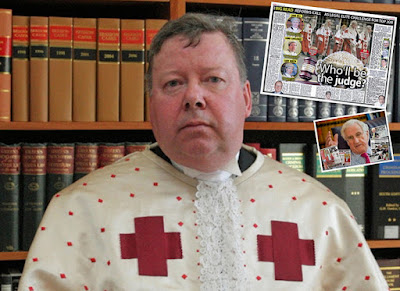
Lord Carloway installed as Scotland’s new top judge. SCOTLAND has a new top judge today as Lord Carloway was formally installed in a ceremony this morning at Parliament House as the new Lord President & Lord Justice General of the Court of Session.

The post of Lord President – who is paid £220,655 a year - lay vacant for an unprecedented seven months after Lord Carloway’s predecessor in the job - Lord Brian Gill unexpectedly walked out of the top judicial post in May 2015 – giving only 30 days notice he intended to quit.

Lord Carloway’s confirmation as Lord President was reported in further detail, here: Lord Carloway appointed as Scotland’s Lord President & Lord Justice General of the Court of Session.

Lord Carloway – real name Colin Sutherland - is known for his backing for the Scottish Government’s failed plan to remove corroboration from Scots law.

While in the role of Lord Justice Clerk, Lord Carloway authored the Carloway Review Report & Recommendations 2011 – which backed a joint effort by Scottish Ministers and the Crown Office to remove the centuries old safeguard against wrongful convictions requiring evidence in criminal trials to be corroborated from two independent sources.

The Carloway Review and it’s recommendation to abolish corroboration - was opposed by members of the judiciary in their Response by the Senators of the College of Justice to SG consultation : Reforming Scots Criminal Law & Practice.

Meanwhile, a new appeal court has been set up to examine disputed civil cases from Scotland's sheriff courts.

The new Civil Sheriff Appeal Court will hear appeals on civil cases from local courts which are typically less serious than those escalated to the Court of Session.

The Criminal Sheriff Appeal Court – created last year has already fallen foul of the legal profession after solicitors vowed to boycott it over levels of legal aid fees.

Commenting on the changes, Community safety and legal affairs minister Paul Wheelhouse – who previously mislead a Holyrood Committee with back pocket briefing notes aiming to help the previous Lord President conceal judges links to business and judicial financial & property empires, said the changes would help "reduce unnecessary delays".

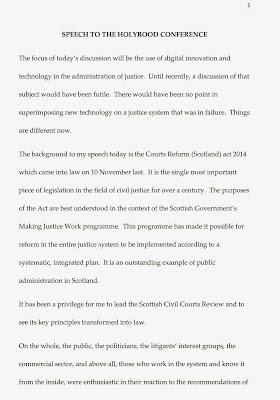
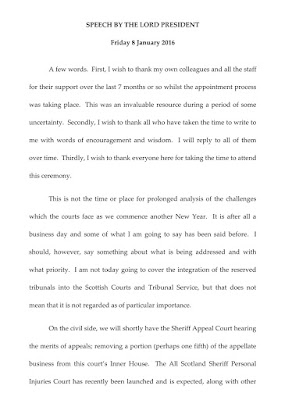
Speech by Lord President, Lord Carloway: Friday 8 January 2016

A few words. First, I wish to thank my own colleagues and all the staff for their support over the last 7 months or so whilst the appointment process was taking place. This was an invaluable resource during a period of some uncertainty. Secondly, I wish to thank all who have taken the time to write to me with words of encouragement and wisdom. I will reply to all of them over time. Thirdly, I wish to thank everyone here for taking the time to attend this ceremony.

This is not the time or place for prolonged analysis of the challenges which the courts face as we commence another New Year. It is after all a business day and some of what I am going to say has been said before. I should, however, say something about what is being addressed and with what priority. I am not today going to cover the integration of the reserved tribunals into the Scottish Courts and Tribunal Service, but that does not mean that it is not regarded as of particular importance.

On the civil side, we will shortly have the Sheriff Appeal Court hearing the merits of appeals; removing a portion (perhaps one fifth) of the appellate business from this court's Inner House. The All Scotland Sheriff Personal Injuries Court has recently been launched and is expected, along with other sheriff courts operating in the post new privative jurisdiction limit, to absorb the bulk of the PI work traditionally channelled through this court's Outer House. We await statistical information on the practical effect of these major pillars of Lord Gill's reforms. It will undoubtedly produce a rebalancing of civil work which ought to see the Court of Session engaged primarily in cases appropriate to the supreme courts in Scotland.

In due course, consideration may require to be given to the size of the Divisions and the work of the appellate judges according to the change in business volumes. We await too the impact of the new provisions: for leave to proceed with judicial review petitions, to appeal generally to the Inner House; and to proceed to the United Kingdom Supreme Court. The UK Supreme Court provisions should ensure that only significant matters of law, rather than fact, and then only ones of general public importance, will be considered by that court. That will be something into which that court will have a decisive input. Again, however, a rebalancing will undoubtedly occur, which will hopefully ensure that each case will ultimately be considered at, but only at, the appropriate judicial level.

There will be continued work to increase accessibility to the courts, including the Court of Session. This will involve a determined drive towards more sustainable procedures with the introduction in the near future of what will in effect be the electronic process. There will be efforts focused on the time taken not for a case to be heard in court, but for a decision to be issued. The problem area here is primarily the Outer House, but in that context it applies across the board in ordinary, commercial and family actions. The solution requires careful consideration of the allocation of judicial reading, hearing and writing time; a fine balance which, after many years of experimentation, we have not yet succeeded in securing.

Accessibility at sheriff court level is also a priority. The untiring Rules Rewrite team, to which we continue to owe a deep gratitude, have been producing a vast series of new rules in a variety of different fields. The effectiveness of the new Simple Procedure Rules will be the touchstone of our success in this difficult area, which affects so many in terms of relatively low value, often consumer related, claims by private individuals.

On the criminal side, there are, as Donald Rumsfeld said, known unknowns. What we do know is that over the last 4 years or so there has been a 60% increase in the number of High Court trials. Numerically this means that, within broadly the same budget, we are dealing annually with 160 more trials, each of which takes an average of 6 to 7 days, than we were processing in 2010. This is a significant challenge. The known unknown is that, other than anecdotal reasoning concerning the subject-matter of the modern High Court prosecution, the underlying cause of this - and it exists at sheriff solemn level too - is uncertain.

We await the coming of the new Criminal Justice Act with the Bowen Reforms on sheriff and jury trials. This will bring sheriff and jury practice into line with the High Court.

There has been concern expressed about the extension of time limits, not for the Crown bringing cases into court at a first diet or preliminary hearing, but thereafter for the court to allocate the case for trial within the current programming constraints. The issue for the future will be whether, in the era of statutory disclosure, scientific analysis of DNA findings and the recovery and detailed scrutiny of text and email messaging, the narrow window allowed by statute for the commencement of a trial is sustainable or in accord with modern principles of fairness or justice.

The recent Audit Scotland report on summary prosecutions threw up some interesting statistics including levels of churn and the substantial costs of the late resolution of cases. These will all be addressed.

The Scottish Courts and Tribunal Service will shortly be in a position to complete its review on evidence and procedure with a view to asking the Government to consider reforms, some of a radical nature, to the way in which we conduct trials and, in particular, the requirement for all witnesses to attend court and testify on oath, even if their evidence is either not controversial or not to be challenged. The continued efficacy of the now almost eviscerated prohibition of hearsay will require re-examination in light of modern technological advances.

We can only have a successful Scottish Legal System if we all participate in its constant re-evaluation. This does not mean that we all require to agree on the best way forward. We will never achieve that level of perfect harmony in Parliament House. If we can all, however, engage in discussing where the problems lie and attempt to devise practical solutions for them, the system will begin to match public expectations in the 21st Century. I look forward to working with everyone willing to do so in achieving that end.

Thank you once again for coming this morning. The court will now adjourn.

On his appointment as Lord President, Lord Carloway is to be asked to give evidence to the Scottish Parliament’s Public Petitions Committee in connection with three year probe on proposals to require judges to register their interests, as called for in Petition PE1458: Register of Interests for members of Scotland's judiciary.

The petition calls for the creation of a publicly available register of judicial interests containing information on judges backgrounds, their personal wealth, undeclared earnings, business & family connections inside & outside of the legal profession, offshore investments, hospitality, details on recusals and other information routinely lodged in registers of interest across all walks of public life in the UK and around the world.

The proposal to require judges to declare their interests enjoys cross party support, and was widely backed by MSPs during a full debate in the Scottish Parliament’s main chamber on 9 October 2014 - reported in full with video footage of MSPs and Scottish Ministers speaking during the Holyrood debate, here: Debating the Judges.

Previous articles on the lack of transparency within Scotland’s judiciary, investigations on judicial interests including reports from the media, and video footage of debates at the Scottish Parliament’s Public Petitions Committee can be found here : A Register of Interests for Scotland's Judiciary

Wednesday, October 14, 2015

REGISTER ADVICE: Scottish Parliament asked to recall Legal Affairs Minister over refusal to reveal government's secret legal advice on register of judges’ interests

Scottish Minister refused to disclose secret legal advice on judges interests. A SCOTTISH Parliament Committee has been asked to recall Legal Affairs Minister Paul Wheelhouse to face questions on secret legal advice commissioned by the Scottish Government on proposals to create a register of interests for the judiciary.

The existence of the secret legal advice - compiled while Lord Brian Gill was head of the Scottish judiciary – and effectively head of the entire justice system - came to light after details obtained via Freedom of Information legislation were handed to MSPs.

The request to recall the Legal Affairs Minister to face questions from the Scottish Parliament’s Public Petitions Committee comes after Paul Wheelhouse refused to discuss or disclose the content & provider of the secret legal advice - with MSPs who are investigating Petition PE1458: Register of Interests for members of Scotland's judiciary.

The judicial transparency proposal calls for the creation of a publicly available register of judicial interests containing information on judges backgrounds, their personal wealth, undeclared earnings, business & family connections inside & outside of the legal profession, offshore investments, hospitality, details on recusals and other information routinely lodged in registers of interest across all walks of public life in the UK and around the world.

Responding to a written request from the Petitions Committee to disclose information on the secret legal advice, Legal Affairs Minister Paul Wheelhouse told MSPs: “In line with the long standing position under successive Ministerial Codes including the most recent version (2015 edition), other than in exceptional circumstances, the Scottish Government does not comment on the source or content of its legal advice, including why legal advice was sought, nor does it provide specific dates about when legal advice was provided.”

Mr Wheelhouse continued: “I am sorry not to be more helpful in this regard but I am sure you can appreciate the good reasons for this guidance which we follow. Paragraph 2.30 of the Code requires Ministers and officials to ensure that their decisions are informed by appropriate analysis of the legal considerations, and that the legal implications of any course of action are considered at the earliest opportunity. Therefore the Committee can be assured that the Government draws on oral and written legal advice as appropriate from its lawyers, from Counsel and from Law Officers.”

While the content of the legal advice is currently unknown – it is thought to have played a role in the Scottish Government’s efforts to undermine MSPs investigations into plans to require judges to declare their vast wealth, links to big business & other interests.

There are concerns as to why the Scottish Government commissioned the secret legal advice on a petition calling for a register of judicial interests, and then failed to mention the existence of the advice during letters from Scottish Ministers including former Justice Secretary Kenny MacAskill - to the Public Petitions Committee during MSPs investigation of the petition.

The existence of the secret legal advice was also concealed by Scottish Ministers during a full Parliamentary debate on the petition at Holyrood last October 2014 – reported with video footage of the debate, here: Debating the Judges.

And, Legal Affairs Minister Paul Wheelhouse did not reveal the existence of the key legal advice on judicial interests during an evidence session he attended at Holyrood in December 2014 – in which the Minister claimed gangster threats meant there could be no register for judges.

An investigation by the Sunday Herald newspaper later established the Legal Affairs Minister misled the Committee, and no such gangster threats Mr Wheelhouse referred to in evidence, were ever made.

Writing to the Petitions Committee, the petitioner has now sought the recall of Mr Wheelhouse.

The petitioner said: “The content of the legal advice and what it says with regards to the application of equivalent levels of transparency & declarations of interest to the judiciary - as exist with others in public life, is sufficiently important to be debated in public.”

MSPs on the Public Petitions Committee requested details relating to the legal advice after they were handed details obtained via Freedom of Information legislation - revealing the Scottish Government had secretly commissioned legal advice on the petition.

The subject of the Scottish Government’s legal advice was discussed during an evidence session at Holyrood on 23 June 2015 where MSPs heard from Scotland’s current Judicial Complaints Reviewer (JCR) Gillian Thompson OBE – who told MSPs she fully supports the creation of a register of judicial interests.

Voicing support for the petition, Ms Thompson told MSPs: “I do not see that there is a reasonable argument to be made against people who are in public service—I might go further and say, in particular, people who are paid by the public pound—providing information, within reason, about their other activities.”

After taking evidence from Gillian Thompson, Petitions Committee member & Independent MSP John Wilson called for “clarification of when that legal advice was sought and why the Government felt it necessary to seek that advice”.

Since the Petitions Committee asked to see the Scottish Government’s legal advice on judicial interests, it has now been established via an on-going Freedom of Information investigation that Lord Gill may also have taken legal advice on the petition.

Given the legal advice obtained by the Scottish Government was compiled while Lord Brian Gill was head of the Scottish judiciary – it would be surprising if the provider of the legal advice disagreed with Lord Gill’s policy of opposition to the petition and any increase in judicial transparency & accountability.

After the top judge suddenly retired in May 2015, quitting office after he gave 30 days notice, Gill (73) remained bluntly opposed to any moves to compel judges to declare their interests.

The top judge – who spent two of his short three year term as Lord President leading a bitter campaign against plans to require the judiciary to declare their vast wealth & business interests - wrote a series of terse letters to MSPs lobbying against the judicial transparency proposal.

Lord Gill – branded “Lord No-No” for refusing to give evidence at Holyrood – lashed out in letters at the media, litigants, court users & the public, describing all as “aggressive” – in an attempt to shut down an investigation by Holyrood MSPs of judicial vested interests and calls for highly paid judges to register their interests like all others in public life.

At one point, Gill implied he may have to consider restricting the judiciary’s interaction with Scottish Parliamentary Committees. And, in the same letter, the Lord President claimed judges could not be hauled before the Scottish Parliament due to loopholes in the Scotland Act .

Justice Diary recently revealed Lord Brian Gill emerged from his brief summer retirement - taking up an appointment as a supplementary panel judge at the London based UK Supreme Court.

Lord Gill has now finally agreed to give evidence at Holyrood, next month, reported here: U-TURN, M’LORD: Top judge Lord Gill to appear before Scottish Parliament to face questions on judicial transparency & calls to create a register of judges’ interests

NO REVIEW OF JUDICIAL COMPLAINTS REVIEWER:

In a double blow to judicial transparency, Legal Affairs Minister Paul Wheelhouse also told MSPs he did not think four years was long enough to conduct a review of the role of Judicial Complaints Reviewer (JCR).

The Legal Affairs Minister said in his letter: “I agree, in principle, with the proposal for a review of the JCR role. However, I am not minded to commission a review at this stage given the relatively short period of operation of the office and the fact that the role is to be extended by the Tribunals (Scotland) Act 2014.”

“In the circumstances I would propose to consider a review of the role once the office holder is exercising the new functions under the Tribunals (Scotland) Act 2014. The review could then look comprehensively at the role and remit of the JCR, including assessment of the workload, capacity matters etc across the full range of functions carried out by the JCR.”

The Minister’s refusal to commission a review of the office & powers of JCR comes after the current JCR Gillian Thompson called for a review of the role.

JCR Gillian Thompson told the Committee in her evidence: “I have said to the Scottish Government that we are four years into the role and I am the second person in the role so it is probably time to start thinking about the possibility of reviewing whether what was originally envisaged under the primary legislation, which was passed in 2008, is what is still required.”

“As a former civil servant, I am always supportive of the idea that, if we have a policy and a concept and the Parliament has agreed to legislation, once it has been in force for a while, at some point or another—a three or four-year period seems not unreasonable—we should go back to have a look at the legislation to see whether it still meets the requirements.”

Gillian Thompson’s predecessor - Moi Ali resigned from the role of Judicial Complaints Reviewer in 2014 after describing the job as “window dressing” during an evidence session held at Holyrood in September 2013

VESTED INTERESTS INTERVENTION:

Earlier this year it emerged a secret meeting was held in February between Legal Affairs Minister Paul Wheelhouse and Lord Gill during February - to discuss joint efforts between the Scottish Government and senior judicial figures to undermine proposals for increased judicial transparency.

Some weeks after the meeting, Scotland’s First Minister Nicola Sturgeon issued a letter of intervention declaring she felt judges should be able to conceal their interests and other activities – activities which now extend from shareholdings in corrupt businesses to lobbying for fracking interests to tax avoidance and more. The Scottish Government’s attempt to thwart a register of judicial interests was reported in the media here: INTERESTS INTERVENE: First Minister joins top judge in bid to block register of judicial interests

Previous articles on the lack of transparency within Scotland’s judiciary, investigations on judicial interests including reports from the media, and video footage of debates at the Scottish Parliament’s Public Petitions Committee can be found here : A Register of Interests for Scotland's Judiciary

Tuesday, June 16, 2015

THE SILENT TYPE: Details of Legal Affairs Minister’s secret meeting with top judge on joint effort to block judicial transparency & register of judicial interests must remain secret - says Scottish Government

Ministers secretly met judicial figures over register for judges interests. DETAILS OF what took place at a secret meeting between Scottish Minsters and the head of Scotland’s judiciary over proposals to increase transparency of the judiciary - must remain secret - says the Scottish Government - who have today blocked the release of discussions between judges and politicians in response to a Freedom of Information request.

The secret meeting between Legal Affairs Minister Paul Wheelhouse and Scotland's now retired top judge Lord President Lord Brian Gill (73) and his aides was held in February - to discuss joint efforts between the Scottish Government and senior judicial figures to combat a long running Scottish Parliament investigation into proposals to increase transparency of the judiciary - Petition PE1458: Register of Interests for members of Scotland's judiciary.

The existence of the secret get together between Scottish Government Ministers and judges desperate to conceal their vast and varied interests from the public - only came to light in a letter of intervention from Scotland’s First Minister Nicola Sturgeon to the Scottish Parliament’s Public Petitions Committee at the end of March.

Releasing only a few unrelated sentences in heavily censored documents, the Scottish Government has now claimed it is not in the public interest for their private discussions with the Lord President and his advisers on how to cover up judges vested interests - to be disclosed to the public or media.

Within the sparse details of what has now been disclosed, a picture is beginning to emerge of a concerted joint effort between the Scottish Government and the judiciary to block any moves to advance the debate on judicial transparency – with civil servants reporting back to to the Judicial Office on their efforts to thwart calls to require judges to declare their interests.

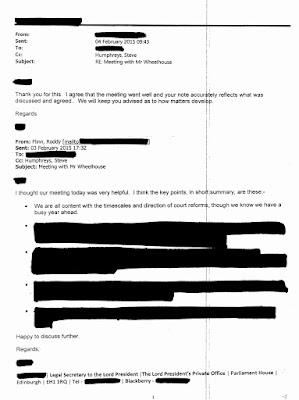
The heavily censored documents - disclosed in response to the FOI request, reads as follows:

From: [Censored] Sent: 04 February 2015 09:43 To: [Censored] CC: Humphreys, Steve Subject RE: Meeting with Mr Wheelhouse

Thank you for this. I agree that the meeting went well and your note accurately reflects what was discussed and agreed.. We will keep you advised as to how matters develop.

Regards, [Censored]

From: Flinn, Roddy Sent: 03 February 2015 17:32 To: [Censored] Cc: Humphreys, Steve Subject: Meeting with Mr Wheelhouse

I thought our meeting today was very helpful. I think the key points, in short summary, are these:-

We are all content with the timescales and direction of court reform, though we know we have a busy year ahead.

[Censored] [Censored] [Censored] [Censored]

Happy to discuss further, Roddy Flinn, Legal Secretary to the Lord President, The Lord President's Private Office

Both the Scottish Government and Judiciary of Scotland are already on the record in opposing the proposal to create a publicly available register  – which would see members of the public, court users, lawyers and the media all able to check out the vast wealth and connections of Scotland’s mega powerful, mega rich judges.

Scotland’s now former top judge Lord Gill refused several invitations to attend the Scottish Parliament and give evidence to MSPs, and Legal Affairs Minister Paul Wheelhouse - who also attended the secret meeting – was recently accused of misleading msps in an earlier evidence session at Holyrood held in December 2014.

The Scottish Government have now said it is not in the public interest for their ‘high quality policy and decision making’ private discussions with the judiciary on joint efforts to shut down debate around making the judiciary more transparency - to be revealed.

Jan Marshal - Deputy Director of the Justice Directorate, for the Scottish Government said: “An exemption under section 29(1)(a) of FOISA (formulation or development of government policy) applies to some of the information requested because it relates to the formulation of the Scottish Government's policy on a range of issues including a register of judicial interests.

This exemption is subject to the 'public interest test'. Therefore, taking account of all the circumstances of this case, we have considered if the public interest in disclosing the information outweighs the public interest in applying the exemption.

We have found that, on balance, the public interest lies in favour of upholding the exemption. We recognise that there is a public interest in disclosing information as part of open, transparent and accountable government, and to inform public debate.

However, there is a greater public interest in high quality policy and decision-making, and in the properly considered implementation and development of policies and decisions.

This means that officials need to be able to consider all available options and to debate those rigorously, to fully understand their possible implications.

Their candour in doing so will be affected by their assessment of whether the discussions on the issues will be disclosed in the near future, when it may undermine or constrain the Government's view on that policy while lit is still under discussion and development”

The move by the Scottish Government to keep their discussions with Lord Gill secret comes after First Minister Nicola Sturgeon personally intervened in the petition, earlier in March, reported here: INTERESTS INTERVENE: First Minister joins top judge in bid to block register of judicial interests

The First Minister also repeated claims made by Lord President Lord Brian Gill (73) - who accused “aggressive media” and  court users in an attempt to thwart the Scottish Parliament probe into why judges are so secretive about their vast wealth and connections.

However, neither the First Minister or Paul Wheelhouse revealed any details of what took place at the meeting to MSPs who are investigating calls to create a register of interests for judges.

Writing in the letter to John Pentland MSP, Convener of the Public Petitions Committee, First Minister Nicola Sturgeon said: “This petition calls on the Scottish Government to create a Register of Interests for the Judiciary. The Scottish Government considers that such a register of judicial interests is not necessary and that the existing safeguards - the Judicial Oath, the Statement of Principles of Judicial Ethics and the system for complaints against the judiciary - are sufficient. These safeguards, together with the register of judicial recusals, are sufficient to protect individuals from judicial bias.”

“Further to the evidence that the Minister for Community Safety and Legal Affairs, Mr Wheelhouse, gave to the Committee on 9 December 2014, he discussed this petition when he met the Lord President in February. The Minister acknowledged the Lord President's concerns about the introduction of a register of judicial interests. The breadth of such a register would make it virtually unworkable. It would need to cover not only financial interests, but also memberships of groups and associations and familial and social relationships. Even so, such a register might not capture relevant issues that could arise.”

“The position of the judiciary is different from that of MSPs and others who hold public office. The judiciary cannot publicly defend themselves. The Lord President has cautioned that such a register could also have unintended consequences. Consideration requires to be given to judges' privacy and freedom from harassment by aggressive media or hostile individuals, including dissatisfied litigants. In addition, there is currently no evidence that judges who should have recused themselves from cases have not done so.”

The judicial transparency proposals - under investigation by MSPs since January 2013 - call for the creation of a single independently regulated register of interests containing information on judges backgrounds, their personal wealth, undeclared earnings, business & family connections inside & outside of the legal profession, offshore investments, hospitality, details on recusals and other information routinely lodged in registers of interest across all walks of public life in the UK and around the world.

The petition has cross party support from msps who backed a motion urging the Scottish Government to create a register of judicial interests at Holyrood on 7 October 2014 - reported along with video footage and the official record, here: Debating the Judges.

Previous articles on the lack of transparency within Scotland’s judiciary, investigations by Diary of Injustice including reports from the media, and video footage of debates at the Scottish Parliament’s Public Petitions Committee can be found here : A Register of Interests for Scotland's Judiciary