Showing posts with label annual report. Show all posts

Wednesday, December 24, 2014

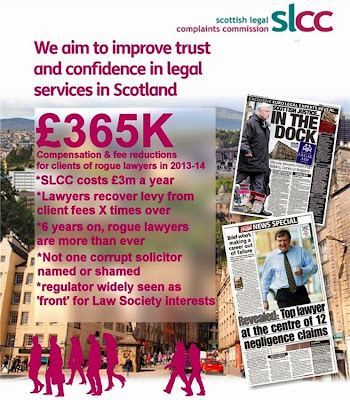
A FINE MESS: Complaints cost Scottish lawyers £1K a day in £365K ‘anonymous’ fines & compensation as regulator refuses to identify rogue solicitors & law firms

Fined by them & do it again – regulator fails to name rogue lawyers. THE CHANCES are – if you have ever been fined in a Scottish court – your identity, address, picture, date of birth, much of your life – private, criminal, or otherwise, and even perhaps a strand of your DNA will make it to a Crown Office Press Release to boost their ‘seasonally adjusted’ conviction rates.

However, if you are a member of the Law Society of Scotland, fear not. For solicitors who end up facing fines, compensation orders and fee reductions ordered by Scotland’s ‘independent’ regulator of complaints about lawyers - the Scottish Legal Complaints Commission (SLCC) – not one rogue solicitor or law firm fined by the SLCC has been named in the past six years since it began investigating complaints in 2008. Not one.

In fact, you stand a better chance of finding out if there is a re-housed spy, mafia supergrass or a serial abuser - living in a safe house in your neighbourhood - than you do finding out the name of a lawyer fined by the Scottish Legal Complaints Commission for ripping off other clients.

This year, the SLCC 2014 Annual Report chose to highlight awards of a ‘whopping’ £365,000 in compensation & fee reductions for clients of dodgy Scottish solicitors – yet, again, not one solicitor fined in connection with a complaint - is named.

The rising fee reductions & compensation orders are good, but the lack of names are not. The suspicions are -  the numbers of ‘repeat offenders’ – lawyers who end up being fined for the same thing, the same complaints, over & over - are starting to mount.

But, let’s put this £365,000 gained for ‘complainers’ by the SLCC into a little more perspective.

The Scottish Legal Complaints Commission was created in 2008 with over £2million of public cash from the Scottish Government. £2 million of yours - in their tummy. Nice – for them.

And, SLCC board members make tidy expenses claims of £150K or more each year since 2008. Nice again – for them. Get the picture? Right. It’s a quango. With lots of money – Your money.

Since 2008, the SLCC has cost around £2.7m - £3million a year to run. Making a total cost of operating the SLCC since 2008 now at around £20million – including that £2million public cash splurge from the Scottish Government.

And - where does this £3million annual complaints levy come from ? It comes from a complaints levy paid by solicitors- who – naturally - recover the money via hikes in client fees.

That’s right. You pay for the SLCC. And, you pay a lot for the SLCC.

You pay so much, some clients have found their legal fees doubled, trebled, even quadrupled to pay for the SLCC.

The complaints levy is only £324 or so a year – however, it is well known in the profession many solicitors recover the levy at least twice, three times or more – per client - from you.

£324 … the price of a half decent widescreen telly …easy to slip that one into your legal bill, and again, and again, and again.

And, there is another problem. A bigger problem. Did you guess correctly ?

Shocker – Rogue solicitors who are found out and told by the SLCC to reduce fees or pay compensation – are recovering their losses by overcharging legal fees to other clients. Now that’s what anyone might call a racket.

There is no escaping a fact - the legislation which created the SLCC - the Legal Profession & Legal Aid (Scotland) Act 2007 - created a multi million pound money monster - much worse than any honey monster.

And what success stories do the SLCC have to tell us about in their annual report. Very few. Actually, hardly any. For fear of identifying someone no doubt.

And what failures do the SLCC have to tell us about in their annual report. None. A little here and there, a reach out to advocates, a tinkering with the edges – otherwise known as “window dressing”.

But, most importantly – not one rogue lawyer or law firm named or shamed since 2008. Imagine that. Around one thousand complaints a year, every year, for six years, and not one lawyer named. Amazing. How did that happen ?

If the Police on £1.2billion a year, or the Lord Advocate & Crown Office on £107million a year stuck to those rules, there would never be any convictions, no one would ever know who was a criminal, and Bambi would wake you up in the morning, accompanied by Thumper the bunny.

So here we have a quandary - from the regulator that once dished out the price of a fish supper as compensation to one victim, to this year’s claim of £365K in compensation & fee reductions, not one corrupt solicitor or law firm who ripped off a client in the past six years has ever been identified.

So, you know what that means, right?

Your own solicitor – yes, that trusty, honest lawyer you handed over all your legal affairs to – may have already been fined by the SLCC for ripping off another client for the very same task you are asking them to perform, at an impending huge cost to yourself.

Your lawyer might actually be under investigation by the SLCC at the very same time you are in their office chatting away about your case - and, you don't even know it. And you will never know it. Never. Not as long as a lawyer can move a monkey puzzle tree around a garden and get someone else to pay for it.

Your solicitor is not required to admit anything to you about their complaints history, and the ‘independent’ SLCC certainly wont tell you – they have rules they must keep all complaints confidential, and cannot dare tell the public the name of serial rogue lawyers for fear of having the entire weight of Scotland’s £1 billion pound publicly subsidised legal profession sit on it’s head. Lawyers, saw to that.

The SLCC does have its fans, of course. Lawyers. Lawyers love the SLCC. Why wouldn’t they? It’s the Law Society in disguise.

Even lawyers who pose as [now sacked] Scottish Ministers - loved the SLCC so much, they appeared at the Scottish Parliament - claiming they were reforming the ‘independent’ Scottish Legal Complaints Commission – by giving corrupt lawyers the right to complain about complaints. Only in Scotland.

Here’s former Justice Secretary Kenny MacAskill giving his take on the SLCC’s form of regulation and his take on the definition of a ‘reform’. It’s great. Well, not really.

Kenny MacAskill evidence to Justice Committee Scottish Parliament 5th August 2014 SLCC Rules change

Although the now sacked Mr MacAskill - argued a range of consumer groups took part in the modification of the SLCC’s rules, suspiciously, none showed up at Holyrood to back him up. Neither were they called to appear before MSPs and face some questions.

Scotland’s top judge, who must also approve any changes to the legislation which governs the SLCC, also did not appear at the Justice Committee. By watching the video clip - you can see why no one else showed up. Anyway, who exactly speaks up for lawyers and sings their praises in public? That’s right – more lawyers.

As for those ‘reforms’, legal observers expect little change to the current way in which a mainly lawyer orientated regulator investigates complaints against other lawyers.

And, how independent or impartial is the SLCC? Well, in a previous investigation by Diary of Injustice - it was revealed much of the SLCC’s staff are qualified solicitors or have served at the Law Society of Scotland.

The SLCC disclosed material via Freedom of Information legislation indicating:  15 members of staff qualified as solicitors, 5 members of staff held a previous position at the Law Society of Scotland, 8 members of staff held a previous position at a law firm and 5 members of staff have held previous positions at a law firm and Law Society of Scotland.

Admit it, people - You just cant get more pro-lawyer than that.

Oh yes … Season’s Greetings from Diary of Injustice. And - Do yourself a favour in 2015 – Look after your own instead of looking after a lawyer. Your family, your pets, along with Bambi  and Thumper will thank you all the more for it.

Monday, December 23, 2013

FIVE YEAR FIDDLE : Rogue lawyers refuse to pay fines & client compensation orders, standards in legal profession at 'all time low' as Scots consumers remain unprotected by £3M a year Scottish Legal Complaints Commission

SLCC

Independent’ regulator has made no difference to poor standards in Scotland’s legal profession STRUGGLING to shake off it’s pro-lawyer, anti-client image, the Scottish Legal Complaints Commission (SLCC) published its 2012-2013 annual report last week, revealing the regulator now deals with more complaints per year. The report also reveals the SLCC’s ‘free’ mediation service, which is generating costs & fees of over £45K to mediators, is resulting in a rising numbers of complaints resolutions instead of cases going on to investigation, determination, and potential disciplinary action against rogue lawyers.

The so-called ‘independent’ regulator of lawyers created six years ago by the Scottish Government at a staggering multi-million pound cost to taxpayers which has never been paid back, also published claims it made compensation awards and fee rebates to clients who were victims of crooked law firms to clients of “over £250,000.

Claims of a feather don’t necessarily match together – SLCC 2012-2013 annual report  Figures contained in the SLCC’s own annual report reveal a very different version on the ‘over £250K compensation figure’, showing that law firms are regularly refusing or delaying to pay fines imposed on them by the regulator, forcing the SLCC to resort to costly court action when dodgy law firms & lawyers refuse to pay up to clients now turned into financial victims.

Figures in the annual report actually reveal there were 49 cases where the SLCC was forced to take recovery action against solicitors & law firms who refused to pay up after the SLCC had made compensation awards to clients.The SLCC said it’s action recovered over £72,000 of compensation for complainers in these cases but gave no further details of the cases concerned.

The SLCC said “We continue to see cases of non-compliance where practitioners fail to pay awards which have been made against them by us. We take a firm line on this and use Sheriff Officers and the Small Claims Court processes where necessary to enforce outstanding sums.” The SLCC went onto claim : “We have the full support of the Law Society of Scotland in tackling non-compliance where a solicitor refuses to pay.”

The SLCC continued “In addition, we have found that complainers sometimes have to wait a considerable length of time to receive compensation or fee rebates where a Judicial Factor or Trustee has been appointed. They may also only receive partial compensation.”

“We have raised this point with the Law Society of Scotland. Whilst we understand that other creditors’ interests need to be considered, it is essential that the complaints system incorporates effective redress mechanisms. We are concerned that in an increasing proportion of cases, complainers are at risk of not receiving full redress.”

“In addition to the risk of inadequacy of redress, we are incurring increasing costs in seeking to enforce our decisions. Since we are funded by a levy on the legal profession, these costs are borne by the profession as a whole.”

In two cases, the SLCC was critical of the Law Society’s administration of the investigation and/or its decision-making. The regulator revealed the Law Society paid a total of £500 compensation to the complainers (plus £20 towards their costs).

The SLCC also asked the Society to reconsider one of these complaints which resulted in a complaint being upheld which the Society had previously decided not to uphold. Perhaps unsurprisingly, the SLCC found that in the two other cases, the Law Society had carried out its investigations generally satisfactorily.

While the claimed improvements contained in the annual report may be welcome in some quarters, notably the Scottish Government who are in need of positive figures from it’s inept creation of the SLCC in 2008 by Kenny MacAskill, the SLCC’s statistics and rumours surrounding the identities of law firms continually subject to client complaints actually reveal some unsurprising facts :

(i) Solicitors & law firms who continually abuse clients  & consumers in complaint after complaint are using the SLCC’s perceived bias towards the profession and the regulator's lack of powers to avoid complaints investigations,

(ii) Solicitors and their ‘professional representatives & support organisations’ (aka Legal Defence Union, Law Care, Law Society etc) are manipulating paperwork, dates of legal work carried out on behalf of clients, and also the regulator’s mediation service to ensure lawyers who are subject of complaints remain in a job with a clean record, thus avoiding claims for negligence, dishonesty and sanction as a result of prosecution before the Scottish Solicitors Discipline Tribunal .

Keen to promote the image of the SLCC as ‘improved’, even though the evidence appears to show the regulator at a five year stand still, Chief Executive of the SLCC, Matthew Vickers, said “We’ve made some significant improvements in our performance this year but there is no room for complacency. Where lawyers haven’t met the standards which the public should expect, we act to put things right. Where we do make awards we follow up strongly to ensure that redress becomes reality. We believe that our trend analysis and guidance contributes to improving legal services and we look forward to continuing to work with the professional bodies to build public trust and confidence in the Scottish legal profession.”

Once hailed as a hope to clean up crooked lawyers, the SLCC achieved so little in 5 years. The SLCC also published a five year review of it’s work, which can be viewed online here : The SLCC Five Years On - Facts & Figures. Commenting on the review, Bill Brackenridge, SLCC Chair said : “The review is a good measure of progress and while there is still work to be done it clearly demonstrates the benefits of having an independent regulator. I would encourage the profession to continue to work closely with the SLCC in order to promote best practice, further reduce the number of complaints and continue to improve the reputation of the legal sector with clients, the public and stakeholders”.

In reality, the Scottish Legal Complaints Commission has moved on little since its creation in 2008. Consumers of legal services in Scotland are as unprotected now as they have been for decades under the lawyer investigates their own culture of the Law Society of Scotland.

Indeed, the Law Society of Scotland appears more in charge of regulation of its own member solicitors than ever before, leaving the SLCC as some bystander, far from innocent, and far from having the will to clean up legal services or protect consumers from the costly consistent horrors of dealing with Scotland’s legal profession.

And, as far as independence goes, the ‘independent’ regulator of complaints against Scottish solicitors, is hardly independent at all as Diary of Injustice revealed earlier this year here : A SPECIAL RELATIONSHIP : Investigation reveals Scotland’s ‘independent’ legal regulator is mired in family, business & personal links to legal profession & Law Society

The cost of this five year stand still you ask? Well, poor legal services in Scotland for one, poor client protection for another, hundreds of lawyers escaping regulation & penalties, and a whopping £3 million pounds a year to run the Scottish Legal Complaints Commission on top of the millions every year Scottish solicitors take in ill gotten gains from clients and get away with it.

So, got a complaint against a lawyer ? Well, tell us in the media about it before or during your trip to the Scottish Legal Complaints Commission. Its amazing what some attention, and little transparency can achieve these days…

MEDIATION – Far from free, and a dodge for dodgy lawyers to escape penalty

Included in the SLCC’s annual report were claims their “free mediation service is an effective early complaint resolution method with 75% success rate.”

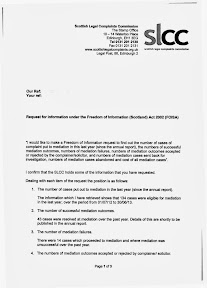
However, a response received from the SLCC in relation to a freedom of information request made by DOI journalists revealed a slightly different story which anyone thinking of going into mediation may wish to consider :

Of the 134 cases eligible for mediation in the last year, 43 cases were settled at mediation, 14 cases were not settled at mediation, 1 case was withdrawn by the complainer, 76 cases were marked as "did not happen", which refers to the fact that the parties did not agree to go to mediation.

The SLCC were asked for statistics on the numbers of mediation outcomes accepted or rejected by complainer or solicitor. However, the SLCC claimed “There is no way of knowing this information. The outcome of the mediation process is agreed between the parties, the mediator does not suggest the settlement. Any settlements reached are confidential.”

Asked about the numbers of mediation cases sent back for investigation, the SLCC disclosed “Any cases that are not settled at mediation will be passed to a Case Investigator to begin the investigation process. In the period in question 90 cases were sent for investigation.”

In spite of claiming its mediation service to be free (to clients), the SLCC disclosed in its FOI response the total cost representing the cost of the mediator and the room hire etc amounts to £45,210.

In the period from 25/04/13 till 30/06/13 the SLCC said it had identified 3 cases which were closed following settlement at mediation. The combined costs of these cases (mediators costs and room hire) amounts to £1335.30

Commenting on the SLCC’s mediation process, a consumer affairs representative who has seen documents from a client who’s case was unsuccessful in mediation, said : “The SLCC’s mediation scheme only seems to guarantee that any lawyer who faces a complaint and who is lucky enough to end up in mediation, can drag out discussions for months, settle for much less than the client appears to have lost, and then go on to find another victim to rip off.”

Thursday, December 13, 2012

From Bad to Worse : Complaints against lawyers up 16%, few cases upheld, Board members on £20K expenses, reports anti-client Scottish Legal Complaints Commission in 2012 annual report

Jane Irvine SLCC ChairIt’s goodbye from her – Jane Irvine’s final term as SLCC Chair since 2008 did little for Scots clients caught in rogue lawyer trap. COMPLAINTS AGAINST SOLICITORS have shot up 16% in 2012, according to the latest 2012 ANNUAL REPORT issued by the ‘independent’ lawyer controlled Scottish Legal Complaints Commission (SLCC) which spent £2.7 million pounds up to 30 June on ‘investigating’ crooked lawyers. The fourth & final report under the Chair of Jane Irvine, whose term expires on 31st December 2012 also reveals the SLCC, which has not yet claimed one single solicitor being struck off as a result of its work over the past four years, was conveniently able to throw out a third of the complaints made to it by members of the public whose lives have invariably been ruined by the actions of rogue lawyers still working in the legal profession.

The report states that of the 1,264 complaints received by the SLCC during 2012 and 566 in hand at the start of the year, a suspiciously high number of complaints (486) were thrown out by the SLCC as being ineligible for investigation, while the report lists that 128 more complaints were withdrawn or resolved before an eligibility decision was made.

Included in the totals were 144 conduct complaints against members of the legal profession, which were then referred to the appropriate professional body (such as the Law Society of Scotland), and 289 eligible complaints were dealt with and closed by the SLCC, leaving 783 still in hand at the end of the year. The most common reasons for the SLCC branding complaints under the heading of “ineligibility” were "totally without merit" (200 cases), time bar (174) and prematurity (115).

Complaint Statistics SLCC annual Report 2012Complaints trends show House sales, Litigation, Wills & Executries remain big factors in clients ripped off by lawyers. The SLCC revealed that cases going all the way to a full determination totalled 146, of which 44 were upheld in whole or in part and 92 not upheld. A total of £37,042 was awarded in compensation across 33 cases, averaging out £1,122 per case yet clients face further hurdles in receiving compensation after the SLCC revealed solicitors had not complied with its rulings, forcing the SLCC to engage Sheriff Officers on particular occasions. The report stated : "We have seen an increase in cases of non-compliance where practitioners fail to pay awards which have been made against them by the SLCC. We take a firm line on this and use sheriff’s officers and the small claims court processes to enforce the outstanding sums."

The SLCC said it was in talks with the Law Society of Scotland about its solicitors refusing to comply with compensation orders, stating : ”We are in discussion with the relevant professional organisations to ensure their support in tackling non-compliance. In addition, we have found that complainers sometimes have to wait a considerable length of time to receive compensation or fee rebates where a judicial factor or trustees have been appointed. Since this does little to build public confidence, we have started to work with the relevant professional organisations to assess options to address this issue.”

Worryingly, the annual report also reveals the SLCC refused to use its powers to abate or zero fees charged by lawyers who had given poor service to their clients, where only in 17 cases, fees were abated and fees totalling a paltry £3,851 were abated, an average award of only £227 per client.

The 2012 audited accounts of the SLCC also reveals that despite throwing out a third of complaints made to it, and the poor use of powers over fees, the SLCC’s board members continued to be paid what can only be described as lavish remuneration, listed as up to £20,000 each during 2011-2012, quite a contrast to the financial losses suffered by Scots clients of rogue solicitors.

A number of case examples are, for the first time, included in the SLCC’s latest annual report, although no identities of solicitors or law firms who have failed their clients have been revealed, marking the SLCC’s continued policy of refusing to name & shame rogue Scottish solicitors & law firms who consumers would be better to avoid.

The SLCC’s 2012 Annual report can be viewed online HERE or downloaded from the SLCC’s website HERE while the 2012 Annual accounts revealing the SLCC’s financial position, expenditure & remuneration of its staff, board members etc can be viewed online HERE or downloaded from the SLCC HERE.

The SLCC issued a Press Release on its 2012 Annual Report HERE

The Scottish Legal Complaints Commission ("SLCC") laid its fourth Annual Report before the Scottish Parliament on 7 December 2012. The report covers the period from 1 July 2011 to 30 June 2012 and highlights the number and types of complaint coming to the SLCC; the SLCC's achievements both as a gateway for legal complaints and a supporter to high standards in the legal profession.

Commenting on the SLCC's challenges and achievements, Chair Jane Irvine said: "It stands as a huge tribute to the skills and hard-work of all our Staff and Board Members that we have achieved all we have this year. Our commitment remains unfailing despite the increasing demands placed on us and our resources, growing case loads and increasing financial pressures, along with the added complications deriving from transitional arrangements and backlog of earlier cases."

Commenting on the work of the organisation during the year, Chief Executive, Matthew Vickers said: "My colleagues and our Board Members are committed to making the SLCC even more effective and efficient in handling complaints and more influential and impactful in improving legal services.

Mr Vickers, the fifth Chief Executive of the SLCC also went onto claim, laughably that “The SLCC exists to strengthen public trust and confidence in our legal services."

In reality however, the SLCC, commonly regarded by most in the know as a joke, has demonstrated itself to be as anti-client as the Law Society of Scotland.

The Law Society of Scotland issued its own Press Release praising the SLCC for its work in protecting solicitors from client complaints.

Commenting on the publication of the Scottish Legal Complaints Commission annual report, Lorna Jack, chief executive of the Law Society of Scotland, said: "We will look at the report in detail to see where we can assist the commission on working with the profession to improve complaints handling. The new use of case studies in this year's annual report are a great way of showing solicitors examples of good practice in complaint handling at an early stage, and further down the line.”

Ms Jack was also grateful for the SLCC’s whitewash of the Law Society’s “Guarantee Fund”, long known as a corrupt compensation scheme which fails to pay out to ruined clients of crooked lawyers.

Ms Jack went onto congratulate the SLCC over their ‘review’ of the Guarantee Fund, saying : "Following a thorough audit of the Guarantee Fund by the Commission as part of its oversight role, we are pleased to see recognition that claims on the fund are being handled properly and impartially by the Society. We have always made it clear that all claims on the fund are considered on a case by case basis and on their own merit, regardless of the funds held and the audit has confirmed this.”

Ms Jack ended by saying : "It is reassuring that the commission is driving efficiencies as our members are tightening their belts during these straightened times.The Society will continue to work with the Commission to seek to reform the legislation to make complaints a better experience for all involved."

A CLIENTS LOT IS NOT A HAPPY ONE :

In reality, clients of Scottish solicitors who are put in a position of having to make a complaint to the SLCC about their solicitor’s conduct or service, are in a no better position in 2012 than they were in two decades ago.

Little compensation on offer for solicitors stealing from clients, or negligent service, regulators poor use of powers to completely negate fees, hardly any complaints being fully upheld, few solicitors struck off, a claims system via the Master Policy that is just as corrupt as it was twenty years ago, a Guarantee Fund compensation scheme which puts tax dodging in the Cayman Islands to shame, regulators who are so anti-client, anti-public & anti consumer they cant see past their expenses claims , and amidst it all, lazy politicians at the Scottish Parliament & Scottish Government who value legal freebies, and paid-for social occasions with lawyers & regulators too much to help constituents in dire need of assistance … the same old story from 1990 to 2012 repeats itself once again …

Previous coverage of the SLCC’s annual reports, which tell a similar story can be found HERE

Tuesday, December 20, 2011

Scottish Legal Complaints Commission forced to publish compensation data in annual report, reveals only 7 cases ‘fully upheld’ against ‘dodgy lawyers’

SLCC DoorReport reveals Scottish Legal Complaints Commission only fully upheld SEVEN complaints against crooked lawyers in 2010-2011. CONSIDERABLE media scrutiny of the Scottish Legal Complaints Commission (SLCC) has forced Scotland’s notoriously anti-consumer law complaints regulator to finally publish client compensation data for the first time in its three year existence. The figures released by the SLCC in its latest annual report for 2011 show that up to £2,061 has been awarded to clients during the SLCC’s investigation of complaints and in one case, an award of up to £9,261 after the SLCC had upheld a complaint. The annual report also reveals the SLCC received 2,598 enquiries and 1,090 complaints made by members of the public against ‘crooked lawyers’ to add to the 274 in hand at the start of the year, yet the ‘independent’ SLCC admits it only managed to fully uphold a meagre SEVEN COMPLAINTS (out of 88) against ‘crooked lawyers’ in the past year – six more than the ONE single complaint it fully upheld last year.

The SLCC’s latest annual report for 2011 reports that of the 1,090 complaints received by the £1.8 MILLION POUND cash-in-the-bank-happy Scottish Legal Complaints Commission this year, 503 complaints were ruled ineligible for investigation despite protests from many clients over the handling of their apparently ‘ineligible’ cases while 81 conduct complaints were referred to the Law Society of Scotland and 4 complaints were referred to the Faculty of Advocates for investigation. Of the remaining, 210 complaints were dealt with and closed by the SLCC, and 566 were still in hand at the year end, including 290 awaiting a decision on eligibility.

The most common reasons for a complaint being declared ineligible were that it was frivolous, vexatious or totally without merit (160 cases), or because the complaint was out of time (146 cases), the limit normally being one year from when the professional relationship ended. Some cases also continued to be referred to the professional bodies under the transitional arrangements.

Fifty seven complaints were resolved by mediation, and one was withdrawn. A further 42 complaints were resolved by report or conciliation at the complaint investigation stage, and 22 more were withdrawn. In six of the cases, clients were awarded an abatement of fees ranging from £200-£2,000 with an average payout of £893, and in 13 cases a payment of compensation was awarded to the client, ranging from £40-£2,061 with an average payout of £517. Total amounts awarded to clients at the investigation stage of complaints were £5,356 for abatement of fees and £6,723 in compensation awards.

However, mediation has its own dangers, as it appears law firms who are involved in disputes with multiple clients have used the mediation service to escape any determinations in complaints, and with the SLCC apparently not collating data on whether the same ‘crooked lawyers’ keep appearing at mediation hearings, the mediation system may well be doing more harm than good for consumer protection.

SEVEN COMPLAINTS UPHELD slcc annualreport online 2011_Page25The SLCC only managed to fully uphold a total of 7 complaints in the last year despite significant numbers of complaints made by the public against lawyers. A further 88 complaints progressed to the formal determination stage (where the SLCC is forced to make a decision on the complaint), of which ONLY SEVEN COMPLAINTS were upheld in full during the entire year, while 20 complaints were partly upheld, with the remaining 61 complaints not upheld. A small number of 26 cases from the 88 complaints required the practitioner to refund or abate fees and/or pay the complainer compensation (some required both). Awards made to clients at the determination stage showed the same range of fee abatements, with an average payout of £650, and compensation payments between £75 and £9,261 with an average payout of £979.

The total amount awarded to clients at determination stage for the last year was £4,550 for abatement of fees and £25,446 in compensation awards. However, the statistics  come with a large caveat, as the compensation award figures now published by the SLCC do not document or reflect the actual quantum of exactly how much money clients believe they have actually lost as a result of their solicitor’s actions in the cases where compensation awards were made.

It should also be noted no compensation award figures have yet been published for 2008-2009 & 2009-2010 and the total amounts paid so far in 2010-2011 which appear on the low side of expectations, dwarf the staggering costs of running the Scottish Legal Complaints Commission along with its lavish Central Edinburgh offices & generous remuneration packages of up to £312 a day for board members who between them have claimed up to £160,000 a year for the three years the SLCC has existed.

Rosemary AgnewSLCC Chief Executive Rosemary Agnew denied journalists access to compensation data amid false promises of early publication. Diary of Injustice had requested the compensation award figures for the last three years via Freedom of Information legislation in July 2011. However, the SLCC’s current Chief Executive, Rosemary Agnew refused to release the data, branding the request as “vexatious”. Ms Agnew went onto claim the compensation data was to be published within 12 weeks of the July request, however no publication was made and the Scottish Information Commissioner Mr Kevin Dunion found the SLCC had mishandled FOI requests for the data. A second FOI request after Mr Dunion’s investigation was also refused by the SLCC, who have now published only the compensation data for the last financial year available.

You can read more about the SLCC’s refusal to hand over the compensation data in response to FOI requests and the Scottish Information Commissioner's investigation, here : Scottish Legal Complaints Commission refuse to publish details of ‘loose change’ client compensation as board & staff live it up on YOUR millions and here : SCROOGE’D : Scottish Legal Complaints Commission buries ‘bad news’ annual report at Christmas, again refuses to release ‘compensation to clients’ data

A legal insider speaking to Diary of Injustice today explained the reluctance of the SLCC to publish client compensation data He claimed : “I think the SLCC have avoided publicising compensation figures in previous annual reports due to worries that if the amounts were published it may encourage more clients to make complaints & compensation claims in the hope they could recover their losses via the SLCC instead of pursuing complicated compensation claims against their solicitors via the Law Society of Scotland’s Master Policy.” which as we all now know holds little chance of success for members of the public making claims made against negligent or crooked lawyers via the client hating Scottish courts.

There is also a suggestion a deliberate decision was taken not to collect or retain data on compensation awarded to clients in previous years, a claim now being investigated by Diary of Injustice.

COMPLAINTS slcc annualreport online 2011_Page15Breakdown of complaints by subject handled by the SLCC in 2010-2011. The Commission also reports that it dealt with 50% of complaints within 100 working days, 85% within 200, and 95% within 300. The most common categories of complaints for the year were residential conveyancing (22%), litigation and family law (15% each), and executries, wills and trusts (12%), among others. Other categories of complaints running at around 2% per subject of the total numbers of complaints received by the SLCC were Housing, Landlord and Tenant, Financial Services - Other,  Bankruptcy and Insolvency, Business Category, Commercial and Company Law Financial Services - Endowment Policies, Mental Health, Planning and Compulsory Purchase, Child Law, Consumer Law, Welfare Benefits, Agricultural Law, Negligence, & Taxation.

The annual report also reveals that the Scottish Legal Complaints Commission managed to spend less money than budgeted, with actual expenditure of £2,408,000, against a budget of £2,839,000 and income of £2,232,000, giving a deficit on the year of £175,000. The Commission's reserves at the year end stood at £1,816,000 (down from £2,025,000 the year before), of which £1m has been earmarked to be gifted back to lawyers to underwrite the general levy in 2011-12.

Regarding the TWO MILLION POUNDS of taxpayer funds spent by Justice Secretary Kenny MacAskill’s Justice department on the SLCC’s start up costs & lavish perks handed out to board members, not one single penny has been returned by the SLCC to public coffers despite calls for the money to be repaid so it can be better used in other areas of public services.

Jane IrvineJane Irvine, Chair of the Scottish Legal Complaints Commission. Introducing the report, the chair, Jane Irvine, said it had been a year of "significant progress" for the Commission. She was keen that the SLCC should "start saying more" to encourage the profession to learn from complaints, but commented: "we have decided to be cautious about drawing conclusions from the limited information we hold; including statistics regarding numbers and types of complaints coming to us. It is not sensible to draw inferences from only two and a half years of limited information about a profession as complex as the Scottish legal profession".

Ms Irvine, who at one point also supported making the Law Society of Scotland compliant with Freedom of Information legislation, also claimed the SLCC was continuing to "lobby the Scottish Government for changes to the Act to allow our complaint handling to become more efficient and user friendly" while in opposing circles, the Law Society of Scotland continues to lobby the Scottish Government at every chance to tone down what few powers the SLCC has, along with ensuring the SLCC refrains from protecting consumers against ‘crooked lawyers’.

Yet with only SEVEN complaints fully upheld in a single year, the Scottish Legal Complaints Commission has a long way to go before it can begin to be trusted to regulate Scotland’s increasingly corrupt legal services market, where client funds are often seen as easy meat by solicitors out to make a quick kill and an easy get-away from any repercussions via lawyer biased regulators such as the SLCC & Law Society of Scotland.

Sunday, December 18, 2011

Law Society demand Justice Secretary MacAskill intervene over SLCC report claiming ‘improper’ influences in Guarantee Fund client claims

Law Society SLCC MacAskillBully required, Urgent : Law Society of Scotland demand Justice Secretary intervene in SLCC ‘Guarantee Fund’ row. FIDDLING & MEDDLING by Law Society of Scotland officials in financial damages claims to the Scottish Solicitors Guarantee Fund made by clients who have been financially ruined by their ‘crooked lawyers’ have prompted the Law Society of Scotland to issue a stern rejection of statements made in the latest annual report of the Scottish Legal Complaints Commission for 2011, published Friday, that the outcome of compensation claims made by clients to the Guarantee Fund are influenced “by factors other than the merits of the claims” such as corruption, intervention by Law Society officials to halt claims going ahead, and an institutional prejudice against consumers trying to recover money stolen by Scottish solicitors.

The Law Society is ‘so upset’ by the allegations, they have now called in Justice Secretary Kenny MacAskill to bully ‘clarify’ the SLCC into withdrawing the claims.

slcc annualreport online 2011_Page30Claiming the obvious L Law Society Guarantee Fund is crooked, dishonest and claims are fiddled. The damaging claims made in the latest annual report of the Scottish Legal Complaints Commission (SLCC) which have prompted the row between the two legal complaints regulators, state : "There is a statistical relationship between the number and total value of the claims made on the fund in the same year as an individual claim, and the level of payment made in individual claims. This suggests that the outcome of claims is influenced by factors other than the merits of the claims". The claims are a result of research the SLCC commissioned into the Scottish Solicitors Guarantee Fund which supposedly exists to protect clients who have lost money as a result of the dishonesty of a solicitor. However, according to key SLCC insiders who spoke to Diary of Injustice earlier in the year, the research commissioned by the SLCC into the Guarantee Fund suffered a significant degree of control freakery, constant interference & a lack of cooperation from the Law Society of Scotland who wanted to control the entire project, and would rather the research not be published.

The Law Society of Scotland, angry at the claims issued a Press Release, rejecting any notion its 'attempt’ at consumer protection is little more than consumer fraud states : The Society has today rejected this assertion as wholly misleading as the merit of the individual claim remains the only consideration when considering the outcome of that claim and any subsequent payment from the Guarantee Fund.  This was clearly explained to the SLCC in meetings and in written correspondence from the President of the Society, all in advance of today's report publication.

With the SLCC annual report being laid before the Scottish Parliament, the Society has today written to the Cabinet Secretary for Justice and opposition justice spokespeople to clarify the situation and give a more accurate picture.

Alistair Morris, convener of the Society's Guarantee Fund committee, said: "It is deeply frustrating that the SLCC suggests the outcome of Guarantee Fund claims are influenced by factors beyond the merits of the claim, especially when we have made it clear verbally and in writing that such a suggestion is wholly wrong.  It is even more concerning that the SLCC do not even refer to those assurances from the Society in their report. The Society co-operated fully with the SLCC when it commissioned research into the Guarantee Fund earlier this year. However we raised significant concerns at the misleading and potentially damaging interpretation of raw statistical data relating to the Guarantee Fund which suggests that the amount paid out in any claim is dependent on the sums held in the fund at any one time. We have made it clear to the SLCC, both verbally and in writing, that all Guarantee Fund claims are considered entirely on a case by case basis and on their own merit, regardless of the funds held. It is extremely disappointing that the SLCC annual report now risks misleading people into thinking that the outcomes of Guarantee Fund claims go beyond their individual merits. “

Mr Morris continued : "There are significant reserves held in the Guarantee Fund currently. Additionally, it is backed by Stop Loss Insurance amounting to £6 million and the legislation covering the Fund allows the Society to levy members if we faced circumstances where there were insufficient funds in the Guarantee Fund and Stop Loss Cover to cover the cost of a claim. Following our discussions with the SLCC we were informed that it intended to commission further research as a result of some of these initial findings. I hope this goes ahead and there will be an opportunity to demonstrate that this statement contained within the annual report laid before the Scottish Parliament is inaccurate and misleading."

Commenting to Diary of Injustice today, an SLCC insider said the law complaints quango had only pursued the Guarantee Fund issue because of criticism from law reform campaigners & investigations carried out by Diary of Injustice into the Scottish Solicitors Guarantee Fund, revealing in an earlier article published in 2009 the Law Society's 'Guarantee Fund' for clients of crooked lawyers revealed as multi million pound masterpiece of claims dodging corruption

Earlier in September 2011, Diary of Injustice reported on the SLCC’s slightly controversial report into the Guarantee Fund which has now caused the apparent fall out between the two regulators, here : DISASTER REPORT : Scottish Legal Complaints Commission study of Law Society “Guarantee Fund” suffers 13% turnout, finds clients ‘treated as criminals’

13% response disaster for SLCC report on Law Society’s crooked Guarantee Fund. A REPORT carried out by the Scottish Legal Complaints Commission (SLCC) into the notoriously corrupt “Scottish Solicitors Guarantee Fund”, a ‘client protection’ scheme operated by the Law Society of Scotland to compensate clients who have lost money because of theft by dishonest crooked lawyers & their staff has been hit by an ABYSMALLY low response of only NINETEEN replies from ONE HUNDRED & FORTY FIVE questionnaires (13%) after the Law Society refused to hand over client contact details to the SLCC & its selected research company who were investigating claims against crooked lawyers in Scotland. One client who did reply to the survey said claimants “were made to feel like a criminal” at Guarantee Fund hearings.

THE REPORT, carried out on behalf of the SLCC by Progressive, a research company based in Corstorphine Road, Edinburgh, claimed the Law Society of Scotland had REFUSED to hand over a detailed contact list of members of the public who had contacted or submitted claims to the Guarantee Fund over the past 5 years. The company & SLCC were left with NO CHOICE other than to leave the Law Society of Scotland to distribute the forms to clients that it felt should be provided with a questionnaire.

Jane IrvineJane Irvine, SLCC Chair left out critical mentions in report announcement. In its announcement publicised online, the Scottish Legal Complaints Commission DID NOT mention the low turnout of NINETEEN PARTICIPANTS in its Press Release, available HERE, nor did the SLCC publicise the fact the Law Society of Scotland distributed the forms themselves after REFUSING to hand over Guarantee Fund claimant details to the company preparing the report or the SLCC itself. Legal insiders have commented today the survey was badly handed by the SLCC who were branded by one official from a Scottish consumer organisation as “too close to the Law Society for comfort” and “unwilling at best to get to the truth”. I reported on just how badly this latest SLCC survey was being handled in an earlier article, here : CENSORED : Scottish Legal Complaints Commission's secret new Master Policy & Guarantee Fund research 'shuts out' real victims of crooked lawyers

Progressive, the firm conducting the survey on behalf of the SLCC said in their now published report : “Progressive was not able to receive a database of contact details from the Law Society of Scotland. As such the questionnaire packs were sent to LSS for labelling and distribution.”

“There were two categories of respondents on the Law Society of Scotland’s database and therefore two methods of distribution. For the first category, LSS had contact details for the claimant themselves so packs were sent directly to them. For the second, LSS’s database only contained details for the names of the claimants’ solicitors. In order to account for this, the questionnaire packs included an additional letter asking the solicitor to forward on to their client named on the front of the envelope.”

“In total, 145 questionnaires were distributed; 85 that went directly to claimants and 60 that went to claimants via their solicitor. In order to optimise the response rates to the survey reminder letters were sent to respondents halfway through the fieldwork period. The fieldwork period was also extended to give maximise the opportunity for claimants to respond.”

“Questionnaires were returned directly to Progressive in freepost envelopes. In total 19 completed questionnaires were returned for analysis, denoting a 13% response rate.”

It had been hoped to send questionnaires out to 250 people although for unexplained reasons and doubtless due to the fact the Law Society of Scotland were controlling distribution, only 145 eventually went out.

The company were further critical of the Law Society’s methods of distribution, stating “A large proportion of questionnaires were not sent directly to claimants. Sending questionnaires first to solicitors to pass on to their clients would have affected the likelihood of the questionnaires reaching them and also their likelihood of completing them.” Progressive further warned : “This is likely to impact response rates.”

The report also claims : “Missing information on labels. A few solicitors fed back that there was no client contact on the packs they were sent so were unable to forward these on, again, affecting the final response rate (at least 4 reported this to be the case)” and that some clients who were sent questionnaires by the Law Society of Scotland could not be traced because they had moved address.

The report went onto state all of those who eventually responded to the survey (NINETEEN PEOPLE IN FIVE YEARS) were suspiciously successful in their claim “to some extent” but even among those, there was still evidence of some dissatisfaction with the outcome and the decisions behind it. Clearly the Law Society of Scotland had chosen clients it thought would give the Guarantee Fund a better write up than others with more horrific experiences.

The report states : “Ten of our respondents were successful in their claim, all of whom were satisfied with the outcome. Six were partially successful and of these, four were dissatisfied.”

From the comments provided as to the reasons why, one respondent’s dissatisfaction stemmed from the perception that they were not provided with direct answers for the decision. Three comments related to respondents not receiving full compensation and feeling that the decision made and the reasons for it were not clearly explained to them.

One respondent to the survey stated : “It seemed as if the Scottish Solicitor’s Guarantee Fund were trying to pay as little as possible and were looking after their own interests. Again you were made to feel like a criminal at the hearing.” Another respondent said : “I was not fully compensated for a fraud that was not my fault but my solicitor's, who was now in jail and yet I had to suffer financially and with stress.”

Comments from the five people who provided reasons for their satisfaction expressed relief that the process had come to an end and they perceived that the Fund had worked well for them.

One respondent said : “Achieved desired outcome although would have preferred not to have gone through the process at all.”Another respondent said : “[Because] I felt that I could move forward and bring closure to the whole affair [as] I had felt very let down by the solicitor involved in my particular case.”

Bearing in mind the turnout for the report is so small, its findings & recommendations are very limited, due mostly to the notably poor advertising of the survey by the Scottish Legal Complaints Commission (who apparently wanted as small a number of participants as possible) and the fact the Law Society of Scotland were allowed to distribute the forms on their own, rather than identification & distribution be handed over to the report’s authors or an independent body.

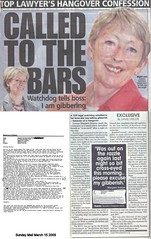
Margaret Scanlan - Called to the Bars - Sunday Mail  15 March 2009 emailChancers Calling - SLCC Board Member Margaret Scanlan branded Guarantee Fund claimants as “chancers”. It should also be borne in mind SLCC Board Members have already expressed anti-client sentiment against claimants to the Guarantee Fund, where in one publicised incident, SLCC Board Member Margaret Scanlan raged against claimants to the Guarantee Fund, branding them “chancers” in a series of bitter emails revealed to the public by Freedom of Information legislation, revealed here : Officials pull FOI disclosures as Guarantee Fund "chancer" emails show Law Society anti-client bias has migrated to Legal Complaints Commission & here : MacAskill must clean up law complaints body as members 'booze culture conduct' reflects lack of discipline & will to investigate crooked lawyers

Speaking to Diary of Injustice this afternoon, a client who has been waiting FIVE YEARS for his claim to the Scottish solicitors Guarantee Fund to be paid after his solicitor stole nearly SEVENTY THOUSAND POUNDS from his client’s bank account, felt the argument between the SLCC & Law Society “is somewhat staged”. He went onto say it was his experience neither the Law Society or the SLCC can be trusted to properly regulate the legal profession in Scotland.

In spite of the Law Society’s condemnation of the claims contained in the SLCC’s annual report, it is now an established fact that claims against the Scottish Solicitors Guarantee Fund have been the subject of delaying tactics & corrupt attempts to prevent any payouts in most damages claims made by members of the public who have been left in financial ruin after growing numbers of Scottish lawyers have embezzled their clients funds.

More analysis of the  latest annual report of the Scottish Legal Complaints Commission for 2011 will be published during the week.

Wednesday, December 07, 2011

SCROOGE’D : Scottish Legal Complaints Commission buries ‘bad news’ annual report at Christmas, again refuses to release ‘compensation to clients’ data

SLCC montageBah, Humbug ! MacAskill’s Scottish Legal Complaints Commission intends to bury its bad news annual report on the run up to Christmas. CHRISTMAS is a good time to bury bad news and the many ghosts of Christmas past, especially if the bad news happens to come from Scotland’s regulator of complaints against ‘crooked lawyers’, the anti-client Scottish Legal Complaints Commission (SLCC) who, after a series of unexplained delays, are expected to publish their latest annual report on or after 20 December 2011 in the hope of quietly burying its consistently poor performance as Scotland’s legal watchdog which has so far not recommended the prosecution of one single crooked lawyer in what is approaching a very long four years since being created in 2008.

And in an attempt to keep the public from knowing just how bad the SLCC have performed, the SLCC has today REFUSED a SECOND Freedom of Information request to release information & figures on exactly how much money the SLCC have awarded over the last three years to clients who have suffered financially at the hands of their legal representatives. Since the SLCC came into being in 2008, it has NEVER published any data or information on how much compensation it has awarded clients who raised complaints about their solicitors.

SLCC refusal of compensation amount awards FOIThe SLCC’s second letter refusing to disclose the compensation amounts awarded to victims of crooked lawyers states : “I confirm the SLCC holds the information that you have requested. The SLCC endeavours to release as much information as possible. However, it has decided that the information you have requested is exempt from disclosure under the exemption found in Section 27 (1)(a)(i) of the Freedom of Information (Scotland) Act 2002.

The information you have requested is intended to be included in the SLCC’s annual report, which at the time of writing this letter is excepted to be published within 12 weeks. The SLCC has considered whether to withhold the information is reasonable and decided that it is because it will enable us to publish the information in context and in conjunction with other information about complaints.

The SLCC accepts that the information is of interest to the public but in the context of this decision has considered whether its release at this time, in advance of the publication of its annual report is in the Public Interest as set out in the Information Commissioner’s guidance. The SLCC’s view is that the arguments for withholding under section 27 outweigh those for releasing it.

1. The information requested is pertinent to the public in that it gives an indication of the effectiveness of the SLCC and information to both complainers and practitioners about outcomes of complaints. It would be argued that publishing this information as soon as possible is in the public interest for this reason.

2. The SLCC has a wider duty to report on complaints about the legal profession. Putting information in an appropriate context and publishing it in conjunction with other information to add meaning and value to it is an essential part of that reporting. Releasing the information as requested would not enable that to happen.

3. The SLCC has a statutory duty to lay its annual report before Parliament.  It is in the public interest that this is complete and appropriately quality controlled. Release of discrete sets of data in advance of publication would not support that.

I appreciate that in response to your earlier FOISA request of 5 July 2011, we had detailed our expectation that out annual report would be published within 12 weeks of your request. While this was our intention, we unfortunately experienced production related delays. Considering this delay, we have approached your request afresh in light of the above guidance along with our present confidence that we should be in a position to release our annual report within the next six weeks. We have also gone on to consider whether we should release the information anyway. Our decision is that section 27(1) should still apply and the information be withheld for all the reasons stated in this letter.

This is the SECOND FOI request for information on actual compensation figures paid out to clients who complained about their lawyers, with the first request, in July being refused by the SLCC’s Chief Executive Rosemary Agnew as a “vexatious request”, to which Scotland’s Information Commissioner Kevin Dunion found the SLCC had failed to handle correctly. Mr Dunion’s decision stated : Following an investigation, during which the SLCC withdrew its reliance upon section 14(1), the Commissioner found that the SLCC had failed to deal with Mr Cherbi's requests for information in accordance with Part 1 of FOISA, on the basis that Mr Cherbi's requests were not vexatious in terms of section 14(1). The full decision by Mr Dunion can be read here Decision 219/2011

TODAY, an insider close to the Scottish Legal Complaints Commission’s Board has revealed the SLCC HAD NEVER INTENDED to publish information on compensation paid out to clients until Diary of Injustice had raised the matter in FOI requests to the SLCC. The insider claimed the FOI requests, coverage of the issue on Diary of Injustice, a “rather nasty, bitter discussion between board members relating to Mr Cherbi’s investigations (which I have been told of) and Mr Dunion’s own investigation as a result of this journalist’s request to Mr Dunion’s office on the matter, have collectively FORCED the SLCC into a reluctantly taken decision to eventually publish the compensation data.

The insider said : “The levels of compensation paid out to consumers is on the low side and the SLCC never expected to be asked about it. However because the information was requested via Freedom of Information, it was down to playing a waiting game to structure the data in such a way any criticism over the low value of awards will be curtailed by other issues in the Annual Report.”

He continued : “To put it bluntly, the SLCC abused Freedom of Information legislation to cover up the compensation figures it will find embarrassing given the amount of money spent on the SLCC and public expectations of a better complaints service than was provided by the Law Society of Scotland.”

The SLCC has the power in Section 56 of the Legal Profession & Legal Aid (Scotland) Act 2007 to award up to £5,000 to complainers who are directly been affected as a result of the solicitor’s misconduct (as a result of a conduct complaint) or up to £20,000 for complainers who  have been directly affected by the inadequate professional services provided by their solicitor (in the case of a service complaint). The compensation awards in all instances are at the direction of the SLCC to be paid by the solicitor who is the subject of the complaint.

Earlier in October of this year, Diary of Injustice revealed the Scottish Legal Complaints Commission were awarding victims of crooked lawyers as little as TEN POUNDS, after their lives had been shattered by the actions of their legal representatives. The article can be read here : Scottish Legal Complaints Commission refuse to publish details of ‘loose change’ client compensation as board & staff live it up on YOUR millions

As revealed on Diary of Injustice on Monday of this week, the SLCC’s Board have authorised their Investigations Manager to produce a report on the levels of compensation paid to clients after a discussion took place at the SLCC’s October board meeting. However it was revealed in the discussions that solicitors & clients had in some cases not accepted the levels of compensation awarded by the SLCC.

The minute of the SLCC’s October meeting stated : There was some debate around the levels of compensation recommended at Investigation stage and the levels of compensation awarded at Determination stage. It was agreed that the Investigations Manager would provide a report on compensation/abatement recommended and rewarded. The report should include any comments from the Practitioner and Complainer as to why they are not accepting proposed settlements. The target date of this report being completed is laughably listed in the October board minutes as February 2012.

The Scottish Legal Complaints Commission was created as a result of the Legal Profession & Legal Aid (Scotland) Act 2007, and brought into being by Justice Secretary Kenny MacAskill in 2007 spent TWO MILLOIN POUNDS of taxpayers money on the hapless law complaints quango. Mr MacAskill went onto handpick a collection of quangocrats, ex Police Officers & lawyers to fill the SLCC’s board who have to-date claimed somewhere in the region of over HALF A MILLION POUNDS in expenses claims yet the SLCC has by its own admission only upheld one single complaint against an unidentified solicitor

Tuesday, January 25, 2011

‘One complaint upheld’, 928 more sent back to Law Society & £1.8million spare cash : Scottish Legal Complaints Commission's 2010 annual report

SLCCThe Scottish Legal Complaints Commission received 1452 complaints last year, however it only fully upheld one single complaint. ANYONE hoping for a crackdown on 'crooked lawyers' in Scotland will be in for a shock today after the Scottish Legal Complaints Commission, revealed in yesterday's announcement of the SLCC’s 2009-2010 Annual Report (pdf), it fully upheld only ONE SINGLE COMPLAINT against an ‘unknown legal practitioner’.

The SLCC’s evident unwillingness to tackle head-on the many well known rogue elements of Scotland’s legal profession appears to be the staggering product of a decade long consumer campaign & the Scottish Parliament & Scottish Government’s attempt to bring ‘independent’ regulation to Scotland’s legal services industry in the form of what is now widely regarded as little more than a quango staffed by lawyers, ex-lawyers, retired senior Police Chiefs, legal academics and other multi-job quangocrats.

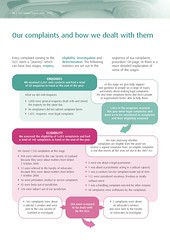
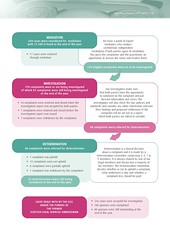
SLCC Annual Report 2010 How we dealt with complaints Page 14Musical chairs or musical complaints ? For the second year running, the SLCC sent most complaints back to the Law Society of Scotland. The amazing figures released yesterday in the Scottish Legal Complaints Commission’s second annual report also show the famously anti-client SLCC yet again sent most of the complaints it received this year back to the Law Society of Scotland, just as it did last year. The second annual report, covering the period from 1 July 2009 until 30 June 2010 reveals the SLCC received a total of 3,561 enquiries during that period, resulting as it claimed, in 1,452 cases classified as “legal complaints”. However, the majority of these cases (928) were sent back to the Law Society of Scotland or Faculty of Advocates under the SLCC’s controversial policy of refusing to deal with any legal business or cases involving instructions given to solicitors which occurred prior to 1 October 2008, the date the SLCC formally began operating, while others were apparently closed ‘as being out of the SLCC’s jurisdiction’.

After sending the majority of the “legal complaints” back to the Law Society of Scotland, the overfunded Scottish Legal Complaints Commission, which has also received millions of pounds of taxpayers money during 2007-2008, revealed it is now carrying a whopping current cash surplus (dubbed a ‘reserve’) of nearly two millions pounds while only managing to accept a meagre 204 complaints to be dealt with by its highly paid staff & board members, some of whom are pocketing salaries of around £1,300 per week.

SLCC Annual Report 2010 Complaints statisticsComplaints, and how they were handled by the SLCC. Of the 204 complaints the SLCC reported it had or was actually dealing with during the last year, amazingly, the law complaints quango only managed to fully uphold one single complaint, along with a handful of others being ‘mediated’ or ‘resolved’ in ways not fully described. The Annual report states : *17 complaints were resolved through mediation and 17 others still under consideration for mediation at the end of the year; * 170 complaints went to investigation, of which 92 were still in hand at the end of the year; * of these, 23 were resolved at or before the stage of an investigation report; * seven were withdrawn by the complainer; * 48 complaints were referred for determination, of which eight were partially and one fully upheld, 15 were not upheld, one was withdrawn, and 23 were still being considered at the end of the year.

Rosemary AgnewChief executive Rosemary Agnew said the number of enquiries and complaints coming to the SLCC was lower than originally predicted. She commented: "This may be due to a number of factors such as the economic downturn. We have responded by adopting a cautious approach to recruitment, expanding only to meet the needs of our current workload, and at the end of the financial year, we employed 29 members of staff instead of the predicted 45, which was the anticipated figure prior to our opening in 2008.”

Ms Agnew continued : “We have successfully established the ‘gateway’ for all complaints about legal practitioners and deal directly with complaints about inadequate professional service. In line with our aim to resolve complaints at the earliest opportunity, we continue to develop our mediation function and aim for resolution through both formal and informal approaches.”

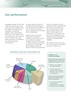
SLCC Annual Report 2010 Performance Page 0013Breakdown of complaints made against solicitors to the SLCC. The SLCC’s media release reported that the largest proportion of complaints received related to residential conveyancing, areas of business not specified, followed by litigation, Employment Law, Executries & Wills (a favourite client rip-off) and family law. Complaints about a solicitor's or advocate's conduct are still referred to the relevant professional body. In the year there were 142 such complaints against solicitors and two against advocates. In addition 216 cases were accepted under the Scottish Legal Services Ombudsman jurisdiction, and 180 opinions completed.

SLCC Annual Report 2010 reveals 1.8million reservesSLCC’s 2010 Annual Report (page 19) revealed the quango currently holds a whopping £1.86 million in ‘reserves’. The SLCC, attempting to play down its controversial gigantic cash surplus (dubbed a ‘reserve’), reported the figure it was currently holding, of £1.86 million, (£1,867,000.) compares with one of over £1.5m for the first nine months of the SLCC's operation, following which the Commission cut the annual levy payable by solicitors to £235 for the current year. The SLCC went onto claim that “actual reserves” at year end were £1.12m, or just under five months' operating costs” as it had decided to ring-fence some £740,000 to underwrite the generally levy in the 2010/11 operating year by transferring it from reserves to income – in other words, the SLCC is, of sorts going to hand back £740,000 to the legal profession when it reduces next year’s levy on all legal practitioners which are covered by its regulation.

SLCC LAW SOCIETYLaw Society of Scotland’s ‘Access to Justice’ Committee said the SLCC should be ‘taken over’ by the Law Society. The reported surplus of £1.86 million now confirmed in the SLCC’s 2010 Annual Report also pokes significant holes in the Law Society of Scotland/SLCC takeover spat which hit the headlines last year, when the Law Society of Scotland’s ‘Access to Justice’ Committee alleged the SLCC was supposedly carrying a gigantic six million pound surplus, with Society representatives apparently going onto suggest in the same newspaper stories that the Law Society of Scotland should, in the name of saving the taxpayer some money, take over both the Scottish Legal Complaints Commission and even more worryingly, the Scottish Legal Aid Board.

Readers can find out more about the battle between the Law Society & the SLCC over a suggested takeover, and dubious media fiddling regarding a now wholly untrue surplus figure, here : Dailly's Law : Law Society ‘takeover plot’ for SLCC & Legal Aid Board backfires over leak of law complaints quango’s alleged £6 million surplus. The idea of a Law Society takeover was, however swiftly rebuffed by one of Scotland’s leading QCs, Paul McBride, who compared the idea to putting Homer Simpson in charge of a doughnut factory, reported here : Doughnuts, principles and no £6m surplus : Law Society’s backroom plot to take over Legal Aid Board attacked by top QC Paul McBride. The argument was closed down when the Law Society issued a media manipulation directive, reported HERE which may well also be aimed at me, bless their souls (if they have any).

Jane IrvineSLCC’s Chair Jane Irvine wrote in her annual message about providing a complaints service. Jane Irvine wrote : “Our priority this year has been to provide a complaint service. In my view, the range of legal services provided means our complaints are very diverse. The range can include complaints about limited advice on dog control, complaints that poor representation was provided in a murder trial or complaints regarding badly drawn up title deeds in a multimillion pound international property development. Every case we receive involves something important to the person who raises it and the person who provided the service, and just like diverse complaints, diverse people's’ needs do not always fit rigid systems. As a result we must flex our complaint handling powers to ensure we work in a way that meets multiple needs.”

On the issue of the many legal challenges to the SLCC’s powers over complaints in Scotland’s Court of Session, Ms Irvine went onto say : “It is inevitable that new legislation will be challenged. Our board prepared for this by setting aside money to fund any legal processes and during the year, we received 11 challenges with the majority still being heard in the Court of Session at the year end. The outcomes of these appeals are important to us”.

Readers can compare the ‘progress’ the SLCC has made in a year by reading last year’s SLCC Annual Report, which can be read in more detail, here : Scottish Legal Complaints Commission reveals it passed most complaints about lawyers back to Law Society, has failed to act on Master Policy report where the quango revealed it was then carrying a surplus (now called a ‘reserve’) of £1.565 million pounds The SLCC’s full audited accounts for 2009-2010 can be found HERE (pdf)

The Law Society of Scotland’s almost simultaneous Press Release responding to the publication of the SLCC’s Annual Report quickly called for further reductions in the charges levied on all its member solicitors, charges which fund the operation of the Scottish Legal Complaints Commission.

Lorna JackLorna Jack Chief Executive of the Law Society of Scotland, revealed in emails to have apparently bullied Communities Minister Fergus Ewing into threatening the SLCC over the question of its levy rate earlier this year, said: "We are pleased that the Scottish Legal Complaints Commission has said they will be "asking for less" when they set the levy for solicitors later this year. We hope this will be a meaningful reduction given the Commission's reserves now stand at over £1 million.

Ms Jack continued : "It is important for the Commission to work as efficiently as possible and carefully manage its budget, particularly in the current economic climate when the solicitors who fund the Commission still face tough business decisions. The consultation on the Commission's budget will begin shortly and we are urging solicitors to contact us so their views can be included in our own submission to the Commission as part of that consultation."

Philip YellandPhilip Yelland, the Law Society of Scotland’s Director of Regulation & previous Director of the Society’s ‘Client Relations Office, well known for its brutal, even deadly treatment of clients who dared complain about their solicitor, said: "It is good to see a fall in the number of complaints made against solicitors compared with last year, which we believe has been party driven by firms dealing more effectively with complaints at source. However, more work needs to be done to ensure a better understanding of the reasons behind this reduction."

While the legal profession pats itself on the back for yet another year which has seen such successes as the SLCC board member’s lavish expenses claims, its continuing failure to monitor the Law Society of Scotland’s infamously corrupt Master Policy & Guarantee Fund after more than two years of operation, an unrivalled anti-client attitude openly displayed by many of its board members & staff, and of course, its mounting troubles in the Court of Session with lawyers openly seeking to challenge its remit, any thoughts of consumer protection appear to have taken a back seat against the many rogue lawyers who remain working in Scotland’s legal services market.

One single complaint fully upheld in a year. Its not much of a badge of success now, is it. We don't even know which law firm this one complaint involves, nor do we know the identities of all the other law firms, solicitors & others reported to the SLCC, Law Society of Scotland or Faculty of Advocates. However, in England & Wales, their new Legal Ombudsman may soon be publishing the names of solicitors & complaints decision. Now … how about bringing some of that openness to Scotland, so consumers really do know what they are getting into when they walk through the doors of a lawyers office ?

Kenny MacAskillJustice Secretary Kenny MacAskill spent over £2 million of public funds on the SLCC’s lavish start-up costs. I’d also like to suggest, as we are in a recession, and since the Scottish Legal Complaints Commission is so flush with cash, the SLCC should now begin to pay back its start-up costs of two million pounds to the public purse. After all, two million could be better used for hospitals, community care, or even other parts of the justice system such as Policing & anti-crime measures, rather than continuing to give taxpayers money to the legal profession and its anti-client regulatory regime which is anything but independent.

My earlier coverage of the Scottish Legal Complaints Commission and its much less than expected performance as a regulator of complaints against Scotland’s legal profession, can be read here : The Scottish Legal Complaints Commission – The story so far