Independent Law journalists report on legal news for consumers, litigants & Scotland's legal community including features on justice, access to justice, law reform, the judiciary, politics & in-depth investigations, analysis and commentaries on legal related issues.
Scotland’s Lord President passes McKenzie Friends hurdle. Confirming my report earlier in February of this year on the Lord President, Lord Hamilton’s plans to formally introduce McKenzie Friends to Scotland’s courts, it has been announced the Court of Session Rules Council, the body which oversees rules regarding any matters which the Court could regulate by an ‘Act of Sederunt’, has discussed the issue of McKenzie Friends at its Monday meeting of earlier this week, and is now in the process of drawing up the rules which will allow & govern the use of McKenzie Friends in the Court of Session by the end of June 2010.
A spokeswoman for the Scottish Courts Service said yesterday : “I can confirm that the Rules Council met on Monday and agreed to draw up rules in relation to McKenzie Friends. I expect these to be drafted within a few days and I anticipate that they be be formally adopted by the end of June.”
While the Lord President's Office had no further comment to add to this statement, campaigners & consumer organisations expressed their hope the rules to be drawn up for Scots McKenzie Friends will mirror that of the guidance used in the English courts system, and not prove as restrictive as the Lord President’s initial proposals announced in February, which were criticised by consumer groups as being too strict.
An official with one of Scotland’s consumer organisations said : “I am delighted Scottish consumers will shortly have the invaluable assistance a McKenzie Friend can provide in court for those who cannot obtain or afford legal representation."
He continued : “I look forward to reading the details of the rules by which Scotland’s courts system will treat those acting as a McKenzie Friend and would hope there is a strong presumption in favour of a litigant having the right to a McKenzie Friend as is the case in England & Wales.”
Scottish Parliament asked Lord President ‘to keep them updated on McKenzie Friend law. Questions which were raised late last week over the Scottish Parliament’s Petitions Committee’s recent letter to the Lord President have now also been resolved with the release of documents from the Parliament, confirming the Committee had asked the Lord President for “an update once the Act of Sederunt has come into force”, rather than choosing to raise specific key points which came out of last Tuesday’s meeting of the Petitions Committee, namely those of remuneration of a McKenzie Friend, usage of the term “McKenzie Friend” and the involvement, or interest of a McKenzie Friend in the case in which they are assisting. The Petitions Committee indicated they would next consider the McKenzie Friend petition on 7 September 2010.
The Court of Session Rules Council, who are now drafting the rules on McKenzie Friends, consists of the Lord President ex officio, two other judges of the Court of Session appointed by the Lord President, five members of the Faculty of Advocates appointed by the Faculty and five solicitors appointed by the Council of the Law Society of Scotland. Members hold office for three years and are eligible for reappointment provided that they retain the qualifications for membership.
The Rt. Hon. Lord Hamilton, Lord President (Chair)
The Rt Hon Lord Reed
The Hon. Lady Dorrian
Mr. Ronnie Clancy, Q.C., Faculty of Advocates
Mr. Gerry J.B. Moynihan, Q.C., Faculty of Advocates
Ms. Lesley Shand, Q.C., Faculty of Advocates
Mr. Eugene P. Creally, Faculty of Advocates
Mr. Graeme Hawkes, Faculty of Advocates
Mr. Gordon Keyden, Law Society of Scotland
Mr. Robin Macpherson, Law Society of Scotland
Mr. Duncan Murray, Law Society of Scotland
Mr. Sydney Smith, Law Society of Scotland
Mr. Fred Tyler, Law Society of Scotland
It should be noted the Faculty of Advocates & the Law Society of Scotland in written submissions to the Scottish Parliament both opposed the introduction of McKenzie Friends to Scotland’s Civil courts. You can read my coverage of the Faculty of Advocate's objections HERE and the Law Society of Scotland’s objections HERE.
However, despite both the major power blocks of the Scottish legal profession obstructing & opposing the introduction of McKenzie Friends to Scottish Civil courts, the issue seems to have cleared the Court of Session’s Rules Council, and we now have an apparent success which should benefit all Scots who require access to justice and our courts.
The draft rules are expected to be available soon, and will be published as I receive them.
Holyrood Committee’s exchanges with Lord President questioned.QUESTIONS have been raised over the outcome of Tuesday’s Petitions Committee hearing on Petition 1247 (McKenzie Friends for Scotland) after it emerged late yesterday that while two members of the Petitions Committee had raised important points to be clarified with Scotland’s Lord President, Lord Hamilton, over the proposed Act of Sederunt to allow McKenzie Friends in Scottish courts, the actual letter sent from the Petitions Committee to the Lord President simply stated "Could you provide an update to the Committee once the Act of Sederunt has been brought into force".
This latest extraordinary turn of events in the campaign to bring McKenzie Friends to Scotland’s courts, a non-lawyer courtroom helper which unrepresented party litigants have been successfully using in England & Wales for the past forty years, comes after last Tuesday’s Petitions Committee hearing concluded its latest deliberations on the McKenzie Friends petition by stating on the Scottish Parliament’s Petition 1247 web page : “4 May 2010 : The Committee agreed to write to the Lord President of the Court of Session seeking a response to specific points.” after two of the Petitions Committee members, MSPs Nanette Milne & Nigel Don raised the thorny issues of the usage of the term “McKenzie Friend” and the question of whether a McKenzie Friend could be remunerated for their services – both key points the Lord President has proved highly resistant to discuss or implement.
Scottish Parliament Petitions Committee 4 May 2010 : McKenzie Friends should remain McKenzie Friends in Scotland(click video to watch)
Nigel Don MSP (SNP) Nigel Don, member of the Petitions Committee & Parliamentary aide to Justice Secretary Kenny MacAskill raised two significant points the Lord President had failed to resolve over the year long battle to bring McKenzie Friends to Scotland’s courts. Mr Don initially praised Lord Hamilton “for getting on with things”, going onto firstly tackle the question of a ‘certificate’ which Lord Hamilton initially proposed should be required for all potential McKenzie Friends to sign prior to their acceptance by the court – a move heavily criticised by politicians, law reform campaigners and even several consumer bodies including Which? & Consumer Focus Scotland.
Nigel Don said :“I am probably not the only one who feels slightly confused about where we have got to. The issue seems to be moving so fast that I am not sure on which side of the net the ball has ended up. However, we should commend the Lord President for getting on with things and for explaining, in his most recent letter, some points that we did not get round to discussing during our previous meeting due to shortness of time.
“I want to raise two points about the suggested rules in the Lord President's letter of 19 February, which predates our previous meeting. Paragraph 5 of that letter states: "The certificate should ... confirm that the lay assistant has no interest in the case".
“I get the impression from the Lord President's subsequent letter that he sees no problem with the lay assistant being a family member or friend of the litigant. Therefore, I draw the conclusion that the suggestion that the lay assistant should have "no interest" should be translated as "no greater interest than the litigant". That is what I would have expected, so I have no problem with that. However, I thought that I had better put that on record in case I am wrong.”
Mr Don went onto raise the equally thorny issue of whether a McKenzie Friend can be paid for their services, an issue I reported on in mid-April, revealing actual case law from the English Family Courts division, which supports a McKenzie Friend’s entitlement to charge for their services. Nigel Don at the April hearing appeared to support the Lord President’s resolute position that no McKenzie Friends should receive money for their services, however Mr Don now appears to have changed his position substantially.
Nigel Don continued : “Secondly, the Lord President's letter of 19 February states immediately thereafter that the McKenzie friend—or lay assistant, as we should perhaps now describe him—is "to receive no remuneration for his or her services in any form".
“I can quite understand why the Lord President should take that view, but there is good reason to believe that that might not be the best view. Given that many of those who might act as lay assistants might be paid by a charity such as a citizens advice bureau to help those who need help, it seems a step too far to assert that the lay assistant should receive no remuneration from anywhere. I can well understand that the Lord President and his colleagues do not want, as it were, second-class lawyers hawking themselves around as McKenzie friends, but I am slightly concerned that the suggested rules go a bit too far.”
“Can we ask the Lord President to consider that point, so that those with experience of the subject who could well help people are not required to act completely for nothing when a charity might support them ?”
Nanette Milne MSP (Scottish Conservative) Nanette Milne, the Conservative MSP member of the Petitions Committee joined the debate, raising the highly contentious issue of the Lord President’s stubborn resistance to using the term “McKenzie Friend” in his plans for bring in the Act of Sederunt to allow, “Lay Assistants”, as Lord Hamilton would rather call “McKenzie Friends” into Scottish courts. Nanette Milne said :“In addition, the petitioner obviously still has concerns about the terminology of "lay assistant" rather than "McKenzie friend". Given that Which? magazine and Consumer Focus appear to use only the term "McKenzie friend", can we perhaps press for the retention of that term ?”
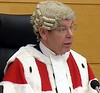
Scotland’s Lord President, Lord Hamilton. Lord Hamilton’s hostility against using the term “McKenzie Friend” – which is accepted in most international jurisdictions where the McKenzie Friend is used, has left many involved in the Scottish debate on McKenzie Friends questioning why the Lord President apparently feels even after forty years, that Scotland should, not join the rest of the world in allowing what is a uniquely named and internationally recognised courtroom helper to assist the growing numbers of unrepresented court users in Scotland who find themselves unable to obtain legal representation.
Which? reported that 85% of Scots would like to see McKenzie Friends allowed in our courts. In an earlier report on the McKenzie Friend petition, I revealed the Lord President had put forward several reasons to the Petitions Committee why he felt the term “McKenzie Friend” should be swapped with the term “Lay Assistant”, where Lord Hamilton alleged Scots were too ignorant to know what a McKenzie Friend actually is, this despite research & polls taken by consumer organisations such as Which? who reported that 85% of those questioned during recent research carried out by Which? on Scottish Legal Services thought it would be a good idea to allow McKenzie Friends in Scotland’s courts.
Petitions Committee Convener Frank McAveety attempted to draw the debate to a close with a continuance of the petition, although one important issue raised by the Committee Clerk remained, namely that of whether the Committee “should push the Lord President to defer consideration of the issue.”
Nigel Don said : “My instinct is not to defer anything at all. I am sure that the Lord President has the good of the system at heart, as people do not get to be Lord President without having a pretty good idea of what goes on in the courts. I think that we should trust him to get on with it. If, one way or another, he and others come to the conclusion that they did not get it quite right first time round, I suspect that the speed with which he is now acting demonstrates that he will be swift to amend things. I do not think that we should defer anything for the sake of it.”
The Committee agreed to continue Petition 1247, and write to the Lord President on the issues raised during the hearing, however as revealed by Holyrood insiders late yesterday, the Committee had apparently changed their mind and simply asked Lord Hamilton to update them once the Act of Sederunt has been brought into force, leaving many questions over whether the Lord President had amended any of his ‘overly protective’ plans announced in February, which have formed the bunk of debate & criticism since being proposed by Lord Hamilton as a way forward.
Mr MacKenzie, the petitioner said this afternoon : “I find it strange the Committee has proceeded in this way, apparently letting the Lord President off the hook on some very serious points of contention. They are not asking for a response to the specific points raised by the two MSPs on the Committee last Tuesday and their own minutes confirm that is indeed what was agreed to be done.”
A Holyrood insider also joined in criticising the Petitions Committee, expressing concern the Lord President had not been called in to be questioned on the issue. He said : “It appears the Committee said one thing then did something completely different. Not a very satisfactory outcome given the Lord President is to act on the McKenzie Friend issue at Monday’s Court of Session Rules Council meeting.”
He continued : “I would also have to say for what is a fundamental shift in the rights of court users to have a McKenzie Friend accompany them as never before in Scotland, it has been a significant failure of the Petitions Committee not to have invited Lord Hamilton in to be questioned over the issue. People must be left wondering why Lord Hamilton or the Petitions Committee have dodged such an open debate on the issue, preferring to exchange what can only be described as series of bizarre exchanges by letter.”
No one from the Scottish Parliament was available for official comment late yesterday, nor were enquiries acknowledged on exactly what the Committee had asked of the Lord President after their meeting last week.
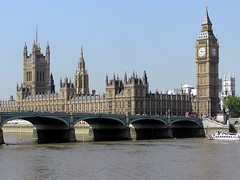
The Palace of Westminster – It’s our Parliament too ! Over the past few weeks of the UK’s election campaign, I’ve noticed many readers saying in comments & emails ‘its just not worth voting'. Never could I disagree with a statement more than this. As citizens, British subjects, the electorate, the one thing we have to hold our politicians to account, to maintain or change the way we are governed, and help decide our nation’s future, is the ballot box. Use the opportunity we have today, participate, and vote !
Some politicians say they are giving us an invitation to join the Government. Well, if that is the case, use your vote, and power as a citizen to ‘join’ such a Government, and hold them to account on each & every issue, policy or law they propose, address or change, along with the very way they may govern us if elected.
Some politicians say we, the people, are the boss. This is the way it should be. If you feel this way, use your vote and power as a citizen to ensure they continue to do their best for the country, and you, through the good times and the bad.
Some politicians say we need a change in British politics, that it should be cleaned up once & for all, and that the very nature of how we vote should be changed to allow ‘wider representation’ of the population. If you feel that way, then again, use your vote and power as a citizen to bring such change, and never let up until such change is upon us.
Some politicians say we need a local champion fighting for Scots at Westminster. We certainly do. All the candidates in Scotland, for whichever political party they are standing for, are very much local champions in their own constituencies. If you feel we need those local champions, find yours, and vote for them !
Lets face it, you can be rest assured the professions will be voting in their numbers, to ensure, or help along the party they wish to be in power … so we as individuals should also use our vote, to make our voice heard.
So, to my readers today … certainly to those of you who may have given up on the political process – take a few minutes out of your day, go along and vote for whichever candidate, local champion, or political party you feel will do their best for the nation, you, your family, your finances, your wellbeing, the causes you may campaign on, or the injustice you may fight, personal or otherwise. We cant grumble if we don't participate, so participate !
Scottish Parliament debated Legal Services Bill.THE LEGAL SERVICES BILL for Scotland, proposed by the Scottish Government to improve Scots consumers access to justice “is turning into little more than a legislative time wasting exercise controlled by the legal profession” according to consumer sources today, after the developments of the past week which saw the bill debated at the Scottish Parliament last Wednesday 28 April where the Bill was passed by 98 votes to 2, amid many retractions by Scottish Ministers on key parts of the bill after intervention by the Law Society of Scotland.
Last Wednesday’s tedious & winding debate, which left spectators in little doubt this piece of access to justice legislation was developing into ‘little more than a protection racket for the current legal services monopoly held by solicitors in Scotland’, saw many retractions of the proposals aimed at allowing Scots consumers to make their own choice on where they could purchase legal services, such as from independent non-lawyer owned legal providers, as opposed to the current Law Society controlled monopoly on legal advice. The Holyrood debate was then followed by a remarkably staged piece of theatre two days later on Friday, where the Law Society of Scotland’s Council, who purported to be previously in favour of alternative business structures voted to oppose abs allowing non-lawyers majority ownership of existing law firms.
Legal Services Bill Stage 1 Debate – The only people not consulted appear to be consumers & fee paying clients ! (click on the links to watch video of the debate)
Two days after the Holyrood debate took place, an already planned policy change was voted through by the Law Society of Scotland’s ‘Council’, which changed its policy on alternative business structures (ABSs) to support majority ownership (51%) of law firms remaining with solicitors or solicitors with other ‘regulated’ (preferably self regulated, of course) professionals. More changes are planned, on the Law Society’s stance on the Legal Services Bill itself, as well as a slew of amendments the Society has persuaded (forced) the Scottish Government to undertake to the bill during it’s next hearings at the Scottish Parliament’s Justice Committee.
Law Society President Ian Smart. Commenting on the Law Society’s vote change, and making reference to further, if unspecified amendments the Law Society are seeking to what was once a consumer choice bill, now little more than a lawyer’s own market protection bill, the Law Society’s President, Ian Smart in a media release said : “We have listened to the profession and there are strong differences of opinion about the way forward, with large and small firms on both sides of the debate. There does, however, seem to be an acceptance that ABSs are inevitable, as reflected in the parliamentary vote, and that a compromise must be found. ”With that in mind, the Society’s Council – which includes solicitors from every sector of the profession – has adopted what it believes to be fair and reasonable compromise position, which would prevent outright external ownership, for instance by supermarkets, but allow firms to compete in a changing marketplace.”
Mr Smart ended by saying : “The next stage of the parliamentary process, which involves making detailed amendments, is almost upon us so the need to present a clear Council policy without further delay was uppermost in the minds of Council members. “We remain committed to ensuring that the proposed legislation is effective, workable and in the interests of the profession and the public. To achieve that, we will remain in discussions with all interested parties and continue to welcome feedback from solicitors.The revised policy will be put to the Society’s membership at its annual general meeting on 27 May. We hope that others will recognise the benefits of supporting a compromise position.”
“Making detailed amendments” …. that will of course relate to ensuring solicitors control the legal services market in Scotland, and ensure any ‘consumer choice’ is killed off at birth .. and with the Scottish Parliament & Scottish Government apparently so willing to bend to the Law Society at every stage, consumers shouldn’t expect much from this fatally damaged piece of legislation. There is little doubt now the Legal Services Bill will end up as badly damaged as the Legal Profession & Legal Aid (Scotland) Act 2007, and will do nothing for Scots consumers, in terms of widening choice of legal services & access to justice.
Background : The Legal Services Bill (Scotland) came into being after the consumer organisation Which? issued a “super complaint” to the Office of Fair Trading under section 11 of the Enterprise Act 2002, stating that the consumer interest was being harmed the restrictions on advocates' business structures, solicitors and advocates providing services jointly, third party entry into the market, and direct consumer access to advocates.
The OFT’s response to the Which? super complaint can be viewed here : OFT response to super-complaint(pdf) along with their comments from July 2007 which stated : “Which? argued that the current restrictions against such practices prevent legal services providers in Scotland from adapting their business to best fit the needs of Scottish consumers. The OFT concluded that the restrictions are unnecessary and believes that there would be benefits to consumers if they were lifted – such as efficiency gains and higher levels of innovation in the provision of legal services.”
The Scottish Consumer Council, now renamed Consumer Focus Scotland, issued its response to the OFT’s consideration of the Which? super complaint, broadly supporting the moves to open up Scotland’s legal services market. The SCC’s reply to the OFT can be viewed HERE(pdf)
 Scotland’s Lord President passes McKenzie Friends hurdle. Confirming my report earlier in February of this year on the Lord President, Lord Hamilton’s plans to formally introduce McKenzie Friends to Scotland’s courts, it has been announced the Court of Session Rules Council, the body which oversees rules regarding any matters which the Court could regulate by an ‘Act of Sederunt’, has discussed the issue of McKenzie Friends at its Monday meeting of earlier this week, and is now in the process of drawing up the rules which will allow & govern the use of McKenzie Friends in the Court of Session by the end of June 2010.
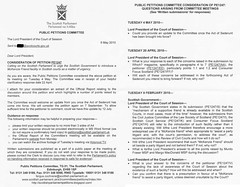 Scottish Parliament asked Lord President ‘to keep them updated on McKenzie Friend law. Questions which were raised late last week over the Scottish Parliament’s Petitions Committee’s recent letter to the Lord President have now also been resolved with the release of documents from the Parliament, confirming the Committee had asked the Lord President for “an update once the Act of Sederunt has come into force”, rather than choosing to raise specific key points which came out of last Tuesday’s meeting of the Petitions Committee, namely those of remuneration of a McKenzie Friend, usage of the term “McKenzie Friend” and the involvement, or interest of a McKenzie Friend in the case in which they are assisting. The Petitions Committee indicated they would next consider the McKenzie Friend petition on 7 September 2010.