Showing posts sorted by date for query nicola. Sort by relevance Show all posts

Saturday, September 19, 2026

SPIEDCOPS: Police Scotland refuse to confirm or deny claims officers investigating Alex Salmond files leak, Operation Branchform & Scottish National Party Finances were profiled by organisations of interest intent on limiting work to expose real extent of political party finance fraud

FOI response from Police Scotland - caption of text and Operation Branchform key figures
Branchform SNP Funds probe
 IN Scotland, whether you are a journalist, a Judge, a Police Officer or someone working on an investigation relevant to branches of Government, Politics, key parts of public life or some realms of business – there is always a person or organisation of interest profiling those who work on such cases, and limiting the flow & access to information relevant to your work.

Therefore in what was seemingly Scotland’s most high profile criminal investigation involving the control, and misuse of funding, money and assets linked to Scotland’s governing party, the Scottish National Party – sources have now claimed those tasked with investigating allegations of fraud linked to the SNP and it’s former Chief Executive Peter Murrell, now convicted and jailed for the theft, embezzlement of over £400,000 of party funds – may well have been profiled by parties with an interest in limiting the scope of the Police investigation and evidence consideration, advice obtained from outside elements contracted into Operation Branchform.

A Freedom of Information request, and subsequent response from Police Scotland – places Scotland’s national Police service in the position of refusing to confirm or deny claims from insiders and legal sources that officers and others linked to the Branchform investigation, were profiled to an extent the information gathered may well have been used by interested parties within the investigation to influence how the consideration of evidence and where it led during the Branchform progressed, or at times slowed, then allegedly in certain instances came to a halt on the orders of prosecutors.

Claims by insiders and whistleblowers tell an interesting alternative to the unbelievable, almost fictional accounts in parts given by the same media-dealing prosecuting authority & Police service which rigged cases against the Rangers Administrators, yet took five years to claim there was not enough evidence to prosecute a collection of financiers, lawyers & individuals linked to the judiciary in the £400 Million Heather Capital Fraud.

An alternative version by insiders reveals instead how parts of evidence and claims were only followed up to a certain degree, how the Crown Office system of ‘independent Crown Counsel’ often known for their ability to rip out swathes of evidence and material often coincidentally protecting high profile figures from charges and trials did their usual and excluded damaging material linking to the highest politicians in Government, and how what was billed as an expected Criminal Trial exposing industrial scale of theft, fraud & dishonesty at the heart of political power in Scotland, ended in a whimper of a guilty plea at the last minute and comments in sentencing which to be honest, read to any experienced [and unafraid for their continued employment] fraud investigator about as straight as a roundabout.

Police Scotland even dragged out exemptions in relation to National Security, and Terrorism laws to refuse to confirm or deny claims made to journalists in relation to the internal workings of Operation Branchform, as noted in the lengthy FOI response from Police Scotland which is republished below, in text format and in original PDF format here: 26-1631 Response

Your recent request for information is replicated below, together with our response.

from July 2021 to the date of this FOI request

I would like to make a Freedom of Information request for information contained in

the numbers of incidents (and details contained in) of any reporting, logging, complaint raise awareness of, or similar from Police Officers and staff employed by or contracted by Police Scotland - that their work emails & communication methods or other were hacked, compromised or accessed by others known or unknown

If any of the above involved investigations with an operational designation - such as "Operation Branchform" and "Operation Newbiggin"

and if any incidents were reported to Police Scotland's anti corruption unit and if so, what action if any was taken

In terms of section 18 of the Act, I am refusing to confirm or deny whether the information sought exists or is held by Police Scotland.

Section 18 applies where the following two conditions are met:

-             It would be contrary to the public interest to reveal whether the information is held. Confirmation or otherwise would prove valuable to those with criminal intent as this information could be used to identify and take advantage of any potential vulnerabilities in the police systems, consequently increasing the risk of cyber-attacks Force wide.

-             If the information was held, it would be exempt from disclosure in terms of one or more of the exemptions set out in sections 28 to 35, 38, 39(1) or 41 of the Act. In this instance, the following exemptions are considered relevant:

• Section 34(1)(b) - Investigations

Information is exempt information if it is held by Police Scotland for the purposes of an investigation which may lead to a decision to report the circumstances to the Crown 

Office and Procurator Fiscal Service (COPFS) to enable a determination on whether criminal proceedings should be instigated.

•            Section 31(1) - National Security and Defence

•            Section 35(1)(a)&(b) - Law Enforcement

•            Section 39(1) - Health & Safety

The security of the United Kingdom is of paramount importance, and we will not disclose information if it would impact on National Security.

Information is exempt information if its disclosure under the Act would substantially prejudice the prevention and detection of crime and the apprehension and prosecution of offenders by adversely impacting on the operational effectiveness of Police Scotland.

Information is also exempt information if its disclosure under the Act would, or would be likely to, endanger the physical or mental health or the safety of an individual.

Disclosure of information relating to invasive cyber security incidents (especially the extent to which they were effective) would highlight any perceived vulnerabilities in systems essential for day-to-day operations, enabling criminals to make an accurate assessment of the capacity of the Service to deal with a variety of any such incidents.

The release of such thorough and specific information would undermine the operational integrity and security of integral police systems by giving those with criminal intent (including terrorists) the opportunity to compromise or exploit these systems to their own benefit, resulting in a loss of sensitive police data or denying the Police Service access to critical infrastructure systems.

As such, to release this would present a real and significant risk to policing operations, public safety and the ability of the police service to efficiently prevent and detect crime.

The above are all non-absolute exemptions and require the application of the Public Interest Test.

Whilst I accept that investigations concerning cyber security would be of significant interest to the public, investigative details will only ever be disclosed by Police Scotland where there are overwhelming public interest considerations for doing so.

That said, there can be no public interest in disclosing information which relates to police investigations outwith the associated criminal justice processes, thereby prejudicing those processes (and the Force’s future law enforcement at large).

On balance, it is considered that the public interest lies in maintaining the section 34(1)(b) exemption given the need to protect the integrity of the investigative process and any final determinations made by the COPFS.

Furthermore, while it can also be suggested that there is a public interest in openness and transparency as regards the security arrangements Police Scotland has in place for protecting its fundamental policing processes, this must be balanced against the strong public interest in maintaining the security and effectiveness of the systems used to do so.

I would contend that the need to ensure the effective conduct of the Service in relation to the prevention and detection of crime, and the public safety considerations involved in the delivery of operational policing, clearly favour non-disclosure of the information.

Technological information is of great value, and, in this instance, it can be argued that the disclosure of any such information would provide limited additional public understanding while simultaneously creating a substantial risk to cyber security - it is therefore reasonable to expect Police Scotland ensure all information held is managed effectively, and where necessary, are cautious of the level of detail released to the public.

On balance, the public interest in withholding the information on this occasion outweighs the public interest in disclosure.

This explanation should not be taken as indicative or conclusive evidence that the information you have requested does or does not exist.

and information contained in the processes used by Police Scotland for staff & Police Officers and contractors to log, report, complain or raise awareness of any such incidents of email and communications hacking, or accessed by others known or unknown

Firstly, I can advise that under the UK General Data Protection Regulation (UK GDPR) and the Data Protection Act 2018, a personal data breach must promptly be assessed to determine whether it is likely to result in a risk to the rights and freedoms of individuals - where this threshold is met, a notification to the Information Commissioner’s Office (ICO) must be made without undue delay and, where feasible, within 72 hours of Police Scotland becoming aware of the breach.

Where the breach is likely to result in a high risk to individuals’ rights and freedoms, a notification to the affected individuals must also be considered.

This reporting timescale requires security incidents to be managed in a timely manner, including early containment, evidence gathering and documented risk assessment.

For this reason, staff are advised that it is essential to promptly detect, contain and assess any data breach for potential risks to both the Police Service of Scotland and individuals’ rights and freedoms. The practices used to ensure this include (but are not limited to) using the designated email address to report phishing, reporting incidents direct to the ISO via the Information Security Reporting Form and referring to the relevant guidance/ Standard Operating Procedures (SOPs).

In this case, I can refer you to the Information Security Standard Operating Procedure, which outlines how all staff, contractors and partners (i.e. anyone with access to police information or premises) protect the confidentiality, integrity and availability of Information Assets and Information Systems.

Moreover, these precautions behaviours are further embedded and strengthen by an annual Data Protection Refresher Course, Cyber Exercises (i.e. simulated cyber-attack exercises to test the organisation’s incident response capabilities, improve readiness, and identify any areas for improvement) and Cyber Awareness Courses.

For awareness, there are currently six courses out in rotation, which includes:

•            Cyber Fundamentals - this course covers what to watch out for at work and how to keep yourself safe against common threats.

•            Phishing Awareness - this course covers what a phishing email is, how to spot them and how to report them.

•            Physical Security - this course covers the measures taken by Police Scotland to protect operations through denying access to buildings, restricting permissions to certain activities and establishing secure work environments.

•            Security Incidents - this course covers cyber security incidents that have already taken place within Police Scotland and highlights what you can do to avoid a repeat scenario.

•            Password Management - this course covers how to create and improve the security of your chosen password. 

•            Device Security - this course covers how to handle and protect sensitive information on your devices.

•            Social Engineering - this course covers some common social engineering techniques, and guidance on how to stay safe.

ENDS

Clearly, Police Scotland feel strongly in the matter and they cannot admit or deny any of these events as referred to in the FOI request occurred.

However when the Freedom of Information disclosure, and denial was put to sources for their own consideration, their responses indicated that not only did it appear officers were indeed profiled by interested parties linked to the Branchform investigation,  it could also not be ruled out informants from within policing passed information to organisations and persons of interest in Operation Branchform which allowed external elements to the investigation to be aware of the pace and direction of evidence gathering, and key events before they even occurred.

Operation Branchform became a matter of interest to journalists in ways perhaps not to the liking of the investigating authorities and those who were being investigated.

For example, on a very similar, almost identical case of systemic and determined acts of fraud, carried out within a governing political party with an almost stasi like grip on controlling a nation’s public authorities, institutions and organisations – a few individuals were tasked with making numerous purchases of just about anything which comes to mind – stationery, confectionery, watches and jewellery, vehicles, property, crypto assets and more – with the sole intent of these purchases and overly unaccountable lifestyles being used as a cover to later be held up for detection, prosecution and finally a day or two in court for headlines as the smokescreen to a much larger multi millions fraud which enabled governing party members to enjoy lifestyles, assets and undetectable offshore finances in a manner which could not be explained by their official salaries and expenses claims.

A journalist colleague who was not connected to the investigation we worked on, but was shown some of our material and files received from case participants said at the time – should be looking for four hundred million, not the twenty or thirty million mentioned in a civil recovery case – which itself collapsed after prosecuting authorities and certain legal figures who wanted the case halted, intervened in the background and saw to it the civil recovery case collapsed.

Another issue raised with us in relation to Operation Branchform revealed sweet deals with media orgs, after a media colleague produced an audio clip revealing their enquiries with Police media assets seeking an agreement to gain access to evidence in relation to the charges against Peter Murrell, post guilty plea and trial – resulted in a demand and agreement for not seeking access to the Nicola Sturgeon interview and materials – which are now being sought for release via Freedom of Information requests to Police Scotland

Police Scotland, and the Crown Office are for now curiously blocking release of the full Police Scotland interview with Nicola Sturgeon after she was arrested on a Sunday after a Police Scotland visit to the house filled with items purchased with ‘stolen’ SNP funds, the address being the same residence she shared with her then husband, Peter Murrell.

Tuesday, June 27, 2023

POLICE SCOTLAND: Non Disclosure Agreements, whistle-blower witch-hunts, £Ms paid to silence victims, institutionally discriminatory & corrupt – The Scottish Govt Policing PR machine & lawyer-led Scottish National Police service that simply ran out of lies

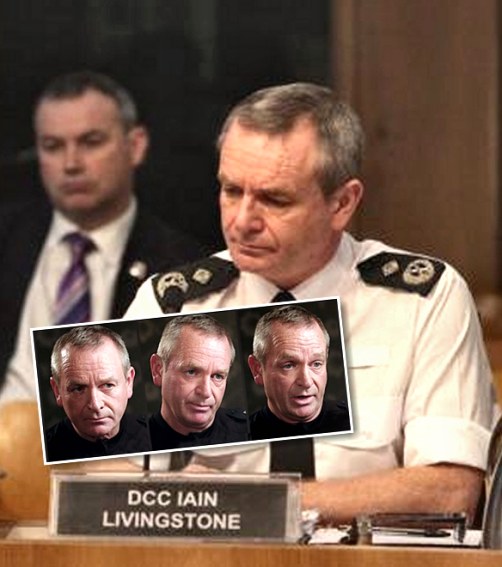
Outgoing Chief Constable Iain Livingstone. FOR FIVE YEARS and despite publicly aired views of former senior Police officers against his appointment - Scotland’s National Police service has been lawyer-led by a Chief Constable - who was once accused, then ‘cleared’ by a Tribunal composed of male Police colleagues - of FIVE allegations of serious sexual assault made against him by a female Police officer.

On 23 February 2023, just days after Nicola Sturgeon announced her resignation as First Minister on 15 February 2023 - Chief Constable Iain Livingstone announced his own resignation and intention to ‘retire’ from leading Police Scotland – with a lengthy departure date of August 2023.

However, in the weeks which followed the Chief Constable’s long goodbye to Scotland’s decimated national Police service - Mr Livingstone took the opportunity to brand Police Scotland as Institutionally discriminatory, institutionally sexist and instructionally racist.

What followed was a very scripted set of headlines involving public inquiries, SNP politicians praising the outgoing Chief Constable, and gangland representing lawyers seeking their own ego boosting headlines in what many came to realise was a carefully orchestrated exercise in press releases and organised spin.

However – Chief Constable Iain Livingstone was certainly not wrong in his accusations against his own Scottish National Police service.

Indeed, across five years of presiding over Police Scotland, the outgoing Chief Constable – who was branded unfit to lead Police Scotland by former Assistant Chief Constable Angela Wilson, and a host of public critics & campaigners – must shoulder some of the blame for a dysfunctional Police Service which – at low points – assisted the Lord Advocate & Crown Office in fitting up prosecutions against persons whose crimes did not exist – most notably the Administrators & Accountants of Rangers Football Club.

However, fitting up prosecutions on a £100 Million scale with the cooperation, orders even – of Scotland’s top law officers, top prosecutors and even with the evidenced involvement of the judiciary itself in the plot to lock up a few accountants for events which were mostly made-up – are but one entry in a long list of greed, avarice & corruption within Scotland’s National Police service and across key stakeholders in Scotland’s justice system – from the Crown Office to the Scottish Government itself.

But lets not kid ourselves everyone. We knew it all along, right?

The Scottish Government and it’s slavishly political, critic & media hostile - intensive Civil Servant-Special Adviser Policing group – were hell bent on control of almost every facet of Policing in Scotland and were grimly determined to ensure Scotland’s National Police Service drifted into the same chasm of control freakery, public relations and spin as the SNP Scottish Government live by each day and eek out their grim control over public life until the next week and the next scandal.

Few surprises there - as control freakery, PR and spin is so typical of the way the Scottish Government and every public organisation and regulator in Scotland operates – when faced with questions and scrutiny of the level of wrongdoing & dishonesty in whichever public authority is under the microscope that particular day.

To back up Iain Livingstone’s scripted admission of institutionally everything-wrong at his own five year grip on power Police Scotland, a series of senior officers were paraded on television to support the Chief Constable’s claims – with absolutely not one sounding believable in any of their responses.

And, to round off the increasingly diversionary campaign of ruining the reputation of Policing in Scotland to take the cameras and attention away from high profile political resignations and investigations into political funding – which appear to be more focussed on what they cannot prove rather than going after actual events and a rather complicated set of – lets call it “Heather Capital” type activities – the Chief Constable’s sexist, discriminatory & institutionally corrupt Police Service scandals were capped off with an arranged slew of new female officer appointments and the appointment of a female Chief Constable to replace Mr Livingstone.

If only it would be advantageous to publish the chat apps content of senior lawyers, civil servants and others on these few weeks of a dodgy Scottish National Police Service, and the dodgiest of dodgy Scottish Governments, ever.

Lets return to some of those issues in the headlines.

Non Disclosure Agreements at Police Scotland under Chief Constable Iain Livingstone – have seen millions of pounds in public cash paid out to victims of wrongdoing, corruption, sexism and misogyny during Livingstone’s five year grip on power at Scotland’s lawyer-led National Police Service – and millions of pounds more of public cash in the five years preceding Livingstone’s appointment as the preferred Scottish Government candidate of Chief Constable in 2018.

For years – cases of wrongdoing in policing – from the time of Scotland’s eight forces to the creation of Police Scotland by the SNP Scottish Government in 2014 – have been looked at by blog journalists.

The numbers are big, the pay-outs to victims even bigger, the wrongdoing, corruption, sexism, misogyny, vendetta witch-hunts of sources to journalists, pursuit of police officers who lodge legitimate grievances on issues relating to their service - and targeting of whistle-blowers has been – and remains to this day – off the scale.

It should not surprise readers that private law firms, solicitors, ‘leading’ members of the Faculty of Advocates & even some members of Scotland’s judiciary – have also collectively gained millions of pounds of public cash over the past decade in burying scandals for Police Scotland and forcing victims to sign Non Disclosure Agreements to prevent anyone talking to the media, public, their families and friends - or even their elected political representatives and the Scottish Parliament.

Readers can view earlier Freedom of Information disclosures obtained by blog journalists here Police Scotland - Non Disclosure Agreements FOI - 2019 which give some idea of the scale of pay-outs and a very limited understanding of the level of institutional wrongdoing at Police Scotland.

More than 20 victims of discrimination and wrongdoing who received financial compensation from Police Scotland were gagged from speaking publicly and the FOI material reveals Non-Disclosure Agreements (NDAs) were used in at least 21 cases in which pay-outs totalling £677,389 were made to police officers, civilian staff and members of the public.

At least ten police constables, an inspector, a sergeant and four civilian workers were found to have signed Non Disclosure Agreements, involving a variety of discrimination disputes on the grounds of sex, sexual orientation, disability and age.

Other Non Disclosure Agreements involving Police Scotland related to wrongful arrest, personal injury and unfair dismissal and a whistle-blower was required to sign an NDA.

In the figures which go up to the year 2019 – Scotland’s National Police service paid an additional £203,380 to cover victims’ legal fees – bringing the total cost to taxpayers to £880,769 over six years.

Initially – and as is routine with all Scottish Public Authorities – Police Scotland refused to identify the law firms which received public cash in relation to Non Disclosure Agreements. The data was only obtained after requests for FOI Reviews were lodged – naming the following law firms in figures: Clyde & Co solicitors £50,782.20, Morton Fraser Solicitors £72,162.56, Thorntons Solicitors £4,910.40.

And in an additional refusal by Police Scotland to identify law firms involved in Non Disclosure Agreements – again for figures up to 2019 – the same law firms were again identified in an FOI review disclosure – Morton Fraser Solicitors £22,208.80, Clyde & Co solicitors £41,460.01

Police Scotland’s key role in the malicious prosecution of the Rangers Administrators has been well documented on this blog PROSECUTION ADVOCATE: Conflicts of interest, failure to recuse & judge swapping in court - Rangers Admin malicious prosecution case illustrates why Scotland’s Prosecutors & Judiciary must be required to register, declare & publish all their interests - and publish all details of judges’ recusals from court hearings, and more widely in the media.

There also remains no further disclosure by Police Scotland into the allegations of five serious sexual assaults against the outgoing Chief Constable Iain Livingstone – information which Police Scotland refused to release to Freedom of Information requests by blog journalists in an article reported earlier here: TOP COP SECRETS: Transparency lacking at Police Scotland as spy scandal cops refuse to disclose files on complaints & historical sexual assault case details involving Deputy Chief Constable Iain Livingstone

Curiously, in the past year – several media publications published articles identifying outgoing Chief Constable Iain Livingstone as a “Frontrunner” for the positions of Commissioner of the Metropolitan Police Service for London , and “Frontrunner” for the post of Director of the UK National Crime Agency.

As readers will be well aware - both positions were filled by other candidates.

Interestingly and perhaps coincidentally - INTERPOL – the International Police Agency recently announced – apparently after much lobbying – the annual Interpol General Assembly is to be held next year in Glasgow, 2024.

The choice, which would be as odd as a group of environmental campaigners choosing to hold their gathering in the middle of an oil refinery – is coincidentally slated for the same year to which candidates for the 2025 Interpol Presidency will begin lobbying for their chance to follow several well known – and even some later jailed figures – to become the new Interpol President in 2025.

A previous example of Interpol Presidency candidates cite the following:

https://hansard.parliament.uk/commons/2018-11-20/debates/59705E54-A997-4F64-AFCA-2D4200158A62/InterpolPresidencyElection

The Minister for Africa (Harriett Baldwin)

Interpol is currently holding its general assembly in Dubai, and a UK delegation, led by Lynne Owens, the director general of the National Crime Agency, is there at the moment. Interpol is electing a new president at the general assembly after former Interpol president and Chinese Vice-Minister of Public Security, Meng Hongwei, resigned from the position on Sunday 7 October after Chinese authorities confirmed that he had been detained and is being investigated on anti-corruption charges.

Two candidates have formally declared for the post and remain in the running as candidates. They are current acting president South Korean Kim Jong Yang and Russian vice-president—one of four vice-presidents—Alexander Prokopchuk. Members of Interpol at the general assembly will vote on the next president on Wednesday. We do not speculate on the outcome of the election, but the UK supports the candidacy of acting president Kim Jong Yang.

Sir Vince Cable

Can the Minister confirm that the British Government are doing all they can to campaign against the candidacy of Mr Prokopchuk? Will she confirm that, until recently, he was head of the central bureau in Russia and was directly responsible for the issuing of red notices, which have been abused and used against opponents of the Putin regime—such as Mr Bill Browder, the proponent of the Magnitsky sanctions? Does she not agree that if this Russian gentleman were to become head of Interpol, it would be an absolute insult to the victims of the Salisbury incident?

Will the Minister explain how the Government intend to pursue their own pursuit of red notices in Russia with that gentleman in this post? Does she not accept that, if this gentleman were to succeed in his election, this would be a massive propaganda victory for the Putin regime, just ahead of a vote in the European Union on fresh sanctions? Would it, in effect, not amount to accepting that Interpol has become a branch of the Russian mafia? I use my words carefully when I say that. Finally, does this not underline the absolute folly of undermining in any way Europol at a time when Interpol is becoming totally dysfunctional and potentially corrupted?

Harriett Baldwin

The right hon. Gentleman raises a number of points. The central point is to clarify for the House the role of the secretary general of Interpol, who, of course, is the German Jürgen Stock. He has the executive role of day-to-day responsibility for the conduct of Interpol, and the UK confirms that it has a very good working relationship with him.

The right hon. Gentleman also raises the question about the candidacy of the current vice-president of the organisation. The UK, as I said in my opening remarks, will be supporting the candidacy of the acting vice-president, Kim Yong Yang. We always seek to endorse candidates who have a history of observing standards of international behaviour.

With regard to the point that the right hon. Gentleman makes about the potential for misuse of Interpol, red notices are a very important point. He will be aware of the systems that are in place to protect individuals’ rights and, indeed, of article 3 of the Interpol constitution, which forbids any organisation to undertake any intervention or activities of a political, military, religious or racial character. Of course, there need to be safeguards, and this Government take any misuse of Interpol notices very, very seriously.

Interestingly, the lobbying – both at National UK level and in Scotland – for a UK/Scotland candidate to ensnare, be ‘elected to’ or assume the Interpol 2025 Presidency - is highly reminiscent of recent attempts to place certain Scots figures in policing positions outside of Scotland – none of which appear to have succeeded given these individuals pasts.

The lobbying between administrations resorted to embittered strings of emails and Chat app platform communications, including claims several detailed reports in newspapers of officers pasts “had been withdrawn and therefore should be discounted in considering applications” and that “a segment in a television interview was misinformed and contained patently false information”.

The exchanges between advisers, media communications officers & administrations on lobbying attempts, currently cannot be published for legal reasons - however the attempts by some within government, at Scotland & UK level to engineer candidates for jobs without serious interviews, and deploy comms officers, even politicians to brief against the media in what became an increasingly bitter recruitment process and ultimately concluded in all parties engaging in infighting – are certainly of public interest in terms of who is appointed to which role in the UK, and why.

Historically, when it comes to any form of transparency and accountability for Police Scotland and policing organisation in Scotland – every effort appears to be expended to ensure secrecy on all fronts remains the case as this blog has previously reported: FOI PROBE: Holyrood Committee hear Scottish Information Commissioner backed off promise to bring Freedom of Information to Scottish Police Federation - even after Info. Tsar knew England & Wales Police Fed. already complied with FOI legislation

And finally – Three sourced tips in relation to stories being looked into.

An audio file submitted to a number of journalists reveals a recently retired policing figure and frequent user of sauna shops - boasted of holding information in relation to politicians and a financial scandal relating to cash and goods - to which the existence of this information was used to gain political lobbying and favours. A crime journalist confirmed the identity of persons in the audio.

An opportunity for that person or others with knowledge of this matter exists to contact journalists and answer questions on why this policing figure’s organisation felt it could play politics and gain favours - in relation to information clearly accumulated as a result of investigations – and why ageing, named former politicians were paid to lobby for, and attack journalists, critics - on behalf of this policing organisation.

Long running enquiries into court cases and complaints investigations revealed the use of Scotland based Private Investigator firms recruiting former Police Officers to utilise in-person surveillance on litigants, solicitors and journalists. Certain of these cases saw persons working for PI firms gaining entry to offices and litigants homes, images of which were recorded on camera equipment. Blog journalists are open to hear explanations from these firms and any employees in relation to their activities.

A long running investigation of digital surveillance employed by organisations in Scotland – which began with the Emma Caldwell case – turned up evidence of a highly organised cyber-hacking ring – which appears to have involvement of former Police Officers from a UK force other than Scotland, England & Wales which continues to snoop on newsrooms and identified journalists, and others including what appear to be opposition politicians.

Emails between lawyers & identified former officers revealed these ex cops regularly offer their services to law firms and any organisation which will hire then. To put it bluntly, these former officers boast of their technical proficiency in defending against cyber-attacks and taking the surveillance and cyber war back to those who whichever entity or organisation perceive as an enemy.

One of the lawyers boasting to clients of how they can deploy ex Police professionals to hack their way through opposing clients and legal representation’s files – sits on committees formed by Scotland’s current top judge – making the link between the judiciary and this surveillance enterprise as clear as was the case in the Emma Caldwell case. If anyone wants to talk, get in touch.

Lastly – Chose your method of giving tips to journalists carefully. Major social media platforms owned by a variety of anti-transparency vested interests - are a no-go area as your Direct Messages and similar are often read before the intended journalists gain sight of it – as a Digital Media employee from a political party recently confirmed in lengthy chats with example communications provided to journos.

Tuesday, August 03, 2021

JUDICIAL REGISTER: Scottish Government confirm Register of Judges’ Interests will be created - after Holyrood TEN YEAR probe of judicial interests & recusals survives lobbying by legal vested interests to close public interest transparency petition

Scottish Govt agree to create Judicial Register. A PETITION to create a register of judges’ interests for all members of Scotland’s judiciary - survived a stormy session of the Scottish Parliament’s Justice Committee – after a failed last-minute Tory led attempt to shut down the TEN YEAR judicial probe.

The attempt to close down Petition PE 1458 was led by the now former MSP Justice Committee Convener – Adam Tomkins of the Scottish Conservatives – who launched blistering criticism on questions around judges’ interests during several hard edged statements to fellow members of the Justice Committee.

However, since these events took place on 2 March at the Scottish Parliament’s Justice Committee – the Scottish Government has since indicated they will create the register of judges’ interests as asked for in the petition - Petition PE1458: Register of Interests for members of Scotland's judiciary.

Petition PE1458 was originally lodged at the Scottish Parliament in 2012. The Petition calls for the creation of a publicly available register of judicial interests – containing information on all judges’ backgrounds, figures relating to personal wealth, undeclared earnings, business & family connections inside & outside of the legal profession, membership of organisations, property and land, offshore investments, hospitality, details on recusals and other information routinely lodged in registers of interest across all walks of public life in the UK and around the world.

Confirmation the judicial register will now move forward, was reported in the media: SNP Government moves forward with register of interest plan for judges

The Daily Record article reports: Now Keith Brown, who was appointed by Nicola Sturgeon to be the new Justice Secretary, has confirmed the Government is taking it forward.

He said: “It was a manifesto commitment of the SNP to create a register of interests for members of the judiciary to improve transparency and trust in the justice system. “Now that the new government is in place, we will start looking at ways this register can be introduced and take forward the work needed to achieve this manifesto commitment.”

The Record further reports support for the petition from MSPs and the Scottish Government: SNP MSP Michelle Thomson said: “I support the commitment from the Scottish Government to create a register of interests for the judiciary. Members of the judiciary, like any other public servant in receipt of public funds, must disclose interests that could influence their decisions or give the perception of doing so”.

A Scottish Government spokesperson said: “Introducing a register of interests for members of the judiciary will increase transparency and trust in the justice system. The Scottish Government will now begin work to engage with stakeholders to consider how best to bring forward this justice reform.”

An additional blog report will publish more detail around the latest events relating to the petition and the creation of a register of judges’ interests – which the Scottish Government confirmed will occur.

Back to the events of March 2021 – Adam Tomkins – the now former Justice Committee Convener after having retired as an MSP at the 2021 election - was joined in the well organised effort to shut down the judicial register debate by Annabelle Ewing – who is now the current Deputy Presiding Officer of the Scottish Parliament, and MSP Rona Mackay – formerly of the Petitions Committee.

However, Justice Committee member John Finnie who has since stood down as an MSP launched a scathing rebuttal of the Tory Convener’s concerted effort to shut down debate on Scottish judges interests and demanded the petition be kept open. Mr Finnie was joined in support by MSPs Rhoda Grant (Scottish Labour), Liam Kerr (Conservative) Liam McArthur (Liberal Democrat) & Shona Robinson (SNP).

In response to Tomkins & Ewing’s praise for judges, and their expressed agreement with the Lord President to shut the petition, John Finnie said in response: “I will follow on from the convener’s comments about the separation of powers. Of course, in any liberal democracy, it is absolutely right that we have an independent justiciary. I accept that. However, we are talking about one individual the Lord President.”

“I do not know that individual and I have no axe to grind one way or another, but I will paraphrase the previous exchanges with him. He said, “No, I don’t want it.” The committee decided to write to him again, and he said, “I’ve already told you that I don’t want it, and I’m telling you again that I don’t want it.” There were discussions about his coming to give evidence and even about whether it was appropriate to ask him to come to give evidence. He said, “Well, I could come and give evidence but, as I’ve told you and I’ll tell you for a third time, I don’t want it.” To be perfectly honest, that does not seem to me like a functioning liberal democracy.”

“What is there to fear from disclosing the information that is being asked for? Examples of other jurisdictions have been given where that is done without a problem. Should we be surprised that a Government of whatever persuasion wants to be in accord with the Lord President and does not want to dissent from the Lord President’s position? Perhaps not.”

I am not persuaded by either of those arguments, but there is a more compelling reason why we must keep the petition open. I am supportive of the intention of the petition. As always, the devil will be in the detail, but the detail that has been shared with us is that we are being urged to commission the work that we had already decided on. It is very clearly unfinished work for the committee. We undertook to do things in relation to the petition; we have not done those. For that reason, we must pass it on to our successor committee to pick up on that work, and it will be for it to decide how to proceed thereafter. The petition should be kept open.”

Justice Committee members Shona Robison, Liam McArthur & Rhoda Grant also agreed to keep the petition open. 

The Scottish Conservatives Liam Kerr also agreed, to keep the petition open.

A planned motion to close the petition was apparently scrapped at this point and discussions aimed at shutting down the petition - which took place outside the realms of the Justice Committee prior to the hearing - have since been made available to journalists.

Instead – The Tory Justice Committee convener Adam Tomkins managed a final spat at the TEN YEAR probe of judges interests and plans to create a register – displaying visible concern that Justice Committee members had kept the petition open

A very animated Adam Tomkins ended the terse, at times bitter hearing on the petition by stating “I will close by saying that just because it is appropriate for elected members in the legislature to have a register of interests, that does not mean that it is appropriate for members of the judiciary to have a similar register of interests. The function of the separation of powers is to treat different branches of government differently, according to their institutional function.I hope that that is a fair summary albeit with a gloss from me at the end of the committee’s decision.”

Petition PE1458: Register of Interests for members of Scotland's judiciary – originally lodged at the Scottish Parliament in 2012 – calls for the creation of a publicly available register of judicial interests – containing information on all judges’ backgrounds, figures relating to personal wealth, undeclared earnings, business & family connections inside & outside of the legal profession, membership of organisations, property and land, offshore investments, hospitality, details on recusals and other information routinely lodged in registers of interest across all walks of public life in the UK and around the world.

Video coverage of the Justice Committee meeting of 2 March 2021 and discussions relating to the register of judicial interests petition can be viewed here:

Register of Judges Interests Petition PE 1458 Scottish Parliament Justice Committee 2 March 2021

Judiciary (Register of Interests) (PE1458) Tuesday 2 March 2021

Convener Adam Tomkins (Scottish Conservative, Glasgow): The second of the petitions before us is PE1458, which concerns a register of judicial interests. The petition, from Peter Cherbi, calls on the Scottish Parliament to urge the Scottish Government to create a register of pecuniary interests of judges bill or to amend the present legislation to require all members of the judiciary in Scotland to submit their interests and information on any hospitality received to a publicly available register of interests. I refer members to the relevant papers, which include submissions from supporters of the petition.

As with the previous petition, the committee has had PE1458 before it for a long time the petition was lodged in December 2012. The last time that the committee considered the petition, it agreed to seek further information on other potential conflicts of interest relating to key stakeholders in the Scottish judicial system and to hold a round-table session on the matter with constitutional and academic witnesses. I am afraid that the pressures of competing work have meant that we have not been able to organise a round-table event on the subject, so that remains undone.

I open the discussion to members. As with the previous petition, we need to decide whether to close the petition or to keep it open for session 6. If we take the latter course, we need to justify our decision.

Annabelle Ewing (Scottish National Party, Cowdenbeath): I am mindful of the fact that I should probably have waited for my colleagues to indicate that they wished to speak first, because that might have been more appropriate, given that I am a newish member of the committee. In any event, I have read the clerk’s note and have been peripherally aware of the petition over the course of several years.

I cite a few points. First, as far as I can see, the statement of principles of judicial ethics is a comprehensive set of requirements. The idea that there is nothing in place is a fallacy. Secondly, I note that additional safeguards have been put in place during the time that the petition has been open. I cite the register of recusals and the publication of judicial expenses and overseas travel. Thirdly, and most importantly, I was struck by the letter from the Lord President and the key point about the need for the independence of the judiciary, which is not comparable to any other profession. The independence of the judiciary of the country is a fundamental tenet of our laws and our society. I agree with the Lord President on those matters, so I do not support the continuation of the petition.

Convener Adam Tomkins (Scottish Conservative, Glasgow): Thank you, Annabelle. The Official Report will not show this, but I was nodding vigorously as you commented on the fundamental importance of the independence of the judiciary as a tenet of the separation of powers. That is the principle that should be front and centre when we consider questions such as this one.

For a register of judicial interests to be created, either the Lord President would need to set that up or Parliament would need to legislate to do so. As Annabelle Ewing has just said, the Lord President has said that he does not see the need for such a register. That is also the view of the current Scottish Government, which has said that it does not support a register.

Liam Kerr (North East Scotland) (Scottish Conservative): For complete transparency, I make the usual declaration that I am a member of the Law Society of Scotland.

I listened carefully to Annabelle Ewing and the convener, who spoke very persuasively. It is an interesting debate. I have not, as yet, heard a convincing argument against the proposal. I think that there is something in what Annabelle Ewing and the convener said, but I need to hear more. Some of the recent debates that the convener and I have been involved in give me pause for thought about the petition.

The convener prefaced his comments by saying that the committee was previously interested in obtaining more information on the issue, and that we talked about having a round-table session. I want to hear and learn more about the issue before I decide what I think about a register of interests. For that reason, I am inclined to think that we should keep the petition open with a view to me or whoever has the privilege of coming back and being on the committee looking at the issue again in the cold light of day of the new session of Parliament.

Convener Adam Tomkins (Scottish Conservative, Glasgow): Annabelle Ewing has asked me to remind members that, like Liam Kerr, she is a member of the Law Society of Scotland, although, again, like Liam Kerr, she has never been not yet, at least on the bench. Thank you, Annabelle.

Liam McArthur (Liberal Democrat, Orkney Islands): I have no such declaration to make. I agree whole-heartedly with what you said, convener, and with what Annabelle Ewing said in opening the debate. It is indisputable that steps have been taken to address at least some of the principles of the concerns that were raised in the petition.

The point where I am slightly anxious here, I refer back to Annabelle Ewing’s comments on the earlier petition about the value and benefits of consistency is that, having sisted the petition previously on the basis that the committee would hold a round-table session to solicit wider views from stakeholders, but then not having done so, it would be difficult to make an argument for closing the petition. Again, that argument seems to be for administrative neatness. We made a commitment as a committee. If, after the election, the incoming committee does not feel that it needs to be beholden to that commitment, that is a decision for it, but it would be passing strange for us to abandon, simply because of the prospect of an election, the conclusion that we reached when we considered the petition previously.

On that basis, as with the earlier petition, I am minded to suggest that we keep this one open until the next session.

Deputy Convener Rona Mackay (Scottish National Party, Strathkelvin and Bearsden): I was on the Public Petitions Committee when the petition started its journey before it came to the Justice Committee, and I am supportive of it I am on record as saying that. However, given that the Lord President and the cabinet secretary have made their views clear on it several times, at this stage, we should close it, with the knowledge that the petitioner can bring it back in the next session of Parliament if he wants to carry on with it.

I do not think that that would be inconsistent. The petition is different from the previous one, which we decided to keep open, because the circumstances are different. At this stage, my preference is to close the petition, and the petitioner can always bring it back. However, I am sympathetic to the subject.

John Finnie (Scottish Green Party, Highlands & Islands): I will follow on from the convener’s comments about the separation of powers. Of course, in any liberal democracy, it is absolutely right that we have an independent justiciary. I accept that. However, we are talking about one individual the Lord President.

I do not know that individual and I have no axe to grind one way or another, but I will paraphrase the previous exchanges with him. He said, “No, I don’t want it.” The committee decided to write to him again, and he said, “I’ve already told you that I don’t want it, and I’m telling you again that I don’t want it.” There were discussions about his coming to give evidence and even about whether it was appropriate to ask him to come to give evidence. He said, “Well, I could come and give evidence but, as I’ve told you and I’ll tell you for a third time, I don’t want it.” To be perfectly honest, that does not seem to me like a functioning liberal democracy.

What is there to fear from disclosing the information that is being asked for? Examples of other jurisdictions have been given where that is done without a problem. Should we be surprised that a Government of whatever persuasion wants to be in accord with the Lord President and does not want to dissent from the Lord President’s position? Perhaps not.

I am not persuaded by either of those arguments, but there is a more compelling reason why we must keep the petition open. I am supportive of the intention of the petition. As always, the devil will be in the detail, but the detail that has been shared with us is that we are being urged to commission the work that we had already decided on. It is very clearly unfinished work for the committee. We undertook to do things in relation to the petition; we have not done those. For that reason, we must pass it on to our successor committee to pick up on that work, and it will be for it to decide how to proceed thereafter. The petition should be kept open.

Shona Robison (Scottish National Party, Dundee City East): I do not have strong views on the petition. I have some sympathy with Annabelle Ewing’s comments about the additional safeguards, and I think that we all agree on the independence of the judiciary. However, I also have some sympathy with what John Finnie has said, in that we should be consistent if we feel that there is some unfinished business for our successor committee to take forward, even if that is just the holding of a round-table session and the gathering of further evidence, it might be in a better position to make a definitive call on whether there is more that should be done here.

I hope that we can reach a consensus. I would be content for the petition to be included in our legacy report as something for our successor committee to consider further.

Rhoda Grant (Scottish Labour, Highlands & Islands): I agree with what John Finnie said and proposed.

Convener Adam Tomkins) Scottish Conservative, Glasgow: I am grateful to colleagues for what has been a very helpful debate. My sense of the discussion is that members of the committee do not feel as strongly about this petition as they did about the previous one. Some modest and minor disagreement has been expressed about whether to keep the petition open or to close it. However, I think that the balance of opinion is in favour of keeping it open, if only because there is a sense of unfinished business. However unfinished the business is, though, I think that everybody who has expressed a view on the matter is clearly of the view that that business needs to be transacted subject to and in the light of the fundamentally important principles of the separation of powers and the independence of the judiciary.

I think that the body of opinion is that the petition should not be closed at the moment, but that our successor committee in session 6 should be invited to consider the matter, if only to hear views and perhaps to explore a little why the Lord President is opposed or why the judiciary, who are represented by the Lord President, are opposed to the creation of such a register.

I will close by saying that just because it is appropriate for elected members in the legislature to have a register of interests, that does not mean that it is appropriate for members of the judiciary to have a similar register of interests. The function of the separation of powers is to treat different branches of government differently, according to their institutional function.

I hope that that is a fair summary albeit with a gloss from me at the end of the committee’s decision.

A reference in the Justice Committee’s Annual report for 2020 to 2021 states the following: Petition PE1458 - is a petition by Peter Cherbi calling on the Scottish Parliament to urge the Scottish Government to create a Register of Pecuniary Interests of Judges Bill or amend present legislation to require all members of the Judiciary in Scotland to submit their interests and hospitality received to a publicly available Register of Interests.

The Report states the Petition, and another will be kept open for the next session of the Scottish Parliament: At its meeting of 2 March 2021, the Committee considered these two petitions for the final time this session and agreed to keep both petitions open for a new committee to consider in session 6.

SCOTTISH PARLIAMENT JUDICIAL INTERESTS PROBE:

The judicial register petition - first debated at the Scottish Parliament’s Public Petitions Committee in January 2013 – calls for the creation of a publicly available register of judicial interests.

A full debate on the proposal to require judges to declare their interests was held at the Scottish Parliament on 9 October 2014 - ending in a motion calling on the Scottish Government to create a register of judicial interests. The motion was overwhelmingly supported by MSPs from all political parties.

The lengthy Scottish Parliament probe on judicial interests has generated over sixty two submissions of evidence, at least twenty one Committee hearings, a private meeting and fifteen speeches by MSPs during a full Holyrood debate and has since been taken over by Holyrood’s Justice Committee after a recommendation to take the issue forward from the Public Petitions Committee in March 2018.

A full report containing video footage of every hearing, speech, and evidence sessions at the Scottish Parliament on Petition PE1458 can be found here: Scottish Parliament debates, speeches & evidence sessions on widely supported judicial transparency petition calling for a Register of Interests for Scotland's judiciary.

The Scottish Parliament’s Justice Committee has consistently supported calls for a judicial interests register over multiple hearings – where MSPs have spoken out on Scottish judges involvement in the Gulf States, reported here: JUDICIAL REGISTER: Justice Committee to hear evidence from ex-Judicial Investigator, top judge on judicial interests register, MSP says Scottish judges should not be involved with Gulf States implicated in unlawful wars, mistreatment of women's rights

A report on the Justice Committee’s consideration of the Judicial Interests Register Petition in May 2019 – where MSPs backed the petition - can be found here: JUDICIAL REGISTER: Justice Committee investigate approach to judges’ interests in other countries – MSPs say ‘Recusals register not comprehensive enough’ ‘Openness & transparency do not contradict independence of the judiciary’

A report on the Justice Committee’s consideration of the Judicial Interests Register Petition in February 2019 – where evidence in relation to Scottish judges swearing dual judicial oaths and working for Human Rights abusing Gulf States dictatorships - can be found here: JUDICIAL REGISTER - MSPs urged to take forward SEVEN year petition to create a Register of Judges’ Interests as Holyrood Justice Committee handed evidence of Scottish Judges serving in Gulf states regimes known to abuse Human Rights

UNCONVINCING TOP  SCOTS JUDGES WHO REFUSED TO BE TRANSPARENT:

Scotland’s most recent two top judges failed to convince MSPs that a register of interests is not required for Scotland’s judiciary

Former Lord President Brian Gill, and current Lord President Lord Carloway consistently argued the existence of judicial oaths and ethics – which are both written, and approved by  judges negate any requirement for further transparency in the judiciary.

However, both the Scottish Parliament’s Public Petitions Committee – who investigated the judicial interests petition for six years, and the Justice Committee – who have considered the petition since 2018, found the judiciary’s arguments against transparency to be “unconvincing”.

Video footage and a full report on Lord Brian Gill giving evidence to the Scottish Parliament in November 2015 can be found here: JUDGE ANOTHER DAY: Sparks fly as top judge demands MSPs close investigation on judges’ secret wealth & interests - Petitions Committee Chief brands Lord Gill’s evidence as “passive aggression”

Video footage and a full report on Lord Carloway (Colin Sutherland) giving widely criticised evidence to the Scottish Parliament in July 2017 can be found here: REGISTER TO JUDGE: Lord Carloway criticised after he blasts Parliament probe on judicial transparency - Top judge says register of judges’ interests should only be created if judiciary discover scandal or corruption within their own ranks

Earlier reports of how the Justice Committee handled Petition PE1458, and evidence which emerged in relation to the Judicial Office and Court Service instructing Justices of the Peace and judges to falsely not record recusals, can be found here: INJUSTICE OF THE PEACE: Judge admits Scottish Courts concealed conflict of interest recusals - Justices of the Peace were told by Court staff any cases where JP judges decided to step down from court hearings - would NOT be recorded in official register of judicial recusals

Previous articles on the lack of transparency within Scotland’s judiciary, investigations by Diary of Injustice including reports from the media, and video footage of debates at the Scottish Parliament’s Public Petitions Committee can be found here : A Register of Interests for Scotland's Judiciary

Monday, March 08, 2021

FIRST INTERESTS: Judge recommended for judicial role by Nicola Sturgeon - found First Minister committed three counts of professional misconduct - in Law Society probe of Ms Sturgeon's failure to provide legal service protections for domestic violence victim

First Minister recommended judge role for lawyer - who found her guilty of misconduct. AN INVESTIGATION has established Scotland’s First Minister – Nicola Sturgeon – was found to have committed THREE counts of professional misconduct by a solicitor she later recommended for the position of a Sheriff within Scotland’s powerful judiciary - currently led by Lord President - Lord Carloway.

The findings of professional misconduct by Sheriff Pasportnikov against the First Minister - were the result of a complaint lodged by a client to the law firm where Nicola Sturgeon worked at the time – Bell & Craig solicitors.

The complaint against Nicola Sturgeon involved the currently serving First Minister’s failure to provide adequate legal services to a victim of domestic violence.

And, the issues in relation to Ms Sturgeon’s failure to provide adequate legal services only came to light after Ms Sturgeon suddenly left the law firm = and the client was forced to go to another solicitor – who it was reported - discovered legal aid forms had not been sent to the Scottish Legal Aid Board – despite assurances the legal aid application had been submitted.

In response to the complaint – the Law Society of Scotland appointed a case manager – a solicitor, and now Sheriff - Olga Pasportnikov - to investigate.

In a five-page report, dated Dec 1998, Olga Pasportnikov said: “The complaint in this case has been identified as professional misconduct by breach of code of conduct and conduct unbecoming a solicitor.”

Pasportnikov identified three counts ‘of professional misconduct by breach of code of conduct and conduct unbecoming a solicitor’.

They were: failing to raise interdict, misleading client about legal aid application & failing to properly consider her financial circumstances

Among ‘circumstances which have been ascertained during the course of the enquiry’ were the legal aid form had been completed and signed by the client and the client’s employers but not sent.

Despite the findings of Sheriff Pasportnikov, and her identification of multiple serious issues where she concluded Ms Sturgeon’s failure to provide competent legal services qualified as professional misconduct - the Law Society of Scotland concluded there should be no further action and Nicola Sturgeon left the legal profession.

It is important to note - the Law Society of Scotland cleared Nicola Sturgeon even after their case manager Ms Pasportnikov identified various breaches of professional misconduct by Nicola Sturgeon – and that Ms Sturgeon – who then 'stood down’ from the legal profession – to contest a seat for the Scottish National Party – then entered politics without an on the record finding of professional misconduct by the Law Society of Scotland.

Records show from announcements in the legal profession’s press, and Scottish Government news postings -  Announced on 31 July 2015 - Olga Pasportnikov was appointed by the Queen following a report to the First Minister Nicola Sturgeon - by the Judicial Appointments Board for Scotland.

Ms Pasportnikov, a University of Dundee graduate, was admitted as a solicitor in 1991. She worked mainly in private practice before joining the Law Society of Scotland in 1998. She has been with the Crown Office & Procurator Fiscal Service since 2003, and is also current convener of the Fife Young Carers Management Committee.

The First Minister has statutory responsibility for making recommendations to Her Majesty the Queen and is required by statute to consult the Lord President of the Court of Session before making her recommendation.

The Judicial Appointments Board for Scotland is an ‘independent’ advisory public body with the role of recommending individuals for appointment to judicial offices within the Board’s remit including judge of the Court of Session, chair of the Scottish Land Court, sheriff principal, sheriff, and summary sheriff.

It has since come to light this story was filed with a Scottish newspaper for publication in June 2018 – after several other newspapers refused to publish the story.

According to now deleted tweets from a former journalist which have now been widely published online – a story on the complaint regarding Nicola Sturgeon’s failure to provide adequate legal services to a victim of domestic violence, and the identification of several counts of professional misconduct against Ms Sturgeon by currently serving Sheriff Olga Pasportnikov - had support from one editor to be published – until a ‘Political editor’ at the same newspaper voted the story down.

The deleted tweet goes on to allege that some weeks later, the same newspaper which did not publish the story on Nicola Sturgeon - was leaked details of the harassment complaints against Alex Salmond and the investigation by Police Scotland - which subsequently led to Mr Salmond being charged with 14 offences, including two counts of attempted rape, nine of sexual assault, two of indecent assault, and one of breach of the peace.

Mr Salmond appeared in court on 21 November 2019 and entered a plea of "not guilty".

At the subsequent trial, Mr Salmond was cleared by a jury trial - heard by Scotland's Lord Justice Clerk - Lady Dorrian.

The information came to light after Justice Committee Convener Adam Tomkins (Scottish Conservative) & former Scottish Government Legal Affairs Minister Annabelle Ewing (Scottish National Party) made a motivated and concerted effort to close down the same Judicial Interests Register petition which Nicola Sturgeon has opposed and sought to close - throughout her term as First Minister.

The Justice Committee hearing of 2 March 2021 can be viewed here: Register of Judges Interests Petition PE 1458 Scottish Parliament Justice Committee 2 March 2021

This is the same Judicial Interests Register petition the First Minister has tried to undermine and block since Ms Sturgeon became First Minister.

If a Register of Judges’ Interests did become a requirement – Sheriff Pasportnikov who found Nicola Sturgeon guilty of professional misconduct may be forced to list that fact and other details of her service to the Law Society of Scotland.

On Wednesday 3 March 2021 - the Judicial Office for Scotland were asked the following questions:

A currently serving Sheriff - Olga Pasportnikov - conducted an investigation of complaints lodged about Scotland's current First Minister Nicola Sturgeon while she was a solicitor at a law firm identified as Bell & Craig

Ms Pasportnikov was, as the Judicial Office will be aware - a case manager for the Law Society of Scotland from September 1998 to March 2003

In a five-page report released in December 1998, Olga Pasportnikov said: "The complaint in this case has been identified as professional misconduct by breach of code of conduct and conduct unbecoming a solicitor."

Olga Pasportnikov found Ms Sturgeon guilty of 3 identifyable counts of professional misconduct:

They were: failing to raise interdict as instructed, misleading client about legal aid application, failing to properly consider the client's financial circumstances

Events then saw the Law Society clear Ms Sturgeon, who quickly left the legal profession.

Noting Ms Pasportnikov currently declares her time at the Law Society of Scotland on her Linkedin page as a "case manager" - along with other career attributes including a term at the Crown Office as a Procurator Fiscal Depute, and her current role as a serving Sheriff

- does Sheriff Pasportnikov have any comment onthe following questions:

why she does not list her role of investigating complaints against solicitors?

why she found Ms Sturgeon guilty of 3 identifyable issues of professional misconduct?

why no regulatory punishment took place upon Sheriff Pasportnikov's findings?

Does the Judicial Office have any comment on the above events and any comment on the impact of a currently serving Sheriff with a long history as a solicitor, prosecutor and now a judge - having found Scotland's current First Minister Nicola Sturgeon guilty of three counts of professional misconduct to which no sanction was ever applied by legal regulators and never declared in any register of interests?

On Friday 5 March 2021 - the Judicial Office for Scotland (JOFS) issued a statement to the media.

The Judicial Office claimed Sheriff Pasportnikov had forgotten she had investigated a complaint case involving the current First Minister Nicola Sturgeon,

A spokesperson for the Judicial Office said:

“The Sheriff was one of a number of case managers working on the Law Society for Scotland’s Client Relations Team from 1998 – 2003. Her role was limited to that of gathering and categorising information as a first step in a much longer process. She did not produce any reports or make any findings. Covering a volume of work, she would not remember specific names in routine cases, including where a solicitor was cleared entirely.”

“In Scotland, sheriffs are appointed by Her Majesty on the recommendation of the First Minister, who makes their recommendation on the basis of a report by the Judicial Appointments Board for Scotland (JABS). The First Minister has statutory responsibility for making recommendations to Her Majesty and is required by statute to consult the Lord President of the Court of Session before making their recommendation.”

“JABS is an independent advisory public body with the role of recommending individuals for appointment to judicial offices within the Board’s remit including judge of the Court of Session, chair of the Scottish Land Court, sheriff principal, sheriff, and summary sheriff.”

A response to the Judicial Office statement was submitted - querying the JOFS claim, and confirming - that material now in the public domain - does confirm Sheriff Pasportnikov did in-fact – investigatge a complaint against Nicola Sturgeon and that Sheriff Pasportnikov identified several breaches of professional misconduct by Ms Sturgeon.

No reply to the additional query has been received, nor has the Judicial Office disputed the terms of questions & information supplied to JOFS staff.

It would be difficult to believe a case relevant to the current First Minister was forgotten about by the investigating reporter - Sheriff Pasportnikov - as there is obviously only one Nicola Sturgeon in Scotland - the current First Minister.

Earlier today, a legal expert assessed the material now in the public domain and deleted tweets from a former journalist which names a Scottish newspaper and a ‘spiked’ story on Ms Sturgeon.

The legal expert said he hoped the Committee on the Scottish Government Handling of Harassment Complaints would now scrutinise the information available and ask further questions of the First Minister.

He said: “In view of suggestions on social media platforms - a former journalist held this information for a number of years, and approached several newspapers seemingly without success - people may reasonably expect questions to be asked of why this story has not come to light until now and the method of travel to the media.”

He added: “Was there motive in withholding this story involving Scotland’s First Minister, either by a newspaper, a political party or a journalist? I am curious to find out. However, I am also curious as to why no one with the information offered the material in evidence to the long running Scottish Parliament investigation of issues involving Alex Salmond.”

“Given the First Minister responded to questions on what appear to be references to the investigation of Ms Sturgeon and a newspaper deal -  MSPs should ask rigorous questions of anyone involved in this matter given the situation we face where information now exists alleging the Sheriff complaint probe of Scotland’s First Minister was allegedly swapped for a story on harassment complaints and a Police investigation of Alex Salmond in the summer of 2018”

In discussions late this afternoon – others have come forward to confirm they were aware of this story for some time, but were unable to obtain any answers from Ms Sturgeon on these events.

JUDICIAL INTERESTS REGISTER - would have required declaration of Sheriff’s role in FM Complaint:

It has been previously reported Nicola Sturgeon personally intervened to block the Judicial Register petition - during a long running investigation by the Scottish Parliament’s Public Petitions Committee

The surprise intervention by the First Minister in the bid to bring transparency to Scotland’s secretive judges came to light after a failed attempt by her then Legal Affairs Minister – Paul Wheelhouse – to overturn the petition with claims that ‘gangsters’ could misuse information in a judges register.

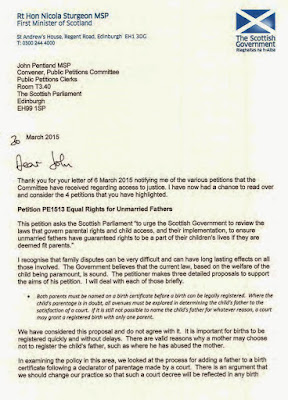
In the letter – dated 30 March 2015 - Nicola Sturgeon also revealed Legal Affairs Minister Paul Wheelhouse had a secret meeting in February 2015 with Lord Gill to discuss the petition and the Judiciary & Scottish Government’s concerted opposition to creating the Judicial Register.

Writing in the letter to John Pentland MSP, Convener of the Public Petitions Committee, the First Minister said: “This petition calls on the Scottish Government to create a Register of Interests for the Judiciary. The Scottish Government considers that such a register of judicial interests is not necessary and that the existing safeguards - the Judicial Oath, the Statement of Principles of Judicial Ethics and the system for complaints against the judiciary - are sufficient. These safeguards, together with the register of judicial recusals, are sufficient to protect individuals from judicial bias.”

Further to the evidence that the Minister for Community Safety and Legal Affairs, Mr Wheelhouse, gave to the Committee on 9 December 2014, he discussed this petition when he met the Lord President in February. The Minister acknowledged the Lord President's concerns about the introduction of a register of judicial interests. The breadth of such a register would make it virtually unworkable. It would need to cover not only financial interests, but also memberships of groups and associations and familial and social relationships. Even so, such a register might not capture relevant issues that could arise.”

“The position of the judiciary is different from that of MSPs and others who hold public office. The judiciary cannot publicly defend themselves. The Lord President has cautioned that such a register could also have unintended consequences. Consideration requires to be given to judges' privacy and freedom from harassment by aggressive media or hostile individuals, including dissatisfied litigants. In addition, there is currently no evidence that judges who should have recused themselves from cases have not done so.”

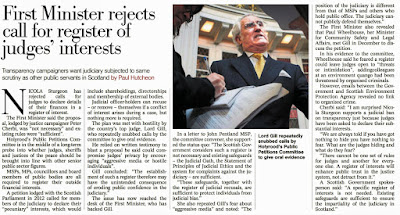
The Sunday Herald newspaper reported on First Minister Nicola Sturgeon’s intervention on behalf of the judiciary and her opposition to the judicial transparency proposal:

First Minister rejects call for register of judges' interests

Paul Hutcheon Investigations Editor Sunday 10 May 2015

NICOLA Sturgeon has rejected calls for judges to declare details of their finances in a register of interest. The First Minister said the proposal, lodged by justice campaigner Peter Cherbi, was "not necessary" and claimed existing rules were "sufficient".

Holyrood's Public Petitions Committee is in the middle of a long-term probe into whether judges, sheriffs and justices of the peace should be brought into line with other senior public sector figures.
MSPs, MPs, councillors and board members of public bodies are all required to register their outside financial interests.

A petition lodged with the Scottish Parliament in 2012 called for members of the judiciary to declare their "pecuniary" interests, which would include shareholdings, directorships and membership of external bodies.

Judicial officer holders can recuse - or remove - themselves if a conflict of interest arises during a case, but nothing more is required.

The plan was met with hostility by the country's top judge, Lord Gill, who repeatedly snubbed calls by the committee to give oral evidence. He relied on written testimony to blast a proposal he said could compromise judges' privacy by encouraging "aggressive media or hostile individuals".

Lord Gill concluded: "The establishment of such a register therefore may have the unintended consequence of eroding public confidence in the judiciary."

The issue has now reached the desk of the First Minister, who has backed Lord Gill.

In a letter to John Pentland MSP, the Committee convener, she supported the status quo: "The Scottish Government considers that such a register of judicial interests is not necessary and that the existing safeguards - the Judicial Oath, the Statement of Principles of Judicial Ethics and the system for complaints against the judiciary - are sufficient.

"These safeguards, together with the register of judicial recusals, are sufficient to protect individuals from judicial bias."

She also repeated Lord Gill's fear about "aggressive media" and noted: "The position of the judiciary is different from that of MSPs and others who hold public office. The judiciary cannot publicly defend themselves."

The First Minister also revealed that Paul Wheelhouse, her Minister for Community Safety and Legal Affairs, met Lord Gill in December to discuss the petition.

In his evidence to the Committee, Wheelhouse said he feared a register could leave judges open to "threats or intimidation", adding that colleagues at an environment quango had already been threatened by organised criminals. However, emails between the Government and Scottish Environment Protection Agency revealed no link to organised crime.

Cherbi said: "I am surprised Nicola Sturgeon supports a judicial ban on transparency just because judges have been asked to declare their substantial interests. "We are always told if you have got nothing to hide you have nothing to fear. What are the judges hiding and what do they fear? "There cannot be one set of rules for judges and another for everyone else. A register of interests will enhance public trust in the justice system, not detract from it."

A Scottish Government spokesperson said: "The Scottish Government considers that a specific register of interests is not needed. Existing safeguards, including the Judicial Oath, the Statement of Principles of Judicial Interests and the system of complaints against the judiciary, are sufficient to ensure the impartiality of the judiciary in Scotland."

Previous articles on the lack of transparency within Scotland’s judiciary, investigations by Diary of Injustice including reports from the media, and video footage of debates at the Scottish Parliament’s Public Petitions Committee can be found here : A Register of Interests for Scotland's Judiciary

Monday, June 15, 2020

FIRE SALE: AIB face sequestration probe as files reveal Trustee was paid £20K by vulture fund to sell home & firebombed farm five days after targeted attack on couple at centre of land case linked to top Scots judges, an ex-Sheriff, an asbestos dumping building company & law firm Levy and Mcrae

Richard Dennis, Kenneth Pattullo face probe. AN ONGOING probe of a case linked to Scotland’s top judge Lord Carloway – has revealed a Trustee acting in a sequestration of a couple who won a court action - relied on his appointment on the basis of a typo in a court document - to go on to strip the couple of all their assets.

And - files now reveal Kenneth Pattullo was paid £20,000 by offshore vulture fund Promontoria - to sell off a firebombed farm and home belonging to a couple who initially won the Court of Session case then lost out when their counsel – John Campbell QC deliberately removed most of their claim after Lord Woolman said Mr Nolan had a case against the building company – Advance Construction Scotland Ltd .

In documents now disclosed to journalists, Nicola Donnelly – a senior manager at Begbies Traynor in Glasgow – admitted in an email to the couple that Promontoria – a vulture fund which bought loans & mortgages from banks including the Clydesdale – paid Trustee Kenneth Pattullo £20,000 - to sell properties belonging to Melanie Collins, and Donal Nolan - which were once valued in the millions – for the sum of £655K.

Records from the very unusual sequestrations of both Ms Collins & Mr Nolan - show their properties were seized by Mr Pattullo of Begbies Traynor on behalf of Advance Construction (Scotland) Ltd – after the building company lost a Court of Session action raised by Mr Nolan in which Advance Construction admitted dumping toxic waste on land owned by the retired National Hunt jockey.

However, after Begbies Traynor had retained the properties on their books for four years – during which time the Clydesdale Bank sold their interest in the properties to Promontoria - the titles suddenly changed hands only a few days after PoliceScotland were called in to investigate a targeted firebombing of Mr Nolan’s farm – which saw four horses die after being torched with petrol by unknown persons.

The couple say Police Scotland believe the targeted arson attack is connected to events related to the court case and the ‘extremely motivated’ bankruptcy which then followed.

Records of land titles obtained from Registers of Scotland reveal Morningside Farm – the target of the firebombing – was sold by Kenneth Pattullo to an Andrew Kenneth Hill of Carluke, Lanarkshire on 22 May 2019 for a purchase price of £380,000 - some five days after the targeted arson attack.

Meanwhile the home of the couple – a house with land - in Newmains, Wishaw, was sold by Mr Pattullo to a “SIPS Homes Scotland Ltd” on 20 May 2019 with a purchase price listed as £255,000

Companies House reports that SIPS Homes Scotland Ltd was created on 4 March 2019 with a registered office at Crossway, Donibistle Industrial Estate, Dalgety Bay, Fife, United Kingdom, KY11 9JE – and has three directors – Mark William Dalziel, Caroline Ann Hynds and Patrick Leaonard Hynds.

A section of land at Branchal, Wishaw – belonging to the retired jockey was sold by Mr Pattullo to the same “SIPS Homes Scotland Ltd” for £20,000 on 4 June 2019.

Begbies Traynor were asked to confirm if Mr Pattullo was in charge of the properties as Trustee - during the events of the targeted arson attack, but they refused to comment.

Susan Reid of Harrogate based Appeal PR – who claim to handle all Public Relations for Begbies Traynor in Scotland stated: “Sorry to be unhelpful, but unfortunately Begbies Traynor is unable to give any information about personal insolvency cases. However, the information is a matter of public record, so you should be able to find it from official sources.”

The sequestrations of both Mr Nolan and his partner – Melanie Collins – after they had effectively won the Court of Session claim against Advance Construction (Scotland) Ltd – came about after John Campbell QC stripped out most of their financial claims for damage & legal expeses – after Court of Session judge Lord Woolman told the couple they had a case against the building company for loss of the use of the use of their property.

A full report on how John Campbell QC reduced his own client’s financial claim almost to zero and without any instruction or consultation - can be found here: CASHBACK QC: Legal regulator’s files reveal senior QC reduced claim without instructions, withheld key evidence & witnesses including Cabinet Secretary from Court of Session case

Commenting on Campbell’s move – the judge said he had never seen this happen in a case previously – and a probe of events has established John Campbell had not sought permission or consultation with his client to strip out the financial damages and legal expenses claims.

Mr Nolan and his partner Ms Collins were then targeted by Advance’s lawyers Levy & Mcrae – who then turned around Advance’s loss in court – and the building company’s admission of dumping toxic waste on Mr Nolan’s land – to go after the couple for hundreds of thousands of pounds in legal expenses.

Levy and Mcrae then petitioned the court for sequestration of Ms Collins on 30 March 2015 – and Mr James Robb (now at Brechin Tindall Oatts solicitors) sought sequestration of Ms Collins and the appointment of the Accountant in Bankruptcy as Trustee in her estate.

The interlocutor from Hamilton Sheriff court dated 30 March 2015 reads as follows:

The sheriff, having heard parties' solicitors, on the opposed motion of the Petitioner, having considered the foregoing petition, together with the productions, and being satisfied that the petition has been presented in accordance with the Bankruptcy (Scotland) Act 1985, and that: * proper citation has been made to the debtor * the requirements of the Bankruptcy (Scotland) Act 1985 relating to apparent insolvency have been fulfilled.

Sequestrates the estate now belonging or which shall hereafter belong to the debtor Ms Melanie Collins before the date of the debtor's discharge and Declares the same to belong to the debtor's creditors for the purposes of the said Act; Finds the respondent liable to the petitioner in the expenses as taxed, Allows an accountant thereof to be given in and Remits same, when lodged, to the auditor of court to tax and to report; and Appoints Accountant in Bankruptcy, 1 Pennyburn Road,Kilwinning KA136SA to be trustee; the whole estate of said Ms Melanie Collins at 07 January 2015 is vested in and now belongs to said trustee, for the benefit of the said debtors creditors

According to financial experts, the appointment of the AIB as trustee in a sequestration is a normal move – and leads to the AIB handing the case to one of their agents – which in this case – was given to auditors KPMG.

However, after KPMG took on the sequestration, and began their work – lawyers acting for Advance approached Sheriff T Millar of Hamilton Sheriff Court – and claimed there had been a typo (administrative error) in their original petition appointing the Accountant in Bankruptcy as Trustee for Ms Collins.

In a closed hearing at Hamilton Sheriff Court on 2 April 2015 - Levy and Mcrae asked Sheriff Millar to swap out the AIB & auditors KPMG for their own preferred Trustee – Kenneth Pattullo of Begbies Traynor.

The interlocutor for the hearing before Sheriff Millar reads as follows:

The Sheriff, having seen and considered the letter of 2nd April 2015 from Levy and McRae Solicitors and it having been noted that an administrative error has been made on the interlocutor of 30th March 2015 in that the Accountant in Bankruptcy was appointed as trustee in error; Allows amendment of said interlocutor by appointing Kenneth Pattulo of Begbies Traynor (CentralLLP), FinlayHouse,10-14 West Nile Street, Glasgow, G12PP as Trustee in the Sequestration of Melanie Collins in place of the Accountant in Bankruptcy

However – according to both financial and legal experts – there was no error whatsoever in the original application to appoint the Accountant in Bankruptcy in the sequestration of Mr Nolan’s partner – Ms Collins.

And – a legal expert has said the court did not actually have the power to amend an error in a petition, rather the court could only ammend an error if the Sheriff had erred in his original decision to appoint the Accountant in Bankruptcy – which is standard practice in sequestrations,

When asked for more information on what happened in this case, and why Levy and Mcrae were able to force s Sheriff to swap the Accountant in Bankruptcy as Trustee for their own choice of Trustee – Mr Pattullo - Hamilton Sheriff Court have consistently refused to provide substantive explanations to these events and a number of addition, unusual rulings related to the sequestration of Ms Collins.

Now, Ms Collins has been told she should approach the court to recall her sequestration, on the basis the court had no power to alter the original Trustee – the Accountant in Bankruptcy – to that of Levy and Mcrae’s preference – Mr Pattullo.

However, in what has now become a battle to secure legal representation to recall the sequestration - multiple law firms have initially worked on the case, confirmed the events at Hamilton Sheriff Court are in error and should be addressed – but later the same law firms have mysteriously withdrawn from acting for Ms Collins after receiving ‘briefings’ or ‘communications’ from those with a vested interest in the case – including Begbies Traynor - the Trustees appointed by Levy and Mcrae.

In the latest attempt to recall the sequestration, Ms Collins approached solicitor Alan Cox of law firm Barton and Hendry in Cumbernauld.

Notes of a meeting between Mr Cox and Ms Collins reveal the solicitor took on the work, and wrote to Begbies Traynor.

However, in an email – dated 15 August 2019 – from Nicola Donnelly – a senior insolvency manager at Begbies Traynor to solicitor Alan Cox of Barton and Hendry – Ms Donnelly told Alan Cox in no uncertain terms that no matter who his clients approached for help – including elected politicians - there would be no change in how events would unfold – which have since led to the sale of all the couple’s properties.

In the email to Alan Cox, Nicola Donnelly states: “I would comment that your clients have instructed previous solicitors [as you are aware] and made complaints to the AiB and their MSP previously as they dispute the validity of the sequestrations. The position obviously will remain the same irrespective of how many different organisations are contacted to act on their behalf.”

Nicola Donnelly also added in her email to Mr Cox: “Eviction actions and forced asset sales are steps taken by a trustee as a last resort. Unfortunately, your clients continued lack of cooperation resulted in the trustee having no other option other than to initiate eviction actions.”

However, an ongoing media investigation has now established the eviction actions referred to by Nicola Donnelly – were undertaken by Addleshaw Goddard - a law firm where Alexander Sutherland - the son of Scotland’s top judge – Lord Carloway was based – but Carloway – real name Colin Sutherland – concealed this conflict of interest in his evidence to the Public Petitions Committee during which he faced questions from Mr Nolan’s MSP – Alex Neil.

After solicitor Alan Cox was contacted by Begbies Traynor - like all other solicitors engaged by the couple to attempt a recall sequestration - Mr Cox later said he could no longer assist in the case.

It should be noted, after Ms Collins was sequestrated in April 2015 – her partner - Mr Nolan – was then targeted by Levy and Mcrae on behalf of Advance Construction (Scotland) Ltd in an action at Hamilton Sheriff Court on 1 September 2015.

In the action to sequestrate Mr Nolan – Levy and Mcrae hired Mr Gavin Walker QC – currently of Axiom Advocates – to attend Hamilton Sheriff Court with instructions to seek the appointment of Mr Pattullo to seize the assets of Mr Nolan – despite the fact he had won the Court of Session claim against Advance Construction for dumping toxic waste on his land.

The couple are now seeking new legal representatives to take on their request to recall the sequestration of Ms Collins, and the Accountant in Bankruptcy has been asked to launch an independent investigation of events in the sequestrations of Ms Collins and her partner, Mr Nolan.

The following questions on this case were put to the Accountant in Bankruptcy (AIB) and it’s boss – Richard Dennis:

Does the Accountant in Bankruptcy have any comment on these targeted incidents of a criminal nature on Ms Collins & Mr Nolan and their farm - which led to the death of four horses and the couple being placed in a state of alarm and fear for their life?

Does the Accountant in Bankruptcy have any comment on the transfer of the titles and sale of the Morningside Farm property, and the fact these titles changed hands to persons of interest - during or only after the targeted fire attack?

Does the Accountant in Bankruptcy have any comment on the sale of this land and the main home & land at Bonkle to SIPS Homes (Scotland) Ltd, and how this sale came about?

Does the Accountant in Bankruptcy have any comment on why Mr Pattullo and Begbies Traynor have not interacted with the couple and their legal agents on various and numerous occasions?

Does the Accountant in Bankruptcy have any comment on the transactions in relation to the securities held by the Clydesdale Bank - during the sequestration of Mr Nolan & Ms Collins, and when the security was transferred during the sequestration from Clydesdale to Promontoria?

Can you clarify what are the AIB & Mr Dennis' responsibilities and liabilities - regarding the actions of trustees, agents administering sequestrations, companies & individuals employed by, and acting on their behalf.

Cam you also clarify what are the AIB & Mr Dennis' responsibilities and liabilities regarding any investigation process into the activities of trustees acting in sequestrations.

Can the AIB confirm if Mr Kenneth Pattullo and Begbies Traynor were the trustee in the sequestration of Mr Donal Nolan, and also the sequestration of his partner Ms Melanie Collins - during the dates of 17/18 May 2019 - these dates correspond to targeted fire attacks (currently under investigation by Police Scotland) which were made on Mr Nolan's farm at Morningside, Wishaw.

Richard Dennis – the Accountant in Bankruptcy - has refused to issue any comment on the above questions put to his office.

CASE BROKE ALL JUDICIAL CONFLICT OF INTEREST RULES:

Nolan v Advance Construction Scotland Ltd [2014] CSOH 4 CA132/11 is the same case which exposed serious conflicts of interest in Scotland’s judiciary – notably where Lord Malcolm (Colin Campbell QC) failed to disclose on multiple occasions - the fact Lord Malcolm’s son – Ewen Campell - represented the defenders in the same court.

Since the sequestration of Mr Nolan and his partner took place after the conclusion of their court case - the couple have been the victim - of what some view as revenge for daring to take on a company with public contracts who illegally dumped hazardous waste on their land, where this same company was and is represented by law firms directly linked to senior figures in Scotland’s judiciary.

Mr Nolan and his partner have been evicted from their own home, lost their farm and land.

And - a deliberate, targeted fire attack on Mr Nolan's stables at a farm in 2019 which resulted in the death of several horses –  is still under investigation by Police Scotland.

Sources believe the deliberate arson attack on the couple’s Morningside Farm which featured in news reports of the tragic discovery of burned bodies of dead horses – is linked to the couple’s sequestration and setbacks in court.

The investigation into the Lord Malcolm case of serious failures to declare conflicts of interest, is reported in further detail here: CONFLICT OF INTEREST: Papers lodged at Holyrood judicial interests register probe reveal Court of Session judge heard case eight times - where his son acted as solicitor for the defenders.

It is also worth noting the Nolan v Advance (Scotland) Ltd case drew in a series of sheriffs and judges – from not easily explained hearings at Hamilton Sheriff Court involving Sheriff Millar, Peter Watson & Levy & Mcrae – and Lord Malcolm’s son – Ewen Campbell – to Court of Session judges including Lord Brodie, Lord Menzies, Lord Woolman, Lord Bracadale (and a concealed recusal) and Lord Hodge – who later prevented the case being appealed to the UK Supreme Court without declaring he had already ruled on the case while in Edinburgh on multiple occasions.

A recent development in the ongoing media probe of this case saw publication of a witness statement from Advocate Ewen Campbell – Lord Malcolm’s son –  which directly contradicts evidence given by  Lord Carloway - to the Public Petitions Committee and MSP Alex Neil in a hearing on 29 June 2017.

A further development saw a court-sourced witness statement of solicitor and ex-Sheriff Peter Black Watson to the Court of Session – which confirmed Watson employed the son of Lord Malcolm in the case to represent the client – Advance Construction Scotland Ltd – which ended up being heard by Lord Malcolm - who concealed his link to his son during multiple court hearings.

During the evidence session - Lord Carloway faced questions from Mr Neil on the Court of Session case - where judge & Privy Councillor Lord Malcolm (real name Colin Campbell QC) – heard a land contamination case - up to EIGHT TIMES while his own son represented the defenders - Advance Construction Scotland Ltd in the same court room.

In response to questions from the MSP, Lord Carloway (real name Colin Sutherland) furiously claimed that Lord Malcolm’s son DID NOT have any “active involvement with the case whatsoever.”

However – the witness statement dated May 2013 - signed by Ewen Campbell – covering the time Campbell worked for Glasgow law firm Levy & Mcrae – contains a written admission Mr Campbell confirming he did in-fact represented the construction company, alongside lawyer Peter Black Watson – who was at the time a Sheriff and partner at the same law firm.

A full report on the publication of evidence contradicting Lord Carloway’s testimony at the Scottish Parliament can be found here: DISHONESTY, LORD: Files reveal Lord Carloway misled Holyrood Committee on involvement of judges’ relative in Court of Session claim – witness statement exposes direct role of Ewen Campbell in £6M land case heard by his father - judge & privy councillor Lord Malcolm

Further material sourced from the Court of Session, including digital evidence in relation to the ongoing media probe of Nolan v Advance - will be published in upcoming articles.