Showing posts with label Mediation. Show all posts

Thursday, October 20, 2022

SCOTS LAW: Legal Highs, Legal Lows. A legal profession which prides itself in preying on clients, ripping-off Legal Aid, fixing court outcomes, concealing malicious prosecutions & judicial conflicts of interest, obstructing public access to justice - and - Why you should really question much of what your lawyer tells you.

World leading? Not a chance M'lud. ONE DAY is a long time in Scotland’s legal world, let alone a full year – but we all can be assured the consistency of wrongdoing, industrial scale dishonesty, legal fee overcharging & outright malice - from Scotland’s legal profession - whether it be in dealing with clients, working in court in civil hearings or in criminal trials, or working for public authorities – is never ending.

While blog journalists have been working on real life cases for the past year, it may be worth reminding readers your rights with regard to regulation of your legal representatives, are as ineffective and futile as they have ever been in Scotland, right up to this date.

After all, since 2008 and some Thirty Five Million pounds plus, later – much of it recovered from fees you pay to your solicitors *and perhaps money & assets your solicitor strips you of when your case goes not the way you were told it would - the Scottish Legal Complaints Commission (SLCC) has not once named a corrupt solicitor or law firm – or actually had any impact on standards of legal service in Scotland.

Fourteen years for the Scottish Legal Complaints Commission - billed in 2008 as an “independent” regulator of Scotland’s legal services – to have absolutely zero material impact on the scale of dishonesty in Scotland’s legal profession – is itself a tribute to how corrupt Scotland’s legal mcmafia really is, and – an indicator of the sheer level of control exerted by professional groups such as the Law Society of Scotland, and Faculty of Advocates (to name but two) on how MSPS and the Scottish Government can or cannot give increased rights to consumers of legal services in Scotland.

For instance, are you looking for a lawyer right now to conduct legal business or perhaps pursue a civil claim, or defend you in a criminal trial?The fact is, if you are trying to find out if a particular solicitor or law firm has any record of complaints, discipline issues, or are just plain corrupt - you - the consumer - are not going to find out.

So, why would you even bother going to a lawyer or a law firm who has perhaps fleeced one hundred clients before you go through their doors? Think first, readers .. do you really need to spend Five thousand pounds on a batch of letters to, say - your next door neighbour for the next Five years over a fence which is 10cm higher than it should be … and then lose the case in court and have to pay your own solicitor say .. another Twenty Thousand pounds for losing, and then end up sequestrated by the solicitor’s good friend the local Sheriff – when you cannot pay the legal fees?

Yes, it is that easy. It’s your money, your lives, your home, your family, your business – consumers. Think first, Tens of thousands of people have gone before you thinking they are smarter than a Scottish lawyer, and what happened next? Well, the statistics tell their own story. Thousands of complaints a year to Scotland’s so-called ‘independent’ legal regulators – staffed by lawyers and their families – and guess what, a tiny amount of redress if anything, and thousands of clients lives ruined.

The public debate on legal services in Scotland is rather odd, and very biased.

Mostly, any public debate on Scotland’s legal profession, is driven by the legal profession itself.

Having examined Scotland’s cliquey legal profession for decades, worked on thousands of cases, reported on hundreds more – and when assigned cases to assist clients through the often murky, dishonest world of legal services and Scotland’s institutionally dishonest courts system and not forgetting the institutionally everything bad Crown Office – it can be easily said – consumers of legal services in Scotland have about as much chance of obtaining a fair hearing, as a baked pie in front of a group of staring, salivating alligators with Scottish LLB Law degrees & judicial robes.

The world, of course – is a bigger place. And, with the advantage of the internet, and the ability to communicate on global platforms, away from the Scots legal mcmafia sponsored public relations spin, and bought up influencers, clients, consumers, journalists and readers can find a more open and less legal profession driven debate on justice, the courts, legal services, and just about anything else you can think of.

Example - If you are interested in US politics and the US Courts, and judiciary – and trust me – you should be - readers who want to expand their knowledge of what judges and lawyers do in and out of court, should start looking at how the US media cover America’s justice system and the US Supreme Court - because - in the US, journalists and lobby groups are much more open and willing to investigate and write up exactly what is going on with a judges' interests, conflicts of interest and recusals.

Even better, there are Law Professors and Academics in the US, who will tell you – the public - the absolute truth about the workings of the US Judiciary and 'SCOTUS' - otherwise known as the Supreme Court of the United States.

Expand your knowledge, people. Look at how other countries media deal with their justice systems and those parts of the judiciary which consider themselves too powerful to be held accountable to ethics, expectation of justice, or even – the law itself.

Reading up on how other countries report on their judges, courts and the workings of the justice system will easily bring even the occasional reader to conclude much of what you have just read, is never reported in Scotland or the UK. In fact, academics here can very easily be roped into (mostly willingly) in what are absolutely vicious campaigns against journalists looking at the workings of the judiciary.

There are of course, other advantages of reading media outside the sphere of Scotland’s legal profession reach in that journalists don’t have to put up with ranting calls from UK or Scottish Judicial Office Press Officers, who end up screaming down the phone at journalists and editors because the thorny question of judges conflicts of interest, judges unexplained wealth & lifestyle, and participation in political deals, lobbying, international bargaining and political lobbying here in Scotland come up for scrutiny.

As colleagues in the media have observed – reviewing the audio records of those calls, would indeed one day make a good book.

So, what have blog journalists been looking at in the past year.

A deep dive into certain long running news articles in relation to the plight of victims in all kinds of scandals, from medical to ill treatment at the hands of whichever Scottish public service, such as Health, Policing, Courts, Judiciary, Local and Central Government – have revealed that lawyers and their law firms quoted three paragraphs down in the articles – are demanding their ‘clients’ sign up to Non Disclosure Agreements – even before legal representation is taken on – and that any compensation recovered be subject to significant success fees for the law firm involved, with clients also forced to sign an agreement they will not raise a complaint, or their representation will be terminated.

And, it certainly does not take too long for lawyers who give quotes to the media on how they are so involved in representing their clients case – to call in a client for a menacing chat, which – now that we live in a world where everyone records everyone … is much more able to be reviewed by journalists and people outwith the legal profession.

The law firms involved, are – unsurprisingly – all “Award Winning Law Firms” – based in Scotland’s big cities and regularly quoted in whatever scandal is the headliner for the week, or weekend.

Still think you are smarter than a Scottish Lawyer? … hmmm!

Does the following example apply to anyone you know?

A meeting with your lawyer goes like this.

Hello, dear client. Tell me your case. Wow! I have never heard of your predicament before ... This is a disgrace! I can take you on as a client but first, you must sign up to our terms of business, give us Five grand, and you also have to sign a Non Disclosure Agreement - and while you are at it, we would like to store your property titles, just in case you cant pay our fat padded faked-up legal fees and we will take your house instead.

Hey folks, this happens a hundred times a week in Scotland. And, for years. Decades even. So, why not get wise to it instead of being ripped off. Don't say you haven’t been told!

Here’s a question for readers:

Have you ever wondered why – in the past fourteen years from 2008 to 2022 – hardly anyone ever gets to see the actual detail in complaints investigations, outcomes, quantum on actual losses by clients compared to the derisory compensation (if any) paid out by predatory law firms after an ‘investigation’ by the Scottish Legal Complaints Commission?

Small numbers, isn’t it. A handful. And, few if any law firms named – in the past Fourteen Years.

In an active case currently under scrutiny, journalists were handed recordings which reveal clients are being threatened during arbitration hearings organised by the Scottish Legal Complaints Commission.

Yes, you read that correct. Clients who agreed to arbitration hearings organised by Scotland's legal regulator - are being openly threatened and intimidated by solicitors - in front of 'qualified' arbitrators and Legal Complaints Commission staff.

Perhaps, upon reading this, you may think the Arbitrators and SLCC staff may step in, even offer to assist the client over the lawyer's shouting, threats and intimidation and their audible threats of using courts and Scotland's ever-puppet judiciary to go after clients.

Not a chance. In fact, the Scottish Legal Complaints Commission denied the Arbitrators or their own staff members hear or witness anything – yet the audio records confirm these events.

In fact - journalists have also been handed communications where the Scottish Legal Complaints Commission actually threatened clients - who had already been threatened at SLCC run Arbitration hearings - that if they uttered a word of what happened - the Scottish Legal Complaints Commission would act against them in some undefined way.

To say the above is corruption at work, would be an understatement at least - but you can be sure, when our investigation is complete, the material in these cases will be published.

Now, to some other issues journalists have been looking into.

Recent cases brought to this blog's attention reveal solicitors are requesting extra payments over legal fees from clients, in crypto currency.

These payments, in many cases appearing to be forced payments, with a threat that if they are not made legal work will cease on anything from claims against councils, to writing a will - are being demanded by law firms from a wide spectrum of clients, including the elderly - the latter of which first drew journalists attention to - as reports were coming in of elderly clients unable to handle technology to the point law firm employees were visiting home addresses to help their clients set up crypto currency accounts which would pay into accounts held by solicitors or 'other persons' connected to a law firm - but which strangely do not show up in the law firm's accounts to the Law Society of Scotland or HMRC.

So, if any readers have elderly or vulnerable relatives who are being forced into making off-the-books crypto currency payments to Scottish law firms - you can email this blog with the details to add to the information now being collected by journalists.

Oh, and if you were wondering how deep Scotland’s legal profession has dived into crypto currencies - to make it all nice and legal, the Scottish Government working group on crypto assets and crypto currency is headed by a UK Supreme Court judge - Lord Hodge.

A number of cases where criminal complaints and investigations have arisen in relation to activities at properties owned by Scots lawyers, and several members of the judiciary in EU countries and in the Gulf states, have been passed to journalists.

Allegations in respect of these cases range from financial crime to tax avoidance, domestic violence, and sexual assault.

Interestingly, many of those who have passed on information in relation to allegations and criminal complaints in such cases, are from Scotland or the UK, and have attended properties owned by certain high flying Scots lawyers & Advocates - in a guest role, of sorts.

Further information in relation to properties in the Gulf States - owned by leading figures of Scotland’s legal world, including the judiciary document cases where persons employed by the owners have been subject to threats, and in certain cases, swift deportation back to their countries of origin, mostly in Asia after events witnessed at the premises became subject to allegations and investigations.

Several key figures within Scotland's legal establishment - have sought to ensure these cases - do not come to light in the media, however the leads are now being investigated and publication may occur at a later date.

In a case which relates to a cover-up within Scotland’s NHS Estate – journalists have been investigating links between Scotland’s legal world & the misuse of evidence by key NHS organisations, over the past 15 months.

The case extends to cover significant patient risks, concealed by NHS Executives who were involved in switching multi million pound contracts and trying to cover their tracks.

Journalists have been investigating the NHS scandal involving NHS Grampian, in which NHS Executives and staff arranged, and colluded to target and discredit Scottish Medical Providers, in a malicious campaign to remove their business, and transfer the contracts to preferred providers.

The sums involved total millions of pounds, and investigating the trail of wrongdoing within NHS Grampian has led to the detection of organised fraud and collusion within Scotland's entire NHS estate and factual evidence revealing corruption right at the heart of NHS National Procurement.

Some of the documents in relation to the NHS Grampian fraud have been posted to Twitter. However a full investigation and publication of material will appear in due course.

Another issue journalists are looking into - is the wide and varied property ownership of solicitors and law firms.

In towns and cities across Scotland, local law firms and solicitors own and hold interests in multiple properties.

How these properties have come to be owned by solicitors is indeed, a very murky affair and a lengthy battle to reveal.

In many cases, there are solicitors who own twenty plus properties in very intricate ownership arrangements clearly designed to thwart persons from finding out the real owner.

Some lawyers have chosen to spread ownership around their families and relatives, whereas others have created offshore trusts and networks of companies of which the aim is clearly to defeat any link between the solicitor and the properties.

The family ownership link has been known about for some time, and frequently emerges when – for example – a solicitor’s partner decides to separate, and they then find out they own a selection of properties they were unaware of when their solicitor partner unleashes his colleagues on their subsequent separation and divorce.

An interesting revelation from the property scrutiny project – identifies solicitors who own significant numbers of rental properties and who are all receiving Housing Benefit paid rents from – in some cases – their criminal legal aid clients,

Yes, You read that correctly.

Solicitors are housing clients in what are in many cases – run down, rat infested flats and properties around Scotland AND – the rent on the property is paid to the solicitor in Housing Benefit, while the solicitor is also collecting Legal Aid cash for representing the client, his tenant in criminal trials.

There are hundreds of such cases currently being looked at. An example of one such case currently being investigated involves a solicitor and Tribunal judge - who represented a client who was found guilty of sexually assaulting paramedics. The client turned out to be the tenant of the solicitor, who was receiving Housing Benefit for his client’s rent, as well as Criminal Legal Aid for representing his client, found guilty of sexually assaulting paramedics.

Turns out the solicitor & Tribunal judge has been at this for years, raking in public cash for tenants he houses, and represents in criminal court at the same time – and – many solicitors are doing exactly the same.

The petition on the Register of Judges Interests. Yes, the petition rumbles on, and journalists await action by the Scottish Government. However, the time has been spent usefully studying the judiciary, watching how assets move, who talks to who, which judge is threatening who about transparency, and how judges waft around the world doing their wee bit for greed, avarice and sheer dishonesty in the legal world.

An update on the petition will be published in the coming weeks.

So, as you see - never a dull moment in the media, or in the legal profession.

And finally.

Whistleblowers. If you want to speak out on what is occurring in your public service, company or whatever the issue is - use an email service such as Protonmail or wherever, and contact the blog or a journalist that you trust and an editor who will not burn you to his friends in whichever public service you are speaking up against.

Sunday, May 03, 2020

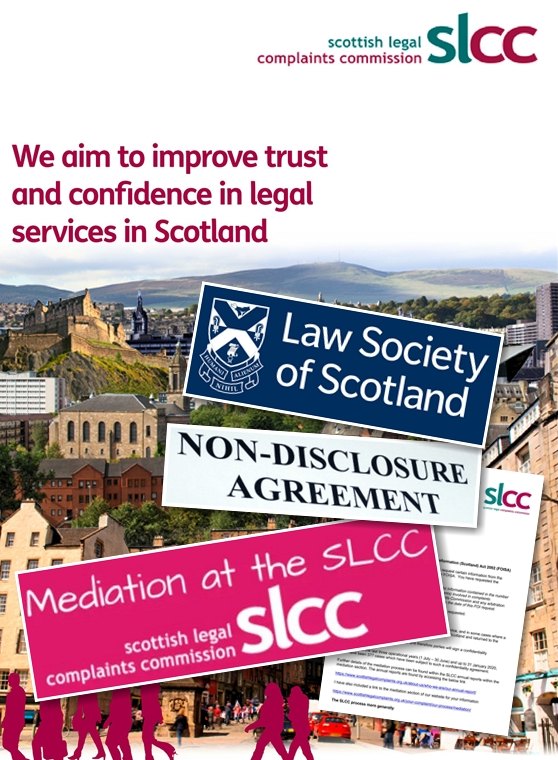
REGULATOR SCRUTINY: Scots Legal Complaints Commission cost consumers & taxpayers £30M – rogue lawyers ordered to pay ONLY £963K over TWELVE YEARS, probe reveals law firms buy secrecy from financially ruined clients with Non Disclosure Agreements

Legal services regulator faces scrutiny. SCOTLAND’S legal services regulator – the Scottish Legal Complaints Commission (SLCC) - created in response to evidence of bias by Law Society of Scotland control of solicitors self- regulation – has cost taxpayers & clients a staggering £30 Million since 2008.

And, amid renewed media interest in continuing pro-lawyer bias in the regulation of Scotland’s legal sector – data obtained from the SLCC now reveals pittance levels of compensation paid out to thousands of financially ruined clients - amounting to less than £963,000 over TWELVE years.

Evidence has also emerged that corrupt Scots law firms are using the same Non Disclosure Agreements used by corrupt businessmen and jailed ex-Holyrood moguls such as Harvey Weinstein to buy secrecy from financial scandal which could impact on their business reputation & brand.

Cases brought to the attention of the media indicate several well known law firms, and even High Street solicitors have forced financially ruined clients into accepting pitiful amounts of compensation - while imposing strict secrecy agreements to ensure the details of financial scandals and identity of the law firm will never be revealed.

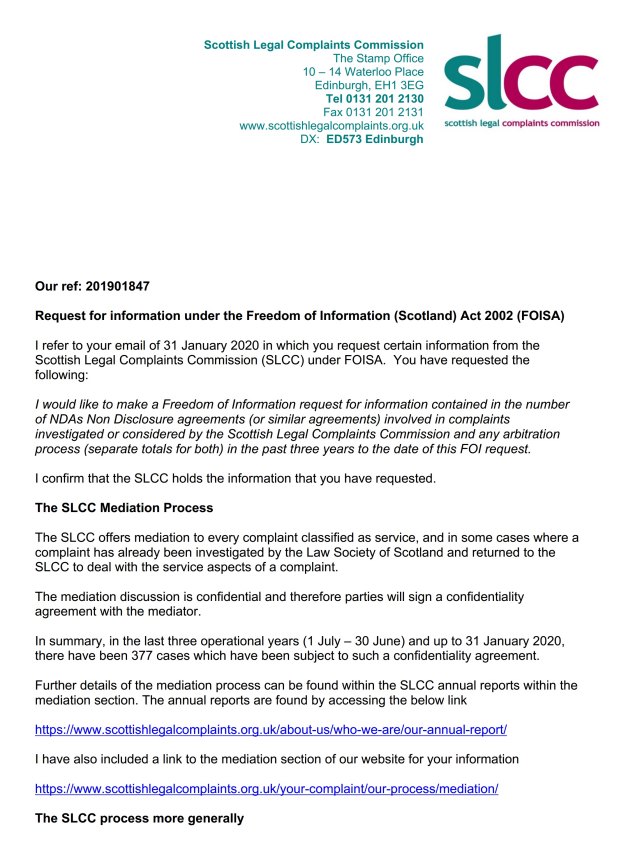
In response to a Freedom of Information request – the Scottish Legal Complaints Commission admitted at least 377 cases of serious complaints against Scottish lawyers in ONLY three years – were subject to conditions of strict secrecy agreements between mediators, law firms and clients who eventually signed up to Non Disclosure Agreements (NDAs).

FUNDING LEGAL COMPLAINTS:

The cost of funding the Scottish Legal Complaints Commission comes from a general complaints levy – which is funded by legal fees taken from clients.

After the funds are collected from clients, the levy is then is paid to the SLCC by all practising solicitors, advocates, QCs and other legal representatives in Scotland.

The figures from 2008 to 2019 - sourced from the SLCC’s budget reports - list a total of around £27,812,965. collected from the complaints levy since 2009.

A further sum of at least £2million in public cash was paid to the SLCC by the Scottish Government in 2008-2009  - making a total income of around £29,812,965 since the legal regulator began investigating complains against rogue lawyers some twelve years ago.

The SLCC’s accounts from 2008-2019 reveal the following figures: 2008-2009 £2,000,000 (received from Scottish Govt), 2009-2010  £2,142480; 2010-2011 £2,661999 2011-2012  £2,714,918 (actual intake – £1,724,624 after SLCC forced to use £1m cash reserves to reduce levy) 2012-2013 £2,792,779; 2013-2014 £2,889,679; 2014-2015 £2,679,500; 2016-2017 £2,808,300; 2017-2018 £3,163,700; 2018-2019 £3,326,199; 2019-2020 £3,623,705 proposed levy & income.

COMPENSATION DOES NOT COVER ACTUAL CLIENT LOSS:

Confirming the total amount of compensation paid to clients who suffered huge financial losses, the response from the SLCC in relation to an FOI request stated: The total amount of compensation directed by the Scottish Legal Complaints Commission to be paid to complainers since its creation to 31 January 2020 is £963,277.38.”

The response added: “This figure includes compensation awarded for inconvenience and distress and compensation for actual loss.”

However, and importantly - the Scottish Legal Complaints Commission did not provide figures for any actual financial losses suffered by clients - or financial losses quantified by clients.

The FOI disclosure also revealed the Scottish Legal Complaints Complaints Commission does not record actual sums paid to complainants.

And, the legal regulator admitted tens of thousands of pounds in compensation have still not been paid to clients, by solicitors already ordered to do so by the legal regulator.

The SLCC stated in it’s FOI disclosure: “Whilst the SLCC does not record the actual sums paid, we do record where we are notified that compensation is not paid. This figure is currently £41,516.89.”

Additionally, new data recovered via a Freedom of Information request reveals at least 377 cases of serious complaints brought against Scottish lawyers in the past three years – were subject to conditions of secrecy agreements between mediators, law firms and clients who signed up to Non Disclosure Agreements (NDAs)

BUY SECRECY – LAW FIRMS FORCE NON DISCLOSURE AGREEMENTS TO CONCEAL SCANDAL:

On the subject of Non Disclosure Agreements between clients, and their solicitors and law firms who were the subject of complaints - the SLCC stated: “In summary, in the last three operational years (1 July – 30 June) and up to 31 January 2020, there have been 377 cases which have been subject to such a confidentiality agreement.”

“The SLCC process allows parties to a complaint to resolve matters between themselves at any point prior to a Final Determination being issued by the SLCC so it possible that such agreements could be negotiated between parties out with our process to resolve a complaint.”

“It is not within the powers of the SLCC to recommend a NDA or similar as part of a resolution to a complaint and the SLCC would not enter into such agreements to settle a complaint.”

“This information is provided to the SLCC as part of an informal resolution, and the parties to the complaints are under no obligation to provide us with such information. Therefore it would not be recorded in a readily accessible way on the SLCC system. I am unable to provide you with exact figures in respect of these types of Non-Disclosure Agreements.”

“There have been approximately 2 instances of such agreements being recorded against complaints settled out with the SLCC process within the last three years to the date of this FOI request.”

While the SLCC does not itself pay compensation to clients – many of whom have suffered life changing and enormous financial losses at the hands of their own legal representatives - the legal regulator does order law firms to pay compensation and other payments to complainants.

However, in just a small snapshot of cases looked at by journalists - where solicitors helped themselves to their client’s assets, emptied bank accounts, appropriated land titles and property from deceased estates & fleeced millions of pounds from clients in investment scams – there are clear indications the current system to compensate for actual and quantifiable financial losses is still heavily weighted in the solicitor’s favour.

In some instances - the Scottish Legal Complaints Commission, Faculty of Advocates and Law Society of Scotland have clearly, and continually turned a blind eye to multi million pound losses attributed to clear, and documented examples of dishonesty & negligence on the part of legal representatives.

However – Diary of Justice has recently been approached by several clients who were forced to register complaints to the Scottish Legal Complaints Commission after losing considerable sums to rogue solicitors and several well known Scots law firms.

Once complaints were filed with the legal regulator, several clients alleged they felt that they were being intimidated into the mediation process - and forced to accept outcomes and settlements far short of their expectations or actual financial losses.

Some clients who entered the SLCC’s mediation process have also alleged they were denied the right to seek independent advice on mediation and settlement offers - which in some cases were time barred to ensure clients were forced to accept little or nothing in return for – in some cases - hundreds of thousands of pounds in actual financial losses.

The Scottish Legal Complaints Commission has so far not listed actual financial losses or financial losses quantified by clients in any statement from it’s creation in 2008 to publication of this article.

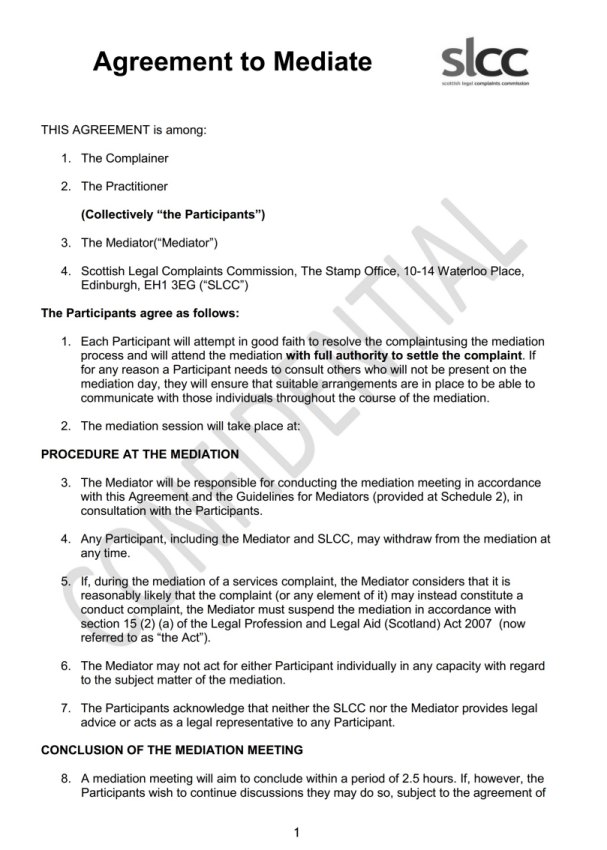
In response to queries from a DOJ journalist, the Scottish Legal Complaints Commission released a copy of their Agreement to Mediate.

The Agreement to Mediate – contains contains numerous conditions, including strict terms of confidentiality - for mediation to occur between clients, mediators & lawyers accused of wrongdoing.

On the issue of Settlements, the SLCC’s Agreement to Mediate states the following:

SETTLEMENT

11. When/if the Participants agree on how to resolve the dispute, the Participants will draw up a Settlement Agreement with the assistance of the Mediator, for the Participants to sign and date. The Settlement Agreement will be legally binding when it is in writing and executed by the Participants. The Participants will be legally bound by the Settlement Agreement once executed and undertake to give effect to the Settlement Agreement.

12. In the event that the Settlement involve actions by one Participant over a period of time, the other Participant will inform the SLCC’s Mediation Co-ordinator when all terms have been met.

13. In the event that a Participant does not fulfil the terms of the Settlement Agreement, the other Participant:

a) may be released from the Settlement terms if they so wish, by giving written notice to that effect to the other Participant; and

b) shall inform the SLCC of the failure to fulfil the terms of the Settlement Agreement.

14. All Participants to the dispute reserve their respective rights should a Settlement not be reached through mediation.

CONFIDENTIALITY

15. The Participants, the Mediator and the SLCC agree that the discussions at mediation will be kept confidential, including the terms of any settlement Agreement.

This paragraph shall not apply where:

i) The Participants consent to specific disclosure;

ii) Disclosure is necessary to implement and enforce the Settlement Agreement;

iii) The Participants are, or any other person is, required by law to make disclosure;

iv) The Mediator reasonably considers that there is serious risk to the safety of any person if the Mediator does not make such a disclosure;

v) There is any allegation of a breach of the Settlement Agreement and disclosure is required for the purposes of taking further action.

16. A Participant may disclose information or documents obtained during the mediation to a person not present at the mediation where that Participant needs to do so in order to obtain professional advice or where the person is within that party’s legitimate field of intimacy. A Participant disclosing information or documents in these circumstances must inform the professional advisor or any such person that the information or documents are confidential.

17. In the event of breach of the obligations contained in paragraph 15 of this Agreement by any Participant, the Mediators, the SLCC and the Participant(s) who have not caused the breach shall no longer be bound by the terms of this paragraph but their rights to take further action in respect of any such breach of this Agreement shall be preserved.

18. Neither Participant may have access to the Mediator’s notes nor SLCC Mediator Review Form nor call the Mediator nor the SLCCas a witness in any proceedings related to any of the issues between them. The Mediator’s opinion will be inadmissible in any subsequent proceedings, which may take place between the Participants concerning the subject matter of the mediation.

The SLCC Agreement to Mediate also contains a key section which removes any liability from mediators should they be considered to have acted negligently or omit to consider issues within the scope of the mediation.

EXCLUSION OF LIABILITY

20. Neither the SLCC nor any Mediator, nor any body with whom the Mediator is professionally associated, shall be liable to the Participants for any act or omission, whether negligently or otherwise, in connection with the performance or purported performance of any of the services provided by them or the obligations arising under this Agreement. This Agreement may be produced and relied upon as a defence to any claim made by a Participant against the SLCC, any mediator or body with whom the Mediator is professionally associated.

Commenting on issues relating to mediation, a spokesperson for the SLCC provided the following statement: “We know that mediation is an unfamiliar process for some parties, but our experience is that, once people take part, it has very high resolution rates, receives higher customer satisfaction scores from both lawyers and complainers, and is more efficient. It allows both parties to take control of the outcome of the complaint, and find an agreed solution that resolves the complaint to both parties’ satisfaction, is often quicker than a full investigation, and is less costly to administer.”

“Of course, not all cases will be suitable for mediation, and mediation only proceeds where both parties agree to attend. Where mediation does not help parties reach an agreed outcome, or where it is not appropriate, cases progress to investigation.”

“We do ask for feedback from everyone who takes part in mediation, and we use this to take action on any concerns raised, and to consider what improvements we might be able to make to our processes.”

The SLCC also provided the following information:

These figures are from our last annual report year (2018-19): Outcomes at mediation: Before we start investigating a service complaint, we give the complainer and the lawyer or firm an opportunity to attend a mediation meeting, led by an independent external mediator.

Number of complaints resolved by mediation: 65

Agreed to mediation when offered: 39% (both parties need to agree to participate for mediation to proceed – if one party does not wish mediation then the matter is progressed to investigation instead)

Mediation was successful: 71% (mediation does have a high success rate in delivering agreed outcomes, but in 29% of cases parties either did not reach or accept an outcome, which they are entitled to do, and so the case proceeded to formal investigation and, if required, determination).

We have a page on our public facing website devoted to mediation (https://www.scottishlegalcomplaints.org.uk/your-complaint/our-process/mediation/), which explains the process for both complainers and lawyers, and includes an information booklet and a video featuring some of our mediators, to help people understand what mediation is and how it might help them to reach a consensual resolution.”

“The Legal Profession and Legal Aid (Scotland) Act 2007 provides that the SLCC may offer mediation as way of resolving service complaints.  This is set out in section 8 of the Act. The objective of mediation is to enable the parties to resolve the service issues complained about quickly, if they choose.

Mediation can be offered at any stage after a service issue is deemed an eligible complaint (mediation is not considered appropriate where there is an eligible conduct issue to be investigated).  It is voluntary, and requires the acceptance of both parties. Mediation is a confidential process which gives the complainer and the firm the opportunity to meet together with an independent third-party so they can both decide how to sort out the service complaint.  The mediator is a neutral person who helps them talk through the problem to see if they can agree a fair and reasonable solution.

If the parties reach an agreement at mediation and if all the settlement terms are fulfilled, that is the end of the complaint process. If the parties reach an agreement but for whatever reason, the settlement terms are not fulfilled, the complaint may proceed to Investigation, after the nature of the alleged breach has been considered by the SLCC. If the complainer alleges that the solicitor breached the terms of the Settlement Agreement, they can submit a new complaint to the SLCC about this. If the parties do not reach an agreement at mediation, the complaint moves to Investigation. Mediation is confidential to the parties of the mediation, the mediator and the SLCC.

Previous media investigations, reports and coverage of issues relating to the SLCC can be found here: Scottish Legal Complaints Commission - A history of pro-lawyer regulation.

Wednesday, February 04, 2015

FRACKING JUDGES: Scotland’s top judge promotes shale gas extraction, big oil and renewable energy as profit incentive for courts on same day Scottish Government announce ban on fracking

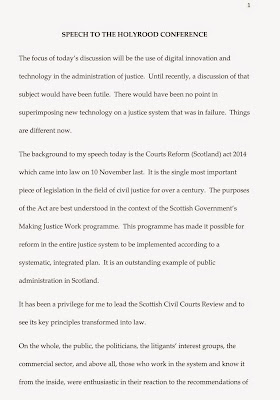
Courts to serve fracking & energy interests - top judge. SCOTLAND'S top judge, Lord President Lord Brian Gill has spoken of his hopes that fracking for shale gas will increase business in the courts. The top judge also wants to turn Scotland's legal system into a mediation haven for big business, big oil, shale gas barons & bankers, according to a speech he gave on the theme of “Digital Justice” last week.

The move is hoped to draw in millions for lawyers and judges - without the need to declare any interests.

During the fourteen page speech – Gill (72) also urged the legal sector to better exploit Scotland’s “natural resources” and renewable energy for their own profit.

Speaking on the issue of fracking, Gill said: “Our resources of energy may be increased by the retrieval of shale gas, if that should be allowed. It seems to me therefore that the opportunity that our natural resources present should be served by the court system.”

However, Gill’s own views on the nation’s energy policy and how the legal sector should exploit it for their own ends was delivered the very same day the Scottish Government grudgingly announced a ban on new shale gas fracking schemes.

Making a statement announcing the ban on fracking after it emerged Energy Minister Fergus Ewing had criticised MSP Joan McAlpine for assisting constituents against plans by the Duke of Buccleuch to mine coalbed methane at Canonbie in Dumfries and Galloway, Mr Ewing told the Parliament: "I want to ensure that the voices of the communities likely to be most affected are heard, and are heard in a more formal and structured way.I am therefore announcing today that in addition to the technical work I've referred to on planning, environmental regulation and upon assessing the impact on public health, Scottish ministers will also launch a full public consultation on unconventional oil and gas extraction."

In spite of the Minister’s promises of a full public consultation, it has been reported there are many in Canonbie who are “too afraid to speak out” against fracking - and now, with the courts and judiciary seemingly keen to exploit fracking and other runs on natural resources “to follow” as a profit model - it can surely only be a matter of time before wealthy landowners turn to their friends and investors in the courts to ensure shale gas plans go ahead - no matter the views of local communities and residents.

Speech by Lord Gill on Digital Justice, Fracking & Big Oil. During the speech, Lord Gill also chastised his own judicial colleagues & lawyers for missing out on exploitation of Scotland’s oil boom.

Lord Gill said: “In the 1960s and 1970s the economy of Scotland was transformed by the discovery of North Sea oil. The judges and lawyers of that time were not alert to the opportunity that Scotland could be an international forum for resolving disputes in the oil and gas industry. We paid a price for our complacency when the international oil and gas industry passed us by.”

Gill continued: “Half a century on we should look at Scotland's economic opportunities and see how the courts can best serve them. In recent years a commitment to renewable energy has brought wind power to the fore as an energy source. Other forms of renewable energy may follow.”

The top judge also claimed Scotland can be made an international centre for litigation and mediation.

Gill said "Our legal system should be a driver for economic progress in Scotland. Our courts and our judges can and should contribute to the prosperity of our country. We can do that if, by the excellence of our judges, and our legal profession and the efficiency of our courts, we make Scotland a forum of litigation that not only retains litigations that at present go elsewhere but also becomes a forum of choice for litigations from abroad.."

However, Gill's policy of promoting the murky, expensive and disreputable Edinburgh legal world as a centre of international litigation and mediation may well be destined to hit the buffers.

Previous attempts by the Scottish Government and now former Justice Secretary Kenny MacAskill to bring make Scotland a more attractive place for international litigation and mediation have come to nothing, even after large amounts of public money have been thrown at the idea and public money lavished by Scottish Ministers on enterprises such as the Scottish Arbitration Centre.

And, despite Lord Gill’s claim of judges supporting the economy, it is unclear how much the judiciary is financially contributing to Scotland, given judges refuse to declare their financial interests.

Over the past two years, Lord Gill has fought a bitter battle with the Scottish Parliament who are considering a proposal called for in Petition PE1458: Register of Interests for members of Scotland's judiciary to creating a register of interests for judges.

The move to bring transparency to judges wealth, links to business & other interests comes after it emerged members of the judiciary have a significant proportion of their undeclared riches in offshore tax havens, arms length trusts, shareholdings in vested interests, energy firms, land ownership, companies linked to public contracts - some within the justice system itself, companies involved in organised crime and secretive links to big business, finance & banking.

A parliamentary debate at the Scottish Parliament which saw MSPs overwhelmingly support a motion urging the Scottish Government to consider a register of judicial interests was reported by Diary of Injustice along with video coverage here: Top judge & Scottish Government told to rethink refusal on declarations of judges as Holyrood MSPs support calls to create a register of judicial interests

Previous articles on the lack of transparency within Scotland’s judiciary, investigations by Diary of Injustice including reports from the media, and video footage of debates at the Scottish Parliament’s Public Petitions Committee can be found here : A Register of Interests for Scotland's Judiciary

Friday, September 28, 2012

Clients snared in £18K a year ‘Mediation Trap’ at Scottish Legal Complaints Commission find little resolution as dodgy lawyers ‘play for time’ to avoid complaints investigations

SLCCMediation at Scottish Legal Complaints Commission branded expensive time wasting tactic. A SCHEME set up by the Scottish Legal Complaints Commission (SLCC) to mediate complaints made against rogue Scottish solicitors & law firms by clients has been branded nothing more than an expensive time wasting strategy which more often than not results in failures of outcomes for the client and advantageous lengthy delays to investigations being started into many Scots law firms over serious complaints made about their service.

In the past year alone, mediation at the Scottish Legal Complaints Commission has cost upwards of EIGHTEEN THOUSAND POUNDS, with a significant number of cases being sent back to investigation after the lengthy mediation process failed.

Clients who have been stuck for months in what has been dubbed by some as a ‘mediation trap’ have recently contacted Diary of Injustice, reporting numerous difficulties and a breakdown of expectation after false promises of amicable conclusions or a ‘sorting out’ of difficulties between clients & solicitors, which have more often than not disappeared during the time it has taken mediation cases to progress, with many clients finding their solicitors have been much less than honest during the mediation process.

As part of an on-going investigation into the viability of mediation between clients & solicitors who have provided expensive, yet poor, often negligent legal service, Diary of Injustice asked the Scottish Legal Complaints Commission to disclose its latest records of medication cases.

MEDIATION slcc FOIbmp_Page1The SLCC responded via a Freedom of Information legislation, disclosing information which makes extremely poor reading for any clients who are currently being cajoled by the SLCC into what is clearly a very poor mediation scheme with little results :

1. 91 cases have been put to mediation in this last year (i.e. since our last annual report).
2. There has been 58 successful mediation outcomes
3. There has been 33 mediation failures
4. The number of mediation outcomes accepted or rejected by complainer/solicitor is not applicable - if either party does not want to agree, there is no settlement. Such a mediation falls within the number of "mediation failures",
5. 33 mediation cases were sent to Investigation (if a mediation fails, the case goes to Investigation),
6. 0 mediation cases have been abandoned
7. The cost of all mediation cases equals £18028.29

While the above figures reveal some 58 ‘successful mediation outcomes’, it appears clients in several of these cases had to settle for much less than they expected to gain from the mediation process.

After DOI journalists made further enquiries of legal sources, it will surprise no one to lean that most of the outcomes in what the SLCC have dubbed ‘successful mediation outcomes’ appear to have disproportionately benefited the law firms & solicitors being complained about more so, than the client victims who were forced to go to the SLCC because of poor legal services undertaken by their solicitors.

There is also evidence to support claims from some clients that solicitors & law firms have been using the SLCC’s mediation process as little more than a delaying tactic to prevent full complaints investigations by regulators which could result in stiffer penalties and media exposure for those in Scotland’s legal profession who consistently abuse their clients.

Speaking to Diary of Injustice, a legal insider said it was common knowledge that law firms were abusing the mediation process simply to avoid investigations into their conduct. He also claimed material from the mediation process has been seen on an almost ‘live basis’ by the Law Society of Scotland & solicitors acting for the Legal Defence Union (LDU) who have previously been reported to have been involved in secret no-notes taken meetings with the highest ranks of the Scottish Legal Complaints Commission, featured earlier by Diary of Injustice in a report here : Investigation reveals Scottish Legal Complaints Commission's links, secret 'off the record' dealings with lawyers lobby group Legal Defence Union

A client who has been stuck in a months long mediation case which ultimately failed described the whole process as “a complete waste of time which only benefited the lawyers and has probably ruined any chance my complaint about my solicitor ripping me off will ever be properly investigated by the SLCC.”

The SLCC have issued no further comment or details on the types of cases entering into its mediation scheme, nor have they published the details of those thirty three cases which have failed and then been put back into the investigation loop.

If you have difficulties with the Scottish Legal Complaints Commission and have been involved in its mediation scheme, Diary of Injustice would like to hear from you. Please contact us via scottishlawreporters@gmail.com

Friday, June 10, 2011

Scottish Arbitration : A ‘World Class Disaster’ with Law Society, Advocates, Surveyors, Marsh & Fettesgate justice, backed by Scottish Government

Law Society & Scottish GovernmentScottish arbitration backed by Law Society & Scottish Govt of no use to clients, say insiders. SCOTTISH ARBITRATION, a new ‘business’ which has sprung up in the wake of the Arbitration (Scotland) Act 2010 backed by the Scottish Government, with participants such as the Faculty of Advocates, the Law Society of Scotland and the Royal Institute of Chartered Surveyors, is “a seedy world full of unaccountable self regulators, dishonest insurance companies and suspect individuals” say legal insiders & consumer groups, warning those who may be considering using arbitration or bringing their arbitration business to Scotland “to forget it and look elsewhere”.

john_murray_qcScottish Arbitration Centre appointed ex Court of Session judge who resigned over ‘officially unexplained allegations’. The recommendation to avoid using the very much self regulator dominated arbitration market in Scotland comes in the wake of a recent report by Scottish Law Reporter, revealing a former Court of Session judge, Lord Dervaird, aka Prof. John Murray QC the judge who STUNNED the Scots legal establishment in the early 1990s by resigning in a cloud of rumours connected to the FETTESGATE ‘Gay Justice Conspiracy' scandal in which several journalists were arrested to cover up allegations against senior members of Scotland’s judiciary, has been appointed as an Honorary Vice President of the Scottish Arbitration Centre, a ‘joint venture’ opened by the SNP’s Fergus Ewing and backed by the Scottish Government, the Chartered Institute of Arbitrators, the Faculty of Advocates, the Law Society of Scotland and the Royal Institute of Chartered Surveyors.

marshDisgraced US insurers Marsh operating here as Marsh UK insure many backers of Scottish Arbitration Centre. It can also be revealed that most or all of the organisations participating in Scottish Arbitration market have links to the disgraced insurers, Marsh, who were convicted in the United States of market rigging. Marsh also arrange professional indemnity insurance for the Law Society of Scotland through its notoriously corrupt Master Insurance Policy, itself linked to deaths in an independent report, and also provides the same insurance to Scotland’s Faculty of Advocates. Marsh are also used by many departments of the Scottish Government, local government and the private sector in Scotland for insurance coverage so if your dispute involves a profession insured by Marsh, a fair hearing in arbitration may be very hard to obtain.

Fergus Ewing Jim Mather Scottish Arbitration CentreFergus Ewing, Jim Mather & Brandon Malone nab create the arbitration business. The Scottish Arbitration Centre made the announcement of the appointment of ex judge Lord Dervaird, stating “A former Court of Session judge, Lord Dervaird has experience as an arbitrator and as counsel in numerous international arbitration proceedings. He wrote the National Report, Scotland, in the ICCA International Handbook on Commercial Arbitration in 1995. He is Emeritus Professor at the University of Edinburgh, and lectures on international arbitration at London (King’s College) and Strathclyde Universities.” No mention of exactly why Lord Dervaird was “a former Court of Session judge” was made in the Arbitration Centre’s media release, something potential clients may wish to know.

According to Scottish Law Reporter : The Scottish Arbitration Centre came about after a specific proposal for an arbitration centre was presented by Brandon Malone, solicitor advocate, on behalf of the Scottish Government’s steering group at a meeting last year between Fergus Ewing and representatives of the bodies authorised to act as Arbitral Appointments Referees (AARs) under the Arbitration (Scotland) Act 2010. Mr Malone, who also happens to be Chairman of the Scottish Arbitration Centre, has been involved with the SNP for many years and was the party’s “Assistant Spokesperson on Justice & Equality” in the late 90’s, famed among other things yet to be published, for writing letters in the Scotsman newspaper defending the legal profession and its stance on regulation.

The much hyped Arbitration (Scotland) Act 2010 pushed through by the SNP Scottish Government aimed to promote domestic & international arbitration under Scots Law and seeks to promote Scotland as a place to arbitrate disputes, legal & otherwise. In the over hyped campaign, the then Communities & Justice Minister Fergus Ewing claimed : “Scotland is now well positioned to be a 'world leader in the lucrative international arbitration scene”.

This latest move on the part of the SNP Scottish Government to create a new business dominated and almost exclusively controlled by Scotland’s closed shop legal services sector, comes on the heels of a FAILED campaign in 2008 by Justice Secretary Kenny MacAskill to encourage foreign firms & clients to bring litigation to Scotland. Wisely, international clientele heeded warnings on the perils of the Scottish justice system and stayed away from Mr MacAskill’s bid to attract litigants to the Scottish courts, a campaign which flopped within a few months.

Critics of the Arbitration (Scotland) Act 2010 and its passage through the Scottish Parliament point out the legislation was put through Hollyrood at the suggestion of the Scottish legal establishment to corner the arbitration market, seen as a lucrative business to be controlled before ‘outside elements’ took it over. The legislation seeks to increase the number of arbitrations under Scots Law while also increasing the level of business for arbitration advisers and the number of appointments of arbitrators based in Scotland, as long as they are agreeable to, or members of, or are under the control of the same organisations who are in partnership with the Scottish Arbitration Centre.

jamie_millarFormer President Jamie Millar welcomed Law Society’s new business venture in the guise of independent arbitration. Speaking at the time of the Scottish Arbitration Centre’s opening, Jamie Millar, the former President of the Law Society of Scotland admitted the whole idea of Scottish arbitration was a Law Society sponsored operation. Mr Millar said : "At the request of our members, the Society campaigned for new arbitration laws and was actively involved in the passage of the Arbitration (Scotland) Act 2010 through the Scottish Parliament. We have long supported the idea of having a focal point to promote the value of arbitration to Scottish businesses so are delighted to see that the new opportunities the act presents are being seized, and that international arbitrations are being encouraged to locate in Scotland."

Faculty of Advocates crestThe Faculty of Advocates were also keen to corner lucrative arbitration business. Alan Dewar QC, Treasurer of the Faculty of Advocates, welcomed the plan, saying : "The Faculty of Advocates is pleased to have participated in the planning and preparations leading to today's launch of the Scottish Arbitration Centre. It looks forward to playing its part in promoting arbitration (both domestic and international) as a useful, cost-effective alternative to litigation. Quite apart from being a beautiful country to visit, Scotland is ideally placed to offer a first class arbitration service in terms of expertise, facilities and surroundings. The Faculty is delighted that the Centre is to be located at Dolphin House in the Old Town of Edinburgh, very close to the Faculty's base."

An official from one of Scotland’s consumer organisations said today the arbitration market in Scotland appears to be cornered & controlled by the legal profession and elements of other professions who themselves are the biggest causes of cases which end up requiring arbitration.

She said : “This is clearly an attempt by a few professions to control the arbitration market for themselves.”

She continued : “There is a danger here where consumers may be fooled into thinking that taking their case to arbitration is a faster, cheaper way of obtaining a resolution to their problem rather than embarking on costly litigation in Scotland’s courts. However those same consumers may not be aware those who are in the arbitration market are backed by the same professions and even the same indemnity insurance companies they already have problems with.  I would therefore advise consumers to view arbitration with a degree of suspicion otherwise they may end up being bitten twice.”

A client who contacted Diary of Injustice about a long running high value negligence case against an Edinburgh law firm has recently been urged by his own solicitors to take his case to arbitration instead of going to court. He was suspicious of the move and asked for advice.

He said : “My own lawyers now want me to take my case to arbitration instead of the Court of Session but I don't believe arbitration will reveal the extent of my solicitor’s negligence and how a large sum of money disappeared from my business. I want a ruling because my former lawyer is a thief and a liar. I also don't want my huge financial loss turned into a paltry settlement.The money is missing and it is my first lawyer’s fault, it should be repaid and he should be found out in court.”

He continued : “I wondered why this sudden rush after my own lawyers worked on my case for three years and said I had a good chance of winning. After I found out the Law Society of Scotland were involved in the arbitration scheme and that it has something to do with the Master Policy insurers who are the defenders in my court action, I asked my lawyer who very reluctantly confirmed the facts. He admitted they were all tied up with the same insurers. I will be staying well away from this so-called arbitration, thanks.”

A Scottish Courts insider said today it would be foolhardy for foreign litigants to come to Scotland on the back of claims of legal expertise which do not exist.

He said : “If the Scottish Government wish to attract litigation or arbitration to Scotland they should first address the important recommendations raised by Scotland’s Lord Justice Clerk, Lord Gill in the Civil Courts Review to ensure Scots civil law is fit for purpose. Currently it is not and we now have a situation where the Scottish Government would rather rush through legislation to suit the ends of business & vested interests than reform the civil justice system upon which the likes of civil litigation & arbitration depends.”

Whether you are a company, or an individual, make sure you know the full facts before becoming involved in the Scottish version of arbitration, which more often than not is controlled & financially supported by the same industry or profession you case or dispute involves. Disputes arbitrated by vested interests do not guarantee a fair hearing, rather they guarantee only an unfair outcome.

If you are being pushed into arbitration in Scotland by professionals who themselves stand to make a lot of money out of it, or perhaps want something covered up while making sure you don't really get the full measure of what a court ruling will provide, stay away from it. Just remember which particular industries & self regulators control the Scottish arbitration market, a state of affairs which clearly makes Scottish arbitration nothing less than a World Class Disaster.

Background of Fettesgate :

Fettes thief cons gay judges probe The SunProbe into gay justice scandal was itself discredited after further newspaper allegations. Fettesgate was the term given to a major scandal involving the Lothian and Borders Police force in the 1990s, from its Fettes Avenue headquarters near Fettes College in Edinburgh.The "Fettesgate scandal", as the incident was quickly called, began in the early hours of 19 July 1992, when burglars spent three hours in the Fettes headquarters of the police force. The break-in, through an unsecured window of the Scottish Crime Squad’s ground-floor offices in the HQ building, led to several confidential documents being stolen and Animal Liberation Front slogans being sprayed on the walls.

Cases for ConcernMany claimed Police were directed to arrest journalists to cover up scandal in the judiciary. Two journalists who reported on the incident after receiving tip-offs were arrested; Alan Muir, a reporter for The Sun, wrote a story based on an anonymous telephone call on the day of the incident, and was detained for six hours, and Ron McKay, a journalist for Scotland on Sunday found documents after another anonymous call six days later. When he wrote a story based on the documents, he was arrested at dawn, while at his girlfriend's house in Chatham, Kent. He was held overnight, and charged with reset, the crime under Scots law of receiving stolen property. The charges were dropped six months later. The stolen documents concerned the police's use of "telephone metering"; recording the destination and duration of suspects' telephone calls, without listening in on them. Although this was regarded as legal, the controversy led to a debate about privacy and what safeguards were needed regarding information gathered in this way.

How I Mugged Man from the Crown Office the Sun 18 December 1992Lothian & Borders Police were branded incompetent and Animal Liberation Front were blamed to take heat off scandal hit judiciary. The theft of such sensitive material from what should have been such a secure place, under the very noses of the police, led to questions being asked about the competence of the Lothian and Borders force to take charge of the European summit in Edinburgh later that year. It transpired that the Animal Liberation Front had not been involved in the break-in. The chief constable later admitted that the treatment of Mr McKay was tactless and apologised to the editor of Scotland on Sunday.

Aggrieved PoliceScots judiciary & Police were thrown into significant disrepute by gay conspiracy allegations. Nobody has yet been charged with the break-in, leading some journalists who have covered the story to believe that the burglar's identity (allegedly a police informer) is known to the police, but that they fear he might embarrass the force in court. The return of the sensitive files was allegedly the result of senior detectives reaching an immunity deal with a man close to the city’s gay criminal underworld. An internal report is believed to have been completed by the police force on the matter, but has never been released to the public.

In a typically Scottish move, an investigation & subsequent report was written by members of the Scots legal establishment on the Fettesgate allegations, clearing everyone That report, widely disputed & discredited since its publication, can be read online or downloaded here : the report on an inquiry into an allegation of a conspiracy to pervert the course of justice in scotland by WA Nimmo Smith QC & JD Friel