Showing posts with label Lawyers Behaving Badly. Show all posts

Thursday, December 17, 2015

NO NAME, NO SHAME: Scottish Legal Complaints Commission will protect identifies of rogue solicitors & dishonest law firms - as legal quango confirms limited publication of complaint cases

Scots legal regulator refuses to name corrupt lawyers. DECISIONS relating to investigations by the Scottish Legal Complaints Commission (SLCC) on complaints about corrupt solicitors - are to be published for the first time in Scotland later this month.

However, lawyers who regularly swindle their clients and taxpayers can breathe a sigh of relief - as the SLCC confirmed it will not publish the names of corrupt lawyers or their law firms in any ‘anonymised’ decisions to be published every few months on the legal regulator’s website.

The move by the pro-lawyer SLCC to publish censored details of legal complaints in Scotland - comes several years after the Legal Ombudsman equivalent in England & Wales began to publish  Public interest cases & case summaries and Ombudsman decision data identifying the number of decisions against named law firms in the rest of the UK.

This imbalance leaves consumers of legal services in Scotland at a disadvantage - as Scots are not able to find out complaints histories of their solicitors or law firms, while consumers in England & Wales are able to make a more informed decision on which solicitor to use.

In a statement released to the media, the Scottish Legal Complaints Commission claimed it cannot identify corrupt or crooked lawyers - due to sections of the Legal Profession and Legal Aid (Scotland) Act 2007 - inserted at the behest of the legal profession – which prohibit anyone from the SLCC identifying a rogue solicitor or law firm.

David Buchanan-Cook, head of oversight at the SLCC, explained: "While we hope that this will also demonstrate better accountability and the transparency of our complaint handling process, we also needed to balance that transparency with our duty to protect the confidentiality of complainers and practitioners. Unlike our counterparts south of the border, our legislation prevents us from 'naming and shaming' individual solicitors or firms without their express permission unless the complaint is unusual and it is in the public interest to publish. Very few, if any, inadequate service complaints meet those criteria.

"For these reasons, we have chosen to publish anonymous complaint information in the form of very short case studies and have, as far as possible, removed any identifying features. As such, the complaint information is only a brief summary of the information made available to the Determination Committee. In making decisions, consideration will have been given to specific facts and circumstances which, again for reasons of confidentiality, cannot be provided publicly.

"We hope, however, that the published information is sufficient to provide general guidance to the profession and that it will help promote best practice in the provision of legal services."

Coinciding with the new service, the SLCC is launching a quarterly ‘Law Society’ style newsletter specifically aimed at providing practical and topical support for client relations managers.

The newsletter – seen as a move to bring the SLCC back into self regulation fold after years of claiming ‘independence’ - will contain regular best practice features, guest articles, prior notice of future CPD events and will provide comment on some of the trends and features emerging from the previous quarter’s published decisions.

It is worth noting the latest window dressing developments at the Scottish Legal Complaints Commission come after coverage in the mass media of several high profile cases involving corrupt lawyers dodging criminal prosecution for fraud and provision of dishonest legal services which often result in substantial and unrecoverable financial losses to clients.

A BBC Scotland investigation Lawyers Behaving Badly – exposed serious flaws in the world of solicitors self regulation where lawyers investigate their own.

And, a recent investigation of the Scottish Legal Complaints Commission revealed the Law Society controlled quango is staffed mainly by families, friends & associates of solicitors, reported here: 'Independent' Scots legal watchdog consists of solicitors’ husbands, wives, sons, daughters, cousins, friends, & employers.

Previous media investigations, reports and coverage of issues relating to the SLCC can be found here: Scottish Legal Complaints Commission - A history of pro-lawyer regulation.

LAWYERS BEHAVING BADLY:

An investigation by BBC’s Lawyers Behaving Badly featured among others, the case of John O’Donnell – a serial rogue solicitor who has featured in numerous media reports.

The programme - aired in January 2014 to much consternation of the Law Society, certain parts of the legal profession and elderly aggrieved legal hacks – revealed staggering differences in how dishonesty is tolerated in the Scottish legal profession in comparison to cases in England & Wales – where dishonesty is automatically a striking off offence.
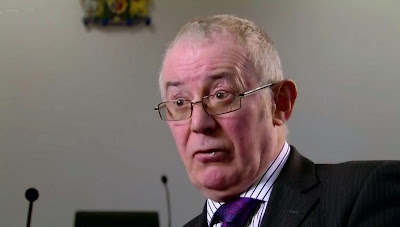
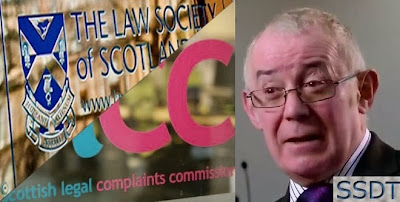
Alistair Cockburn, Chair, Scottish Solicitors Discipline Tribunal. Featured in the investigation was the Scottish Solicitors Discipline Tribunal (SSDT) Chairman’s attitude towards solicitors accused of dishonesty in their representation of clients legal affairs. During the programme, it became clear that dishonesty among lawyers in Scotland is treated less severely, compared to how English regulators treat dishonesty.

Sam Poling asks: The Scottish Solicitors’ Discipline Tribunal hears all serious conduct cases against solicitors. Last year they struck off nine of them. But is this robust enough?

Alistair Cockburn Chairman, Scottish solicitors discipline tribunal replies: It is robust in the sense that it doesn’t just give convictions on the basis that somebody’s brought before us charged by the Law Society.  We are mindful, particularly when reminded of the lay members, of a duty to the public.

One is always concerned when there is deception but you can have a situation where solicitors simply lose their place. They make false representations in order to improve their client’s position, not necessarily their own. And you would take that into account in deciding what the penalty was but there’s no suggestion that such conduct wasn’t deemed to be professional as conduct. 

Sam Poling: So there are levels of dishonesty which sit comfortably with you, satisfactorily with you?

Alistair Cockburn: No it’s not a question of saying sitting comfortably with me.  I’ve told you…

Sam Poling: OK that you would accept?

Alistair Cockburn: No I’d be concerned on any occasion that a solicitor was guilty of any form of dishonesty.  One has to assess the extent to which anyone suffered in consequence of that dishonesty.  You have to take into consideration the likelihood of re-offending and then take a decision.  But you make it sound as if it’s commonplace.  It isn’t.  Normally dishonesty will result in striking-off.
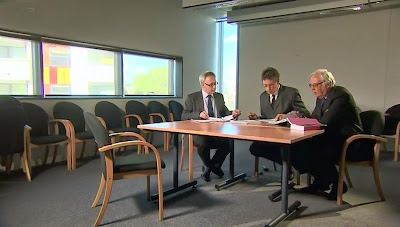
English QC’s agree ‘dishonesty’ is a striking off offence. The SSDT Chairman’s comments on dishonesty compared starkly with the comments of the English QC’s who said dishonesty was undoubtedly a striking off offence.

Andrew Hopper QC: “I cant get my head round borrowing in this context. Somebody explain to me how you can borrow something without anyone knowing about it. That’s just taking.”

Andrew Boon Professor of Law, City University, London: “They actually say in the judgement they would have struck him off but the client hadn't complained.”

Andrew Hopper QC “We’re dealing with a case of dishonesty and that affects the reputation of the profession. I would have expected this to result in striking off.”

Andrew Boon, Professor of Law: “The critical thing is the risk factor. If somebody has been dishonest once the likelihood is that they are going to be dishonest again unless they’re stopped.”

As Sam Poling went on to report: “but he [O’Donnell] wasn't stopped. The tribunal simply restricted his license so that he had to work under the supervision of another solicitor.”

Friday, December 04, 2015

ROGUES PAY: 1009 cases of rogue lawyers reported to ‘independent’ legal regulator as SLCC claim mediation success up, £401K awarded to clients of dodgy solicitors

Mediation hearings hijacked, compensation only a fraction – say clients. THE LATEST annual report of the ‘independent’ Scottish Legal Complaints Commission (SLCC) - reveals increasing numbers of solicitors are evading full investigations and formal determinations on poor quality or dodgy legal services provided to Scottish consumers in the year 2014-2015.

The figures, based on complaints reported to the client-funded legal regulator from 1 July 2014 to 30 June 2015, reveal 1009 complaints about solicitors were ‘reported’ to the SLCC in the past year, and the number of complaints  accepted for service and conduct rose from 319 to 424, with three cases relating to unnamed members of the Faculty of Advocates.

Nearly 200 cases were resolved or withdrawn before an eligibility decision was taken. The Complaints Commission claim 56 cases were resolved at mediation, a success rate of 76%.

However, the experience of clients reveal mediation is not an even handed or impartial approach.

Clients involved in mediation cases who contacted the media revealed  that when they turned up for mediation hearings, the solicitors they had complained against brought additional representatives who were not supposed to be in attendance.

Clients revealed mediation hearings had been effectively hijacked mediation hearings  by law firms with what one client described as “bully tactics”.

In another mediation hearing involving a client and a solicitor from a well known law firm, it was alleged the mediator desperately put forward the solicitor’s view there should be no settlement – even before the mediation hearing began.

2014-2015 SLCC Annual report complaints down, up & pennies to clients. The SLCC’s annual report also reveals that at investigation stage 60 cases were resolved by report, and 21 cases by conciliation, with 30 cases withdrawn. A total of 132 cases - down from 210 the previous year – went to determination, of which 109 were wholly or partly upheld.

The Scottish Legal Complaints Commission claim that a total of £401,340 (up from £365K in 2013-2014) was agreed or awarded in compensation, fee refunds and reductions to Scottish consumers for inadequate professional service by Scottish lawyers during the year. 

However, as the SLCC has refused to quantify the scale of financial losses alleged in complaints made about solicitors, it is difficult to estimate what percentage of compensation is actually being handed back to clients wronged by their solicitors.

In one instance reported to the media, it has been revealed a single solicitor is being investigated over complaints relating to a trust fund valued at over £500,000. The complainants have not received any compensation to-date, and the case has been on-going for over a year, with pressure being exerted on the complainants to enter mediation.

Residential property transactions remain the most common sources of client complaints, at 29%, followed by litigation (20%), family law (16%) and executries, wills and trusts (15%).

The most frequent types of complaints concern failures to communicate; failures to advise; delays; failures to provide information; failures to follow instruction and failures to prepare adequately.

Chair Bill Brackenridge commented: “It has been a year of performance in handling complaints and ensuring consumers get redress from their lawyers if they’ve received an inadequate service. The annual report also shows that we’re using complaints data to improve professional standards across the wider regulatory system.”

“A personal highlight was our successful lobbying for the power to convene a statutory consumer panel, which is now informing our plans for the future and the quality of our day to day work."We were also delighted to recruit Neil Stevenson as our new chief executive, charged with leading a longer term plan for the organisation to ensure we deliver value to consumers and to the sector.”

Former Law Society Director of Professional Support - Mr Stevenson  - said: “We’re in a great position and now we’re looking ahead to the next four years to make sure that the SLCC continues to make a difference for consumers and the profession. We are looking forward to going out to public consultation in January on an exciting new four year plan. Our plan will consider how consumers select and experience legal services and their needs when things go wrong with a service, rather than just looking at the system from a perspective of regulations and institutions.”

The latest figures announced today, bear little difference from previous years reporting of complaints handling at the Scottish Legal Complaints Commission.

This year, the SLCC also dropped claims it was partly funded by the public after a statement which appeared in last year’s annual report angered the Law Society of Scotland.

Last year’s annual report under former Chief Executive Matthew Vickers, stated: “We are funded by a levy on the legal profession and hence, indirectly, from fees charged to the public.”

Under the new Chief Executive – Neil Stevenson - former Law Society Director of Representation and Professional Support – the annual report now states: “The SLCC receives no public money. We are funded by a levy on the legal profession, collected from individual practitioners by the relevant professional organisations."

However, Diary of Injustice revealed in 2008 - the SLCC had received around £2 million pounds of taxpayers money from the Scottish Government, which has never been repaid.

Funding for the SLCC is gathered from an annual levy on the legal profession – who in turn recover the levy with hikes in already sky high legal fees and charges to clients.

Neil Stevenson was appointed to the role of Chief Executive after the resignation of Matthew Vickers earlier this year, reported here: GONE MEDIATIN’: Pro-lawyer legal regulator loses another CEO as Matthew Vickers leaves Scottish Legal Complaints Commission for Ombudsman Services role

The Law Society’s decision to retake control of the ‘independent’ SLCC by placing one of their own in the CEO slot came after after the Scots legal profession was left reeling from the effects of the damaging BBC Scotland investigation “Lawyers Behaving Badly” -  which blew the mask off lawyers investigating their own colleagues and how the legal profession covers up legal aid fraud.

Since the BBC programme aired in January 2014,  the Law Society demanded significant changes to the SLCC after concluding the hapless complaints quango – staffed mostly by former Law Society insiders – failed to stand up for lawyers during the BBC Scotland investigation.

Another attempt by the Law Society to spin out a client satisfaction poll backed up with dodgy statistics came apart when DOI revealed the full extent of how the poll had been rigged -  featuring in a media investigation here: OWNED POLL: Law Society ‘scripted’ survey criticised by Scottish Legal Complaints Commission - new data reveals few clients of dodgy lawyers ask legal regulators for help

The pro-lawyer Scottish Legal Complaints Commission was created in 2008 as a result of the Legal Profession and Legal Aid (Scotland) Act 2007

The legal quango – staffed mainly by former Law Society employees, solicitors and Ministerial appointed board members claiming up to £150K a year in expenses, has racked up staggering costs of well over £20 million to Scottish clients in the past seven years, with little to show for it.

Previous media investigations, reports and coverage of issues relating to the SLCC can be found here: Scottish Legal Complaints Commission - A history of pro-lawyer regulation.

Thursday, July 02, 2015

FAILED TO JAIL: Law Society’s self regulation ‘failed public’ as ex solicitor who posed as colleague to lure clients has jail sentenced quashed by Court of Session

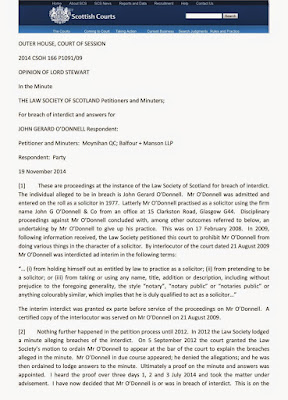
Banned lawyer John O’Donnell escapes jail A BANNED SOLICITOR who was given a three month custodial sentence earlier this year for posing as a colleague to lure clients has had his jail sentence quashed during an appeal hearing at the Court of Session earlier this week.

John Gerard O’Donnell (64) was found guilty of breach of interdict and sentenced in February by Lord Stewart after the court heard details of O’Donnell’s eleven year trail of ruined clients and consistent failures by the Law Society of Scotland to protect the public & clients from rogue solicitors.

But earlier this week - Appeal judges admonished O'Donnell after hearing of mental health problems and lack of proof over criminal motive.

Lady Dorrian, who sat with judges Lord Drummond Young and Lady Clark, ruled that Lord Stewart acted incorrectly when he ordered O'Donnell to be sent to jail.

Lady Dorrian added: "We are satisfied that the Lord Ordinary erred in his approach to sentencing. We think a period of imprisonment is excessive.We propose recalling the sentence imposed and impose an admonition."

Lady Dorrian’s assertion that sentencing O’Donnell to there months in jail was “excessive” comes after Lord Stewart claimed in his February 2015 sentencing statement that "In order to punish Mr O'Donnell and to deter others, the court must impose a custodial sentence.”

Yesterday, the Law Society of Scotland claimed it had done all it could to protect consumers from O’Donnell and others like him who prey on members of the public and fleece taxpayer funded legal aid.

Lorna Jack, Chief Executive of the Law Society of Scotland said: “By holding himself out as a solicitor permitted to practice, John O’Donnell engaged in a course of conduct that breached a court order and flouted the Scottish Solicitors’ Discipline Tribunal and provisions of the statute that regulate the legal profession’

“The Law Society did all it could and should have done in relation to protecting the public and reputation of the profession by taking breach of interdict action against John O’Donnell.  Mr O’Donnell had breached an order of the court and it is therefore for the court to determine what sanction is appropriate.”

Jack continued: “It is essential to protect members of the public seeking legal advice and ensure they can continue to put their trust in solicitors. We will always take action against individuals if we have good reason to believe they are misleading people by holding themselves out as a solicitor when they are not entitled to do so.”

Legal insiders countered there was no real protection of the public interest, and the Law Society’s system of self regulation – where lawyers investigate their own – had once again failed.

Among many examples of O’Donnell’s activities, it was revealed in court he took the identity of a solicitor colleague - Colin Davidson - in order to dodge a five year ban imposed by the Scottish Solicitors Disciplinary Tribunal in 2009 after they found O’Donnell guilty of professional misconduct for a third time.

Despite the ban - O'Donnell started working for a firm on Glasgow's south side - operated by solicitor Colin Davidson.

O'Donnell impersonated Mr Davidson, using his name to sign legal documents and posed as Davidson to clients. O’Donnell also gave instructions to an advocate – giving the impression that he was allowed to work as a solicitor.

John O’Donnell’s identity was only revealed after a client visited Diary of Injustice and read of media investigations into the solicitor’s murky past.

One of O’Donnell’s victims – widow Elizabeth Campbell (71) discovered O’Donnell was not Colin Davidson after she visited the Diary of Injustice law blog and saw his picture along with media investigations into O’Donnell’s decade long trail of client scams.

An investigation by the media also established Mrs Campbell was referred to John O’Donnell by Gilbert S Anderson – employed at Hamilton Citizens Advice Bureau in a position funded by the Scottish Legal Aid Board.

Letters obtained by the Sunday Mail newspaper & Diary of Injustice - revealed Anderson sent O’Donnell a handwritten note saying “possibly in my mind a cash for Colin £3000” indicating he hoped O’Donnell would be able to scam fees from the elderly widow.

Diary of Injustice reported on the case involving John O’Donnell & Gilbert Anderson, here : Crooked lawyer impersonates DEAD COLLEAGUE to lure clients in fraud scam.

Gilbert Anderson was the subject of further investigations, reported here: BREACH OF TRUST : Citizens Advice investigates taxpayer funded Hamilton CAB lawyer

John O’Donnell featured in numerous media reports spanning over a decade relating to multiple negligence claims, and continuing investigations into his conduct for over a decade which the Law Society of Scotland was unable, or unwilling to prevent.

LAWYERS BEHAVING BADLY:

An investigation by BBC’s Lawyers Behaving Badly featured the case of John O’Donnell.

The programme - aired in January 2014 to much consternation of the Law Society, certain parts of the legal profession and elderly aggrieved legal hacks – revealed staggering differences in how dishonesty is tolerated in the Scottish legal profession in comparison to cases in England & Wales – where dishonesty is automatically a striking off offence.

Alistair Cockburn, Chair, Scottish Solicitors Discipline Tribunal. Featured in the investigation was the Scottish Solicitors Discipline Tribunal (SSDT) Chairman’s attitude towards solicitors accused of dishonesty in their representation of clients legal affairs. During the programme, it became clear that dishonesty among lawyers in Scotland is treated less severely, compared to how English regulators treat dishonesty.

Sam Poling asks: The Scottish Solicitors’ Discipline Tribunal hears all serious conduct cases against solicitors. Last year they struck off nine of them. But is this robust enough?

Alistair Cockburn Chairman, Scottish solicitors discipline tribunal replies: It is robust in the sense that it doesn’t just give convictions on the basis that somebody’s brought before us charged by the Law Society.  We are mindful, particularly when reminded of the lay members, of a duty to the public.

One is always concerned when there is deception but you can have a situation where solicitors simply lose their place. They make false representations in order to improve their client’s position, not necessarily their own. And you would take that into account in deciding what the penalty was but there’s no suggestion that such conduct wasn’t deemed to be professional as conduct. 

Sam Poling: So there are levels of dishonesty which sit comfortably with you, satisfactorily with you?

Alistair Cockburn: No it’s not a question of saying sitting comfortably with me.  I’ve told you…

Sam Poling: OK that you would accept?

Alistair Cockburn: No I’d be concerned on any occasion that a solicitor was guilty of any form of dishonesty.  One has to assess the extent to which anyone suffered in consequence of that dishonesty.  You have to take into consideration the likelihood of re-offending and then take a decision.  But you make it sound as if it’s commonplace.  It isn’t.  Normally dishonesty will result in striking-off.

English QC’s agree ‘dishonesty’ is a striking off offence. The SSDT Chairman’s comments on dishonesty compared starkly with the comments of the English QC’s who said dishonesty was undoubtedly a striking off offence.

Andrew Hopper QC: “I cant get my head round borrowing in this context. Somebody explain to me how you can borrow something without anyone knowing about it. That’s just taking.”

Andrew Boon Professor of Law, City University, London: “They actually say in the judgement they would have struck him off but the client hadn't complained.”

Andrew Hopper QC “We’re dealing with a case of dishonesty and that affects the reputation of the profession. I would have expected this to result in striking off.”

Andrew Boon, Professor of Law: “The critical thing is the risk factor. If somebody has been dishonest once the likelihood is that they are going to be dishonest again unless they’re stopped.”

As Sam Poling went on to report: “but he [O’Donnell] wasn't stopped. The tribunal simply restricted his license so that he had to work under the supervision of another solicitor.”
Previous reports on John G O’Donnell can be read here John G O'Donnell - how one solicitor held up the Law Society

Sunday, March 15, 2015

DISHONEST LAW: Latest annual report of discipline tribunal where lawyers appear in front of themselves - reveals pitiful 31 case workload in the fairy tale land of solicitors’ self regulation

Lawyer vs lawyer tribunal protects bad apples, again. AMID the usual claims of client protection while attempting to polish the bad apples from the rotten - the latest annual report of the Scottish Solicitors Discipline Tribunal (SSDT) – the body charged with ‘prosecuting’ rogue solicitors who rip off their clients – details a dry, if ‘increasingly complex’ series of cases where rogue solicitors are hauled before their own colleagues to face the music.

This year’s thirty eight page report from the lawyer vs lawyer tribunal - covering the period 1 November 2013 to 31 October 2014 and only now published in the second week of March 2015 – details the usual, typically less than honest world of self regulation of the legal profession - where lawyers investigate themselves and then recommend their colleagues appear before themselves for a quick slap on the wrist.

The grand workload of the tribunal for the last year has – unsurprisingly – not seen a busy year, with 31 cases taken to the Tribunal during the 12 months, along with another 11 appeals against decisions of the Law Society of Scotland and other miscellaneous applications. The Tribunal managed to break away from the hustle & bustle, and occasional dodgy deals at parties by making findings of professional misconduct in 24 cases.

And – dishonesty – the habitual daily workout of some in Scotland’s legal profession – made famous by Alistair Cockburn’s performance on the BBC Scotland’s investigation Lawyers Behaving Badly – only merits a single mention in the entire report of a year’s worth of prosecuting dodgy solicitors.

2013-2014 SSDT Annual Report – revealing slaps on the wrist dished out to rogue solicitors. In this year’s SSDT Annual report – and like others before it – there is little to show the legal profession have any regard for client protection. Typically, solicitors receive pittance fines – which are usually made up from hikes in legal fees as soon as they get back to work. Along with fines, the traditional slap on the wrist was handed down on several occasions.

Chairman of the legal profession’s in-house tribunal commented: “Details of the Tribunal’s workload over the past 12 months are set out in this report. The Tribunal has continued to be very busy with cases becoming more complex and taking up more Tribunal time.”

The Tribunal is also dealing with a lot of Complaints which involve Secondary Complainers who have made claims for compensation.

There have again been a large number of cases involving the Council on Mortgage Lenders Handbook. It is hoped that members of the profession take time to read these decisions and be reminded of their obligations in terms of the Handbook.

The Tribunal is receiving an increasing number of Appeals under section 42ZA by Lay Complainers who often have difficulty in framing their Appeal in a structured and relevant way. The Tribunal accordingly has prepared guidance for Lay Complainers to try to assist them with this.”

Going on to comment on the state of the tribunal’s online website – which has suspiciously deleted many findings against rogue Scots lawyers, Chairman Cockburn said: “The Tribunal Findings continue to be put on the Tribunal website which can be accessed at www.ssdt.org.uk The Tribunal experienced technical difficulties with its website during the year owing to the age of the website. A temporary website is now in place and the Tribunal is working towards having a new website in operation in 2015.”

“Tribunal hearings continue to be held in public, normally at The Scotsman Hotel in Edinburgh. The diary part of the Tribunal website details the substantive business scheduled to be heard but not procedural business. In certain cases, business is not put into the diary if the hearing is to be held in private.”

DISHONESTY FACTOR:

An investigation by BBC’s Lawyers Behaving Badly featured the case of John O’Donnell, and went on to reveal the startling differences in how dishonesty in the Scottish legal profession is treated lightly compared to England & Wales – where dishonesty is automatically a striking off offence.

Alistair Cockburn, Chair, Scottish Solicitors Discipline Tribunal. Featured in the investigation was the Scottish Solicitors Discipline Tribunal (SSDT) Chairman’s attitude towards solicitors accused of dishonesty in their representation of clients legal affairs. During the programme, it became clear that dishonesty among lawyers in Scotland is treated less severely, compared to how English regulators treat dishonesty.

Sam Poling asks: The Scottish Solicitors’ Discipline Tribunal hears all serious conduct cases against solicitors. Last year they struck off nine of them. But is this robust enough?

Alistair Cockburn Chairman, Scottish solicitors discipline tribunal replies: It is robust in the sense that it doesn’t just give convictions on the basis that somebody’s brought before us charged by the Law Society.  We are mindful, particularly when reminded of the lay members, of a duty to the public.

One is always concerned when there is deception but you can have a situation where solicitors simply lose their place. They make false representations in order to improve their client’s position, not necessarily their own. And you would take that into account in deciding what the penalty was but there’s no suggestion that such conduct wasn’t deemed to be professional as conduct. 

Sam Poling: So there are levels of dishonesty which sit comfortably with you, satisfactorily with you?

Alistair Cockburn: No it’s not a question of saying sitting comfortably with me.  I’ve told you…

Sam Poling: OK that you would accept?

Alistair Cockburn: No I’d be concerned on any occasion that a solicitor was guilty of any form of dishonesty.  One has to assess the extent to which anyone suffered in consequence of that dishonesty.  You have to take into consideration the likelihood of re-offending and then take a decision.  But you make it sound as if it’s commonplace.  It isn’t.  Normally dishonesty will result in striking-off.

English QC’s agree ‘dishonesty’ is a striking off offence. The SSDT Chairman’s comments on dishonesty compared starkly with the comments of the English QC’s - who said dishonesty was undoubtedly a striking off offence.

Andrew Hopper QC: “I cant get my head round borrowing in this context. Somebody explain to me how you can borrow something without anyone knowing about it. That’s just taking.”

Andrew Boon Professor of Law, City University, London: “They actually say in the judgement they would have struck him off but the client hadn't complained.”

Andrew Hopper QC “We’re dealing with a case of dishonesty and that affects the reputation of the profession. I would have expected this to result in striking off.”

Andrew Boon, Professor of Law: “The critical thing is the risk factor. If somebody has been dishonest once the likelihood is that they are going to be dishonest again unless they’re stopped.”

As Sam Poling went on to report: “but he [O’Donnell] wasn't stopped. The tribunal simply restricted his license so that he had to work under the supervision of another solicitor.”
LEGAL WORLD’S TRIBUNAL WHERE LAWYERS APPEAR IN FRONT OF THEMSELVES:

Just how complex are the rules around prosecutions of solicitors for ripping off their clients?

Notes from the SSDT report reveal the hurdles put in place by the legal profession to protect their own …

In cases of professional misconduct the Tribunal will receive a Complaint from the Law Society fiscal which will then be served upon the Respondent. The Respondent has three weeks in which to lodge answers (although extension of time for lodging answers requests are often received and are sometimes granted provided there is a valid reason). The matter will then be set down, either for a procedural hearing, a preliminary hearing or a substantive hearing. Procedural hearings are used to clarify whether or not there are any preliminary issues and identify whether evidence is going to be required. Preliminary hearings are set down where there are preliminary points which have to be decided before the Complaint can proceed to a substantive hearing. These usually take place by way of a debate. At a substantive hearing the Tribunal will either proceed to make a finding of professional misconduct, find the Respondent not guilty of professional misconduct or remit the matter to the Law Society under section 53ZA on the basis that the Tribunal considers the Respondent's conduct may amount to unsatisfactory professional conduct.

If there is a Secondary Complainer involved in the Complaint they only become a party to the proceedings after a finding of professional misconduct is made. Prior to any finding of professional misconduct, Secondary Complainers have no direct input into the Tribunal process. If a finding of professional misconduct is made and if the Secondary Complainer has requested compensation, it will be up to the Secondary Complainer to provide the Tribunal with the necessary evidence. The Tribunal will then decide whether or not it is appropriate to make an award of compensation in favour of the Secondary Complainer. There can be cost implications for the Secondary Complainer if additional Tribunal time is required to deal with their claim and an award is not made in their favour.

In relation to section 42ZA Appeals the Tribunal receives the Appeal either from the solicitor, or from a Lay Complainer. Lay Complainers when making an Appeal under section 42ZA often have difficulty in focusing their Appeal and setting out clearly and succinctly what their grounds of Appeal are. The Appeal should identify any error of fact or law made by the Law Society. The Appeal will be served on the Law Society and the Solicitor/ Lay Complainer and three weeks are allowed for the lodging of answers. Again there may be circumstances when an extension of time for lodging answers is given.

The Tribunal cannot give Lay Complainers advice with regard to the making of their Appeals. The Tribunal however does understand that it is difficult for Lay Complainers to deal with the formal Tribunal process and guidance notes have been made available on the Tribunal's website. If Lay Complainers are unable to put their Appeal in the proper form, despite having been given warning in terms of Tribunal rule 23 and being given the opportunity to amend, the Appeal may be struck out as being manifestly unfounded. Procedural hearings are usually held for section 42ZA Appeals so that it can be clarified whether or not the matter is to proceed by way of submissions or whether the facts are in dispute. Sometimes there are three parties to 42ZA Appeals being the Appellant, the Law Society and the solicitor/Lay Complainer, in whose favour the Law Society previously made a Determination.

Sunday, March 01, 2015

TO CATCH A BRIEF: It takes Eleven years for Law Society’s self regulation client ‘safety net’ to catch up with banned solicitor who left trail of destruction, dishonesty & negligence

Jail for banned lawyer John O’Donnell A BANNED SOLICITOR who posed as a colleague to get round a ban on practising law has been found guilty of breach of interdict and jailed for three months - after leaving an ELEVEN year trail of destroyed clients & legal problems across Scotland.

John Gerard O’Donnell (64) – who also appeared in a special BBC Scotland investigation – Lawyers Behaving Badly – was finally sentenced by Lord Stewart at the Court of Session on Friday. However, O’Donnell was freed for a period of two weeks to enable him to decide if he wants to appeal.

The custodial sentence comes after a catalogue of evidence heard during court proceedings revealed many examples where the Law Society of Scotland system of self regulation – lawyers investigating themselves – fails to protect the public.

Among many examples of unacceptable behaviour, the court heard solicitor John O’Donnell took the identity of another solicitor - Colin Davidson - in order to dodge a five year ban imposed by the Scottish Solicitors Disciplinary Tribunal in 2009 after they found O’Donnell guilty of professional misconduct for a third time.

Despite the ban - O'Donnell started working for a firm on Glasgow's south side - operated by solicitor Colin Davidson. O'Donnell impersonated Mr Davidson, using his name to sign legal documents and posed as Davidson to clients. O’Donnell also gave instructions to an advocate – giving the impression that he was allowed to work as a solicitor.

However, things fell apart in the scam - when John O’Donnell’s real identity was discovered – after a client visited Diary of Injustice and read of media investigations into the solicitor’s murky past.

Representing O’Donnell at the hearing, defence advocate Richard Murphy told Lord Stewart that O'Donnell had suffered in the past from mental illness. He added: "He never intended to return to practice but he ended up doing more than what he intended to do." Mr Murphy also told the court that O'Donnell would never return to practising law, and offered to pay a fine as an alternative to a prison sentence.

However, the judge Lord Stewart said he had no option but to send O'Donnell to prison. Lord Stewart said: "In order to punish Mr O'Donnell and to deter others, the court must impose a custodial sentence.”

One of O’Donnell’s victims – widow Elizabeth Campbell (71) – only discovered O’Donnell was not Colin Davidson after she visited Diary of Injustice law blog and saw his picture along with media investigations into O’Donnell’s decade long trail of client scams.

Mrs Campbell had been referred to John O’Donnell by Gilbert S Anderson – who worked at Hamilton Citizens Advice Bureau - in a position funded by the Scottish Legal Aid Board.

Letters obtained by the Sunday Mail newspaper & Diary of Injustice - revealed Anderson sent O’Donnell a handwritten note saying “possibly in my mind a cash for Colin £3000” indicating he hoped O’Donnell would be able to scam fees from the elderly widow.

Diary of Injustice reported on the case involving John O’Donnell & Gilbert Anderson, here : Crooked lawyer impersonates DEAD COLLEAGUE to lure clients in fraud scam. Gilbert Anderson was the subject of further investigations, reported here: BREACH OF TRUST : Citizens Advice investigates taxpayer funded Hamilton CAB lawyer

Clients of O’Donnell discovered his identity on DOI – Lord Stewart. The opinion issued by Lord Stewart during mid-November stated: “Mrs Campbell went to the Hamilton Citizens’ Advice Bureau.  At the time she was “very upset, depressed and undergoing therapy”.  She was referred from the Citizens’ Advice Bureau to Colin Davidson, solicitor, at Davidson Fraser & Co, solicitors, at the Clarkston Road office.  From 29 March 2011 to 6 October 2011 Elizabeth Campbell put her affairs in the hands of Colin Davidson at Davidson Fraser & Co—or so she thought.  On 13 April 2012 Mrs Campbell discovered from an internet website—perhaps the website called “A Diary of Injustice in Scotland” http://petercherbi.blogspot.co.uk/ —that the man she thought was Colin Davidson was in fact John O’Donnell.”

“…when she first went to 311 Clarkston Road Mrs Campbell met a male who introduced himself as “Colin Davidson”, a male whom she thereafter—and without being corrected—called “Mr Davidson”.  She identified John Gerard O’Donnell in court as the man whom she had known as “Colin Davidson”.  She had “lots” of meetings with the pseudo Davidson; and she has documented specifically meeting him at the office on 29 March, 4 April, 13 April, 21 April, 28 April, 8 June, 5 July, 7 July, 20 July, 21 July and 19 September 2011.  There were moments of Feydeau-like farce, for example when the real Colin Davidson appeared or when Mrs Campbell heard other people, including the secretary, referring to the pseudo Davidson as “John”.  The explanation given to Mrs Campbell by Mr O’Donnell was that it was “a family thing”: he said that some people knew him as John but he was Colin Davidson.”

MOTION TO COVER: QC who represented Law Society was approached at party over O’Donnell deal:

Elaine Motion QC – head of Edinburgh law firm Balfour & Manson who represented the Law Society of Scotland in the Court of Session against John G O’Donnell, also represented the Law Society during hearings against O’Donnell at the Scottish Solicitors Discipline Tribunal. Prior to one earlier attempt to prosecute O’Donnell at the tribunal, O’Donnell’s lawyer tried to broker a secret deal with the QC at a Law Society Christmas party in 2009.

A ‘limited account’ of the 2009 meeting between QC Elaine Motion & solicitor Steven Gold - who acted for O’Donnell – was documented in the SSDT’s findings relating to a complaint against O’Donnell -published here Council of the Law Society of Scotland v John G O'Donnell

Page three of the Council of the Law Society of Scotland v John G O'Donnell states : “In December 2009, Elaine Motion and Steven Gold, Solicitor were both at a Law Society’s Christmas Drinks Party. They were involved in a conversation with regard to the health and welfare of the Respondent. Mr Gold made representations on behalf of the Respondent to Elaine Motion to the effect that it would be humane and advantageous to everyone involved if a way could be found to allow the Respondent to hand in his practising certificate without having to undergo the ordeal and expense of an appearance before the Tribunal. Elaine Motion was sympathetic to the representations but indicated that she would require to discuss matters with the Law Society of Scotland who would make the decision.

John O’Donnell has featured in numerous media reports relating to 21 negligence claims made against him by clients, and continuing investigations into his conduct for over a decade which the Law Society of Scotland was unable, or unwilling to prevent.

LAWYERS BEHAVING BADLY:

An investigation by BBC’s Lawyers Behaving Badly featured the case of John O’Donnell, and went on to reveal the startling differences in how dishonesty in the Scottish legal profession is treated lightly compared to England & Wales – where dishonesty is automatically a striking off offence.

Alistair Cockburn, Chair, Scottish Solicitors Discipline Tribunal. Featured in the investigation was the Scottish Solicitors Discipline Tribunal (SSDT) Chairman’s attitude towards solicitors accused of dishonesty in their representation of clients legal affairs. During the programme, it became clear that dishonesty among lawyers in Scotland is treated less severely, compared to how English regulators treat dishonesty.

Sam Poling asks: The Scottish Solicitors’ Discipline Tribunal hears all serious conduct cases against solicitors. Last year they struck off nine of them. But is this robust enough?

Alistair Cockburn Chairman, Scottish solicitors discipline tribunal replies: It is robust in the sense that it doesn’t just give convictions on the basis that somebody’s brought before us charged by the Law Society.  We are mindful, particularly when reminded of the lay members, of a duty to the public.

One is always concerned when there is deception but you can have a situation where solicitors simply lose their place. They make false representations in order to improve their client’s position, not necessarily their own. And you would take that into account in deciding what the penalty was but there’s no suggestion that such conduct wasn’t deemed to be professional as conduct. 

Sam Poling: So there are levels of dishonesty which sit comfortably with you, satisfactorily with you?

Alistair Cockburn: No it’s not a question of saying sitting comfortably with me.  I’ve told you…

Sam Poling: OK that you would accept?

Alistair Cockburn: No I’d be concerned on any occasion that a solicitor was guilty of any form of dishonesty.  One has to assess the extent to which anyone suffered in consequence of that dishonesty.  You have to take into consideration the likelihood of re-offending and then take a decision.  But you make it sound as if it’s commonplace.  It isn’t.  Normally dishonesty will result in striking-off.

English QC’s agree ‘dishonesty’ is a striking off offence. The SSDT Chairman’s comments on dishonesty compared starkly with the comments of the English QC’s who said dishonesty was undoubtedly a striking off offence.

Andrew Hopper QC: “I cant get my head round borrowing in this context. Somebody explain to me how you can borrow something without anyone knowing about it. That’s just taking.”

Andrew Boon Professor of Law, City University, London: “They actually say in the judgement they would have struck him off but the client hadn't complained.”

Andrew Hopper QC “We’re dealing with a case of dishonesty and that affects the reputation of the profession. I would have expected this to result in striking off.”

Andrew Boon, Professor of Law: “The critical thing is the risk factor. If somebody has been dishonest once the likelihood is that they are going to be dishonest again unless they’re stopped.”

As Sam Poling went on to report: “but he [O’Donnell] wasn't stopped. The tribunal simply restricted his license so that he had to work under the supervision of another solicitor.”
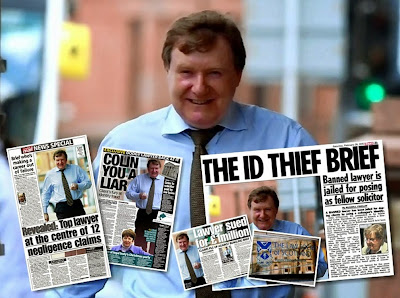
If you have poor experiences with the legal profession in Scotland or feel you are the victim of a rogue solicitor, tell the media. Diary of Injustice would like to hear from you. Email us more details via scottishlawreporters@gmail.com

Friday, November 21, 2014

COMPLAINTS FLICK: Law Society of Scotland & ‘independent’ Scottish Legal Complaints Commission team up to produce video on how to complain about a rogue lawyer

Legal regulators SLCC and Law Society launch complaints process video. IN A MOVE seen as an attempt to combat publicity about poor regulation of the legal profession and few if any prosecutions of dodgy lawyers ripping off their clients, the Law Society of Scotland and the ‘independent’ Scottish Legal Complaints Commission (SLCC) have teamed up to produce a public video explaining the process for making a complaint about a solicitor in Scotland.

However, people who have actual experience of the solicitor complaints process as administer by the Law Society & SLCC have criticised the video as bearing little comparison with reality to how clients of rogue lawyers are treated after making a complaint.

The ‘help’ video, which begins with a claim that most people are happy with their solicitors and have no reason to question services provided, or demands for sky high legal fees without any real evidence of work, can be viewed on the SLCC’s website here: SLCC and Law Society of Scotland joint video on the complaints process or on the Vimeo hosting website directly here: Making a complaint about a solicitor

The video on how to complain about a rogue solicitor appears along with another video clip - Scottish Legal Complaints Commission - Mediation video, also produced by the SLCC which claims to document the process of mediation. However, some users of the mediation service have referred to their mediation experiences as less than satisfactory, and little more than a delaying tactic used by law firms who attempt to escape complaints investigations.

One client involved in a bitter five year struggle with the Law Society described the video as “an attempt to limit a person’s expectation of justice.” He went on to say the video “looks like it has been made by crooks to save crooks”.

The ‘how to’ complain video comes on the heels of revelations that solicitor Clive Franks, a senior partner of Edinburgh based Franks Macdam Brown and a key member of the Law Society of Scotland’s infamous Complaints Committee regime, committed suicide on November 10, 2014.

It has since been revealed in the media the Law Society of Scotland were investigating Clive Franks over fraud allegations relating to client funds. Mr Franks was involved in defending a controversial case involving a challenge to the will of building tycoon Alfred Stewart. It was revealed in the Sunday Mail newspaper Franks was a trustee of a will which was changed at the last minute to cut out members of the family of the deceased.

Law Society Complaints Committees – of which Franks was a key player, form a key role in protecting corrupt lawyers from complaints lodged by members of the public and it is likely the Complaints Committees were consulted in some way on the video productions.

Making a complaint about a solicitor - Scottish Legal Complaints Commission


Mediation - Scottish Legal Complaints Commission


Commenting on the video, Matthew Vickers, the current Chief Executive of the SLCC said: “Having dealt with legal complaints over the past six years, we appreciate that the current process is complex and can be a difficult one for clients to understand.   I welcome this video – which we have made in partnership with the Law Society of Scotland – as a valuable tool to inform the public about how the legal complaints process works, and the stages within it.”

Carole Ford, convener of the Law Society of Scotland’s Regulatory Committee, welcomed the video: “The vast majority of people are very happy with the service they receive from their solicitor, but it’s important that those who are not satisfied know that they have somewhere to go, and that there are processes in place that can help resolve any issues.  The Law Society has worked closely with the SLCC on this joint venture and I think we have successfully produced a valuable tool that could go a long way to helping the public understand the complaints process from start to finish.”

Susan McPhee, Citizens Advice Scotland’s Head of Policy and Communications added: “We welcome this video from the Law Society of Scotland and the Scottish Legal Complaints Commission.  Consumers in Scotland need clear routes to resolve issues they have with solicitors – and these routes need to be easily understood by consumers.  This video provides a gateway for consumers to find out what they need to do, and what their solicitors are obliged to do if there is a disagreement.  I hope it is used by consumers to ensure rights are respected and protected.”

MEDIA EXPOSE LAWYERS BEHAVING BADLY:

Legal insiders say the SLCC & Law Society decided to make the video clip in response to increasing media coverage of dodgy solicitors and the public’s reaction to constant legal rip offs and poor regulation which came into focus with the BBC’s Lawyers Behaving Badly programme - which featured reports on poor regulation of Scotland’s legal profession, along with a host of crooked lawyers still going about their business.

Alistair Cockburn, Chair, Scottish Solicitors Discipline Tribunal. Of note in the programme was the Scottish Solicitors Discipline Tribunal (SSDT) Chairman’s attitude towards solicitors accused of dishonesty in their representation of clients legal affairs. During the programme, it became clear that dishonesty among lawyers in Scotland is treated less severely, compared to how English regulators treat dishonesty.

English QCs speaking on the programme were unequivocal that dishonesty is a striking off offence south of the border, while the appearance through the years in Scotland has been Scots lawyers are simply given a slap on the wrist, or a merit badge for dishonesty by their colleagues in the regulation game.

Sam Poling asks: The Scottish Solicitors’ Discipline Tribunal hears all serious conduct cases against solicitors. Last year they struck off nine of them. But is this robust enough?

Alistair Cockburn Chairman, Scottish solicitors discipline tribunal replies: It is robust in the sense that it doesn’t just give convictions on the basis that somebody’s brought before us charged by the Law Society.  We are mindful, particularly when reminded of the lay members, of a duty to the public.

One is always concerned when there is deception but you can have a situation where solicitors simply lose their place. They make false representations in order to improve their client’s position, not necessarily their own. And you would take that into account in deciding what the penalty was but there’s no suggestion that such conduct wasn’t deemed to be professional as conduct. 

Sam Poling: So there are levels of dishonesty which sit comfortably with you, satisfactorily with you?

Alistair Cockburn: No it’s not a question of saying sitting comfortably with me.  I’ve told you…

Sam Poling: OK that you would accept?

Alistair Cockburn: No I’d be concerned on any occasion that a solicitor was guilty of any form of dishonesty.  One has to assess the extent to which anyone suffered in consequence of that dishonesty.  You have to take into consideration the likelihood of re-offending and then take a decision.  But you make it sound as if it’s commonplace.  It isn’t.  Normally dishonesty will result in striking-off.

English QC’s agree ‘dishonesty’ is a striking off offence no matter what. The SSDT Chairman’s comments on dishonesty astounded viewers, and compared starkly with the comments of the English QC’s who said dishonesty was undoubtedly a striking off offence.

Andrew Hopper QC: “I cant get my head round borrowing in this context. Somebody explain to me how you can borrow something without anyone knowing about it. That’s just taking.”

Andrew Boon Professor of Law, City University, London: “They actually say in the judgement they would have struck him off but the client hadn't complained.”

Andrew Hopper QC “We’re dealing with a case of dishonesty and that affects the reputation of the profession. I would have expected this to result in striking off.”

Andrew Boon, Professor of Law: “The critical thing is the risk factor. If somebody has been dishonest once the likelihood is that they are going to be dishonest again unless they’re stopped.”

As Sam Poling went on to report: “but he [O’Donnell] wasn't stopped. The tribunal simply restricted his license so that he had to work under the supervision of another solicitor.”
This article has been updated with new information, and comments from individuals currently involved in complaints investigations being conducted by the Scottish Legal Complaints Commission & the Law Society of Scotland.

If you are making a complaint about a solicitor and feel you are being treated unfairly by the SLCC & Law Society of Scotland, please consider publicising your difficulties, to help protect your own interests and others. You can contact us at scottishlawreporters@gmail.com. Any material provided will be treated as confidential and will not be published without your consent.

Thursday, February 27, 2014

The Dishonesty Factor: Scottish solicitors accused of dishonesty ‘less likely to be struck off’ than dishonest lawyers who face tougher regulation in England & Wales

Contrary to profession’s view, evidence from clients suggests dishonesty in Scots solicitors is rewarded, not punished. SCOTTISH solicitors “make false representations in order to improve their client’s position, not necessarily their own”. This was a claim made by solicitor Alistair Cockburn, Chairman of the Scottish Solicitors Discipline Tribunal (SSDT) in response to key questions raised by BBC Journalist Sam Poling in the recent investigative programme Lawyers Behaving Badly.

The claims made by the tribunal Chief led to startling revelations over how the lawyer led discipline tribunal which is charged with making findings against members of Scotland’s legal profession deals with allegations & evidence of dishonesty against rogue solicitors.

Insisting the discipline tribunal was ‘robust’ and had a duty to the public, the Chair of the SSDT went on to justify his position, stating “One has to assess the extent to which anyone suffered in consequence of that dishonesty.  You have to take into consideration the likelihood of re-offending and then take a decision.” Mr Cockburn went onto claim dishonesty is not commonplace and would result in solicitors being struck off. The SSDT Chair told the BBC journalist: “Normally dishonesty will result in striking-off.”

However, many clients who make complaints about dishonest solicitors will be surprised at the SSDT Chair’s claim, given the fact most complaints involving dishonesty encounter resistance on the part of the legal profession's self regulatory bodies such as the Law Society of Scotland and Scottish Legal Complaints Commission (SLCC).

 Solicitors sometimes make false representations – SSDT Chair Alistair Cockburn speaking to the BBC.

Sam Poling asks: The Scottish Solicitors’ Discipline Tribunal hears all serious conduct cases against solicitors. Last year they struck off nine of them. But is this robust enough?

Alistair Cockburn Chairman, Scottish solicitors discipline tribunal replies: It is robust in the sense that it doesn’t just give convictions on the basis that somebody’s brought before us charged by the Law Society.  We are mindful, particularly when reminded of the lay members, of a duty to the public.

One is always concerned when there is deception but you can have a situation where solicitors simply lose their place. They make false representations in order to improve their client’s position, not necessarily their own. And you would take that into account in deciding what the penalty was but there’s no suggestion that such conduct wasn’t deemed to be professional as conduct. 

Sam Poling: So there are levels of dishonesty which sit comfortably with you, satisfactorily with you?

Alistair Cockburn: No it’s not a question of saying sitting comfortably with me.  I’ve told you…

Sam Poling: OK that you would accept?

Alistair Cockburn: No I’d be concerned on any occasion that a solicitor was guilty of any form of dishonesty.  One has to assess the extent to which anyone suffered in consequence of that dishonesty.  You have to take into consideration the likelihood of re-offending and then take a decision.  But you make it sound as if it’s commonplace.  It isn’t.  Normally dishonesty will result in striking-off.

The position on dishonesty taken by the SSDT boss appears to conflict with that found by many clients who are forced into the unenviable position of having to complain about their solicitor.

After months of waiting on results from regulators run principally by lawyers, most clients who file complaints against their solicitors will be all too aware that regulators often refuse to even look at claims of dishonesty due to the fact a proven case of dishonesty against a solicitor may entitle clients to claim compensation from the Scottish Solicitors Guarantee Fund, and raise potential legal action in Scottish courts.

More often than not, solicitors who are dishonest to their clients, and solicitors who regularly make dishonest representations – even before judges in a court of law, will not be struck off simply because regulators will ensure such cases never appear before the tribunal or see the light of day in a complaints decision found against a fellow solicitor by his colleagues in the profession’s own self regulator.

Unsurprisingly, the Scottish tribunal’s view of claims of dishonesty by solicitors – a common theme in almost all complaints made by members of the public or clients against the legal profession in Scotland, contrasts sharply with the opinions of legal experts in the rest of the UK who insist dishonesty is a striking off offence.

The BBC asked a panel of three legal experts from England & Wales for their opinion on the case of John G O’Donnell and how he was dealt with by the discipline tribunal which related to a case where O’Donnell was accused of borrowing £60K of clients money without consent. The panel easily concluded solicitors accused of dishonesty should be struck off as there was a risk to the reputation of the legal profession and the risk of reoffending was too great.

Dishonesty in the legal profession: Risk factors mean it is a striking off offence – English legal experts.


Andrew Hopper QC said: “I cant get my head round borrowing in this context. Somebody explain to me how you can borrow something without anyone knowing about it. That’s just taking.”

Andrew Boon Professor of Law, City university, London said : “They actually say in the judgement they would have struck him off but the client hadn't complained.”

Andrew Hopper QC “We’re dealing with a case of dishonesty and that affects the reputation of the profession. I would have expected this to result in striking off.”

Andrew Boon, Professor of Law: “The critical thing is the risk factor. If somebody has been dishonest once the likelihood is that they are going to be dishonest again unless they’re stopped.”

As Sam Poling went on to report: “but he [O’Donnell] wasn't stopped. The tribunal simply restricted his license so that he had to work under the supervision of another solicitor.”
In Scotland every year and for well over two decades, there are and have been thousands of enquiries and complaints to the Scottish Legal Complaints Commission (SLCC) and the Law Society of Scotland.

Almost all complaints against solicitors indicate at at one stage or another, the solicitor was dishonest to their client, either by making a false representation to them as to the progress of their case, or making false representations to cover their own positions.

More often than not, as in the case of Borders solicitor Andrew Penman, who a Law Society reporter found in 1994 had deliberately deceived a bank, had attempted to put files in order with an implication of dishonesty while doing so, hardly any complaint against a Scottish solicitor which documents dishonesty on a grand scale, has ever resulted in a striking off.

Mr Penman, who still works as a solicitor at Stormonth Darling solicitors in Kelso, was never struck off, and the Law Society along with its most senior staff set out to ensure any legal action against Mr Penman would never make it to court, the case and its history reported in detail HERE.

Contrary to the Law Society’s claims during the 1990’s, the Penman case was not a blip. Evidence from hundreds of complaints since the 90’s show is more common than not for the dishonesty of a solicitor to be rewarded in the Scottish legal profession with a continuing practicing certificate, just as in the O’Donnell case and hundreds, potentially thousands of others, rather than result in a striking off.

Thursday, January 23, 2014

Lawyers Behaving Badly: Axe Law Society dual role, give Scots clients same consumer protections of England & Wales' independent regulation of solicitors

Unprotected: Scots consumers have no protection from dodgy solicitors who regulate themselves. UNTIL the dual role of representing both clients and solicitors is removed from the Law Society of Scotland, and clients of Scotland’s closed shop legal profession are given the same or even greater standards of consumer protection & independent regulation as currently operate in England & Wales, there is little incentive for Scottish solicitors to behave anything other than badly, as BBC Scotland found recently in their investigation of Lawyers Behaving Badly.

More often than not, the fact is, those of us who require to use legal services in one way or another via a lawyer, or those of us who require access to the courts in Scotland are taken on the same, well trodden, fee-generating-years-long ride by solicitors & law firms who have no reason to offer high quality, low cost access to justice in a legal system which is closed shop, monopolistic, and poorly regulated.

Just as fee paying clients are routinely ripped off, so is the taxpayer by way of a £150 million pound legal aid budget which seems to exist as little more than a public subsidy to prop up dodgy law firms & lawyers who would serve the community better from a position behind bars, sitting in a High Street office raking in tens of thousands of pounds a year from the public purse.

This is of course, not news to anyone who has been let down by a solicitor, and it is certainly not news to members of the public who have experienced the almost inhuman mix of regulatory bodies in Scotland, the Scottish Legal Complaints Commission (SLCC), the Law Society of Scotland and the Scottish Solicitors Discipline Tribunal, who currently hold court over all complaints against Scottish solicitors.

The SLCC often claims to be “independent”. It is not. Diary of Injustice reported on the secret vested interests at the Scottish Legal Complaints Commission in an earlier article here: A SPECIAL RELATIONSHIP : Investigation reveals Scotland’s ‘independent’ legal regulator is mired in family, business & personal links to legal profession & Law Society

Neither has the SLCC cleaned up standards in the legal profession, nor has it named and shamed any crooked lawyers, nor has it protected clients any better than the Law Society of Scotland, who are equally as fixated as the SLCC on attending to, and apparently representing the interests of its membership the legal profession and much the same, found BBC Scotland in their recent Lawyers Behaving Badly investigation of Scotland’s out of control legal profession.

As the Lawyers Behaving Badly programme has now finished its term on the BBC’s iPlayer and clips of what was broadcast have been removed from the internet by the BBC, apparently after alleged protests from the legal profession and the Law Society of Scotland, those with an interest in how the Scottish legal profession regulates itself in Scotland still have access to articles on this site.

How Scots solicitors regulators dealt with dodgy legal aid solicitor:

SLCC Lockhart montageA solicitor who ruined pensioner's legal affairs was given slap on the wrist by law complaints regulator SLCC. KILMARNOCK solicitor Niels S Lockhart, who was accused by the Scottish Legal Aid Board (SLAB) of making £670K worth of dodgy claims for legal aid work and who then went on to ruin the legal affairs of a pensioner and other clients was allowed to continue working as a lawyer after the Scottish Legal Complaints Commission (SLCC), the ‘independent’ regulator of solicitors decided his firm NS Lockhart Solicitors need only pay a meagre fine of ONE HUNDRED POUNDS to a victim who had complained about the legal nightmare she had been put through.

Solicitor Niels Lockhart was the subject of lengthy investigations by the Scottish Legal Aid Board which were uncovered by Diary of Injustice & the Sunday Mail newspaper and reported earlier here : One law for lawyers : Secret Report reveals Legal Aid Board, Law Society & Legal Defence Union ‘cosy relationship’ in Lockhart case

Diary of Injustice published the full SLAB S31 complaint report to the Law Society of Scotland obtained after a Freedom of Information disclosure, here : SCOTTISH LEGAL AID BOARD S31 COMPLAINT REPORT TO THE LAW SOCIETY OF SCOTLAND : NIELS S LOCKHART

Diary of Injustice also published the investigation carried out by the Scottish Legal Complaints Commission into Niels S Lockhart. The report can be viewed online here : SLCC Investigation of complaint against Niels S Lockhart of NS Lockhart Solicitors, Kilmarnock.

How Lord Advocate & Crown Office dealt with Legal Aid fraudsters who all happened to be solicitors:

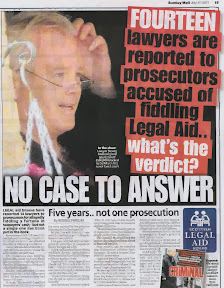
Crown Office also refused to prosecute dodgy legal aid lawyers. An exclusive report in the Sunday Mail newspaper also raised questions about the Crown Office lack of will to prosecute lawyers who were accused of legal aid fraud, revealing that FOURTEEN lawyers accused of multi-million pound legal aid fraud escaped justice as Scotland’s Crown Office fail to prosecute all cases in 5 years.

Legal aid bosses reported 14 lawyers to prosecutors for allegedly fiddling a fortune in taxpayers' cash - but not a single one has been put in the dock. Eleven suspected fraud cases were marked no proceedings, one lawyer was declared insane, one died and the other is still being considered. Crown officials did not identify any of the lawyers involved or reveal the scale of their alleged fraud. The revelations were made by Crown Office and Procurator Fiscal Service director of operations Scott Pattison in response to a freedom of information request.

Diary of Injustice has reported on the BBC’s investigation into self regulation of the Scottish legal profession in previous articles here: Lawyers Behaving Badly - a window into the world of lawyers regulating themselves

Tuesday, January 21, 2014

LUCAN FOR HIM: Law Society repeatedly refused BBC Scotland access to 'key player' Regulation Chief for in-depth investigation report on rogue solicitors

Non appearance of top Law Society regulation boss in BBC investigation questioned QUESTIONS have been raised as to why Philip Yelland, the little known figure in charge of regulation of Scotland’s solicitors for the past two decades was not allowed to appear on Lawyers Behaving Badly, the recent BBC Scotland investigation on systemic failings in how the Scottish legal profession regulates itself and how lawyers have regularly escaped justice and continue to benefit from publicly funded legal aid.

In response to media enquiries, sources at the Edinburgh HQ of the Law Society of Scotland have confirmed that repeated requests from BBC Scotland for access to the society’s Director of Regulation were refused by Law Society chiefs who were determined there should be no access to, or any appearance by the twenty plus year serving head of regulation in the BBC programme.

Substituting for the Director of Regulation, the Convener of the Law Society’s Regulation Committee, Carole Ford was instead, interviewed on the powerful BBC programme broadcast last week.

However, while Ford’s performance was expectedly praised in some legal quarters, some legal experts, clients, and those who have experienced the ‘alice in wonderland’ world of how the legal profession regulates itself felt the Committee Convener was a poor substitute, and appeared to have little grasp as to the realities of how the system works, and how paying clients are treated by lawyers who regularly cover up for their own colleagues.

While many expected Mr Yelland to be part of the BBC investigation, there are numerous reasons as to why the one person in legal regulation circles who has been involved in many of the controversial and highly public cases involving solicitors escaping penalty for their actions over the past twenty years did not appear on the highly acclaimed undercover investigation by BBC journalist Sam Poling.

The Law Society’s reluctance to allow Mr Yelland’s appearance in the BBC programme may well stem from the unfortunate demise of the Society’s former Chief Executive Douglas Mill, who resigned a few weeks after the Law Society’s Council viewed and debated video footage posted to video sharing website You Tube of Mill’s angry confrontation at a Holyrood Justice Committee hearing with John Swinney, Scotland’s Finance Chief.

During the Justice Committee hearing in 2006 which formed part of the Scottish Parliament’s second, ill-fated attempt to clean up regulation of the legal profession, the former Chief Executive was caught out by the Scottish Parliament’s video coverage of the hearing when he argued with the SNP Finance Chief that the Law Society’s Master Policy, the insurance scheme which protects corrupt lawyers from clients, was fair, and that there was no collusion between figures at the Law Society and the insurers to throw out financial damages claims made by clients.

However, Mr Swinney, a skilled debater himself, trounced the then pugnacious Law Society Chief on all points, leaving the public with little doubt the Master Policy Insurance client compensation scheme run by the Law Society of Scotland is unfair and claims made by clients for damages are clearly subject to concerted and determined manipulation at the highest levels of the Law Society and the legal profession.

The footage featuring Mill's Holyrood confrontation with John Swinney was first posted to the You Tube video sharing website in late December 2007. Mill, who superseded the equally controversial Kenneth Pritchard as Secretary of the Law Society of Scotland in the early 1990’s, then going on to become the Society’s Chief Executive and expected by many to remain in the position for a lengthy period of time, resigned a few weeks later in January 2008.

The confrontation between the former Law Society Boss and Scotland’s now Finance Chief, has since become a warning to how Law Society figures used to a closed world lacking any accountability can quickly stumble in public appearances such as the Holyrood Master Policy clash which made it obvious to all that the Law Society was, and remains determined to hang onto self regulation and the power that comes with it, at any cost.

Fears of BBC questions over claims made by clients against solicitors may also have played a part in the Society’s refusal to allow access to its regulation chief.

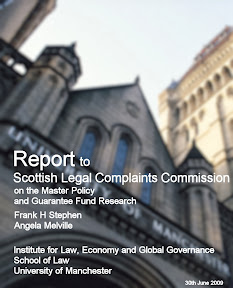
Academics heard involvement of Regulation Boss was linked to controversial complaints. A case referred to in a Research Report from the University of Manchester School of Law documented allegations in papers which have never been made public that the Society’s long time Regulation Chief was also allegedly linked to a case of a claim involving the Master Policy, where a respected businessman & family man from Oban committed suicide after he was sent to a law firm who have since been identified in a number of cases where dodgy solicitors have escaped justice and even possible criminal charges for legal aid fraud.

The revelations, appearing in papers studied by Professor Frank Stephen & Dr Angela Melville of the Manchester University of Law School in 2009 who were compiling a report on the Master Policy for the Scottish Legal Complaints Commission (SLCC), alleged the businessman from Oban had been sent to a Glasgow law firm to represent him in a court case against his former solicitors.

However the Glasgow based law firm, who have since represented the First Minister himself and a number of controversial figures in the legal world, did nothing for a period of three years and when it was revealed the same law firm who the Law Society’s Regulation Chief had allegedly recommended to the Oban businessman were also representing the Legal Defence Union, the organisation which represents crooked lawyers against complaints, the unnamed client committed suicide.

Against a background of too-numerous-to-mention cases where involvement of the twenty year plus serving Law Society’s Regulation Boss appears to have played a key part in allowing corrupt solicitors to remain in work, Yelland may well have faced difficult questions over his involvement in one of the key parts of the BBC Scotland report aired last week, that of former solicitor Tom Murray, currently living in Lucca, Italy.

Featured in the Lawyers Behaving Badly documentary, Murray, has appeared before the Scottish Solicitors Discipline Tribunal (SSDT) on no less than three occasions, (i) Law Society-v-Thomas Hugh Murray 01/03/2005 (ii) Law Society-v-Thomas Hugh Murray 25/11/2005 and (iii) Law Society-v-Thomas Hugh Murray 10/12/2009.

Former solicitor Murray, who said on the BBC programme during secret filming that if he returned to Scotland he could reapply to be a solicitor again, was found guilty of professional misconduct in respect of misrepresentation, deception and misleading clients including his failure to tell his clients he had been barred from practising as a lawyer. The solicitor who was sequestrated in Scotland in 2001 and continues to avoid any moves by the Law Society to take action against him and recover compensation awarded to his clients.

The case of Murray, and the Law Society’s apparently haphazard pursuit of complaints against him clearly provided fertile ground for difficult questions of Yelland, who has personally signed off on many of the communications to clients who were involved with the former solicitor. Diary of Injustice featured an in depth report on the Law Society’s involvement in the Murray case in an earlier article HERE

In a long, rambling statement attacking the BBC Scotland programme, the Law Society of Scotland made no mention as to why Mr Yelland refused to appear, nor did the Society explain why the one man who can be linked to many of the complaints made against Scottish solicitors which have done significant damage to the image of the profession, did not appear or give an account of his charge over regulation of, and standards in Scotland’s legal profession in the past two decades.

Diary of Injustice has reported on the BBC’s investigation into self regulation of the Scottish legal profession in previous articles here: Lawyers Behaving Badly - a window into the world of lawyers regulating themselves