Showing posts with label SSDT. Show all posts

Monday, November 22, 2021

TRIBUNAL ROLE PROBE: Judge-appointed Vice-Chair of Scottish Solicitors Discipline Tribunal asks Court of Session to block Legal regulator probe of his conduct & role in “inappropriately brought” discipline case at Institute and Faculty of Actuaries

Tribunal Judge asks Court to block probe of his conduct. A SIGNIFICANT conflict of interest in how the legal profession investigates itself may play a role in one of three appeals to the Court of Session – after details emerged the Scottish Legal Complaints Commission (SLCC) – is facing legal action to block a regulatory investigation of three members of the Institute and Faculty of Actuaries (IFoA) – one of whom is Benjamin Kemp – the Vice-Chair of the Scottish Solicitors Discipline Tribunal (SSDT).

Material obtained by journalists reveal three separate appeals to the Court of Session against the Scottish Legal Complaints Commission’s decision to investigate Mr Benjamin John Tizzard Kemp and two additional members of the Institute and Faculty of Actuaries. Mr Kemp is represented by Brodies LLP

The two additional IFoA members - Ms Emma Gilpin (Head of Regulation) and Mr Michael Scott (Head of Disciplinary) who also face investigation by the Scottish Legal Complaints Commission in the same complaint – have launched their own, separate appeals to the Court of Session which seek to overturn the SLCC's decision to commence an investigation of their professional conduct.

Details of the complaints lodged against the three Institute and Faculty of Actuaries members appear to relate to IFoA Disciplinary action which was thrown out by a Tribunal, which then awarded costs against the Institute and Faculty of Actuaries for bringing the case.

The complaints, submitted by Mr Rhodri Tomos, former Fellow of the Institute and Faculty of Actuaries to the Scottish Legal Complaints Commission - relate to the bringing of a disciplinary action against Mr Tomos, from October 2019 to January 2021 after which the Disciplinary Tribunal Panel made a final determination the original disciplinary action was "inappropriately brought", "unconscionable" and "not in the public interest".

It has also emerged the Institute and Faculty of Actuaries were required to pay costs for the "inappropriately brought” disciplinary action.

Commenting on the case - Mr Rhodri Tomos, former fellow of the IFoA who submitted the complaints to the Scottish Legal Complaints Commission in relation to the conduct of Mr Kemp and the other IFOA members, said:

"The IFoA Disciplinary Tribunal Panel threw out the IFoA's case against me very quickly in just a couple of hours, when the hearing was listed for 3 days.

The panel, chaired by an experienced Court Judge, criticised the disciplinary as inappropriately brought, unconscionable and not in the public interest. That's the exact opposite of what the IFoA disciplinary scheme is supposed to be there for. The panel awarded costs against IFoA in my favour.

No member of the public had complained about me or my work. It was an internal "executive referral" from IFoA, which triggered my resignation from IFoA in Oct 2019 after working so hard since 2001 to qualify as a Fellow. I then suffered a long and stressful 16 months disciplinary process from IFoA, who used internal and external lawyers, including a QC against me, an unrepresented individual, yet they still lost.

My complaint to SLCC about the lawyers involved is entirely reasonable based on the DTP's findings, which are final, and deserves a full investigation in the public interest. This matter is entirely self-inflicted by IFoA, who along with their oversight body the Financial Reporting Council have failed to investigate my complaints throughout. "

Earlier today, a potentially serious conflict of interest in the appeal by the Institute and Faculty of Actuaries members has been identified by legal sources – where one of the three IFoA members – Mr Benjamin Kemp now under investigation by the SLCC – also holds the position of Vice-Chair of the Scottish Solicitors Discipline Tribunal (SSDT).

The Scottish Solicitors Discipline Tribunal is the third, and effectively the judicial tier of legal regulation in Scotland - which acts on investigations carried out by the Scottish Legal Complaints Commission and hears ‘prosecutions’ of solicitors and advocates - undertaken by the Law Society of Scotland & Faculty of Advocates.

The appointment of Solicitors Discipline Tribunal members by Scotland’s top judge the Lord President, currently Lord Carloway (Colin Sutherland) - effectively makes all Tribunal members including Mr Kemp - judicial appointees.

Commenting on court challenge, a legal source said: “We have a situation developing in this appeal where the Vice Chair of the SSDT, the senior tier of legal regulation in Scotland whose members are appointed by Scotland’s top judge – is now asking the same judiciary to overturn a decision of Scotland’s statutory legal regulator to investigate complaints about his own professional conduct.”

The Scottish Solicitors Discipline Tribunal website confirms the role of Scotland’s top judge in appointing members of the SSDT, stating: “The Tribunal has both solicitor and lay members. All are appointed by the Lord President of the Court of Session – Scotland’s most senior judge. Solicitor members are nominated by the Law Society of Scotland, but may not also be members of the Council of the Law Society. Lay members are drawn from all backgrounds and walks of life, following open advertisement The principles of public appointment are followed by the Scottish Government in making recommendations to the Lord President.”

The Scottish Legal Complaints Commission were asked for comment and issued the following response: “As you are aware, we are legally quite restricted in what we can say – under s43 of our Act we can’t comment on any complaint, with the law making it a criminal offence. This includes confirming or denying whether a specific complaint has been received.  We are lobbying for this to be changed so we can be more transparent, but need to abide by the current legislation.”

The Judicial Office and Lord President were asked for comment on the position of Mr Kemp in this Court of Session appeal against the Scottish Legal Complaints Commission, given the inherent conflict of interest of Mr Kemp – effectively a judicial appointee, and Vice Chair of the SSDT - a key organisation in the regulation of solicitors, now asking the judiciary which appointed him - to overturn an investigation of the statutory body the SLCC to investigate complaints against himself.

No statement has been issued by the Judicial Office prior to publication, however any further statement or response will be added to the article.

It has not been confirmed by the Institute and Faculty of Actuaries as to whether the individual lawyers or the Institute and Faculty of Actuaries itself - is funding this appeal in the Court of Session.

In response to media enquiries, the Institute and Faculty of Actuaries said: “The IFoA does not comment on any live proceedings.”

It should be noted that cost orders have been awarded against the Institute and Faculty of Actuaries (IFoA) for investigations previously dismissed by the Disciplinary Tribunal.

These cost orders are referred to in the 2020-2021 Annual report of the Institute and Faculty of Actuaries Disciplinary Board, which states:

“Three cases were dismissed by the Tribunal panel without a hearing of the parties. Determinations where findings of misconduct are not made are not usually published by the Tribunal panels unless requested by the Respondent. Costs were awarded against the IFoA in respect of two of the dismissed cases. The total costs awarded against the IFoA was £69,248.73.”

The Institute and Faculty of Actuaries Disciplinary Board cost guidance states costs are awarded when IFoA bring cases inappropriately or negligently.

Monday, September 25, 2017

ROGUES GALLERY: Lawyer who spoke at Holyrood on behalf of Law Society - struck off for dishonesty, meanwhile concerns Police probe at bust law firm Ross Harper may hit Crown Office block on prosecuting colleagues in legal profession

Rogue lawyers & Police probes dog Scots legal industry. A LAWYER who gave evidence to MSPS on behalf of the Law Society of Scotland has been struck off – for serious dishonesty - after earlier findings of professional misconduct a year earlier.

Michael McSherry, who once gave evidence to the Scottish Parliament’s Justice & Home Affairs Committee on Vulnerable and Intimidated witnesses – was struck off by the Scottish Solicitors Discipline Tribunal (SSDT) after being found guilty of professional misconduct in relation to misrepresentation to two law firms on the purpose of funds being held, and failures to carry out proper money laundering checks.

The findings issued by the Discipline Tribunal also reveal a former solicitor, listed as 'Ms B' worked for McSherry.

The unnamed solicitor recently had her practising certificate removed by the Law Society of Scotland, yet she was easily able to find employment back in the legal services sector and began working with McSherry.

While the name of the solicitor is anonymised, the latest incident again reveals a trend where crooked lawyers who are turfed out of the profession land jobs as 'consultants' or 'paralegals' following them being stripped of their right to practice law.

McSherry was previously found guilty of professional misconduct in 2016 for failing to bank fees taken from clients, and his continuing to act on behalf of the client in his capacity as a solicitor when he was not the holder of a practising certificate, was not affiliated to any practising firm of solicitors and had no professional indemnity insurance cover. Law Society of Scotland v Michael Thomas McSherry (21 January 2016)

The latest Scottish Solicitors Discipline Tribunal findings on Michael McSherry, recently published - are here: Law Society of Scotland v Michael Thomas McSherry (27 June 2017)

The full document listing the SSDT findings on Michael McSherry is here: SSDT Findings: Law Society of Scotland v Michael Thomas McSherry (27 June 2017)

Solicitor(s): Michael Thomas McSherry, Solicitor, 51 Morven Road, Bearsden, Glasgow

Tribunal Date: 27/06/2017 Appeal Status:No Appeal

Interlocutor: Edinburgh 27 June 2017.  The Tribunal having considered the Complaint at the instance of the Council of the Law Society of Scotland dated 11 April 2017 against Michael Thomas McSherry, Solicitor, 51 Morven Road, Bearsden, Glasgow; Find the Respondent guilty of professional misconduct singly in respect of his misrepresentation to Mr D about the purpose for which funds were held (issue 1), the improper, incomplete and inaccurate recording in the client ledgers (issue 2), and his misrepresentations to Slater, Hogg and Howieson and TLT Solicitors (issues 6 and 7); and in cumulo in respect of his failure to carry out proper money laundering checks on Company 1 and Mr C (issues 3 and 5), his failure to investigate the source of funds from Mr D (issue 4), his poor record-keeping and accounting practices (issue 8), his failure to reconcile bank statements (issue 9) and his failure to undertake training in connection with his role as cashroom manager (issue 10);  Order that the name of the Respondent be Struck Off the Roll of Solicitors in Scotland; Direct in terms of Section 53(6) of the Solicitors (Scotland) Act 1980 that this order shall take effect on the date on which the written findings are intimated to the Respondent; Find the Respondent liable in the expenses of the Complainers and of the Tribunal including expenses of the Clerk, chargeable on a time and line basis as the same may be taxed by the Auditor of the Court of Session on an agent and client, client paying basis in terms of Chapter Three of the last published Law Society’s Table of Fees for general business with a unit rate of £14.00; and Direct that publicity will be given to this decision and that this publicity should include the name of the Respondent but need not identify any other person.

And, it has also been reported in the media that a Police Scotland probe has been launched into the now bankrupt law firm – Ross Harper.

However, as observers to the ‘twilight zone’ world of Police investigations into lawyers will be well aware, most probes carried out by Police almost never result in a prosecution before the courts, as has previously been the case in relation to multiple cases involving fourteen law firms & millions of pounds of legal aid fraud – which resulted in not one case going to court, reported earlier here: FOURTEEN lawyers accused of multi-million pound legal aid fraud escape justice as Scotland’s Crown Office fail to prosecute all cases in 5 years

The Sunday Mail reports on the Police Scotland probe of bust law firm Ross Harper:

Cops launch cash probe into bust law firm Ross Harper and Co after partners struck off

The company had offices across Scotland before they were shut down in 2012 after operating for more than 50 years.

By Craig McDonald 06:00, 17 SEP 2017

A police investigation has been launched into the collapse of one of ­Scotland’s top law firms.

Ross Harper and Co, who had offices across Scotland, were shut down in 2012 after more than 50 years in practise.

It emerged that public cash claimed in Legal Aid fees was not paid to ­suppliers and experts hired by the Glasgow firm.

A lengthy probe by the Law Society of Scotland led to four partners being struck off and two more being censured.

We can reveal a dossier has now been passed to police, who have launched a criminal investigation.

The Mail understands the initial focus is on former ­senior partner Alan Miller, 38, who was struck from the roll of solicitors last month.

One expert witness hired by the firm welcomed the probe. Forensic psychologist Ian ­Stephen, who’s owed £5000 in fees, said: “I think it’s appropriate that police investigate.

“If anyone commits a crime, be it fraud or anything else, then you would expect police would make inquiries into it.

“If this happened in any other profession, the appropriate ­professional body would make inquiries and, if there was a criminal element to it, you would expect police to become involved.

“I don’t not see how the ­situation should be any different for solicitors.”

Stephen, a former senior medic at the State Hospital at Carstairs, said: “I felt badly let down by Ross Harper. You should be able to put your faith in a lawyer.

“I was always writing to them to ask why I was not being paid. I was shocked they were so ­blatant about it.”

Professor Hugh Pennington saw £4000 in fees go unpaid.

The bacteriolgoist said: “I was shocked to ­discover Ross Harper were ­withholding payments from me and others. There has been a betrayal of trust.”

Miller and Jim Price, also a senior partner, were struck off last month by the ­Scottish ­Solicitors ­Disciplinary Tribunal for professional misconduct.

Price was employed as general manager of Nottingham Forest in 2013 but left the football club within a year.

Two further partners, Paul McHolland and Joseph Mullen, were censured by the SSDT but are still able to practise.

The SSDT found Legal Aid cash lay in “a drawer”, the firm’s bank account, for up to two years.

The cash was used to help them ­balance their books after the 2008 financial crash.

Accounts also showed a cheque was cancelled and ­reissued three times before it reached its destination.

On at least two occasions, the same tactic was used to hold up payments of £300 to Pennington.

We told last month how legal watchdogs are facing more than £100,000 worth of claims from victims of the firm.

Any compensation would be paid from a Law Society client protection contingency fund.

Ross Harper had 12 offices in Scotland and were the country’s biggest earning Legal Aid firm, with 2006-07 earnings of £1.7million. They were founded in 1961 by ex-law professor Ross Harper.

A police spokeswoman said: “Inquiries are at an early stage.”

A Law Society of Scotland spokesman said: “Concerns were raised about the firm’s ­accounting record following one of our ­routine ­compliance inspections.

“This led to us going to the Court of Session to request the appointment of a judicial factor to the firm in April 2012 and, ­following investigation, we prosecuted all six former partners before the independent SSDT.

“We have a legal duty to report suspicious activity to the ­relevant authorities but cannot comment on whether reports have been made on specific cases.”

The SSDT decision on Ross Harper is here: Law Society of Scotland v-Alan Miller, Joseph Mullen, Paul McHolland & James Price

The full document detailing the SSDT’s findings in relation to the Ross Harper law firm partners can be found here: SSDT Findings: Law Society of Scotland v-Alan Miller, Joseph Mullen, Paul McHolland & James Price

Solicitor(s): Alan Matthew Miller, 22 Broomknowe Avenue, Lenzie, Joseph Mullen, 9 Glen Mark, St Leonard’s, East Kilbride, Paul John McHolland, 24 Portland Road, Kilmarnock and James Price, formerly residing at 2 Rigside, Douglas Water, Lanark and now residing at Calle Java 19, 29591, Malaga, Spain

Tribunal Date: 08/05/2017 Appeal Status:No Appeal

Interlocutor: Perth 8 May 2017.  The Tribunal having considered the amended Complaint at the instance of the Council of the Law Society of Scotland against Alan Matthew Miller, 22 Broomknowe Avenue, Lenzie, Joseph Mullen, 9 Glen Mark, St Leonard’s, East Kilbride, Paul John McHolland, 24 Portland Road, Kilmarnock and James Price, formerly residing at 2 Rigside, Douglas Water, Lanark and now residing at Calle Java 19, 29591, Malaga, Spain; Find the First Respondent guilty of Professional Misconduct in respect that (a) The First Respondent during his tenure as a Partner and principal in the said former firm of Ross Harper and in particular during the period when he was the designated Cashroom Manager being 1 April 2010 to 5 April 2012, operated a system or policy whereby the business of the former firm was improperly funded by payments due to third parties, whereby in particular, sums received from the Scottish Legal Aid Board and others were deposited in the firm’s bank accounts, and cheques were thereafter drawn on those accounts and purported payment of third parties outlays made which had been incurred on behalf of the former firm’s clients. Said system or policy resulted in sums validly due to Third Parties not being timeously paid.

Further, the firm, under the authority and direct instruction of the First Respondent, took unauthorised and excessive fees despite there being insufficient funds at the credit of the client ledgers to meet those fees and without having had any legitimate basis for taking fees at the point in which they were deducted from the client ledgers.  Said funds and fees were taken and rendered in a dishonest, wrongful and improper use of client’s funds without the knowledge or consent of the clients to allow the said firm to continue to trade and operate within the limit of its banking facilities. All of the foregoing in breach of the Solicitors (Scotland) Accounts etc. Rules 2001, the Code of Conduct for Scottish Solicitors, the Law Society of Scotland Practice Rules 2011: (b) The First Respondent submitted false and inaccurate Accounts Certificates to the Complainers thereby deliberately concealing from the Complainers the true financial position of the said firm; (c) The First Respondent acted dishonestly in reporting matters to the inspection team of the Financial Compliance Department of the Complainers, and that in breach of Rule B6.12 of the Law Society of Scotland Practice Rules 2011; (d) The First Respondent in his specific capacity as Designated Cashroom Manager between 1 April 2010 and 5 April 2012 failed to supervise the cashroom staff and cashroom systems to keep proper accounting records and that in breach of Rule B6.13 of the Law Society of Scotland Practice Rules 2011 and Rule 12 of the Solicitors (Scotland) Accounts etc. Rules 2001; (g)The First Respondent failed to settle invoices rendered by professional expert witnesses timeously, and that despite having received reimbursement of these sums from third parties;

Find the Second Respondent guilty of Professional Misconduct in respect that The Second Respondent during his tenure as a Partner and principal in the said former firm of Ross Harper acquiesced in the operation of a system or policy whereby the business of the former firm was improperly funded by payments due to third parties whereby in particular, sums received from the Scottish Legal Aid Board and others were deposited in the firm’s bank accounts, and cheques were thereafter drawn on those accounts and purported payment of third parties outlays made which had been incurred on behalf of the former firm’s clients. Said system or policy resulted in sums validly due to Third Parties not being timeously paid. 

All of the foregoing in breach of the Solicitors (Scotland) Accounts etc. Rules 2001, the Code of Conduct for Scottish Solicitors, the Solicitors (Scotland) (Standards of Conduct) Practice Rules 2008 and the Law Society of Scotland Practice Rules 2011;  Find the Third Respondent guilty of Professional Misconduct in that The Third Respondent during his tenure as a Partner and principal in the said former firm of Ross Harper acquiesced in the operation of  a system or policy whereby the business of the former firm was improperly funded by payments due to third parties whereby in particular, sums received from the Scottish Legal Aid Board and others were deposited in the firm’s bank accounts, and cheques were thereafter drawn on those accounts and purported payment of third parties outlays made which had been incurred on behalf of the former firm’s clients.

Said system or policy resulted in sums validly due to Third Parties not being timeously paid.  All of the foregoing in breach of the Solicitors (Scotland) Accounts etc. Rules 2001, the Code of Conduct for Scottish Solicitors, and the Solicitors (Scotland) (Standards of Conduct) Practice Rules 2008 and the Law Society of Scotland Practice Rules 2011; Find the Fourth Respondent guilty of Professional Misconduct in that (a) The Fourth Respondent during his tenure as a Partner and principal in the said former firm of Ross Harper operated a system or policy whereby the business of the former firm was improperly funded by payments due to third parties, whereby in particular, sums received from the Scottish Legal Aid Board and others were deposited in the firm’s bank accounts, and cheques were thereafter drawn on those accounts and purported payment of third parties outlays made which had been incurred on behalf of the former firm’s clients.

Said system or policy resulted in sums validly due to Third Parties not being timeously paid.  Further, the firm, under the authority and direct instruction of the Fourth Respondent as Joint Managing Partner, took unauthorised and excessive fees despite there being insufficient funds at the credit of the client ledgers to meet those fees and without having had any legitimate basis for taking fees at the point in which they were deducted from the client ledgers. 

The fees in these instances were deducted for the purposes of assisting the firm’s cashflow and financial position and to conceal the true level of the firm’s liabilities and overdraft. Said funds and fees were taken and rendered in a dishonest, wrongful and improper use of client’s funds without the knowledge or consent of the clients to allow the said firm to continue to trade and operate within the limit of its banking facilities. 

All of the foregoing in breach of the Solicitors (Scotland) Accounts etc. Rules 2001, the Code of Conduct for Scottish Solicitors, and the Solicitors (Scotland) (Standards of Conduct) Practice Rules 2008 and the Law Society of Scotland Practice Rules 2011; (b) The Fourth Respondent countersigned and submitted false and inaccurate Accounts Certificates to the Complainers thereby deliberately concealing from the Complainers the true financial position of the said firm; (c) The Fourth Respondent acted dishonestly in reporting matters to the inspection team of the Financial Compliance Department of the Complainers, and that in breach of Rule B6.12 of the Law Society of Scotland Practice Rules 2011; 

Order that the name of the First Respondent be Struck Off the Roll of Solicitors in Scotland; Direct in terms of Section 53(6) of the Solicitors (Scotland) Act 1980 that the order shall take effect on the date on which the written findings are intimated to the First Respondent; Censure the Second Respondent; Censure the Third Respondent; Order that the name of the Fourth Respondent be Struck Off the Roll of Solicitors in Scotland; Direct in terms of Section 53(6) of the Solicitors (Scotland) Act 1980 that the order shall take effect on the date on which the written findings are intimated to the Fourth Respondent; Find the Respondents jointly and severally liable in the expenses of the Complainers and of the Tribunal including expenses of the Clerk, chargeable on a time and line basis as the same may be taxed by the Auditor of the Court of Session on an agent and client, client paying basis in terms of Chapter Three of the last published Law Society’s Table of Fees for general business with a unit rate of £14.00 restricted in the case of the Second Respondent to 20% and in the case of the Third Respondent to 10%; and Direct that named publicity be given to this decision, declaring that such publicity shall not contain the name of the clients or otherwise identify them as the publication of their personal data is likely to damage individuals’ interests.

Alistair Cockburn Vice Chairman

Second Interlocutor:

The Tribunal having made findings of professional misconduct in respect of matters complained of by Thomas Aulds, ARM Architects LLP, 2a Berkeley Street, Glasgow; Dr Peter Thornton, 49 Carlogie Road, Carnoustie; Ian Stephen, 19 Glen View Crescent Gorebridge; The PRG Partnership, 111 Cowgate, Kirkintilloch, Glasgow; Ewa Daly, Pierwsza Pomoc Polscotia, St George’s Building, 5 St Vincent Place, Glasgow and David Bartolo, 2/52 Rallinson Road, North Coogee, Western Australia, appoints them if so advised to lodge statements of claim with the Clerk to the Tribunal at Unit 3.5, The Granary Business Centre, Coal Road, Cupar, Fife, within 21 days of the date of intimation hereof.

Alistair Cockburn,  Vice Chairman.

Compensation Interlocutor:

Glasgow,   21 August 2016.  The Tribunal having made a finding of professional misconduct against Alan Matthew Miller, 22 Broomknowe Avenue, Lenzie, Joseph Mullen, 9 Glen Mark, St Leonards, East Kilbride, Paul John McHolland, 24 Portland Road, Kilmarnock, and James Price formerly residing at 2 Rigside, Douglas Water, Lanark, and now residing at Calle Java 19, 29591, Malaga, Spain; Having allowed 21 days for the Secondary Complainers, Thomas Aulds, ARM Architects LLP, 2a Berkeley Street, Glasgow; Dr Peter Thornton, 49 Carlogie Road, Carnoustie; Ian Stephen, 19 Glen View Crescent Gorebridge; The PRG Partnership, 111 Cowgate, Kirkintilloch, Glasgow; Ewa Daly, Pierwsza Pomoc Polscotia, St George’s Building, 5 St Vincent Place, Glasgow; and David Bartolo, 2/52 Rallinson Road, North Coogee, Western Australia to lodge their claims for compensation;  Having received confirmation from Dr Peter Thornton that he does not wish to submit a claim for compensation and having received no correspondence from said Thomas Aulds, Ian Stephen, The PRG Partnership, Ewa Daly and David Bartolo within said 21 days; makes no further order and no further finding of expenses.

Alistair Cockburn, Vice Chairman

Previous reports on the Scottish Solicitors Discipline Tribunal can be found here: Cases of repeat offender rogue lawyers rise at Scottish Solicitors Discipline Tribunal

Sunday, March 15, 2015

DISHONEST LAW: Latest annual report of discipline tribunal where lawyers appear in front of themselves - reveals pitiful 31 case workload in the fairy tale land of solicitors’ self regulation

Lawyer vs lawyer tribunal protects bad apples, again. AMID the usual claims of client protection while attempting to polish the bad apples from the rotten - the latest annual report of the Scottish Solicitors Discipline Tribunal (SSDT) – the body charged with ‘prosecuting’ rogue solicitors who rip off their clients – details a dry, if ‘increasingly complex’ series of cases where rogue solicitors are hauled before their own colleagues to face the music.

This year’s thirty eight page report from the lawyer vs lawyer tribunal - covering the period 1 November 2013 to 31 October 2014 and only now published in the second week of March 2015 – details the usual, typically less than honest world of self regulation of the legal profession - where lawyers investigate themselves and then recommend their colleagues appear before themselves for a quick slap on the wrist.

The grand workload of the tribunal for the last year has – unsurprisingly – not seen a busy year, with 31 cases taken to the Tribunal during the 12 months, along with another 11 appeals against decisions of the Law Society of Scotland and other miscellaneous applications. The Tribunal managed to break away from the hustle & bustle, and occasional dodgy deals at parties by making findings of professional misconduct in 24 cases.

And – dishonesty – the habitual daily workout of some in Scotland’s legal profession – made famous by Alistair Cockburn’s performance on the BBC Scotland’s investigation Lawyers Behaving Badly – only merits a single mention in the entire report of a year’s worth of prosecuting dodgy solicitors.

2013-2014 SSDT Annual Report – revealing slaps on the wrist dished out to rogue solicitors. In this year’s SSDT Annual report – and like others before it – there is little to show the legal profession have any regard for client protection. Typically, solicitors receive pittance fines – which are usually made up from hikes in legal fees as soon as they get back to work. Along with fines, the traditional slap on the wrist was handed down on several occasions.

Chairman of the legal profession’s in-house tribunal commented: “Details of the Tribunal’s workload over the past 12 months are set out in this report. The Tribunal has continued to be very busy with cases becoming more complex and taking up more Tribunal time.”

The Tribunal is also dealing with a lot of Complaints which involve Secondary Complainers who have made claims for compensation.

There have again been a large number of cases involving the Council on Mortgage Lenders Handbook. It is hoped that members of the profession take time to read these decisions and be reminded of their obligations in terms of the Handbook.

The Tribunal is receiving an increasing number of Appeals under section 42ZA by Lay Complainers who often have difficulty in framing their Appeal in a structured and relevant way. The Tribunal accordingly has prepared guidance for Lay Complainers to try to assist them with this.”

Going on to comment on the state of the tribunal’s online website – which has suspiciously deleted many findings against rogue Scots lawyers, Chairman Cockburn said: “The Tribunal Findings continue to be put on the Tribunal website which can be accessed at www.ssdt.org.uk The Tribunal experienced technical difficulties with its website during the year owing to the age of the website. A temporary website is now in place and the Tribunal is working towards having a new website in operation in 2015.”

“Tribunal hearings continue to be held in public, normally at The Scotsman Hotel in Edinburgh. The diary part of the Tribunal website details the substantive business scheduled to be heard but not procedural business. In certain cases, business is not put into the diary if the hearing is to be held in private.”

DISHONESTY FACTOR:

An investigation by BBC’s Lawyers Behaving Badly featured the case of John O’Donnell, and went on to reveal the startling differences in how dishonesty in the Scottish legal profession is treated lightly compared to England & Wales – where dishonesty is automatically a striking off offence.

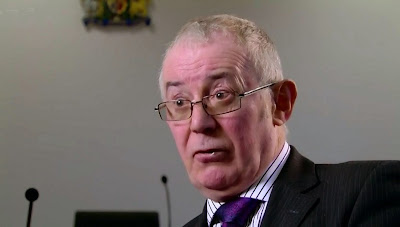
Alistair Cockburn, Chair, Scottish Solicitors Discipline Tribunal. Featured in the investigation was the Scottish Solicitors Discipline Tribunal (SSDT) Chairman’s attitude towards solicitors accused of dishonesty in their representation of clients legal affairs. During the programme, it became clear that dishonesty among lawyers in Scotland is treated less severely, compared to how English regulators treat dishonesty.
Sam Poling asks: The Scottish Solicitors’ Discipline Tribunal hears all serious conduct cases against solicitors. Last year they struck off nine of them. But is this robust enough?

Alistair Cockburn Chairman, Scottish solicitors discipline tribunal replies: It is robust in the sense that it doesn’t just give convictions on the basis that somebody’s brought before us charged by the Law Society.  We are mindful, particularly when reminded of the lay members, of a duty to the public.

One is always concerned when there is deception but you can have a situation where solicitors simply lose their place. They make false representations in order to improve their client’s position, not necessarily their own. And you would take that into account in deciding what the penalty was but there’s no suggestion that such conduct wasn’t deemed to be professional as conduct. 

Sam Poling: So there are levels of dishonesty which sit comfortably with you, satisfactorily with you?

Alistair Cockburn: No it’s not a question of saying sitting comfortably with me.  I’ve told you…

Sam Poling: OK that you would accept?

Alistair Cockburn: No I’d be concerned on any occasion that a solicitor was guilty of any form of dishonesty.  One has to assess the extent to which anyone suffered in consequence of that dishonesty.  You have to take into consideration the likelihood of re-offending and then take a decision.  But you make it sound as if it’s commonplace.  It isn’t.  Normally dishonesty will result in striking-off.

English QC’s agree ‘dishonesty’ is a striking off offence. The SSDT Chairman’s comments on dishonesty compared starkly with the comments of the English QC’s - who said dishonesty was undoubtedly a striking off offence.

Andrew Hopper QC: “I cant get my head round borrowing in this context. Somebody explain to me how you can borrow something without anyone knowing about it. That’s just taking.”

Andrew Boon Professor of Law, City University, London: “They actually say in the judgement they would have struck him off but the client hadn't complained.”

Andrew Hopper QC “We’re dealing with a case of dishonesty and that affects the reputation of the profession. I would have expected this to result in striking off.”

Andrew Boon, Professor of Law: “The critical thing is the risk factor. If somebody has been dishonest once the likelihood is that they are going to be dishonest again unless they’re stopped.”

As Sam Poling went on to report: “but he [O’Donnell] wasn't stopped. The tribunal simply restricted his license so that he had to work under the supervision of another solicitor.”

LEGAL WORLD’S TRIBUNAL WHERE LAWYERS APPEAR IN FRONT OF THEMSELVES:

Just how complex are the rules around prosecutions of solicitors for ripping off their clients?

Notes from the SSDT report reveal the hurdles put in place by the legal profession to protect their own …

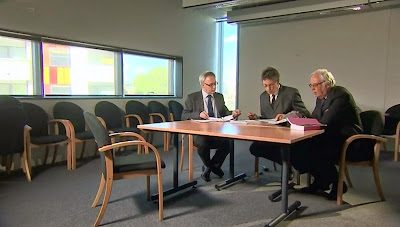
In cases of professional misconduct the Tribunal will receive a Complaint from the Law Society fiscal which will then be served upon the Respondent. The Respondent has three weeks in which to lodge answers (although extension of time for lodging answers requests are often received and are sometimes granted provided there is a valid reason). The matter will then be set down, either for a procedural hearing, a preliminary hearing or a substantive hearing. Procedural hearings are used to clarify whether or not there are any preliminary issues and identify whether evidence is going to be required. Preliminary hearings are set down where there are preliminary points which have to be decided before the Complaint can proceed to a substantive hearing. These usually take place by way of a debate. At a substantive hearing the Tribunal will either proceed to make a finding of professional misconduct, find the Respondent not guilty of professional misconduct or remit the matter to the Law Society under section 53ZA on the basis that the Tribunal considers the Respondent's conduct may amount to unsatisfactory professional conduct.

If there is a Secondary Complainer involved in the Complaint they only become a party to the proceedings after a finding of professional misconduct is made. Prior to any finding of professional misconduct, Secondary Complainers have no direct input into the Tribunal process. If a finding of professional misconduct is made and if the Secondary Complainer has requested compensation, it will be up to the Secondary Complainer to provide the Tribunal with the necessary evidence. The Tribunal will then decide whether or not it is appropriate to make an award of compensation in favour of the Secondary Complainer. There can be cost implications for the Secondary Complainer if additional Tribunal time is required to deal with their claim and an award is not made in their favour.

In relation to section 42ZA Appeals the Tribunal receives the Appeal either from the solicitor, or from a Lay Complainer. Lay Complainers when making an Appeal under section 42ZA often have difficulty in focusing their Appeal and setting out clearly and succinctly what their grounds of Appeal are. The Appeal should identify any error of fact or law made by the Law Society. The Appeal will be served on the Law Society and the Solicitor/ Lay Complainer and three weeks are allowed for the lodging of answers. Again there may be circumstances when an extension of time for lodging answers is given.

The Tribunal cannot give Lay Complainers advice with regard to the making of their Appeals. The Tribunal however does understand that it is difficult for Lay Complainers to deal with the formal Tribunal process and guidance notes have been made available on the Tribunal's website. If Lay Complainers are unable to put their Appeal in the proper form, despite having been given warning in terms of Tribunal rule 23 and being given the opportunity to amend, the Appeal may be struck out as being manifestly unfounded. Procedural hearings are usually held for section 42ZA Appeals so that it can be clarified whether or not the matter is to proceed by way of submissions or whether the facts are in dispute. Sometimes there are three parties to 42ZA Appeals being the Appellant, the Law Society and the solicitor/Lay Complainer, in whose favour the Law Society previously made a Determination.

Wednesday, April 16, 2014

DISHONESTY TRIBUNAL: 35 cases of dodgy lawyers with a mere 9 struck off & 26 slaps on the wrist is a “busy year” claims Scottish Solicitors Discipline Tribunal
Dishonesty among lawyers is tolerated more in Scotland. A SCOTTISH TRIBUNAL tasked with judging corrupt lawyers and applying sanctions from a slap on the wrist to a striking off, is generally viewed as an old pals act back slapping exercise which tolerates dishonesty among the Scottish legal profession much more than it’s English counterpart, say critics & clients who have endured lengthy and in many cases almost pointless hearings of the Scottish Solicitors Discipline Tribunal (SSDT).
The SSDT, who claimed in a recent legal profession internal media story that they had been through a “very busy” year to 31 October 2013, revealed the tribunal heard a less than stellar 35 cases compared to 26 for the previous year. The Tribunal claimed it had a "significant increase in business" in its hearings, which now also include appeals by lay complainers against decisions of the Law Society of Scotland not to make a finding of unsatisfactory professional conduct.

However, out of the 35 cases which actually made it to the tribunal through the usual maze of self protecting self regulation where lawyers regulate themselves, a paltry NINE cases resulted in solicitors being struck off, with the remaining solicitors receiving slaps on the wrist, broken down as three suspended from practice, two had a restriction placed on their practising certificate, four were fined and censured and a further six were censured.

And, while the SSDT claims to take its duties to deal with the worst elements of dodgy lawyers seriously, it has been reported by the legal profession’s internal media that in only two of the cases brought before the tribunal in the past year, undisclosed amounts of compensation were ordered by the tribunal to be paid.

A summary of the cases heard before the tribunal in it’s “busy year” claimed that: “In all, nine cases involved failure to complete conveyancing procedures in a proper manner (with or without other failures), and the same number saw a failure to comply with the accounts rules. Eight cases involved misleading the Law Society of Scotland or other parties, and seven a failure to reply to the Society or others. There were numerous other findings of misconduct including five of dishonesty.”

As of today, the 2013 annual report has yet to be published on the tribunal website, which is well known for its lack of information and more often than not publishing of judgements months after they have occurred – a move viewed by many in the media as an attempt to hide the true scale of dishonesty and dodgy lawyers from the public’s attention.

DISHONESTY IS THEIR GAME: The Scottish way of dealing with dishonest lawyers often gives a slap on the wrist whereas solicitors found guilty of dishonesty stand a greater chance of being struck off in the rest of the UK:

Dishonesty in Scots solicitors more common than lawyers would have us believe. SCOTTISH solicitors “make false representations in order to improve their client’s position, not necessarily their own”. This was a claim made by solicitor Alistair Cockburn, Chairman of the Scottish Solicitors Discipline Tribunal (SSDT) in response to key questions raised by BBC Journalist Sam Poling in a recent investigative programme Lawyers Behaving Badly which is no longer available for public viewing.
The claims made by the tribunal Chief led to startling revelations over how the lawyer led discipline tribunal which is charged with making findings against members of Scotland’s legal profession deals with allegations & evidence of dishonesty against rogue solicitors.

Insisting the discipline tribunal was ‘robust’ and had a duty to the public, the Chair of the SSDT went on to justify his position, stating “One has to assess the extent to which anyone suffered in consequence of that dishonesty.  You have to take into consideration the likelihood of re-offending and then take a decision.” Mr Cockburn went onto claim dishonesty is not commonplace and would result in solicitors being struck off. The SSDT Chair told the BBC journalist: “Normally dishonesty will result in striking-off.”

In comparison to the light way in which the Scottish tribunal appears to treat dishonesty among legal colleagues in all its various shades, English legal experts who studied the judgements of the Scottish Solicitors Discipline Tribunal condemned the way dishonest lawyers are more often than not let off the hook in Scotland.
Speaking on a case where a well known Scottish solicitor accused many times before of dishonesty was at it again, English QC Andrew Hopper said on national television: “We’re dealing with a case of dishonesty and that affects the reputation of the profession. I would have expected this to result in striking off.”

Andrew Boon, Professor of Law added : “The critical thing is the risk factor. If somebody has been dishonest once the likelihood is that they are going to be dishonest again unless they’re stopped.”

Almost all complaints against solicitors indicate at at one stage or another, the solicitor was dishonest to their client, either by making a false representation to them as to the progress of their case, or making false representations to cover their own positions.

Very few complaints made by clients against Scottish solicitors which involve serious allegations of dishonesty have ever resulted in solicitors being struck off by the Scottish Solicitors Discipline Tribunal, and an ongoing media investigation into judges undeclared earnings from top Scots law firms has turned up links between serving members of Scotland’s judiciary, law firms, and solicitors who have frequently been accused of dishonesty yet never struck off.

Tuesday, December 07, 2010

Money laundering laws ‘don't apply to crooked lawyers’ as Law Society allows solicitors who banked in tax havens for mystery clients to keep jobs

Law Society of ScotlandUnfit regulator : Law Society allows solicitors who flouted money laundering laws to keep jobs. DESPITE widespread public anger & concern over companies, individuals, criminals, and even some politicians who bank in tax havens around the world to escape paying their fair share of tax, revelations in the SUNDAY MAIL newspaper last weekend apparently show the flouting of money laundering laws have little effect within the legal profession as the paper revealed two solicitors, George Morton and Malcolm Thomson who worked for the Marshall Wilson Law Group in Falkirk escaped with a fine while still being able to work, while members of the public charged with a violation of money laundering laws but without the protection of a self regulating body such as the Law Society might have faced court, a custodial sentence and even the loss of their jobs.

No press release has been issued by the Law Society of Scotland or the Scottish Solicitors Discipline Tribunal (SSDT) other than the findings on their website in this case, available here : Law Society v Malcolm Welsh Thomson and George Raymond Morton. The full SSDT finding is available HERE (pdf)
ssdtSSDT found solicitors guilty of breaking money laundering laws but still allowed them to keep their jobs. The Scottish Solicitor Discipline Tribunal’s determination stated : “The Tribunal having considered the Complaint dated 7 October 2009 at the instance of the Council of the Law Society of Scotland against Malcolm Welsh Thomson, Solicitor, Marshall Wilson Law Group Limited, 2 High Street, Falkirk (hereinafter referred to as “the First Respondent”) and George Raymond Morton, Solicitor, formerly of Marshall Wilson Law Group Limited, 2 High Street, Falkirk and now of Morton Pacitti LLP, 5 Newmarket Street, Falkirk (hereinafter referred to as “the Second Respondent”); Find the First Respondent guilty of Professional Misconduct in cumulo in respect of his several breaches of the Solicitors (Scotland) Accounts, Etc Rules 2001, namely Rule 6 regarding the operation of client accounts, Rule 8 regarding keeping properly written up books and accounts, Rule 10 regarding the reconciliation of client funds, Rule 11 regarding the payment of interest on un-invested balances and Rule 22 which prohibits the firm acting for the lender to one of the solicitors in the firm; Find the Second Respondent guilty of Professional Misconduct in cumulo in respect of his several breaches of Rule 24 of the said Rules in relation to his failure to comply with the requirements of the Money Laundering Regulations; Censure the First Respondent and Fine him in the sum of £7,500 to be forfeit to Her Majesty; Censure the Second Respondent and Fine him in the sum of £7,500 to be forfeit to Her Majesty; Find the Respondents jointly and severally liable in the expenses of the Complainers and of the Tribunal including expenses of the Clerk, chargeable on a time and line basis as the same may be taxed by the Auditor of the Court of Session on an agent and client, client paying basis in terms of Chapter Three of the last published Law Society’s Table of Fees for general business with a unit rate of £14.00; and Direct that publicity will be given to this decision and that this publicity will include the names of both Respondents.”

Now over to the Sunday Mail for their report on the case :

money2Lawyers fined after banking £1.43m for mystery clients offshore - with no questions asked

Dec 5 2010 Exclusive by Russell Findlay and Lauren Crooks, Sunday Mail

LAWYERS in a High Street firm have been fined for flouting rules meant to stop money laundering. But George Morton and Malcolm Thomson escaped with their jobs.

Legal watchdogs found that Morton, 58, "completely ignored" procedures put in place to stop criminals laundering dirty money. He continued to do so for over a year despite warnings from Law Society of Scotland investigators. They discovered £1.43million of payments made without proper background checks. Some were in cash and some were for unidentified clients in Jersey and the Virgin Islands.

Thomson, 45, was found guilty of five counts of professional misconduct over breaches in accounting rules.

The pair, who worked for Marshall Wilson Law Group in Falkirk, were each fined £7500 by the Scottish Solicitors' Discipline Tribunal after they struck a deal which saw some charges dropped. Thomson was named as the firm's money laundering reporting officer in 2005 - but now admits he is "not a suitable person" for the role.

He was first warned about "serious concerns" after a Law Society accounts check in 2005. Inspections over the next three years raised more fears about money laundering.

In 2007, it was found that the firm "did not disclose money laundering checks on four companies and two people" for payments of £1.43million. Officials were told money laundering could be taking place but Morton, who was responsible for the transactions, did not know the source of the funds.

The SSDT found that his failures to comply with the rules were "very serious" and that he had completely ignored them for a "considerable period of time". The SSDT found "the breaches of the accounts rules which went to the very heart of the accounting system got worse rather than better during the three-year period".

Lawyer Jim Reid, who prosecuted the pair, said: "There was no suggestion that money laundering was taking place but lack of documentation left the firm open to money laundering activities."

Thomson still works at Marshall Wilson. Morton has joined another Falkirk firm, Morton Pacitti. Thomson declined to comment while Morton was unavailable.

Monday, January 11, 2010

Law Society ‘routinely fails to report crime' as Crown Office admits it never received report on Glasgow lawyer theft cover-up investigation

Law Society of ScotlandLaw Society of Scotland failed to tell Crown Office of theft evidence. CROWN OFFICE OFFICIALS have admitted the Law Society of Scotland and the Scottish Solicitors Discipline Tribunal failed to inform them, and the Police, of alleged criminal activity after solicitor Catriona Macfarlane, based at Glasgow law firm Hasties, was found guilty by the Scottish Solicitors Discipline Tribunal (SSDT) in early November 2009 of covering up a £24,000 client theft by her own husband, a mortgage broker.

Law Society of Scotland v Catriona Macfarlane 5 verdictSolicitors Tribunal found solicitor guilty of covering up a theft, but didn’t tell Police or Crown Office. To-date, no criminal charges have been brought in this case, and many are now questioning why there has been no Police investigation over the highly detailed findings published by the Law Society and the Scottish Solicitors Discipline Tribunal (SSDT), which stated that Catriona Macfarlane’s actions had left her client in a vulnerable position and left them exposed to an unacceptable risk after it had been revealed she covered up her own husband's theft of £24,150 from a client who had approached Mrs Macfarlane to act for him in a house purchase deal.

You can read my earlier report on this case, here : Glasgow lawyer who covered up husband's £24k client theft gets slap on the wrist by Law Society tribunal, continues working and the SSDT’s verdict availabe for download in pdf, here: Law Society v Catriona Margaret Macfarlane

COPFSCrown Office were reluctant to release statement on lack of prosecution. Initially the Crown Office delayed responding to media enquiries, and then put off giving any statement on the affair after Crown Office officials delayed media reaction by re-categorising any enquiries as Freedom of Information requests, which can take up to 20 days or more to generate a reply. The Crown Office only issued a statement on the affair after Scotland’s FOI Commissioner Kevin Dunion had been informed of the misuse of FOI legislation to delay a COPFS statement on a potential criminal investigation.

A spokesman for the Crown Office was eventually forced to admit : “I can confirm that we have not received a criminal report in connection with either Nigel MacFarlane or Catriona MacFarlane in relation to the incident.”

Philip YellandLaw Complaints Chief Philip Yelland did not report investigation’s theft details to Police. This stark admission by the Crown Office that it had not been alerted to the case has raised growing questions over why the Law Society of Scotland and the Scottish Solicitors Discipline Tribunal did not contact the Police & Crown Office over the events which had been revealed in their own investigation, and has left many questioning why the Law Society’s Director of Regulation, Mr Philip Yelland, notorious for being involved in many ‘controversial’ Law Society complaints investigations also did nothing, despite his own public claims that solicitors engaging in such activity have been struck off in the past … although not always reported to the Police as they should have been …

Law Society’s Director of Regulation Philip Yelland claimed lawyers are struck off for bad conduct but evidence shows otherwise.

A senior legal insider today alleged the Crown Office was reluctant to prosecute members of the legal profession for criminal activity, and went onto accuse the Law Society of Scotland of routinely covering up criminal activity of its members it had detected in the course of investigating complaints against solicitors.

He said : “The Law Society of Scotland have to look at nearly 5000 complaints a year against solicitors and a good percentage of those relate to theft of a client’s funds, misappropriation of titles, fraud, and other activities which fall into the realms of criminal law. Not once however, do the Law Society turn over any details of criminal activity they uncover during the course of their investigations to the Police or the Crown Office, or even the Scottish Legal Aid Board, so effectively we have the body responsible for regulating solicitors in Scotland failing to pass on evidence of criminal actions to the proper authorities for a criminal investigation.”

He continued : “I would also have to question whether the new Scottish Legal Complaints Commission has, after one year of operation, passed on the details of any possible criminal activity on the part of solicitors it has detected, to the Police or Crown Office ?”

After enquiries made today, a source close to the SLCC confirmed that no cases had been passed by the SLCC onto the Police as of yet – which is odd, considering some of the kinds of allegations and evidence I have been reading in complaints cases presented to the SLCC for investigations.

A spokeswoman for one of Scotland’s consumer organisations today called on the Police & Crown Office to be more pro-active in detecting criminal activity carried out by members of Scotland’s legal profession.

She said : “It is worthwhile noting in the case of solicitor Catriona Macfarlane the Scottish Solicitors Discipline Tribunal were fairly exact in their findings and the level of detail, but it appears the Police and the Crown Office, who must have been aware of what had been reported by the Law Society and the SSDT, and the reports in the media, still did nothing.”

She continued : “Just as much as the Law Society of Scotland and the SSDT have a duty to protect consumers from solicitors who damage their clients, there is a duty on the Crown to detect and prosecute any criminal activity on the part of a solicitor to protect the general public. Why therefore has no action been taken by the Crown Office on this case where, according to the SSDT’s findings it seems a theft had been committed and covered up by a solicitor who is still able to practice.”

MacAskill tight lippedJustice Secretary Kenny MacAskill – tight lipped & soft on crimes committed by solicitors. From cases reported to me in the past involving criminal actions reported to or detected by the Law Society during the course of their investigations, it is clear to me the Law Society has a policy of not reporting criminal activity by solicitors to the Police or the Crown Office, and there is ample evidence to suggest the Crown Office itself has no wish to prosecute lawyers for criminal actions in Scotland, as I revealed in an earlier article I wrote here : Justice Secretary 'hush hush' on criminal records of lawyers as Crown Office claims its too costly to keep details on legal profession's crooks

Just to back that up once again, a client I know who reported his own solicitor to the Law Society of Scotland over fee irregularities and the misuse of his property titles claimed he had also tried to report the matter to the Police in his area but was told they did not want to become involved as the PF would probably do nothing.

He said : “I complained to the Law Society about my solicitor sending me demands for work he had not done and also refusing to hand over my title deeds until I paid his bill. The Law Society looked at the complaint and my solicitor then claimed the bill was an error but we then found out he had used my house titles to get himself a loan at the bank.”

He continued : “I called the Police in and they said it was a civil matter and wanted the Law Society to clear it up but the Law Society did nothing other than wipe the false bill, the lawyer got away with what he did at the bank and it took me nearly a year to get my title deeds back. He should have been charged and sent to jail along with all those at the Law Society who covered it up.”

The Crown Office were challenged today on the Macfarlane case, and asked if they have any intention of directing the Police to conduct enquiries with a view to bringing charges against the individuals concerned. So far, no comment has been received from the Crown Office.

Thursday, November 12, 2009

Glasgow lawyer who covered up husband's £24k client theft gets slap on the wrist by Law Society tribunal, continues working

Law Society of ScotlandLaw Society of Scotland investigation found McFarlane covered up £24,000 client theft by her own husband. In yet another case which demonstrates the lack of effective regulation of Scotland's legal services market and poor consumer protection, solicitor CATRIONA MACFARLANE, 49, of Hasties Solicitors, Glasgow, has been found guilty by the Scottish Solicitors Discipline Tribunal of professional misconduct but allowed to continue working as a solicitor.

The findings reported by the Scottish Solicitors Discipline Tribunal (SSDT), said that Catriona Macfarlane’s actions had left her client in a vulnerable position and left them exposed to an unacceptable risk after it had been revealed she covered up her own husband's theft of £24,150 from a client who had approached Mrs Macfarlane to act for him in a house purchase deal.

Law Society of Scotland v Catriona Macfarlane 1aSSDT heard lawyer covered up husband’s massive theft from client after cash was handed over for mortgage. In August 2006, Mr. A approached a mortgage broker, identified as Ideal Mortgages, to arrange a mortgage, giving Mr Nigel Macfarlane £24,150 to be used as a deposit on a property, and approached Catriona Macfarlane of Glasgow Law Firm Messrs Hasties to act for him in the purchase. The client, Mr A, was not aware at this time, that Catriona Macfarlane was married to his mortgage broker, Mr Nigel Macfarlane, nor did Macfarlane disclose this relationship to her client. Problems with the mortgage caused the house purchase to be delayed, which prompted the client to call his solicitor, Mrs Macfarlane, informing her he had handed £24,150 to the mortgage broker, who Mrs Macfarlane had still not disclosed was her husband. The SSDT judgement reported that Mrs Macfarlane's only reply to her client's telephone call was "She said only that she would call him back".

The Tribunal decision further reported : "She (Mrs Macfarlane) called back a short time later. She said that, having spoken to the broker, she was able to confirm that Mr A's money was safe and could be returned to him at any time. By this stage, she was aware that her husband had misappropriated Mr A's money. On 19 February, Mr Macfarlane came to Mr A's house and confessed … that he had spent his money. He promised to 'sort things out'."

“Mr. A and his wife were by this time suspicious. Although Mr. MacFarlane and the Respondent referred to each other respectively as “the broker” and “the solicitor” they shared the same surname. Mr. A and his wife confronted the Respondent on 19 February 2007. She confirmed that she and Mr. Macfarlane were married. She said that she “would sort things out”.

“On 26th February 2007 the Respondent advised Mr. A that she could no longer act for him and that he should seek separate representation. Mr. A was thereafter represented by new Solicitors. The transaction was completed in April 2007. All additional costs including penalty interest due to the sellers of the property were recovered from Nigel Macfarlane. The sums misappropriated by him were repaid in full."

The SSDT’s verdict : availabe for download in pdf, here: Law Society v Catriona Margaret Macfarlane

Solicitor Catriona Macfarlane, of Loganswell, Newton Mearns, Glasgow, and employed by Glasgow Law Firm Messrs Hasties Solicitors of Lynedoch Crescent, Glasgow, who was enrolled as a solicitor on 4 October 1982 was found guilty by the SSDT of Professional Misconduct in respect of her failure to disclose to her client the extent of her knowledge of her husband’s actings and her failure to timeously advise her client to seek separate independent advice and her failure to withdraw from acting for her client, all in breach of the Code of Conduct for Scottish Solicitors 2002.

The Scottish Solicitors Discipline Tribunal issued punishment, censuring Mrs MacFarlane, and issued a fine of £2500 to be forfeit to Her Majesty and Direct in terms of Section 53 (5) of the Solicitors (Scotland) Act 1980.

Further, Mrs Macfarlane was informed that for a period of 3 years, her practising certificate shall be subject to such restriction as will limit her to acting as a qualified assistant to and to being supervised by such employer as may be approved by the Council or the Practising Certificate Committee of the Council of the Law Society of Scotland. Mrs Macfarlane was also found liable in the expenses of the Complainers and of the Tribunal.

A representative of one of Scotland's consumer organisations condemned the decision to allow Mrs Macfarlane to continue as a solicitor, also branding the fine & practising certificate reduction as "weak".

She said : "This case shows us nothing has changed. Weak punishments like this are no deterrent for rogue solicitors who have the ability to rip off their clients without fear of losing their jobs & livelihood. Cases like this show that the Law Society of Scotland and SSDT are not serious about consumer protection from rogue solicitors.”

“How can the public have any confidence in the legal profession if all solicitors get is a slap on the wrist and fine when they are caught in major wrongdoing such as this case where, according to the SSDT findings, the solicitor covered up for her own husband's theft of clients money."

She continued : "I'm sure the public expected a lot more after the LPLA Act (2007) came into force but as we can see, the legal profession are still looking after their own, with the Scottish Legal Complaints Commission making not one bit of difference to the rising levels of fraud against consumers by their legal representatives."

MacAskill tight lippedJustice Secretary Kenny MacAskill accused of being a soft touch on poor regulation of crooked lawyers. A member of the public who is experiencing huge problems with the Scottish Legal Complaints Commission and the Law Society of Scotland over his complaint branded the whole system of regulation of lawyers in Scotland as ‘a con against the public, and also condemned the Scottish Government for being soft on crooked lawyers.

He said : “Where is the long arm of the Justice Secretary when all these crooked lawyers are stealing to order from their clients ? I cant get a fair hearing with this useless SLCC or the Law Society, and writing to the Scottish Government has also done no good. Any lawyer who covers up a theft or steals from theri clients should be jailed because if I had done it, I would go to jail. Why the special dispensation for lawyers to steal as they like ?”

COPFSCrown Office silent on criminal charges against lawyers. The Crown Office were asked today if Catriona Macfarlane and her husband, Nigel Macfarlane, would face criminal charges for the cover up and theft of their client’s funds, which albeit were repaid, still rank as theft (which in most people’s book is still a criminal offence). So far, no response from the Crown Office, who are well known to have a soft touch against criminals in the legal profession itself, often apparently refusing to prosecute solicitors of even very serious crimes.

You can read an earlier article I wrote on how the Crown Office mishandle prosecutions against solicitors, here : Justice Secretary 'hush hush' on criminal records of lawyers as Crown Office claims its too costly to keep details on legal profession's crooks

A source at the Law Society of Scotland today alleged it had not passed on any details of any criminal activity detected during their investigation to the Crown Office, which is no big surprise, as the Law Society of Scotland usually cover up any details of criminal activity they discover during the course of their 'investigations' into crooked lawyers and I doubt the Scottish Legal Complaints Commission, had they been involved, would have done any different (another non-surprise).

SLCC square‘Anti-client’ Scottish Legal Complaints Commission would have done no differently, issuing just another slap on the wrist. Trust in the Scottish legal profession will never be established until fully independent regulation (not the half-baked, half-house Scottish Legal Complaints Commission slap handed version) is enacted to protect consumers from thousands of cases of serious fraud, negligence and the poor handling of clients legal affairs which occur each year in Scotland.

Please support the implementation of fully independent regulation for legal services in Scotland.

Monday, December 15, 2008

Lawyers stealing from clients to earn 'double fees' while Law Society looks the other way in vast network of legal aid fraud & embezzlement

Law Society of ScotlandLast week the Law Society of Scotland went to great lengths to inform newspapers of the prosecution and jailing of ex-solicitor Valerie Macadam for embezzling at least £130,000 of client funds.

The Law Society press release can be read here : Former solicitor Valerie Macadam sentenced to three years for embezzlement

However, when asked if every penny of the embezzlement had been repaid to clients, the Law Society were a little more vague on their reply, preferring actually a "no comment" .. leading to the suspicion that, like in so many other cases, after a solicitor steals clients funds, the money is lost forever .. despite the legal profession's constant claim their "Guarantee Fund" pays out in full to anyone who suffers a loss at the hands of a crooked lawyer.

Laughably, it was left to a newspaper to report the Guarantee Fund had paid back Valerie Macadam's victims, but no figures were mentioned, nor, according to journalists contacting me, were accounts and payments disclosed by the Law Society, leading to suspicions the story was "entirely bogus" and "a pack of lies" - according to one senior law journalist.

However, while Valerie Macadam was sent to jail for three years, and will probably, according to one source, be out on release after just twelve months, little mention was made of another solicitor, Iain Robertson, of Paisley legal firm Robertson & Ross, being found guilty by the Scottish Solicitors Discipline Tribunal of pocketing £21,308 from a client who was already on legal aid.

Iain Robertson is also being probed for possible legal aid fraud, although today when asked for comment on the case, the Scottish Legal Aid Board issued the following statement :

slab“The Board's policy in any situation where fraud or abuse of legal aid is identified, is to take action to stop it, recover monies and to take the appropriate action which may include; suspension, deregistration (if the solicitor is providing criminal legal assistance), reporting to the prosecuting authorities and to the Law Society of Scotland. We invest substantial resources into investigating fraud and abuse to protect both tax payers and the vast majority of honest legal aid practitioners. However, it is inappropriate for the Board to comment on any case until investigations or other actions are concluded.”

A source at the Law Society of Scotland today claimed "People here don't want to talk about the Paisley case because what Robertson did is rife among Scots solicitors and most clients don't realise if they are on legal aid and are probably so poor they don't need to pay their lawyers".

There was however, no Law Society Press Release available on Mr Robertson being allowed to continue practising after the notoriously sloppy Scottish Solicitors Discipline Tribunal fined him £5000 after finding him guilty of professional misconduct, and ruled the incident "appeared to be a one-off", concluding: "What happened was due to incompetence rather than anything more sinister.”.

However, fortunately for the rest of us, the Sunday Mail newspaper reported the story, and highlighted the fact the solicitor in question “has been reported ot the Procurator Fiscal after a Police probe into an alleged legal aid fraud worth up to £350,000.”

The source at the Law Society went on to say : "The Law Society of Scotland is inundated with complaints about lawyers charging clients huge sums of money while they are on legal aid and we have some reports of lawyers demanding custody of client's state benefits books if they refuse to pay up".

Well, no wonder the Law Society doesn't want to discuss such cases of blatant fraud, and particularly in some cases where outwardly respectable solicitors are effectively stealing people's state benefits to pay for legal work when these same solicitors are claiming legal aid from the state for payment of the same legal work !

Surely, solicitors confiscating clients state benefits & pensions books is some kind of fraud which needs to be investigated by the Police at least, and hard questions asked of the Law Society as to why it has done nothing in such circumstances ?

It is of course personally shocking to me to learn of this as my own mother was a victim of such a fraud where a well known Scottish Borders accountant confiscated her pension book to keep control of the money for himself, which you can read more about here : Scottish Borders accountant confiscates pension book

A client of a well known Edinburgh legal firm which claims not to take on legal aid work, informed me today of their own similar case where they have been forced to hand over more than nine thousand pounds to their lawyer despite the fact the solicitor has been claiming legal aid for their client's case for around four years.

"Our solicitor keeps sending us bills for work yet we have signed eight legal aid claims forms which we are told he is receiving money for. He forced us to sell our car and several items of furniture to give him more cash and is now demanding we sell our house at anything we can get to keep paying him for a case he is basically doing nothing with that has lasted 4 years and got nowhere".

"We now suspect the legal aid board knew nothing of the fees our lawyer has been charging us as we are supposed to be well within the financial limits where a financial contribution from us is necessary".

I recommended today in the case I have quoted, the client should contact the Scottish Legal Aid Board privately and inform them of what has been going on, in terms of how much money their solicitor had demanded & received from them while being in receipt of legal aid. I am also keeping an eye on the case and will make sure it received the due media attention it deserves, in the public interest.

If a client who is on legal aid suspects the same is happening to them, they should contact the Legal Aid Board, report matters, and also let the media know of what their solicitor has been charging them while receiving legal aid at the same time.

Additionally I have heard this week of legal firms holding onto settlements made to clients involved in legal aid funded cases, where secret deductions were made by the legal firms before the remainder, if anything was passed onto the client or the legal aid board. These actions by solicitors may be considered fraudulent and SLAB should be notified immediately.

Contact details for the Scottish Legal Aid Board are as follows :

The Scottish Legal Aid Board
44 Drumsheugh Gardens
Edinburgh
EH3 7SW
telephone: 0131 226 7061. email : general@slab.org.uk

The odds are, if you don't qualify to give a financial contribution to legal aid (which has to be made clear to you from the very start of your legal aid application), but are still being charged for the legal work carried out by your solicitor, there is a problem, and it will probably be the case the solicitor will be doing the same to other clients.

We can't allow the Law Society to whitewash what certainly seems to be a significant area of fraud where the earning of ‘double fees’ by unscrupulous solicitors goes on while the Law Society and the ‘independent’ Scottish Legal Complaints Commission conveniently look the other way.

To highlight the issue at hand, here follows last week’s Sunday Mail report on Iain Robertson :

Legal aid rip-off probe lawyer keeps job

Dec 7 2008 By Steve Dinneen

A LAWYER being probed over alleged legal aid fraud escaped being struck off despite ripping off a client.

Iain Robertson was able to continue practising because the incident was a "one-off".

He has now been accused of fraud in a separate investigation.

The Scottish Solicitors' Discipline Tribunal found Robertson pocketed £21,308 from a woman client while getting legal aid cash for the work.

They fined him £5000 after finding him guilty of professional misconduct.

But they decided not to strike him off, ruling it "appeared to be a one-off" and concluding: "What happened was due to incompetence rather than anything more sinister."

But Robertson has been reported to the procurator fiscal after a police probe into an alleged legal aid fraud worth up to £350,000.

The Sunday Mail revealed in April that the 55-year-old lawyer, a partner in Paisley firm Robertson and Ross, was being investigated.

Police reported him to the fiscal in April.

Robertson said: "We have co-operated fully and are confident the matter will be resolved in our favour.

Tuesday, April 01, 2008

Revelations in Court of Session appeal show Law Society & Fiscal deliberately failed to take witness affidavit and excluded crucial evidence

Taking a long time, but about three years later, I finally have the Legal Services Ombudsman's report into the Law Society of Scotland's handling of my complaint against Michael Robson - the now infamous 'tennis playing lawyer', which you can read more about here :Lawyer who took on Law Society for clients ended up as dishonest as those he challenged

Sunday Mail - Michael Robson, an untrustworthy solicitor who did nothing for his clients

Shamed Lawyer in Tennis Racket Sunday Mail 21 October 2007

The report basically shows the Law Society of Scotland handled my complaint against former lawyer Michael Robson, with the utmost prejudice against me, and that the Council of the Law Society of Scotland deliberately excluded the details of Michael Robsons conduct in the medical negligence case relating to my mum, just to deny me a fair hearing, deny me the chance to give an input into the case, and deny me any justice - just as they do with everyone else.

Legal Services Ombudsman's report on the Law Society of Scotland & Court of Session case involving Michael Robson

LSO Report on Michael Robson Page 1LSO Report on Michael Robson Page 2

LSO Report on Michael Robson Page 3LSO Report on Michael Robson Page 4

Perhaps more importantly, the Legal Services Ombudsman's report shows that the Law Society of Scotland and even Law Society Fiscal in the case, Mr David Reid of Messrs Flemming & Reid, failed to the point of deliberately seeking to deny me the chance to make a formal affidavit that I was entitled to input into the Court of Session hearings.

From the LSO report into Michael Robson

"In his response of 17 December, the Fiscal expressed his surprise. He said that he had understood that you were „very interested in the prosecution’. He suggested that enquiries should be made as to your whereabouts when you were required as a witness. However, I cannot see that any such enquiries were made. On 21 March 2005, the Law Society provided the Fiscal with your e-mail address. I can only assume that it was at that point they realised that they had a contact e-mail address for you on another file.

Here follow a couple of sample emails from the Law Society Fiscal Paul Reid to myself, showing firstly, his intention to take statements from me, then silence, after no doubt the Law Society decided I should again be denied access to justice or given a chance to speak.

Law Society Fiscal Paul Reid writes to contact me for a statement - on a hearing which was to take place the very next day early in the morning ....

From: "Fleming & Reid" <flemingreid@btconnect.com>
To: <petercherbi>
Subject: Council of the Law Society of Scotland - Michael G Robson
Date: Tue, 22 Mar 2005 12:24:16

FLEMING & REID, SOLICITORS, 180 HOPE STREET, GLASGOW, G2 2UE

TELEPHONE: 0141 331 1144

Our ref: PR/GP

Dear Mr Cherbi,

Council of the Law Society of Scotland

Michael G Robson

I write further to my recent correspondence in connection with the above to which I have not heard from you in response.

In the course of discussions with representatives from the Law Society I was advised that you were now communicating with them by way of e-mail. I am therefore taking the liberty of presenting this message to you by way of e-mail.

A hearing in connection with the prosecution of Michael G Robson is to take place tomorrow within the Scotsman Hotel, 20 Northbridge, Edinburgh, before the Discipline Tribunal at 10am. I had written to you previously asking that you contact me in order that I may obtain from you a statement which would then be encapsulated within the form of an Affidavit of your evidence. I have not heard from you in response. I would be grateful if you would telephone me upon receipt of this e-mail to indicate whether or not it is your intention to attend tomorrow to give evidence on behalf of the Complaint.

I look forward to hearing from you in early course.

Yours sincerely

P A Reid, LLB (Hons) Dip.LP.NP.

SOLICITOR ADVOCATE

My reply :

From: "PC" <petercherbi>
To: "Fleming & Reid" <flemingreid@btconnect.com>
Subject: Re: Council of the Law Society of Scotland - Michael G Robson
Date: Tue, 22 Mar 2005 20:50:07

Dear Mr Reid,
Thanks for your email.
I'm sorry it seems that the Law Society haven't kept you informed of my
whereabouts or my health, but in any case, I am not currently in the Uk
and wont be able to return until sometime before June.
I certainly could not attend tomorrows hearing
However, I would like to attend the hearing, or give evidence, I cannot advance you
a statement by tomorrow - 10am
I would suggest, given the importance of my testimony, and the fact that
you were not made aware that I was not at my address to which you were
writing (which was actually 47 Bongate), you try to obtain a postponement
or adjournment of the hearing on these grounds, as I would very much like
to input into this hearing, given Mr Robson's conduct as per his
representation of my affairs.

Fiscal Paul Reid replies :

Reply-To: "Fleming & Reid" <flemingreid@btconnect.com>
From: "Fleming & Reid" <flemingreid@btconnect.com>
To: <petercherbi>
Subject: Council of the Law Societry of Scotland - Michael Robson
Date: Wed, 27 Apr 2005 13:03:2
Dear Mr Cherbi,

Council of the Law Society of Scotland

Michael G Robson

I write further to your e-mail of 12th April in connection with the above.

I have yet to be made aware as to whether Mr Robson intends to appeal the judgement. A period of 21 days following release of the written Findings is allowed for either party to mark an appeal.

I suspect the indication that an appeal will be forthcoming is based upon previous history insofar as Mr Robson is concerned.

From my own part I would consider that any appeal at his instance is bound to fail. However if an appeal is so marked then it would be my intention to counter-appeal the decision of the Tribunal in relation to your evidence.

When that is determined, at that stage it would be my intention to meet with you, if possible, and obtain from you a statement in relation to your involvement with Mr Robson and the manner in which you were let down. I trust this will not cause you a difficulty. If there is any further information which you require from me, please do not hesitate to contact me.

Yours sincerely

P A Reid, LLB (Hons) Dip.LP.NP.

SOLICITOR ADVOCATE

A further chaser from me, a year later, asking about my statement, after silence from the Fiscal ...

From: <petercherbi>
To: "Fleming & Reid" <flemingreid@btconnect.com>
Subject: Re: Michael Robson
Date: Thu, 6 Apr 2006 18:21:56

Mr Reid
I am informed that the prosecution of Michael Robson is to be in May, but I have not heard from you as to the matter of whether I am giving a statement or not.
It seems I have also been contacted by elements of a lobby group who are volunteering to be in touch with Mr Robson, to ensure that all his rights to cross examine witnesses or cases in the prosecution, are adhered to.
It seems therefore if I am not going to testify for you, I will be testifying for someone else, which is very odd to me, because I am the complainer of course

Clearly I was still waiting on giving a statement a year after .. but the Law Society were determined to see I had no chance in having access to the court on this one ...

A catalogue of obvious delay, denial of access to justice and prejudice seems to be the course of the day in the Law Society's determination to prevent me from speaking in court against their lawyer Michael Robson.

Even worse revelations in the Legal Services Ombudsman's report show the Law Society Fiscal made an attempt to delete references to my complaint so they could be heard at a later date - supposedly, and that was unsurprisingly denied, simply because no one in the court, even Mr Robson, wanted me to be able to speak about how he treated the case of my mum's death at the Borders General Hospital.

From the Legal Services Ombudsman's report :

"On 20 February 2004, the Law Society lodged a complaint of professional misconduct with the Scottish Solicitors Discipline Tribunal (the Tribunal). That complaint included details of your allegations against Mr Robson. A hearing took place before the Tribunal on 23 March 2005. You were unable to give evidence as you were only made aware of the hearing the day before.

The Fiscal made an application to delete reference to your complaints which would allow them to be held over to a later date. That application was denied. No finding of professional misconduct was made in relation to your complaint. However, Mr Robson was found guilty of professional misconduct in relation to another matter before the Tribunal."

Quite convenient for both the Scottish Solicitors Discipline Tribunal and the Court of Session that I wasn't allowed to make any affidavit or statement about how Michael Robson had treated me as a client - and with my complaint being one of the principle complaints against Mr Robson which the Law Society had investigated, that is an incredible denial of access to justice, which the court itself became part of. Mr Robson was happy too of course, as he didn't have to answer for why he lied the whole time he said he was handling the medical negligence case involving the death of my mum.

The conclusion of the Legal Services Ombudsman's report finds the Law Society guilty of wrongdoing, so to speak, and offers a paltry 100 pounds for their actions. Quite disgusting that in our society, an ombudsman has such limited power, but this is just another good example of how crooked lawyers get away with it, time and again, with everyone, not just myself.

Legal Services Ombudsman's conclusion :

"I have considered the handling of your case by the Law Society and in my opinion they failed to take reasonable steps to keep in contact with you between February 2004 and March 2005. I am also of the view that they failed to give you adequate notice of the hearing of 23 March 2005 and you were therefore unable to give evidence. I recommend that the Law Society compensate you in the sum of £100 for the distress and inconvenience caused to you as a result"

Ultimately, the Law Society gets off the hook again, and if anything this case simply shows the present structures of prosecuting crooked lawyers and recovering damages in Scotland is a complete and utter failure.

So can I find a lawyer to represent me in a case to sue the Law Society and Mr Robson for what happened ? I doubt it, as all lawyers are members of the Law Society of Scotland and wont want to do anything to upset the powers that be.

Offers of legal representation to clear up this mess will be gratefully received ...

This is all a good example of how our glorious Scottish legal system is geared to self protecting lawyers and the legal profession against any member of the public who may have a valid claim against a solicitor. That in itself is a good enough argument to ensure that any regulation involving the legal profession must be fully independent, transparent and have no connection whatsoever with the present systems the legal profession has put in place over the years to constantly save itself from any harm.

Reform these injustices now, and bring fully independent regulation for the legal services market, which must be fully opened up to break the Law Society's monopoly on access to justice - as they have so well demonstrated against myself and so many others.