 Policy of non-prosecution : Scotland’s Crown Office failed to go after legal aid fraudsters. THE CROWN OFFICE & PROCURATOR FISCAL SERVICE, Scotland’s £100 MILLION A YEAR prosecution team headed by the Lord Advocate, currently Frank Mulholland QC, is facing questions over its role in walking away from hundreds of fraud prosecutions after it emerged a staggering ONE HUNDRED & SEVENTY SEVEN CASES reported to the Crown Office by the Scottish Legal Aid Board (SLAB) for legal aid irregularities dating back as far as 2005, saw little or no action, and no financial recovery or penalties imposed on lawyers & clients alleged to have defrauded the huge taxpayer funded legal aid budget under the term of now former Lord Advocate Dame Elish Angiolini DBE QC.
This latest revelation, which raises significant questions about the determination of the Crown Office to go after lawyers & their clients who seek to defraud Scotland’s £160 MILLION LEGAL AID BUDGET comes after the Sunday Mail newspaper and Diary of Injustice revealed in July the Crown Office had failed to prosecute any of FOURTEEN solicitors who had been investigated by the Scottish Legal Aid Board and reported to the Crown Office for alleged legal aid fraud.
 Scottish Legal Aid Board reported lawyers & clients to Crown Office for legal aid fraud, yet no results. The information revealed by the Scottish Legal Aid Board in response to a Freedom of Information request detailed that on top of multiple cases of alleged legal aid fraud committed by 14 solicitors reported to the Crown Office, a further 177 claimants had been reported to the COPFS for prosecution yet it appears no prosecutions took place in any of the cases even after lengthy investigations had taken place by SLAB at significant cost to taxpayers. The numbers of claimants reported by the Scottish Legal Aid Board to the Crown Office for alleged legal aid fraud revealed in 2005/06, 14 cases were reported for prosecution. In 2006/07 the number increased to 32. In 2007/08 the number increased again to 36. In 2008/09 another increase, resulting in 39 reports. In 2009/10, the number of claimants reported for fraud dipped to 27 and in 2010/2011 numbers increased again to 29.
The Scottish Legal Aid Board response went onto state with regard to solicitor only cases : In all solicitor cases, the Board’s initial findings are shared with the COPFS in the first instance. This is to enable the Crown to assess whether, prima facie, a case exists that would warrant further examination, offer direction on the focus of any enquiry and secure the assistance of the relevant police force which will be required to conduct the formal investigation. It is for the Procurator Fiscal to decide if a prosecution should be pursued.
 Not Beyond Suspicion : Crown Office Civil Recovery Unit admits it recovered nothing from legal aid fraudsters. After secret information was supplied to Diary of Injustice about several of the cases, all of which saw little or no action, the Crown Office admitted through an additional Freedom of Information request it had not recovered ONE SINGLE PENNY from any of the legal aid fraud cases reported to it since 2005, other than the James Muir £1.8 MILLION legal aid fraud case where solicitor Mr Muir threw himself in front of a train after being raided by the authorities for a long running legal aid fraud racket. Crown Office officials stated in the Muir case : “The sum of £971,000 was recovered by the Civil Recovery Unit under an extra-judicial settlement” and “under the same agreement the sum of £779,000 was to be paid to the Scottish Legal Aid Board.”
Clearly there is a problem with the Crown Office where no prosecutions or financial recoveries for legal aid fraud have taken place in all the cases reported since 2005, other than in the one single case of a deceased solicitor who was not able to bring the full weight of the legal profession and the Legal Defence Union to his defence.
 John Lamont MSP, Conservative Justice Spokesman & member of Holyrood’s Justice Committee. Asked about the Crown Office failure to punish legal aid fraudsters, Conservative Justice Spokesman John Lamont MSP said “This is totally unacceptable. The legal aid budget is one of the largest components of the Scotland’s justice budget and must be controlled carefully. If anyone abuses this system then they must be punished – what kind of message does it send out if they are not?”
A Scottish Government insider today backed up the results of the investigation by Diary of Injustice into the lack of legal aid fraud prosecutions, claiming Procurator Fiscals had a poor understanding of complex fraud cases and were perceived by many as being reluctant to prosecute cases they felt they would not be able to win.
He said : “In all of the cases reported to the Crown Office alleging legal aid fraud, I understand the Scottish Legal Aid Board were very sure of their position & evidence yet after the effort & expense of ‘solid investigations’ by SLAB, when the cases were reported to the Crown Office, it was perceived there was no will on the part of PFs to put the cases through the courts.”
He continued : “The public and politicians alike have a right to be concerned that after a lot of taxpayers money has been spent on these investigations by the Scottish Legal Aid Board, the Crown Office, which itself receives over one hundred million pounds a year to prosecute Scotland’s criminal elements, did nothing. Clearly there is a problem at the Crown Office.”
A legal insider speaking to Diary of Injustice on the issue blamed elements of the legal profession for attempting to bully the Scottish Legal Aid Board and the Crown Office over prosecutions of solicitors for legal aid fraud. He also named the Legal Defence Union as a key player in many of the cases involving solicitors “who were clearly on the take”.
He said : “I have some sympathy with the Scottish Legal Aid Board and Crown Office due to my understanding both organisations have been subject to a barrage of organised obstruction from elements within the legal profession over these cases involving legal aid fraud. For instance, I understand the Legal Defence Union have indulged in very bitter, aggressive and almost threatening discussions over solicitors accused of legal aid fraud in order to prevent them appearing in court. Clearly this kind of behaviour is contrary to the course of justice.”
He continued : “It appears very clear to me the Legal Defence Union are not operating in the public interest. I would therefore suggest the Crown Office & SLAB now review how they deal with the LDU instead of being eager to engage in back door deals to avoid high profile prosecutions which taxpayers have a right to expect in cases of millions of pounds of public funds being defrauded by Scottish solicitors.”
 Legal Defence Union intervened in the case of Niels S Lockhart and brokered deal for no charges or pursuit of complaint. The Legal Defence Union, founded by the Glasgow Bar Association and the Scottish Law Agents Society (SLAS), has itself been linked to secret submissions to the Scottish Legal Aid Board which ensured no prosecution against Niels S Lockhart and 13 other solicitors accused of legal aid irregularities. Diary of Injustice revealed secret submissions from the Legal Defence Union had helped block any further proceedings against solicitor Niels S Lockhart, after an exclusive report in the Sunday Mail newspaper on the Lockhart case.
 SLCC’s Chair Jane Irvine held secret ‘no records’ meetings in Balmoral Hotel with Legal Defence Union bosses. Further revelations about the relationship between the Legal Defence Union’s relationship with solicitors regulators came to light in an investigation by Diary of Injustice which established a series of SECRET MEETINGS between an LDU Solicitor Director William Macreath, also a partner at law firm Levy McRae and the Chief of the Scottish Legal Complaints Commission (SLCC), Jane Irvine, on off-the-record-no-notes-kept terms at Edinburgh’s expensive Balmoral Hotel, just across from the SLCC’s lavish Stamp Office HQ, where both officials agreed “there would be no formal records of any element of the discussion.”.
More on the SLCC’s secret meetings with the LDU can be read here : Investigation reveals Scottish Legal Complaints Commission's links, secret 'off the record' dealings with lawyers lobby group Legal Defence Union
The Legal Defence Union has also been linked to the suicide of a married Oban family man in the SLCC’s 2009 report into the Master Policy. The Oban suicide case was the subject of at least two reports by the now superseded Scottish Legal Services Ombudsman, who was at the time, Linda Costelloe Baker. Mrs Baker in her reports condemned the Law Society of Scotland’s failures in the case. The current Chair of the Scottish Legal Complaints Commission), Jane Irvine, succeeded Linda Costelloe Baker as SLSO, and is known to be aware of events yet has failed to mention in any public documents the SLSO’s reports on the suicide and the LDU’s involvement in the Oban suicide case.
BACKGROUND TO CROWN OFFICE FAILURE TO PROSECUTE LEGAL AID FRAUDSTERS
Information disclosed by Scott Pattison, the former Director of Operations for the Crown Office, now a Sheriff, to a Freedom of Information request which forms part of an ongoing investigation by Diary of Injustice into widespread systemic corruption & fraud in the Scottish legal profession which receives up to £160 MILLLION POUNDS of taxpayer funded legal aid from the Scottish Government each year, stated :
 • Since the start of 2005, SLAB has submitted nine reports to Crown Office alleging criminal offences by a total of thirteen solicitors. One report related to a firm of five solicitors;
• The allegations relating to eleven of these solicitors were marked for no action on the basis of an insufficiency of evidence. This related to seven separate reports (for which Crown Counsel’s Instructions were obtained in three);
• A report relating to one of the eleven solicitors referred to above was referred to the Civil Recovery Unit for their consideration;
• One solicitor died before criminal proceedings were commenced;
• One solicitor was placed on indictment for Sheriff and Jury proceedings for fraud. That solicitor entered a preliminary plea in bar of trial on the grounds of insanity which was sustained by the Court. In light of that decision, the case was deserted pro loco et tempore; and
• In relation to the final solicitor, the matter remains under consideration.
 Crown Office admitted even more lawyers escaped prosecutions over legal aid frauds. A further admission on lawyers referred by the Scottish Legal Aid Board over legal aid irregularities was made from the Crown Office relating to an additional case which had not been initially disclosed to Diary of Injustice. The admission contained details of yet another lawyer accused of allegations of a criminal nature, stating : SLAB made allegations of a criminal nature against a solicitor and sought preliminary advice from Crown Office. SLAB did not submit a crime report but were assisted by the police in carrying out further enquiries. A report was thereafter submitted by the police to the local Procurator Fiscal rather than Crown Office. The case was marked for no proceedings by the Procurator Fiscal.
BACKGROUND TO THE LEGAL DEFENCE UNION
According to the Scottish Law Agents Society website, the Legal Defence Union (LDU) was formed in 1987 for the specific purpose of promoting and protecting the welfare of solicitors in Scotland. Indeed, the concept of an independent defence body for solicitors received unanimous support at the 1987 Annual General Meeting of The Law Society of Scotland. The LDU was the result of a joint initiative by the Scottish Law Agents Society, one of the oldest solicitors’ organisations in Scotland and the Glasgow Bar Association.
The Legal Defence Union also claim “it is committed to protecting the interests of all solicitors in Scotland whether engaged in court, conveyancing or commercial work, in town or country, and in all areas of activity.”
The Legal Defence Union offers a refuge to solicitors in trouble by providing prompt, expert and wholly confidential professional advice. Assistance is available on a local or national basis and there is no restriction on choice of adviser. It has extensive experience in advising on the problems which may affect solicitors. These include the most serious emergencies of professional life; for example, the threat of contempt of court, police raids on the office, Law Society or Guarantee Fund inspections or a citation to appear before the Discipline Tribunal. The LDU can also help with the many lesser sanctions facing solicitors such as Inadequate Professional Services, problems of conflict, conduct, confidentiality and other risk areas.
Financial support to conduct a solicitor’s defence is also provided if required. Members are automatically covered by Legal Expenses insurance for legal representation to defend their rights as solicitors before a professional disciplinary body, Law Society committee, criminal court on a matter of professional conduct, or in certain civil matters. In some instances, membership provides other prosecution defence and employment disputes benefits. General advice can be obtained from any of the solicitors on the LDU board, 13-strong panel of solicitors, which includes the presidents of the Glasgow Bar Association and the Scottish Law Agents Society. Membership is open to all solicitors practising in Scotland. There are 3 categories of membership - CORPORATE, EMPLOYED and INDIVIDUAL.
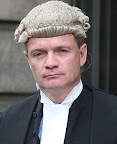 Top QC Paul McBride calls for jurors to sit tests to establish their suitability to be on a jury. REFORM of the current system of juror selection is a must if their verdicts are to be respected, says top Scots QC Paul McBride who believes jurors should be made to sit tests to establish their suitability for sitting on juries in Scotland’s courts. Mr McBride’s remarks come after the puzzling verdict in the Neil Lennon assault case, where a Hearts fan was acquitted of a sectarian assault after the jury removed the reference to making a sectarian remark from the charge relating to breach of the peace, and returned a not proven verdict for ‘aggravated by religious prejudice charge’.


