Showing posts with label Her Majesty’s Courts and Tribunals Service. Show all posts

Wednesday, January 24, 2018

TRIBUNAL INTERESTS: As MSPs consider way forward for Judicial Interests Register, calls grow to include wealthy, well connected Tribunal members as Lord Carloway appoints 28 Tribunal judges

Tribunals - dominated by wealthy, powerful individuals & professional groups. AMID recent moves in a Scottish Parliament investigation considering a way forward for judges to register their interests, an ongoing media probe of individuals and professional groups who dominate tribunals has revealed ties between tribunal judges and solicitors found guilty of professional misconduct.

In one case, an employment tribunal judge who has featured in several controversial tribunal decisions has been found to have links to a lawyer found guilty of  professional misconduct by the Scottish Solicitors Discipline Tribunal (SSDT).

The lawyer, who escaped penalty was found guilty by the SSDT in respect of misleading the Royal Bank of Scotland as to the purpose of obtaining loan funds from the Bank on the basis that they were required to purchase a property in Scotland when the truth was that they were required to purchase a property in an EU country.

The solicitor involved in the deception case , and now linked to the Employment tribunal judge - advertises himself as an “employment law specialist”.

In a further case currently being probed by the media, a second tribunal judge has been found to have links to an Edinburgh law firm accused of embezzling tens of thousands of pounds from client accounts, in a complaint which is currently under investigation by legal regulators.

The two cases of potential conflicts of interest for Tribunal judges, and emerging cases of other conflicts of interest at tribunals come as the Judicial Office announced in January the appointment of twenty eight Tribunal judges – without any declarations of interest or background.

Earlier this month, the Judicial Office announced the appointment of fourteen new Employment Judges to the panel of judges of Employment Tribunals (Scotland).

By virtue of the power conferred upon the Lord President by regulation 8 of the Employment Tribunals (Constitution and Rules of Procedure) Regulations 2013, Lord Carloway appointed Claire Marie McManus, Muriel Robison and Mark David Whitcombe as salaried Employment Judges.

Ms McManus and Ms Robison were appointed with effect from 1 January 2018, while Mr Whitcombe’s appointment will take effect from 5 March 2018.

The Lord President has also appointed the following 11 persons as Employment Judges on a fee-paid basis, for the five-year period from 15 January 2018 until 15 January 2023: Neil Antony Buzzard, Sally Emma Cowen, David William Hoey, Amanda Crawford Jones, Paul Dominic McMahon, Roderick Murdoch McPherson, Declan John O’Dempsey, Peter George O’Donnell, Melanie Jane Sangster, Michelle Diane Sutherland, Giles Ian Woolfson

A further round of appointments of Pensions Tribunal judges was made earlier today, revealing another fourteen new members have been appointed by Lord Carloway to the Pensions Appeal Tribunal for Scotland.

The Lord President appointed David McNaughtan, advocate; Robert Milligan QC; David Short, solicitor; and Nick Gardiner, advocate, as Legal Members.

Lord Carloway has also appointed the following persons to the tribunal: Service Members: Col. Stuart Campbell, Lt. Col. William Lindsay, Col. Pat Wellington, Ft.-Lt. Lee Bryden

Medical Members: General Medical: Dr. James O’Neill, Dr. Richard Hardie, Dr. Taru Patel

Psychiatric: Dr. Tim Dalkin, Dr. Paul Cavanagh, Dr. Ross Hamilton

The appointments came into effect on 11 January 2018 under the powers conferred upon the Lord President by paragraph 2 of the Schedule to the Pensions Appeal Tribunals Act 1943.

The selection process for both round of appointments followed a closed-doors recruitment exercise calling for applications from suitably qualified individuals who wished to be considered for appointment.

Currently, not one member of any tribunal is required to declare their interests in a published register of interests – despite their position as a judge, deciding on cases before them where they could have a vested interest in the outcome.

a call has been made for all tribunal members to declare and register their interests.

The manner in which tribunals are created and governed in Scotland, is a familiar model of professionals within the same groups and spheres of influence - awarding jobs to colleagues, the favoured, and vested interests.

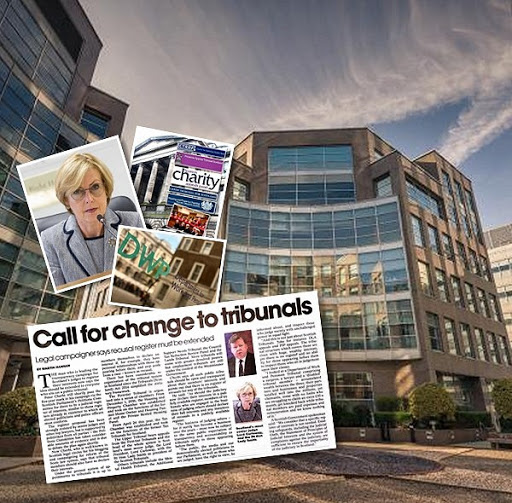
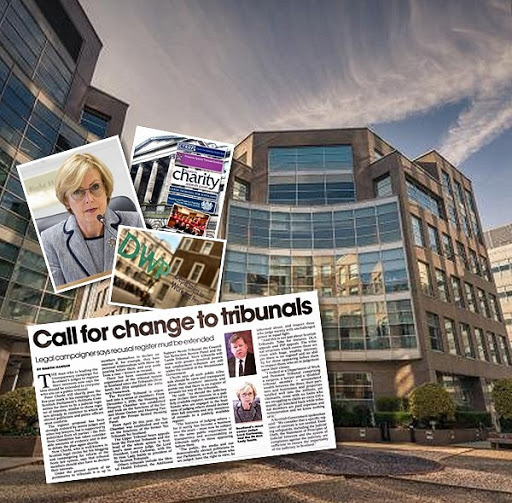
A no expenses spared approach for tribunal members who tow the line is often the case, enhanced with office accommodation such as the new tribunals centre being created in Glasgow at 3 Atlantic Quay, a high-quality office development close to the River Clyde in the centre of the city.

In October 2017, the Scottish Courts & Tribunals Service (SCTS) confirmed they and Her Majesty’s Courts and Tribunals Service (HMCTS) have decided to rationalise their accommodation and move jointly into the new centre – which is being rented out at nearly £2million a year from the Moorfield Group and partners Resonance Capital.

The moves planned to start next year will also mean that accommodation is ready for the tribunals that are going to be devolved to the SCTS.

Members of tribunals are recruited by the Judicial Appointments Board (JAB) during appointments rounds regularly held to fill vacancies in the murky world of the Scottish Courts and Tribunals Service and Judiciary of Scotland.

Applicants face interviews from their peers across the legal, professional, charitable and public service world & industries awash with public cash, junkets, charity interests, coaching, arbitration & consultancy profits.

Successful candidates are subsequently appointed by Scottish Ministers.

An example of a recent appointments round run by the Judicial Appointments Board saw 30 new Legal Members and 19 Ordinary Members appointed by the Scottish Ministers to the First-tier Tribunal for Scotland and assigned to the Housing and Property Chamber by the President of Scottish Tribunals, Lady Smith.

A full report on the earlier appointments round can be found here: TRIBUNAL REGISTER: Calls for transparency as legal & wealthy, well connected interests dominate Tribunals system membership - Register of Recusals & Interests should be extended to cover all Tribunals in Scotland.

Coverage of recent calls to create a full register of interests for all tribunal members can be found in an earlier report here: TRIBUNAL INTERESTS: Calls for wealthy, well connected interests & professions who dominate tribunals & appeals system to be brought into line with transparency & declarations in published register of interests

The National reported on the issue of creating a register of interests for tribunal members in October 2017:
Call for change to tribunals - Legal campaigner says recusal register myst be extended

Martin Hannan Journalist 14 October 2017 The National

THE man who is leading the transparency campaign for Scotland’s judges to register their interests now says the idea should be extended to everyone who sits on a public tribunal.

Peter Cherbi will shortly pass the five-year mark in his campaign via the Scottish Parliament’s Petitions Committee for there to be a judicial register of interests, similar to those registers already in existence to which all elected politicians and police officers must conform.

The register proposal has been strongly resisted by senior judges and other top lawyers, but is supported by politicians from all parties – the Petitions Committee has taken considerable amounts of evidence and is due to debate the plan again shortly.

Now Cherbi, who is well-known in Scottish legal circles for his blogging and campaigning for reform of the Scots law system, says that tribunal members should also have to declare their interests.

Under the present system of appointments to tribunals it is up to members themselves to declare an interest if, for example, they have personal relationships with those appearing before them, and step aside from a case – known as recusal.

There has been considerable re-organisation of the tribunal system in Scotland since the Tribunals (Scotland) Act 2014 simplified the statutory framework.

The First-tier Tribunal is organised into a series of chambers. From December 1, 2016, the Housing and Property Chamber was established and took on the functions of the former Home Owner and Housing Panel and the Private Rented Housing Panel.

From April 24 this year, the Tax Chamber was established and took on the functions of the former Tax Tribunals for Scotland.

The Upper Tribunal hears appeals from the First-tier Tribunals and the head of the whole system is Scotland’s most senior judge, the Lord President, Lord Carloway, with the Rt Hon Lady Smith as president of the Scottish Tribunals.

Others tribunals include the Mental Health Tribunal, the Additional Support Needs Tribunal, the Council Tax Reduction Review Panel and the Lands Tribunal. More tribunals will come with greater devolved powers but employment tribunals are still under the control of the Westminster Government.

Cherbi says all such public tribunals should be open and transparent about their members’ interests and points out that there is no register of recusals for any of the tribunals.

He said: “As should the judiciary now declare their interests in a publicly available register, members of tribunals who are engaged in the business of judging others should declare their full interests and any instances of recusals in a publicly available register.

“The business of judging others – for it surely has become a business over the years – must now be subject to the same public expectation of transparency and accountability as tribunals apply to those appearing before them.

“The public, the media and our democratically elected politicians in our Parliament, as well as those who are judged, have the right to view, be informed about, and inspect those who judge society with unchallenged power in equal light.

“And this is not just about Scottish Tribunals. Take for instance DLA appeals and PIP appeals. The tribunal structure which covers those are riven with huge, wealthy interests, yet there is no register and no ability for those appearing before them to inspect those who sit in judgement upon their claims.

“I looked at a Department of Work and Pensions Tribunal comprising a surgeon, a lawyer and a ‘disabled’ tribunal member – accumulated wealth between the three, their partners and businesses and properties totalled well into the millions, yet claimants, some with no limbs who are struggling to claim an extra £30 a month, get knocked back while tribunal members are paid expenses and remuneration and we know nothing of it.”

A Scottish Government spokesman said: “We consider that a specific register of interests is not needed. Existing safeguards, including the Judicial Oath, the Statement of Principles of Judicial Interests and the system of complaints against the judiciary, are sufficient to ensure the impartiality of the judiciary in Scotland.”

YOUR TRIBUNAL: A publicly funded adversarial environment full of vested interests:

Next year, tribunals will move to an expensive new home in the centre of Glasgow.

The Scottish Courts and Tribunals Service (SCTS) and Her Majesty’s Courts and Tribunals Service (HMCTS) are to rationalise accommodation in Glasgow and the new Tribunals Centre will be located at 3 Atlantic Quay. 

The SCTS claim the 34 hearing rooms for cases to be heard, the design of the centre will provide excellent facilities for all tribunal users, and specific  support for young users with additional support needs.  Additionally, the centre will provide facilities for vulnerable witnesses to give evidence to both Glasgow Sheriff Court and the High Court.

During 2018, the SCTS-supported Housing and Property and Health and Education Tribunal Chambers will move into the new Centre. The HMCTS-operated social security tribunal will move at a similar time with other tribunals HMCTS services to follow at a later date.

The SCTS provides support to many of Scotland’s devolved tribunals and is making preparations for the future transfer of the UK reserved tribunals operations in Scotland, currently provided by HMCTS.

If you have any experience before any of these Tribunals, or information in relation to cases, Diary of Injustice journalists would like to hear about it. All information and sources will be treated in strict confidence, contact us at scottishlawreporters@gmail.com

Previous articles on the lack of transparency within Scotland’s judiciary, investigations by Diary of Injustice including reports from the media, and video footage of debates at the Scottish Parliament’s Public Petitions Committee can be found here : A Register of Interests for Scotland's Judiciary.

Previous reports on moves to publish judicial recusals in Scotland and a media investigation which prompted further reforms of the Scottish Register of Judicial Recusals can be found here: Judicial Recusals in Scotland - Cases where judges have stood down over conflicts of interest

Thursday, October 19, 2017

TRIBUNAL INTERESTS: Calls for wealthy, well connected interests & professions who dominate tribunals & appeals system to be brought into line with transparency & declarations in published register of interests

Tribunals are dominated by wealthy, powerful individuals & professional groups. AMID an ongoing media probe into the undeclared, and significant interests of individuals and professional groups who dominate public tribunals, a call has been made for all tribunal members to declare and register their interests.

The manner in which tribunals are created and governed in Scotland, is a familiar model of professionals within the same groups and spheres of influence - awarding jobs to colleagues, the favoured, and vested interests.

A no expenses spared approach for tribunal members who tow the line is often the case, enhanced with office accommodation such as the new tribunals centre being created in Glasgow at 3 Atlantic Quay, a high-quality office development close to the River Clyde in the centre of the city.

Last week, the Scottish Courts & Tribunals Service (SCTS) confirmed they and Her Majesty’s Courts and Tribunals Service (HMCTS) have decided to rationalise their accommodation and move jointly into the new centre – which is being rented out at nearly £2million a year from the Moorfield Group and partners Resonance Capital.

The moves planned to start next year will also mean that accommodation is ready for the tribunals that are going to be devolved to the SCTS.

Members of tribunals are recruited by the Judicial Appointments Board (JAB) during appointments rounds regularly held to fill vacancies in the murky world of the Scottish Courts and Tribunals Service and Judiciary of Scotland.

Applicants face interviews from their peers across the legal, professional, charitable and public service world & industries awash with public cash, junkets, charity interests, coaching, arbitration & consultancy profits.

Successful candidates are subsequently appointed by Scottish Ministers.

An example of a recent appointments round run by the Judicial Appointments Board saw 30 new Legal Members and 19 Ordinary Members appointed by the Scottish Ministers to the First-tier Tribunal for Scotland and assigned to the Housing and Property Chamber by the President of Scottish Tribunals, Lady Smith.

A full report on the appointments can be found here: TRIBUNAL REGISTER: Calls for transparency as legal & wealthy, well connected interests dominate Tribunals system membership - Register of Recusals & Interests should be extended to cover all Tribunals in Scotland

The names of those appointed are:

Legal Members: Yvonne McKenna; Lesley-Anne Mulholland; Nairn Young; Shirley Evans; Alastair Houston; Steven Quither; Petra Hennig McFatridge; Colin Dunipace; Lesley Johnston; Anne Mathie; Kay Springham; Alan Strain; Aidan O’Neill; Jan Todd; Alison Kelly; Valerie Bremner; Eleanor Mannion; Virgil Crawford; Pamela Woodman; Lynsey MacDonald; Karen Kirk; Neil Kinnear; Fiona Watson; Nicola Irvine; Graham Dunlop; Andrew Upton; Joel Conn; Melanie Barbour; Lesley Ward; Andrew McLaughlin.

Ordinary Members: Eileen Shand; Elizabeth Williams; Janine Green; Jennifer Moore; Linda Reid; Angus Lamont; David Fotheringham; David MacIver; David Wilson; Gerard Darroch; Gordon Laurie; James Battye; Leslie Forrest; Tony Cain; Elizabeth Currie; Frances Wood; Jane Heppenstall; Melanie Booth; Sandra Brydon.

Not one of these members  - the thirty lawyers – or the nineteen ‘ordinary’ members - has declared any interests in a publicly available register of interests – as there is currently no requirement to do so.

The Judicial Appointments Board publish a version of a register of interests,- available here: Judicial Appointments Board - Register of Interests

However, the JAB register of interests leaves out any mention of property wealth and many other interests known to be held by those serving on the quango tasked with recruiting Scotland’s judiciary and tribunal members.

A legal insider commenting on the JAB register observed: “It appears as if members are poor souls sitting round a table with little to declare, whereas the undeclared financial wealth and status on this list is significant and ought to be declared”

The world of Disability Living Allowance appeals and PIP appeals has too come under the spotlight - after a study of appeal panels revealed members wealth and property totalling in the millions compared to disabled applicants who were being ‘knocked back’ on applications for a few extra pounds a month.

The tribunal structure which covers benefits appeals are riven with huge, wealthy interests, yet there is no register and no ability for those appearing before them to inspect those who sit in judgement upon their claims.

In one look at a DWP Tribunal comprising a surgeon, a lawyer and a 'disabled' tribunal member - accumulated wealth between the three, their partners and businesses and properties totalled well into the millions, yet claimants, some with no limbs who are struggling to claim an extra £30 a month and get knocked back while tribunal members are paid expenses & remuneration know nothing of it.

An adviser who assists those facing benefits appeal tribunals gave an example of a benefits tribunal membership:

A surgeon tribunal member - of 25 years experience as a medical practitioner owned several properties, has several positions on public bodies, has a long history of advising Government departments on medical legislation, has appeared as an expert witness on many occasions for NHS trusts and assisted Medical Defence Unions in the UK against hospital negligence claims.

His partner has a similar level of interests in terms of wealth and property, has a wide variety of positions in advising and acting for quangos,public bodies, professions, local and central government.

A solicitor member of the tribunal, who has over 20 years experience of a solicitor owns numerous properties, holds several other positions on tribunals and has made a lucrative career of advising and representing quangos, public bodies and has fought and won cases for professional groups.

However, the third member – the disability member of the tribunal – proved to be the most interesting.

The disability member, who is in receipt of DLA – holds significant assets and property well out of the reach of any typical DLA or PIP claimant.

This same disability member appears to hold several positions on public bodies and has frequently travelled on publicly funded junkets.

And, the same disability member has been the author of written reports on individuals – one which was described by a former local Government employee as “a personal vendetta” against a claimant from the same town in which the tribunal was held.

The former benefits adviser also recalled a recorded hearing – in which the same disability member became aggressive during a benefits appeal hearing - and demanded an assisted blind claimant remove their black glasses.

The net worth of the three members of this particular DLA tribunal was estimated at around £5.2m – taking into account the tribunal members partners, whose interests often coincided with public bodies, professions, local and central government.

It has also been alleged remuneration and expenses for benefits appeal tribunal members include payments for “knocking back applicants”.

A former Local Government employee who worked in the benefits section of a council told of how he had been part of a discussion at his former workplace where a senior member of staff claimed DLA tribunal members had on occasion been paid hundreds of pounds more for throwing out DLA applications.

Clearly, those before such a tribunal have the right to know who they face, and the interests of those who judge them.

The National reports further:

Call for change to tribunals - Legal campaigner says recusal register myst be extended

Martin Hannan Journalist 14 October 2017 The National

THE man who is leading the transparency campaign for Scotland’s judges to register their interests now says the idea should be extended to everyone who sits on a public tribunal.

Peter Cherbi will shortly pass the five-year mark in his campaign via the Scottish Parliament’s Petitions Committee for there to be a judicial register of interests, similar to those registers already in existence to which all elected politicians and police officers must conform.

The register proposal has been strongly resisted by senior judges and other top lawyers, but is supported by politicians from all parties – the Petitions Committee has taken considerable amounts of evidence and is due to debate the plan again shortly.

Now Cherbi, who is well-known in Scottish legal circles for his blogging and campaigning for reform of the Scots law system, says that tribunal members should also have to declare their interests.

Under the present system of appointments to tribunals it is up to members themselves to declare an interest if, for example, they have personal relationships with those appearing before them, and step aside from a case – known as recusal.

There has been considerable re-organisation of the tribunal system in Scotland since the Tribunals (Scotland) Act 2014 simplified the statutory framework.

The First-tier Tribunal is organised into a series of chambers. From December 1, 2016, the Housing and Property Chamber was established and took on the functions of the former Home Owner and Housing Panel and the Private Rented Housing Panel.

From April 24 this year, the Tax Chamber was established and took on the functions of the former Tax Tribunals for Scotland.

The Upper Tribunal hears appeals from the First-tier Tribunals and the head of the whole system is Scotland’s most senior judge, the Lord President, Lord Carloway, with the Rt Hon Lady Smith as president of the Scottish Tribunals.

Others tribunals include the Mental Health Tribunal, the Additional Support Needs Tribunal, the Council Tax Reduction Review Panel and the Lands Tribunal. More tribunals will come with greater devolved powers but employment tribunals are still under the control of the Westminster Government.

Cherbi says all such public tribunals should be open and transparent about their members’ interests and points out that there is no register of recusals for any of the tribunals.

He said: “As should the judiciary now declare their interests in a publicly available register, members of tribunals who are engaged in the business of judging others should declare their full interests and any instances of recusals in a publicly available register.

“The business of judging others – for it surely has become a business over the years – must now be subject to the same public expectation of transparency and accountability as tribunals apply to those appearing before them.

“The public, the media and our democratically elected politicians in our Parliament, as well as those who are judged, have the right to view, be informed about, and inspect those who judge society with unchallenged power in equal light.

“And this is not just about Scottish Tribunals. Take for instance DLA appeals and PIP appeals. The tribunal structure which covers those are riven with huge, wealthy interests, yet there is no register and no ability for those appearing before them to inspect those who sit in judgement upon their claims.

“I looked at a Department of Work and Pensions Tribunal comprising a surgeon, a lawyer and a ‘disabled’ tribunal member – accumulated wealth between the three, their partners and businesses and properties totalled well into the millions, yet claimants, some with no limbs who are struggling to claim an extra £30 a month, get knocked back while tribunal members are paid expenses and remuneration and we know nothing of it.”

A Scottish Government spokesman said: “We consider that a specific register of interests is not needed. Existing safeguards, including the Judicial Oath, the Statement of Principles of Judicial Interests and the system of complaints against the judiciary, are sufficient to ensure the impartiality of the judiciary in Scotland.”

YOUR TRIBUNAL: A publicly funded adversarial environment full of vested interests:

Next year, tribunals will move to an expensive new home in the centre of Glasgow.

The Scottish Courts and Tribunals Service (SCTS) and Her Majesty’s Courts and Tribunals Service (HMCTS) are to rationalise accommodation in Glasgow and the new Tribunals Centre will be located at 3 Atlantic Quay. 

The SCTS claim the 34 hearing rooms for cases to be heard, the design of the centre will provide excellent facilities for all tribunal users, and specific  support for young users with additional support needs.  Additionally, the centre will provide facilities for vulnerable witnesses to give evidence to both Glasgow Sheriff Court and the High Court.

During 2018, the SCTS-supported Housing and Property and Health and Education Tribunal Chambers will move into the new Centre. The HMCTS-operated social security tribunal will move at a similar time with other tribunals HMCTS services to follow at a later date.

The SCTS provides support to many of Scotland’s devolved tribunals and is making preparations for the future transfer of the UK reserved tribunals operations in Scotland, currently provided by HMCTS.

Lady Smith, President of Scottish Tribunals – who is in charge of the £7.8million Scottish Child Abuse Inquiry – claimed:  “The creation of the new Tribunals Centre in Glasgow is the latest important development in the evolution of the Scottish Tribunals. The premises will act as a hub for tribunals supported by SCTS, providing a range of modern facilities and services for tribunals users. They will also offer a separate, appropriately designed space, for vulnerable witnesses and users, including for witnesses providing evidence for Sheriff and High Court cases in Glasgow. This co-located approach to provision for the tribunals should be regarded as a flagship for the administration of justice in Scotland in the 21st century.”

Eric McQueen, Chief Executive, SCTS said: "This has been an exciting opportunity with SCTS and HMCTS working together to create a bespoke tribunals centre, improving the services we provide for tribunals, while reducing costs.  It also provides an early opportunity to bring together SCTS and HMCTS staff to prepare for forthcoming tribunal reforms.”

Kevin Sadler, Deputy Chief Executive, HMCTS said: “We are committed to improving people’s experience of the justice system by providing facilities that are modern, comfortable and accessible.We have worked collaboratively with SCTS on this opportunity and we look forward to creating a joint tribunals centre with them in the heart of Glasgow.”

If you have any experience before any of these Tribunals, or information in relation to cases, Diary of Injustice journalists would like to hear about it. All information and sources will be treated in strict confidence, contact us at scottishlawreporters@gmail.com

Previous articles on the lack of transparency within Scotland’s judiciary, investigations by Diary of Injustice including reports from the media, and video footage of debates at the Scottish Parliament’s Public Petitions Committee can be found here : A Register of Interests for Scotland's Judiciary.

Previous reports on moves to publish judicial recusals in Scotland and a media investigation which prompted further reforms of the Scottish Register of Judicial Recusals can be found here: Judicial Recusals in Scotland - Cases where judges have stood down over conflicts of interest