Monday, June 29, 2009

Justice Secretary forced into new appointments round at Scottish Legal Complaints Commission after lay member ‘steps down’

SLCC squareScottish Legal Complaints Commission delayed publishing minutes to hide lay members resignations. The Scottish Legal Complaints Commission was caught up in another scandal tonight as it was revealed that at least one, so far unidentified lay member wants to stand down, provoking a new round of Ministerial appointments of ‘lay members’ who are supposed to have no links to the legal profession, to the beleaguered law complaints body.
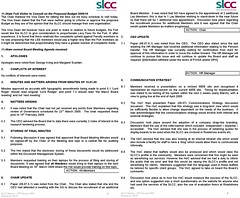
SLCC lay member steps down February 16 2009Minutes from February 09 just published reveal that at least one lay member is to stand down. Revelations from minutes recently released show that one of the SLCC’s lay members, so far unidentified, has asked to stand down, and discussions have already taken place between the SLCC’s Chair, Jane Irvine, the CEO Eileen Masterman and the Scottish Government’s Justice Department over replacements and mysteriously also point to the appointment of an additional lay member. “Paper (08.07.5.1) was noted from the Chair. The Chair also stated that she and the CEO had attended a meeting with the SG to discuss the recruitment of an additional Board Member. It was noted that SG have agreed to the appointment of 2 additional Lay Members; this is due to 1 Lay Member wishing to stand-down in the near future so that there will be 1 additional new appointment. Discussion took place regarding the recruitment process for additional Members and it was agreed that the Chair would update Members as matters progressed.”

Jane IrvineSLCC Chair Jane Irvine. The Chair of the Scottish Legal Complaints Commission, Jane Irvine, refused give an explanation for the sudden departure of a lay member, nor did she wish to identify the individual at the centre of the latest crisis to hit the ‘independent’ SLCC. Ms Irvine delayed any announcement on the matter by making the enquiry a ‘freedom of information request’, which can take anything up to 20 days to receive a reply.

A legal insider said tonight : “This latest problem to hit the Scottish Legal Complaints Commission shows it is unfit for purpose and should be scrapped in its present format. The delay in publishing these minutes simply because there were problems within the organisation the SLCC did not wish to reveal, demonstrates the commission is more focussed on protecting itself than protecting the interests of clients.”

He went on : “If the public and the profession are to be served by a regulator which will give the public confidence in the Scots legal services market, there has to be a totally independent regulator with full powers of prosecution and enforcement of discipline, rather than the idiotic arrangement we currently have where the SLCC will investigate a complaint and the Law Society will ‘punish’ the offending solicitor.”

MacAskill tight lippedJustice Secretary Kenny MacAskill decidedly unhappy over more disarray at SLCC. The Justice Secretary, Kenny MacAskill was asked for his reaction to the resignation and the requirement for a new round of lay person appointments to the SLCC. His spokesman said : “We wouldn’t comment on speculation about the board membership of an independent public body. Any further appointments that might be required would take place according to the statutory framework laid down in the Legal Profession and Legal Aid Act and the procedures laid down by the Office of the Commissioner for Public Appointments in Scotland.”

An official from a Scottish consumer organisation who looked at the latest publications of minutes from the SLCC was staggered that ‘late publication’ had been used to conceal serious problems within the SLCC. He said : “This latest scandal points to an organisation which does not have the consumer’s best interests at heart. Concealing resignations of lay members by failing to publish information timely seems to indicate to me the Commission realises it has no public trust otherwise why fear releasing such information into the public domain ?”

He continued : “These events also raise many questions such as : if new lay members are to be appointed, where are the advertisements for these posts ? who will pay for this new round of appointments ? what are the criteria for these positions ? and why is there to be an extra lay member appointed ?”

If an extra lay member is to be appointed which will leave the SLCC with one more lay member than lawyer members, will the legal profession object to the arrangement or ask for an additional lawyer member to be appointed ? I can see this developing into another big mess at the SLCC.”

Well we have an interesting set of circumstances here, as it looks very much like the Justice Secretary will have to appoint new lay members to the Scottish Legal Complaints Commission, but where will these lay members come from ?

Are the replacement lay members to be more stooges from the legal profession or other self regulatory bodies who know how to protect the guilty from their victims ? I fear that will be the case, as the initial round of appointments to the SLCC by the Justice Secretary, which I reported on here : Call for MacAskill appointments 'sleaze investigation' as revelations show Legal Complaints Commission member was subject of Police inquiry left a lot to be desired in terms of transparency and accountability.

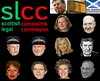
Scottish Legal Complaints CommissionThe SLCC board members : Do you want to join this bunch and be a lay member ? If you feel like contacting the Justice Secretary over the lay member positions at the Scottish Legal Complaints Commission, contacting the Justice Secretary as soon as possible, HERE. You can also contact the SLCC to offer your services as a lay member by email, HERE. Just don’t expect to be taken on if you don't have relatives already in the legal profession .. which does seem to be one of the criteria for sitting on the SLCC and scoffing up to £350 a day in expenses.
Law Society of ScotlandLaw Society of Scotland officials get top line access to SLCC meetings but clients are not invited. Full details of the February meeting of the SLCC, just published late this month, with the entire top brass of the Law Society of Scotland in attendance, can be viewed by clicking on the following images, where readers may also note, the poor dears at the SLCC are also still waiting for their pensions transfer …

SLCC’s February meeting, details just published in June ! :
SLCC 16th February meeting 0001SLCC 16th February meeting 0002SLCC 16th February meeting 0003SLCC 16th February meeting 0004SLCC 16th February meeting 0005

So how about keeping the public informed on these appointments ? or is this another ‘secret squirrel’ operation to parachute in more sympathisers of crooked lawyers into the once claimed ‘independent’ Scottish Legal Complaints Commission .. which is now anything but independent.

Friday, June 26, 2009

Scots chartered accountants ‘are too dishonest’ to handle wills & executries as ICAS pulls out of rights of audience battle for legal business

ICAS LOGO 2Scots accountants regulator ICAS have withdrawn their application for rights of audience. The choice of which professional should ruin your legal & financial affairs after you are dead, is to remain unchanged for now, with the revelation that the Institute of Chartered Accountants of Scotland have put 'on hold' their application to the Scottish Government for extended rights of audience to handle clients wills & probate services - work currently undertaken exclusively by solicitors.

Scottish GovernmentScottish Government made a short admission on accountants rights of audience battle. A spokesman for the Scottish Government today said : "ICAS have put their application on hold meantime. We will proceed once we hear from them again. We have no correspondence from ICAS other than the application. We had a telephone conversation with them some months ago but have heard nothing since."

ICAS had applied for rights of audience to the Scottish Government in July 2008, under the terms of Sections 25-29 of the Law Reform (Miscellaneous Provisions) (Scotland) Act 1990, which I reported on in an earlier article, here : Accountants demand powers to handle wills & legal services, offering 'crooked' self regulation and little consumer protection in return

The 2008 application came after ICAS had tried unsuccessfully to amend the Legal Profession & Legal Aid (Scotland) Bill 2007, to enable accountants to enter the legal services business, which I reported on earlier, here : Scottish Accountants try to amend LPLA Bill for their own benefit - but refuse independent regulation safeguards for the consumer

A solicitor welcomed the news that ICAS had pulled their rights of audience application, claiming that accountants could not be trusted to handle the wills of dead clients, and warned the public there were little safeguards in the event a crooked accountant made off with the client’s money.

He said : "Considering accountants have little or no experience in the field of handling probate work in Scotland, and clients have even less safeguards in terms of protection from rogue accountants ruining their business, I doubt it would be in the consumer's best interests at this point in time to allow accountants to handle clients post-death affairs. I would therefore not advise a potential client or any of your readers to trust an accountant to 'wind up' their legal affairs according to their will."

Norman Howitt Accountant JRW Group Hawick Scottish BordersThe case of Scottish Borders accountant Norman Howitt (pictured left) made it dangerous to allow accountants to handle a client's will. The solicitor went onto continue his critique and suggested accountants be barred from any involvement with wills : "On the basis of the now well known case involving your own family and the accountant Mr Howitt who was executor to your family’s ruined estate, I have advised and put off several clients from appointing their accountant as 'executor' to their will. After having read of Howitt’s actions in your case, I feel accountants and others close to the deceased's financial affairs should be banned from becoming executors on wills they are closely linked with or are handling via their firms either in a personal or business capacity."

You can read more about the way in which an accountant in the Scottish Borders, Norman Howitt, helped a solicitor also in the Scottish Borders, Andrew Penman of Stormonth Darling Solicitors, Kelso, ruin my family's legal affairs, and how they got away with it, here : A picture is worth a thousand words - Images of fraud reveal corruption & deceit by lawyers & accountants in the Scottish Borders

While for now, chartered accountants in Scotland do not have the right to handle wills & probate services, they can conduct similar business in England & Wales, which you can read more about HERE

There are numerous reported cases where accountants, acting in the capacity as executor, have totally ruined the estates of deceased clients. Take it from me, there is as little protection against a crooked accountant robbing your life savings or ruining your legal affairs, as there is against a solicitor doing the same.

Often I have found, from not only the case involving my own family’s legal affairs, but also those many more cases brought to my attention by you, the public, that crooked lawyers, and crooked accountants seem to make a good team taking as much money for themselves as they can get before actions are discovered.

It is also a fact the Law Society of Scotland and the Institute of Chartered Accountants of Scotland, both self regulators of their own professions, work together closely on many issues, and proliferate each other’s aims on occasions of investigations into crooked lawyers & accountants, by appointing each other’s members to their in-house committees, a subject which I tackled earlier, here : Fears over corrupt self regulation as accountants regulator draft in ex Law Society President and solicitor as Public Interest members

I would therefore recommended that members of the public who have already appointed an accountant as 'executor' on their will should immediately replace that person or their firm with someone who is a lot less involved in their financial or legal affairs and ensure whoever that person is, they are appointed with a set of specific instructions on what they can and cannot do, with a given timeline & cost not to be exceeded for the completion of their work.

Wednesday, June 24, 2009

Scottish Legal Complaints Commission to be told ‘Master Policy claims destroyed clients lives' as Law Society & insurers protected crooked lawyers

SLCC squareScottish Legal Complaints Commission research reveals a trail of destroyed clients who attempted claims against lawyers. RESEARCH commissioned by the Scottish Legal Complaints Commission will this week reveal a catalogue of dirty tricks employed by the Law Society of Scotland, insurers Marsh UK and Royal Sun Alliance to defeat clients attempts to recoup millions of pounds of money stolen by hundreds of crooked lawyers who are still practising law in Scotland today.

On Friday morning, 26th June, a presentation at the SLCC's Headquarters at the Stamp Office in Edinburgh, will be told of the experiences of members of the public who attempted to recover money and assets which solicitors had either stole for themselves or lost through providing poor & negligent legal service to their clients. This research has been so feared by the Law Society of Scotland, it’s officials demanded early access to the material prior to publication, in an effort, some legal insiders say, is to censor the worst parts of evidence which will show the Master Policy to be “thoroughly corrupt”.

I reported on the Law Society’s attempts to gain early access to the Master Policy research here : Cabinet Chief Swinney intervenes in SLCC investigation of claims against crooked lawyers as Law Society 'fearing worst' demands early secret meetings.

SLCC membersSLCC members will be given presentation on extent of failed claims & corruption within Law Society’s Master Policy & Guarantee Fund. Dr Angela Melville and Professor Frank Stephen, of Manchester University's School of Law will give a presentation to members of the Scottish Legal Complaints Commission on the results of their investigation into the workings of the Master Policy & Guarantee Fund client compensation schemes once touted by the Law Society of Scotland as being "the ultimate in consumer protection" but which evidence over the years has revealed, are little more than 'fronts' for a thoroughly corrupt regime bent on ensuring clients claims for compensation against thousands of crooked lawyers over the years, wither & die long before getting access to court.

A Scottish Government insider welcomed the research, which he claimed would have been “… hard to complete under the circumstances, with an air of bitter resentment from the Law Society their much valued Master Policy & Guarantee Fund was at last getting some outside scrutiny. I understand there has been considerable input into the research from clients who effectively had their lives destroyed by the Law Society and those who run the Master Policy.”

He went on : “While it will be interesting to read the final report, I have to wonder if the SLCC will actually do something about it because most of its board & staff complement who came over from the Law Society have been well aware of the controversies surrounding the Master Policy & Guarantee Fund for a number of years and cannot claim ignorance of these problems which to a significant degree were instrumental in creating the legislation which led to the creation of the SLCC itself.”

An official of a consumer organisation involved in the creation of the LPLA Act, which brought about the SLCC’s existence commented : “Now the SLCC have the information its time for them to put up or shut up. We have had long enough of going round & round the mulberry bush on these issues of the Master Policy & Guarantee Fund. If the SLCC don’t take action now then the organisation is effectively a write-off as far as consumer protection goes.”

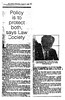
Policy is to protect both says Law Society - Kenneth PritchardFormer Law Society Chief & serving Sheriff Kenneth Pritchard intervened in claims to Master Policy. Among the revelations will be documents showing that key Law Society officials continually intervened in claims made by ruined clients to the Master Policy & Guarantee Funds, in order to delay by years, the processing of such claims, or even kill off attempts to obtain compensation stone dead. In some of the most severe cases, involving millions of pounds stolen by law firms from clients, Law Society chiefs such as former Law Society Secretary Kenneth Pritchard, were shown to have ordered solicitors to drop their clients for fear of massive payouts in negligence cases, despite ‘fixed’ Law Society investigations which covered up everything from fraud, to acts of potential criminality.

Debating chamberMSPs at Holyrood were intimidated by the legal profession into dropping constituents calls for fairer access to justice and resolution of their cases. Indeed the power and influence of the Law Society of Scotland, backed up by the Scots legal establishment, has in the words of one MSP, “produced a vice like grip on public access to justice and even access to elected representatives”, where routinely, in cases where victims had called on their elected representatives for assistance, the Law Society would "call in" constituent's MSPs for meetings, and attempt to persuade them from dropping their constituent's requests to handle often severe cases involving crooked lawyers and the Law Society’s lack of will to do anything when faced with serious & substantiated complaints.

John SwinneyCabinet Secretary John Swinney was one of the few who stood up to the Law Society's insistence that all claims against crooked lawyers fail. The Commission will also be shown videos which have been sent to the research team, revealing evidence from the current Cabinet Secretary for Finance, John Swinney MSP, that Law Society chiefs routinely intervened in claims & complaints involving crooked lawyers or challenges to the Law Society of Scotland to ensure no success for members of the public who had fell victim to notoriously corrupt law firms and individual solicitors.

Cabinet Secretary John Swinney reveals Law Society Chief Kenneth Pritchard ordered law firms to drop clients who pursued crooked lawyers.

Royal Sun Alliance Claims Manager Trevor Goddard admitted that only 1% of claims against crooked lawyers even make it to court.

Cabinet Secretary John Swinney reveals the Law Society’s resentment to outside regulation of the Master Policy & Guarantee Fund.

Ex Law Society Chief Douglas Mill falls into his Granny’s Grave as John Swinney reveals the Mill & his colleagues operated a policy for protection of crooked lawyers.

You can read more about the impact of the revelations by John Swinney at the Scottish Parliament, which eventually led to the resignation of the Law Society’s then Chief Executive, Douglas Mill, HERE

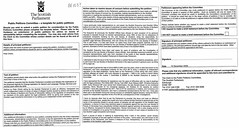
Petition PE1033 3pagePetition PE1033 was aimed at resolving failed claims against the Master Policy and crooked lawyers. Of course, the problems with the Master Policy & Guarantee Fund are easy to fix, if minds were focussed on admitting the truth and getting down to resolving the issues everyone knows about but just doesn't want to admit. I proposed a solution to this over two years ago, but the Law Society of Scotland wheeled out its big guns to kill it off at Parliamentary stage, where Petition PE 1033, which you can read more about here : Petition PE 1033 - A call for action, review & settlement for victims of the Scottish legal profession's injustice against client complaints.

It's fate can be read here : Law Society kills Petition PE1033 amid calls for review of injustice & regulatory sins of the past

Michael Clancy - Law Society BullyLaw Society Director Michael Clancy stepped in to stop Petition attempt to clean up lawyers corruption cases. The Petition was closed down, after a series of dishonest submissions from the Law Society Scotland, with the Petitions Committee only too eager again to satisfy the desires of a dishonest legal profession, and the ‘over-protective-of-crooked-lawyers’ Justice Secretary Kenny MacAskill only too willingly joined in the bitterness against clients interests, and expressed his view here : Truth & reconciliation fails as MacAskill follows Law Society orders to Parliament on attempt to heal public confidence in legal profession

Perhaps someone else would like to take up Petition PE1033 and resubmit it ? as I fear Holyrood is generally too prejudiced against my proposition to clean up the sins of the past of a very dirty legal profession who have grown fatter on the profits of injustice.

The SLCC’s research into Master Policy & Guarantee Fund claims made it to the Scotsman this week, reported here :

Looking for the best solution when relations break down

Monday, June 22, 2009

Freedom of Information campaign : Make the Law Society of Scotland comply with FOI

Law SocietyLaw Society members are shielded by secrecy from FOI. When the law is twisted against people by those in the legal profession who use the law as a business model to make profit, and conceal activities that would be regarded as criminal activity if a member of the public did the same, the law itself is discredited.

This is currently the case in the Scottish legal services market, where many solicitors & law firms are milking the public and their clients for vast sums of money for poor services, even fleecing clients at-will, and getting away with it due to the influence of the Law Society of Scotland in closing down any public interest reforms to regulation, access to justice, or attempts to consider cases of the past. Indeed things are currently so bad, you don't even have a right to know if your own lawyer has a criminal record !

The situation is, one could say, a mirror image of the battle which Westminster fought to keep everyone from finding out as we have now, that our politicians have been paying their expenses with our money and if it had not been for Freedom of Information, and the intervention of the national press, we would have been none the wiser because secrecy, can conceal anything.

So. If you want to stop these people (who received £2.5million from the taxpayer)

Scottish Legal Complaints Commission

getting away with this level of secrecy :

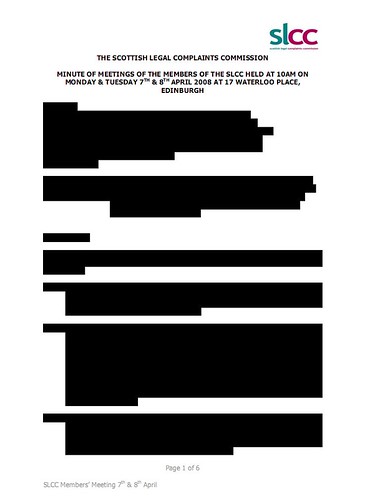
SLCC 7&8th April Meeting Blanked out Page 1

and if you want to stop the Law Society of Scotland from using their immunity from Freedom of Information to protect lawyers from complaints, criminal investigations and fully independent regulation

Law Society exempt FOI

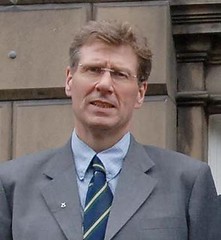
email or write to this man, Justice Secretary, Kenny MacAskill :

Kenny_MacAskill

at : scottish.ministers@scotland.gsi.gov.uk or Kenny.MacAskill.msp@scottish.parliament.uk

or write to him at : Kenny MacAskill MSP, Cabinet Secretary for Justice,The Scottish Government,St Andrew’s House, Edinburgh EH1 3DG.

… and ask him to do his job to see Scots get a fairer deal in access to justice and transparency in legal services, which can be achieved in some part by removing the legal profession’s exemption from Freedom of Information legislation and making them more accountable to us.

Friday, June 19, 2009

Justice Secretary 'remains bitter’ over calls to make Law Society of Scotland comply with Freedom of Information laws

Law Society of ScotlandLaw Society of Scotland officials are determined to prevent forced compliance with FOI. FOUR YEARS after the first calls were made to the Scottish Government to bring the Law Society of Scotland into compliance with Freedom of Information legislation, attitudes apparently remain unchanged at the Justice Department over calls to force greater transparency & accountability on the lawyers regulatory, despite the fact the new regulator for complaints against Scottish solicitors, the joint taxpayer-lawyer funded Scottish Legal Complaints Commission is itself FOI compliant.

I have reported on the Scottish Government’s reluctance to make the legal profession comply with Freedom of Information laws in an earlier article here : MacAskill’s ‘no intention to include Law Society in FOI review’ allows lawyers to keep scandals & criminal records hidden from public scrutiny

MacAskill tight lippedJustice Secretary MacAskill is rumoured to be 'bitter' over calls to make lawyers comply with Freedom of Information. The Scottish Government's three year go slow on bringing the Law Society of Scotland into the scope of Freedom of Information legislation, has today been attributed by sources within the administration to problems of bias in the Justice Department itself, with civil servants being described as 'very angry' that members of the public should even be calling for such reforms. The Justice Secretary himself, aware of publicity surrounding the secretive nature of the Law Society is also rumoured to be "very bitter" that critics of the legal profession have even dared suggest the Law Society be brought within the scope of Freedom of Information legislation.

A legal insider today said : "Officials at the Justice Department are less than pleased that members of the public, campaign groups and journalists have made enquires on the lack of progress of reforms in legal services. Occasionally, civil servants have themselves hit out at critics of the slow pace of justice reforms, with less than gentlemanly outbursts, due to impressions given the Justice Department itself is now covering up for corruption, and even perhaps criminality in the legal profession itself."

He went on : "The Justice Secretary himself, is well known to be vehemently against anyone who dares criticise his colleagues in the legal profession, to the point that any idea put forward from outside the legal establishment to 'improve' public access to justice, or, as in this case, making the legal profession compliant with freedom of information laws, MacAskill has set himself diametrically against, simply out of bloody mindedness."

A senior journalist with one of Scotland’s major newspapers confirmed the level of hostility towards those calling for reform of the legal profession. He said : “One civil servant I know launched into a shocking barrage of insults against particular individuals whom it is well known the Law Society tried to exclude from major Scottish Parliamentary inquiries on the state of regulation of the legal profession.”

“I don't think there is any need for this level of prejudice in the civil service. If it is the case that some officials within SG feel so partisan against the public on issues of reforming the legal profession, they should go work for the Law Society instead of the Scottish Government.”

ScottishGovernmentThe Scottish Government are bitterly resisting reforms to the legal sector. It seems somewhat at odds to me, with the era we are now living in, where secrecy, self regulation and the corruption & greed which both issues seem to breed, have virtually wiped out our main banks, trust in the financial sector, and even trust in politicians not to over claim on their expenses accounts, that the Scottish Government are still so bitterly resisting making the legal profession compliant with Freedom of Information laws, and also remain so opposed to implementing fully independent regulation of solicitors, to safeguard consumers best interests.

This resistance on the part of the Scottish Government to process any reforms of the way regulation and client business is handled by the Law Society of Scotland, is an almost perfect mirror image of the resistance from the legal profession itself, who are determined to remain immune from FOI legislation, and virtually all other forms of independent oversight which may very well end up revealing an even greater scale of corruption within the Scots legal sector which might take critics such as myself by surprise.

John SwinneyJohn Swinney revealed Law Society Chiefs threatened anyone who called for regulatory reforms. Indeed, while the first calls for making the Law Society of Scotland comply with Freedom of Information laws were being made, Cabinet Secretary John Swinney MSP, then in opposition, revealed that the Law Society’s then Chief Executive Douglas Mill was busy attacking such ideas, even issuing open threats to the Financial Services Authority and any future regulator who might consider taking a stick to the vast sea of corruption which surrounds areas such as the Law Society's discredited Master Policy & Guarantee Fund client compensation arrangements, which some liken to money laundering operations.

John Swinney says a sea change is needed in attitudes to regulating the legal profession. How true …

Jane IrvineSLCC's Chair Jane Irvine, supports the idea of making the Law Society comply with Freedom of Information. However, while Justice Secretary Kenny MacAskill continues his go slow on making the Law Society comply with Freedom of Information legislation, a growing number of consumer groups and even some from within the legal establishment itself, such as the Chair of the Scottish Legal Complaints Commission, Jane Irvine, are supporting the idea that the public interest would be best served by making the legal profession's governing body FOI compliant.

You can read an earlier article I wrote about the SLCC's Chief Jane Irvine who came out and supported FOI compliance for the Law Society of Scotland, here : Legal Complaints Chief supports ‘consumer advantages’ of removing Law Society’s Freedom of Info immunity

SLCC squareScottish Legal Complaints Commission has suffered several scandals as a result of FOI disclosures. Admittedly, the Scottish Legal Complaints Commission is no angel itself, when it comes to the Commission's own compliance with Freedom of Information laws. In some cases, the SLCC has chosen (allegedly through Ministerial direction) to censor disclosed material to particular journalists, and on other occasions, has apparently been authorised to lie in FOI disclosures. You can find some more good FOI scandals involving the SLCC HERE.

SLCC 7&8th April Meeting Blanked out Page 1SLCC blacked out FOI disclosures in true Westminster style and Law Society might do the same if made FOI compliant. However, while the Information Commissioner is investigating these breeches of FOI laws by the SLCC, and has already criticised the commission in a number of decisions for their poor practices, FOI has brought us an invaluable insight into the way the legal profession will co-opt independent organisations set up as a result of legislation to look at client complaints, and perhaps even more importantly, has also shown us the steps some officials take, and the lengths some are willing to go, to stifle public debate and calls for legitimate reforms which are certainly in the public interest.

As politicians are subject to Freedom of Information laws, as the Police are subject to Freedom of Information laws, as indeed are many other public bodies & services, including local & national Government are subject to Freedom of Information laws, then so also must the legal profession be made subject to Freedom of Information laws, a reform which is definitely in the public interest.

Thursday, June 18, 2009

Westminster Expenses : They work for you, are paid for by you, have possibly stolen from you, but they feel they are not accountable to you

House of CommonsWestminster publishes MPs expenses online with most details blanked out. The House of Commons has finally published MPs expenses online, however many of the details have been blanked out, because while we as taxpayers are paying MPs salaries and their expenses, we are it seems not entitled to see what we are paying for, or by the looks of it, any returns the country actually gains by allowing politicians to claim for all & sundry from us, the taxpayer.

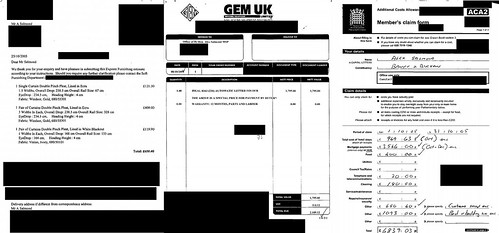
MP Phone BillAn MP’s British Telecom reminder blacked out – would you pay a bill if it landed through your letterbox in this state ?. While members of the House of Commons seemingly can get anything & everything paid for by the taxpayer, from mortgage interest, to second homes allowances, to telephone bills to the removal of moss from their umpteenth house, or duck houses and repairs to swimming pool boilers .. the ones paying it – us, are not entitled to see exactly where the money is going and what the justification is for their huge expenses to the country, particularly in these crushing financial times.

For a couple of samples of today’s publication of expenses from Westminster, via Freedom of Information (in other words, the blacked out version, as opposed to the Telegraph ‘warts and all’ version) we see among the Scottish contingent, Alex Salmond claiming for mortgage expenses and a rather costly envelope folder, as well as curtains & bedding .. with Scottish Conservative MP David Mundell keeping the First Minister company on mortgage expenses, which I'm sure probably most of the country would like to join in with, having mortgages, bedding, curtains, food, and letter folder contraptions paid for out of thin air out of other people's taxes & hard work.

A sample of First Minister Alex Salmond’s Westminster Expenses as an MP :

Alex Salmond Expenses examples

A sample of South of Scotland MP David Mundell’s Westminster expenses :

David Mundell Mortgage expenses

Virtually all the documents have blacked out parts, leading one to conclude democracy, transparency and accountability have most definitely been blacked out in the entire country. I wonder where politicians learned that little trick from ? It surely couldn’t be the legal profession, could it ? … and lets not forget Kenny MacAskill, Scotland’s Justice Secretary is busy trying to keep the Law Society of Scotland exempt from Freedom of Information laws, just in case we begin to find out many of the dirty secrets of Scotland’s less than honest legal profession : MacAskill’s ‘no intention to include Law Society in FOI review’ allows lawyers to keep scandals & criminal records hidden from public scrutiny

Telegraph front pageIf it had not been for the Telegraph newspaper, we would have been none the wiser on crooked politicians expenses claims. Exposing this organised ‘thieving’ from the country of course, fell to the Telegraph newspaper, rather than Freedom of Information legislation, because as we now see in today’s release of expenses information from Westminster, it would not be possible to see who had been flipping homes, and who was claiming what for which property. It is therefore clear that FOI legislation will have to change because it is being used to deceive rather than empower, just as we have seen the Scottish Legal Complaints Commission use FOI to cover up scandalous workings within its increasingly bizarre operations of allegedly regulating the Scottish legal profession.

I reported some rather secretive goings on at the SLCC where similar blacked out documents were issued to hide controversial information here : FOI disclosures censored to law journalists as MacAskill’s legal complaints commission prefers secrecy to public accountability

David Mcletchie taxiMSP David McLetchie was among those politicians caught out at Holyrood claiming thousands for expenses. MSPs might like to think they are whiter than their Westminster counterparts, but as we know here in Scotland, that is most certainly not the case. While MSPs expenses are now published online, again, it took pressure from newspaper investigations such as those in the Sunday Herald to force the changes at Holyrood which Westminster will now have to go through.

You can read more about MSPs expenses milking in an earlier article, here : First Minister Alex Salmond admits he's not 'whiter than white' over Westminster expenses scandal as questions arise over £800 food allowance claims

If you want to find out more about your own MP’s expenses at Westminster (and there is a lot to find out !), click the following link which leads to the BBC News website :

MPs' expenses: Find your MP

and the main story from BBC News :

MPs' expenses made public online

The expenses claims of every MP for the past four years have been published, but with some key details blacked out.

Commons authorities have published the details after a long-running Freedom of Information battle.

The addresses that claims relate to - and correspondence - have been removed on privacy and security grounds.

This means it is not possible to see if MPs "flipped" second homes - a key part of the Daily Telegraph's revelations from its leaked version of the data.

MPs have said some details, like addresses and travel patterns, have to be withheld for security reasons .

But other details have been removed in the official version such as Prime Minister Gordon Brown's claims for his Sky television subscription - despite the fact it was published last year, also under the Freedom of Information Act.

The uncensored details obtained by the Daily Telegraph have led to weeks of revelations and a slew of resignations from MPs.

On Wednesday Treasury minister Kitty Ussher stepped down amid reports that she changed the designation of her constituency home to avoid capital gains tax.

Ms Ussher said she acted within the rules but wanted to protect the government from further embarrassment amid public anger about expenses.

The BBC's political editor Nick Robinson said that if the full uncensored claims had not been leaked to the Telegraph, then MPs like Miss Ussher would still be in their jobs.

Among Daily Telegraph revelations that do not appear in the blacked out versions of MPs' receipts are:

  • Andrew MacKay - From the official receipts it would not have been possible to know the Tory MP claimed for a second home without having a main constituency home.
  • Margaret Moran - The Labour MP who claimed £22,000 for dry rot on her second home. The receipts do not show her second home was in Southampton -100 miles from her Luton constituency.
  • Sir Peter Viggers - Tory MP who tried to claim £1,645 for a "duck island", the official receipts show no evidence of the unsuccessful claim.
  • Hazel Blears - The former Labour minister claimed second home expenses for three different properties in a single year but the redacted receipts do not show this as addresses are blacked out.

Heather Brooke, one of the campaigners who brought the Freedom of Information case, told the BBC the official publication was a "substandard version".

She pointed out the High Court had ordered that second home addresses be published - MPs rejected this in a later Commons vote, arguing it would jeopardise their security.

"It's the only way to police effectively whether there is a second home and whether the mortgage exists whether it's been paid off or not and they are still claiming. It's really the only way we can hold them to account on that second home allowance."

'Seismic changes'

She said the security argument had been "totally discredited" adding: "I can see that avoiding embarrassment has been the key motivating factor of what's been deleted."

And Maurice Frankel, of the Campaign for Freedom of Information, also said the official version was a "very poor substitute": "The mood of the House of Commons was that they did not want any of this information to be published and, failing that, as little as possible."

But cabinet minister Hilary Benn told BBC Radio 4's Today programme: "The argument for keeping bank details, phone numbers and addresses confidential I think is a fair one."

But he said the system needed to change: "That's why we've seen seismic changes, that's why Parliament has already taken steps to alter the rules why Christopher Kelly's committee will look at what the new system will be."

He added the problems were the result of self regulation - now expenses would be audited independently.

For the Conservatives, shadow Commons leader Alan Duncan said: "I think the black ink is justified where it is things like ex-directory phone numbers ... and personal details and bank accounts."

He said changes had been made to ensure MPs could not "play around with the second home address in order to extract as much money as possible out of the system".

Exclusions

But he said "at the very least" addresses should be properly audited.

"Whether the exact address should be put up which would allow people to walk up your front drive I think is a grey area - but the verification of the house and the consistency of the house that is registered is important."

More than a dozen MPs have said they plan to stand down since the furore over expenses began and many have had to repay money - more than £300,000 has been repaid.

Claims made by all 646 MPs under three different allowances since 2004 have been published alphabetically on the Parliament website with thousands of receipts made available in a series of PDF files.

The Telegraph's reports focused largely on the additional costs allowance, designed to cover costs associated with second homes.

WITHIN THE RULES

£24,000-a-year Additional Costs Allowance, which covers the running of MPs' second homes

£22,193-a-year Incidental Expenses Provision, which pays for running an office

£10,400-a-year Communications Allowance, which funds websites, newsletters, stationery and postage

The paper highlighted the practice of "flipping" - by which some MPs switched the designation of their homes and claimed allowances for several properties over the four year period and other claims that were within the rules - but questionable.

Last year, the Commons agreed to blank out certain information considered sensitive including addresses and all communications with the Fees Office. MPs have been able to suggest further exclusions.

Other information published on Thursday includes the incidental expenses provision for office costs and the communications allowance - Parliament had been ordered to publish them by the High Court.

Labour has referred MPs accused of making questionable claims to an internal disciplinary panel, which has barred five MPs from standing at the next election.

The Tories have asked all its MPs to submit their claims to an internal panel for scrutiny, with a handful of MPs either being forced to stand down or choosing to retire.

The furore has led to interim changes to the second homes allowance while the Committee of Standards in Public Life is holding an inquiry into expenses and will recommend changes to allowances rules.

Gordon Brown has said oversight of MPs expenses must be handed over to an external regulator as part of a root and branch reform of Parliament.

The Daily Telegraph's assistant editor Andrew Pierce told the BBC they would publish the entire list of claims submitted by the cabinet on Friday and every MP's expenses on Saturday - to allow people to draw their own conclusions about what had been "censored".

"I suspect it could be that more MPs will be considering their position and maybe their party leaders will be considering whether they are really fit to be an MP," he said.

Tuesday, June 16, 2009

Scottish Courts criticised over 'vexatious' rulings as cases show public denied access to justice in challenges against law firms

scslogoScotland's courts have been criticised for protecting legal firms against challenges by barring clients from courts. A recent addition to the list of vexatious litigants in Scotland, now numbering six people, has drawn attention to the fact that most of the cases on the list appear at some stage, to involve issues relating to the legal profession, with even allegations of interference in the judicial process itself, leading to criticisms today that the Scottish courts are protecting lawyers from challenges by clients who cannot obtain legal representation due to the fact that most lawyers will not take on legal actions against their colleagues.

As the Scotsman reported yesterday, the latest addition to the list of vexatious litigants follows a judgement from Lord Reed in the case of the Lord Advocate v Andrew McNamara, relating to cases raised by the pursuer dating back to 1996.

Among those mentioned, as the Scotsman reports, in the cases brought by Mr McNamara, were Edinburgh legal firm Tods Murray who were suing McNamara for fees, and Glasgow legal firm Levy & McRae, who formerly themselves represented McNamara in his own actions against Tods Murray. The Scotsman goes on to report that the cases grew to involve the former First Minister Henry McLeish - himself forced to resign over secretly renting out his offices to law firm Digby Brown, another Glasgow legal firm - Alexander Stone & Co, and Sheriff Peebles.

The glaring consistency in all those named in the various legal actions, is of course, they are all members of, or have some connection with the legal profession.

Law Society of ScotlandLaw Society of Scotland ‘strangely silent’ on public being barred from courts when cases involve challenges to lawyers. A legal insider today alleged that ‘vexatious rulings’, quietly taking place without protest, are damaging public access to justice in Scotland, and appear to be being used by the legal establishment as a last line of defence against people who find themselves unrepresented by counsel solely because their cases, which are often complicated, involve challenges to the legal profession’s way of doing things.

He said "What is glaringly obvious in the list of vexatious litigants on the Scottish Courts website is that most of the cases, the details of which are peculiarly not listed in full to give readers any leads on why such rulings have been applied, seem to have some involvement with the legal profession in some way, such as challenges to fees, poor work, misrepresentation, interference in the judicial process itself, and even involvement with the Law Society of Scotland."

He went on : "One could easily conclude the courts are closing the door on access to justice for anyone who is challenging a legal firm, and who also find themselves coincidentally lacking legal representation because of an organised boycott against their case by solicitors and the Law Society of Scotland."

John SwinneyCabinet Chief John Swinney revealed Law Society chiefs ordered solicitors to drop clients. The lack of legal representation of individuals who find themselves the target of 'vexatious litigant' rulings appears to be no accident, as Cabinet Secretary John Swinney revealed during a debate in the Scottish Parliament that Law Society chiefs have written to solicitors advising them "to drop clients", in cases which usually involve solicitors initially representing clients against other legal firms in complicated legal actions, where complaints of negligence, poor service, or falsified fee demands, and corruption against clients have been detected.

The usual pattern of obstruction then develops in that clients find themselves suddenly unrepresented nearing their proof hearings in Court after orders to cease representation are handed out by the Law Society, or as reported in some cases, secret deals are worked out between the legal firms to drop the pursuer a few days before the court case is due to start.

Cabinet Secretary John Swinney reveals Law Society Chief Kenneth Pritchard ordered legal firms to drop clients, leaving them unrepresented in court, like McNamara.

Kenny MacAskillJustice Secretary Kenny MacAskill 'should make guidelines’ to Judges on barring people from access to court. An official from a consumer organisation today said that while Scotland has so far escaped using the ruling to bar so many people from the courts, she believed it was time for the Justice Secretary to step in and ensure that members of the public are not being barred from access to the courts simply because their cases involve challenges against 'crooked lawyers' or involved claims against other professionals.

He said : "Given the recent ideas of a sentencing council put forward by the Scottish Government in the Criminal Justice and Licensing Bill, I believe it is now appropriate for the Justice Secretary to make strict guidelines to the courts on cases which may be considered vexatious litigation and that it may be time for a review of the Vexatious Actions Act and how it is applied in cases where it appears people are being denied access to justice especially when their case seems to involve problems with the legal profession.”

“It does appear to me that many of the cases so far which have been denied a hearing in the Scottish courts seem to involve problems with the legal profession, and a determination on the part of some that no issue of an unrepresented pursuer's case receives a fair hearing, for fear of upsetting the balance of power in the Scots legal world which most people now accept is heavily tilted against the consumer by vested interests."

As the evidence clearly shows, the court has become no place for challenging a crooked legal firm – because everyone in the court, except the client, is a member of the Law Society of Scotland .. even the judge.

A new independent venue must be developed for such cases, as the court has clearly demonstrated time & again it cannot be trusted and cannot be impartial enough in such instances where a client has been maligned by one of their colleagues, to deliver a just verdict while determining exactly the course of events which led to the litigation in the first place.

Thursday, June 11, 2009

Justice Secretary 'hush hush' on criminal records of lawyers as Crown Office claims its too costly to keep details on legal profession's crooks

COPFSScotland's Crown Office & Procurator Fiscal Service ‘too busy to collect details’ of crooked lawyers. Despite the blaze of publicity sought by both the Justice Secretary Kenny MacAskill and the Scottish Crime & Drug Enforcement Agency on their joint announcement that over 4000 hardened criminals are roaming Scotland who for now cannot be caught, the Crown Office have revealed an extraordinary gaffe in their own procedures, where apparently there is no information routinely recorded of the previous or present occupations of accused or convicted persons - particularly when it comes to solicitors.

Scotland's Got CrookedDiary of Injustice reported SCDEA's announcement that 250 crooked lawyers & 3000 criminals were on the loose. The Crown Office's policy on identifying the occupations of criminals compares unfavourably with the Scottish Crime & Drug Enforcement Agency's own investigation methods, who, as I reported on earlier, revealed that around 367 serious crime groups are active in Scotland involving 4,066 people, assisted by over 250 crooked lawyers, accountants and other "specialists" who are giving the criminals professional help.

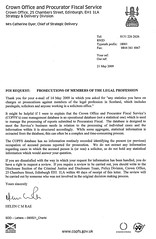
Crown Office on prosecutions of solicitorsCrown Office admit they don't gather statistics on how many crooked lawyers are prosecuted. In response to Freedom of Information queries to the Crown Office on the disclosure of statistics engathered relating to charges or prosecutions against members of the legal profession in Scotland, which includes paralegals, solicitors, and anyone working in a solicitor's office, it was disclosed that "The COPFS database has no information routinely recorded indentifying the present (or previous) occupation of accused persons reported for prosecution. We do not extract any information regarding cases in which the accused person is (or was) a solicitor, so do not hold any statistical information which would answer your question."

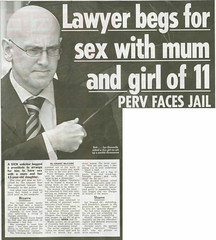
Ian Donnelly - Lawyer begs for sex with mum & girl of 11 - Daily RecordSolicitor Ian Donnelly convicted of sex offences but if the Crown Office have their way no one will ever find out Donnelly is a lawyer. The Crown Office indicated their database "is an operational database (not a statistical one) which is used to manage the processing of reports submitted to the Procurators Fiscal. The database is designed to meet the Service's business needs in relation to the processing of individual cases and information within it is structured accordingly. While some aggregate statistical information is extracted from the database, this can often be a complex and time -consuming process." It appears to be that its too time consuming an issue for the Crown Office to keep statistics on crooked lawyers, but not too time consuming that they cant hand over figures for other criminals & crimes for Kenny MacAskill to make sweeping announcements on …

You can read another article on some of the Scottish legal profession’s leading lights being charged with criminal offences here : Legal Aid Board 'brought into disrepute' by Legal Services Chief's criminal charges over rent boy scandal

Criminal Records of LawyersDiary of Injustice reported earlier, the public in England & Wales can find out statistics on criminal records of lawyers but not in Scotland. The apparent lack of an initiative by Scotland’s Crown Office to engather statistics on crooked members of the Scots legal profession has today been condemned by a legal insider as "little more than pandering to Scotland's legal establishment who do not wish to see recordable statistics made available to the public on the criminal records of members of Scotland's legal profession.". However as I reported last month, the public in England & Wales do get a bit more information on the criminal antics of the legal profession in the rest of the UK : Criminal records of lawyers : Scots public kept in dark over convictions while England & Wales get ‘right to know’

Lawyer accused of flashing at boy, 13 -  Daily Record April 13 2006Ever wondered why charges are dropped against lawyers and not against others ? – the Crown Office are the last people to tell. A Scottish Government source today admitted there was no appetite to divulge the statistics of prosecutions against members of the legal profession because of ‘Ministerial policies.’ He said : "As you know, it is not Ministerial policy to upset the legal fraternity, and it has been that way for a number of years even before the current administration took office in 2007. If statistics were collected on prosecutions against members of the legal profession, the public might start to wonder why so many criminal cases, some involving serious charges, are disproportionately dropped against lawyers, while there would be no question of not pursuing similarly serious charges to a conviction against ordinary members of the public."

He went on : "However, I fail to see how the Justice Secretary can claim to be tough on crime when he wont even allow the country's prosecution authorities to collect detailed statistics on the likes of prosecutions against members of the legal profession while on the other hand, being able to make grandiose announcements there are literally thousands of criminals and crime gangs roaming Scotland aided & abetted by many in the legal profession, who for varying reasons cannot be caught or identified."

MacAskill tight lippedKenny MacAskill has politicised media releases on justice but remains hush hush on crooked lawyers identities. Coincidentally at the weekend, the former head of the SCDEA Graeme Pearson, appearing in the Sunday Mail newspaper, criticised the SCDEA's 'mapping investigation' announcement as "more a political event than a policing event." criticisms which many agree with, after recent Press releases & media events held by varying public bodies such as the Scottish Legal Aid Board, and Government funded consumer organisations have been in effect taken over for political means by the Justice Department, leading to as one serving Chief Executive yesterday claiming "Our Press Conferences & Press Releases are now little more than political theatre to promote the SNP rather than giving an impartial account of justice issues affecting Scotland".

There is of course, little need to wonder why the Crown Office refuses to keep statistics on the numbers of crooked lawyers prosecuted or sent to jail in Scotland …

The lack of statistics at the Crown Office is simply down to the influence of the legal profession who do not want the public being able to access such detailed information, and, perish the thought we should not be told who exactly are the SCDEA's least recommended solicitors & legal firms who made it to their recent investigation of all things crooked in Scotland, which has now been used mainly for political show by the Justice Secretary, rather than making the determined effort to lock up those who are allegedly the crooks among us ...

The Justice Secretary was asked for comment two weeks ago on his attitude & policy towards criminal prosecutions & criminal records of solicitors in Scotland .. so far, he has not replied …

Its a small thing though, if you consider it, taking a note of someone’s employment, considering that anyone who is charged with a criminal offence, is usually asked what they do, if of course, its not already on some file or Police record somewhere (which it must be, because the SCDEA say so) ... so why deny even the most simplest of tasks, to ensure the public know more about their legal representatives ?

Why must we not be able to know more about our legal representatives in Scotland ? Why the big hush hush Mr MacAskill ? Have you spent too much time defending your colleagues in the legal profession you now cannot see the wood for the trees ?

Tuesday, June 09, 2009

Cabinet Chief Swinney intervenes in SLCC investigation of claims against crooked lawyers as Law Society 'fearing worst' demands early secret meetings.

John SwinneyCabinet Secretary for Finance John Swinney intervenes in investigation after Law Society attempt to dictate remit & scope of inquiries. John Swinney MSP, the Cabinet Secretary for Finance, has been forced to intervene in a bitter exchange between officials of the Scottish Legal Complaints Commission and members of the public participating in the first independent investigation to be carried out into compensation claims made against Scottish solicitors, after it emerged the SLCC's Chief Executive, Eileen Masterman had agreed to hand out copies of the research directly to the Law Society of Scotland, but had refused similar requests from members of the public whose views were being sought for the research.

I reported on the first ever independent investigation into claims made against Scottish solicitors in an earlier article, here : Scots public urged to take part in Commission's survey on claims made against lawyers with Law Society's Master Policy & Guarantee Fund

Eileen MastermanSLCC Chief Executive Eileen Masterman refused to hand over copies of research but Law Society to get a copy. The Commission's Chief Executive, Eileen Masterman who received requests from the Law Society of Scotland for copies of the research even before the project began, agreed they would receive the research in a pre publication format, while denying similar requests from participating members of the public, citing among other reasons that the public "were not stakeholders in the research or the Scottish Legal Complaints Commission", despite the fact that £2.5 million pounds of taxpayers money has been poured into the Commission, which has mostly went on officials huge salaries of up to £1350 a week and expenses perks of SLCC board members of up to £350 per day.

However, the Cabinet Chief Mr Swinney was brought into the issue by concerned constituents he has represented in the past on issues relating to claims & complaints against solicitors, over fears the Law Society were attempting to undermine the Commission’s research into claims against crooked lawyers, long known to be stage managed by the legal profession with clients achieving little or no success and most cases even being prevented from reaching court.

It was as we all know, Mr Swinney’s Holyrood confrontation with Law Society Chief Douglas Mill, over claims of corruption within the Master Policy which led to Mill’s downfall from the Society’s top position, which I reported on in early 2008, here : Breaking News : Law Society Chief Executive Douglas Mill who lied to Parliament, pursued 'personal vendetta' against critics - to resign

Mr Swinney has expressed deep concerns to the Commission over the research, and it can be revealed today the Cabinet Chief has written to the SLCC's Chief Executive Eileen Masterman, reminding her that millions of pounds of taxpayers money has been spent on the Commission, making the Scots public "stakeholders" in ‘not only the research but also the organisation itself’.

Mr Swinney contends (and has told SLCC Chief Executive Masterman in no uncertain terms) that members of the public participating in the research should also be given copies of the report at the same time the Law Society receives their copies, to ensure no alteration of the results of the research, which the Law Society is said to 'fear the worst' over, due to constant scandals involving client claims against crooked lawyers which often involve dirty tricks, delay and subterfuge from the Insurers who run the Master Policy on behalf of the Law Society of Scotland.

Philip YellandLaw Society of Scotland Director of Standards Philip Yelland asked for discussions on research before publication. In leaks from sources at the SLCC today, it can also be revealed the Law Society of Scotland have demanded exclusive access to the Master Policy research before it is published, and have also demanded discussion with the Commission, over fears that revelations from what is the first independent investigation ever to be carried out into financial claims made against 'crooked lawyers' in Scotland could be very damaging for the legal profession, the insurers and the Law Society of Scotland itself.

Law Society demands meeting over investigationLeaked emails from Law Society to SLCC demanded discussion of research before publication. Law Society Director Philip Yelland in his email to the SLCC Chief Executive Eileen Masterman asks : "There is the issue of the production of the final report and how the Commission would intend to use this. It is acceptable that in view of the provisions of the Freedom of Information Act at some stage the report will become public and it would be helpful at this stage to know whether it would be the intention of the Board of the Commission, once the report is produced, to discuss the matter with the professional bodies before formal publication or whether the Board would intend to discuss the final report with the professional organisations proper to any publication or indication of the steps that might be taken."

Earlier paragraphs in Mr Yelland's emails to the Commission were attacked by SLCC insiders, who branded them “little more than fishing attempts by the Law Society to gauge the scope of the SLCC's research into the Master Policy, with a view to interfering in its terms & remit to save face and stop the public getting to know the truth."

Mr Yelland's fishing questions : "It is noted clearly that the Commission will want to speak with participants from the professional bodies (presumably the Guarantee Fund and Insurance Committees or members from these Committees) and it is also noted specifically that there is reference to a desire to speak to individuals. Is there any intention for the research to speak with individual solicitors about their views on the Master Policy and Guarantee Fund ?"

Yelland went on to enquire "So far as the Focus Groups are concerned, it is intended that there will be Focus groups involving members of the profession and mixed groups with members of the profession and the public ?"

Masterman agrees to hand over copies to Law SocietyProfessor Alan Paterson told by SLCC Chief Exec. Masterman that Law Society were expecting the worst on investigation of claims against crooked lawyers. Eileen Masterman responded by saying she would hand over copies of the research prior to publication, and in an email to Professor Alan Paterson, a board member of the Commission, & Professor of Law at Strathclyde University, Ms Masterman said : " ..I would be happy to give them (the Law Society) a preview of the report before publication (and I think we'll have to publicise it fairly quickly after the Board have had an opportunity to consider it) but I don't want us to be under any immediate pressure about how, or if, we're going to take it forward."

Eileen Masterman continued to Professor Paterson saying she thought the Law Society might feel they were in trouble with the research : "I get the impression that the Law Society of Scotland are expecting the worst and trying to second guess what that will be."

A legal insider today accused the Law Society of attempting to dictate the terms of the Commission's ground breaking research, and claimed officials at the SLCC "felt vulnerable to demands from the Law Society of Scotland for the inevitable edits of the parts of the research that the profession would not wish the public to read".

He went on : "There is an intense feeling of distrust within the Commission's staff that the Law Society of Scotland is constantly looking over our shoulders at what we are doing, and in reality, little is progressing at the Commission without the cooperation or say so of the profession's governing body."

Kenny MacAskillJustice Secretary MacAskill is blamed by legal insiders for allowing the SLCC to fall victim to Law Society bullying. Many insiders blame the Commission's problems on Justice Secretary Kenny MacAskill, for taking a back seat while the Commission was being formed, and allowing the Law Society to run the appointments process to the Commission, which has been widely condemned as "full of sleaze" by many consumer groups & law reform campaigners.

Current conditions in the workplace at the Scottish Legal Complaints Commission seem to have deteriorated so much that some members of staff have indicated they feel so ashamed of news reports & public criticism of the Commission, they now feel they cannot admit even to their friends to working at the SLCC, for fear of being told they “are employed at a front organisation set up to protect the legal profession more so than deal with complaints from members of the public.”

John SwinneyCabinet Chief John Swinney, ‘deeply angered’ by difficulties at SLCC. Mr Swinney, while continuing to watch developments, refused to comment on the further difficulties at the embattled Scottish Legal Complaints Commission. However sources close to the Cabinet Secretary admitted Mr Swinney was deeply angered at the way the Commission was handling its role as the independent regulator of complaints against Scotland legal profession which it was assigned in legislation Mr Swinney himself as an MSP campaigned hard to be passed into law as the Legal Profession & Legal Aid (Scotland) Act 2007.

A source close to Mr Swinney this afternoon said : “John has worked so hard on this problem to see much of his effort twisted around by the Law Society and incompetence from others in Government who are responsible for protecting the public interest and seeing to it what was billed as a clean up of the legal profession’s poor complaints handling process became reality.”

“As the situation goes, there has been no clean up of anything and the SLCC in its current format is widely recognised as being unfit for purpose.”

I think we all feel that way … and certainly there now has to be some reforms of the Scottish Legal Complaints Commission to bring it closer to the public & consumers of legal services, while being more accountable & transparent in its operation. Ultimately, the SLCC will most probably needed to be regulated itself.

Sunday, June 07, 2009

First Minister Alex Salmond admits he's not 'whiter than white' over Westminster expenses scandal as questions arise over £800 food allowance claims

Alex_Salmond smileScotland's First Minister Alex Salmond blamed expensive food allowance claims on William Wallace events. Scotland's First Minister Alex Salmond who is also an MP at Westminster, been sucked into the expenses scandal at the House of Commons in London, with revelations Mr Salmond had claimed £800 for food expenses for two months, while the Parliament was actually in summer recess.

Mr Salmond, speaking on BBC radio last week, did not give specifics to callers on his expenses claims, choosing to blame attending William Wallace commemoration events as one of the reasons for the large food claims. Mr Salmond continued, saying he was "quite happy to go before an independent audit" but admitted no one including himself could claim they were "whiter than white" in the expenses scandal.

First Minister Alex Salmond on £800 food claims admits "I'm not whiter than white" in expenses scandal.

nigel_donThe SNP's Nigel Don embarked on a series of property deals to get Holyrood to pay his mortgage. While the First Minister claimed on BBC Radio that no one within the SNP had been 'house flipping' to claim thousands of pounds from the taxpayer on second homes, recent revelations over Nigel Don's property deals to secure £688 a month from the taxpayer to pay his mortgage, despite receiving a salary of £55,381. It is worth noting that Mr Don is also Parliamentary assistant to Justice Secretary Kenny MacAskill, and is also a member of Holyrood’s Petitions Committee, where recently Mr Don’s remarks on an access to justice petition ‘constituted disinformation’ as some pointed out at the time.

I wrote about Mr Don’s mortgage arrangements and work on the Petitions Committee in an earlier article here : Influencing Justice reforms in Scotland worth ‘price of a mortgage allowance’ as MacAskill's ministerial aide gets £688 a month to fund capital flat

christine_grahameChristine Grahame, the SNP’s MSP for South Scotland claimed a staggering £26,465 for ‘stationery’. Another example of huge expenses claims at Holyrood surfaced recently with revelations the SNP’s Christine Grahame claimed a staggering £26,465 for postage and stationery, while other politicians from the Tories and Liberal Democrats representing the same area claimed ‘significantly less’ sums. You can read more about MSPs stationery claims here : Scottish Parliament : Christine Grahame’s £26k stationery expenses claim on 'consultations'

Currently, up to 28 MSPs at the Scottish Parliament, 12 of that number being SNP MSPs and 6 of those being Cabinet Ministers in the Scottish Government, including the Cabinet Secretary for Finance, John Swinney, are claiming mortgage interest payments of up to £1000 a month from the Scottish taxpayer to pay for their second homes in Edinburgh. This state of affairs could hardly be described as being ‘whiter than white’ – Scottish MSPs collectively claiming millions of pounds from the taxpayer in expenses while themselves claiming they are a model for transparency & accountability compared to their colleagues caught up in the Westminster expenses scandal.

You can read more about the Scottish Parliament’s own expenses milking scandal here : An extra £2m for MSPs at Holyrood while Westminster’s reputation withers in expenses scandal

Many MSPs have ensured they have not been outdone by their Westminster counterparts in expenses claims, in examples I have previously covered here : Scottish MSPs get in on the act of expenses milking too

david_mcletchieEx Tory leader & lawyer David McLetchie was brought down over huge taxi expenses claims. The Scottish Conservatives, who have raised the issue of the First Minister’s food expenses, have themselves suffered expenses scandals, which led to the resignation of David McLetchie as the Scottish Conservative Party leader, after revelations he claimed more than £11,500 for taxi journeys ‘into the unknown’, some of the destinations being revealed later as his law office at Tods Murray, and a few trips to Morningside …. You can read more of the McLetchie scandal here : McLetchie taxi details revealed

It is also worth noting that while the Liberal Democrats in England have been told to pay back any Capital Gains Tax on profits made by selling properties funded by taxpayers, the Scottish end of the party, seems to have a different policy for its members, as has been covered in the media here : LibDems leader Tavish Scott refuses to reveal capital gains tax payments on property profits

Lets also not forget that Scottish politicians were also recently caught for even claiming wreaths from the taxpayer, reported last month here : Scottish Parliament MSPs 'as crooked Westminster' claimed expenses for funeral wreaths

What is so disgusting to me, is that while there are people including children literally begging for cancer or other medical treatments to their local NHS Trusts throughout the country, only to be told there is either no money to pay for it, or that they are in the wrong postcode, politicians from all political parties, including the SNP are able to basically claim for what they want. A thoroughly disgusting situation which no honest decent person can defend.

How could a politician, already being paid over £70,000 plus, justify they deserve £800 for food, or £14,000 to clean moss off the front of their house, while, say, a 14 year old child cannot get a life saving course of medication simply because they live in the wrong area or their own health board has run out of money. That HAS to be an affront to humanity, politicians putting money and self gain before the lives of constituents while having such a huge salary for allegedly representing our interests.

Indeed the caller in the radio show who questioned Mr Salmond on his food expenss may well be right when he said “All you politicians are in it to line your own pockets”.That much is true – they certainly do, but it must now stop, and we the electorate must hold all politicians to account for their actions of lining their own pockets, no matter which party they are from.

The Sunday Herald reports :

Fresh challenge to Salmond over London meals claims

By Tom Gordon, Scottish Political Editor

ALEX SALMOND is facing fresh accusations over his expenses as an MP, after the Conservatives proved he was out of London for several weeks during the whole period for which he submitted maximum claims for meals from the House of Commons.

The first minister claimed the monthly £400 maximum for both August and September 2005, despite Westminster being in summer recess.

Salmond has repeatedly refused to publish his diaries for the months, dismissing suggestions the claims were unjustified as "laughable".

Last week, he told a BBC Radio Scotland phone-in: "I was in London in recess in 2005. MPs often go to London. They were all legitimate Parliamentary claims."

But the Scottish Tories last night produced a list culled from SNP press releases and newspapers showing Salmond was in Scotland on at least 22 of the 61 days in question. His eight August engagements included Robin Cook's funeral, a cricket match in Edinburgh, a gala in Rhynie, an art exhibition in Banff, and a constituent's 100th birthday in Portsoy.

The following month he was in Scotland for at least a fortnight, campaigning in the Livingston and Cathcart by-elections, and attending the SNP conference in Aviemore.

Salmond's spokesman said the first minister had never stated he was in London all the time, and suggested some of the claims might refer to days when parliament was sitting.

Besides claiming £400 for food in August and September, Salmond also claimed the maximum for six other months in 2005-06, a total of £3200. He also claimed £1751 for food in 2007-08, when he was first minister, despite voting on only six days in the Commons.

Annabel Goldie, the Scots Tory leader, last night wrote to Salmond urging him to publish his diaries. She said: "I am asking him to be open and transparent with the taxpayers about his Westminster expenses. He claimed the maximum food allowance of £800 for August and September 2005, but there are doubts over how much time he actually spent in London during that period that would justify such a large claim.

"I hope for the sake of the Scottish Parliament he takes this opportunity to clear up any lingering doubt."

Salmond has been the MP for Banff and Buchan since 1987 and is also the MSP for Gordon.

The continuing row over his Commons expenses comes as a fresh review of the MSP expenses system begins at Holyrood.

Sir Neil McIntosh is to examine whether "key elements of the scheme could be expected to continue to command public confidence".

Although praised as more transparent than Westminster, the Holyrood scheme still allows MSPs to keep all profit from the sale of second homes funded by the taxpayer.

Last month, the Sunday Herald revealed 28 MSPs currently claiming mortgage interest would make around £2 million profit if they sold up.

A Holyrood source said the McIntosh review, which will report by December, was aimed squarely at closing the second homes loophole. Tavish Scott, the Scottish LibDems leader, who would make a £120,000 profit on his second home, is under fresh attack over "despicable" expense claims by his MSPs.

Peter Nield, a LibDem councillor in Angus, resigned from the party in disgust at Scott's failure to discipline four LibDems who claimed for Remembrance Day poppy wreaths.

Although all agreed to repay the money after the claims were publicised, Nield said that was "irrelevant".

Now sitting as an independent, he said of Scott: "When a party leader is so out of touch with society he does nothing to reprimand those responsible, it is a step too far for me. It is despicable MSPs on good salaries and generous expenses claim back Remembrance Day poppies as expenses."

A LibDem spokesman described Nield's decision as "disappointing".

In a statement, Salmond said he was "entirely confident" about his expenses. "I was in London in both August and September, securing an unfurnished rented flat and other engagements, and during that period also paid bills from the Commons refreshment department incurred during the parliamentary session."

***

Council expenses cost taxpayer £3m Argyll and Bute Scotland's most expensive authority By Tom Gordon, Scottish Political Editor

SCOTLAND'S councillors claimed more than £3 million in expenses last year on top of £22.4m in salaries, according to new official figures. In recent days, all 32 local authorities were forced by law to publish councillors' salaries and expenses for 2008-09, showing spending on travel, accommodation, meals, phones and IT.

Analysis by the Sunday Herald shows that the average expenses claimed per councillor ranged from £325 in the country's smallest authority, Clackmannanshire, to £6004 per head in the largest, Argyll and Bute. The Scottish average was £2486.

Under a complicated remuneration formula, all 1222 councillors earned a basic salary of at least £15,000, with more for those in bigger councils and those with special responsibilities, such as committee chairs, and provosts.

The most expensive council in terms of salaries was the City of Edinburgh, with its 58 members taking home an average £21,079 in pay.

The least expensive was Moray, with its 26 members earning an average salary of £17,314. The average across the country was £18,351.

Overall, the most expensive council, including salaries and expenses, was Argyll and Bute, run by a coalition of Independents and the SNP. Its 36 councillors cost an average of £24,088. With 25 inhabited islands covering the largest geographical area of any council, their expense claims included £152,974 on mileage and £10,703 on ferry fares.

The least expensive was Labour-run Inverclyde, whose 20 members each cost £18,128 overall. Across Scotland, the average councillor cost £20,837.

Despite outnumbering them 10 to one, the councillors expense claims came to less than a third of those made by MSPs.

The highest expenses claim was made by the SNP's Donald Manford, chairman of the transportation committee in the Western Isles, whose £20,081 claim was larger than his £17,819 salary - it included £11,740 in travel and £5300 in subsistence claims.

In contrast, several dozen councillors around the country claimed no expenses at all.

Argyll and Bute said its unique geography contributed to high costs. A spokeswoman said: "We have very strict controls on what can be claimed as expenses, and in what circumstances claims can be authorised.

"Receipts are required not only for subsistence or accommodation claims, but also for fuel ...

"Councillor remuneration is fixed by the government by statutory order, not by councils themselves. Mileage rate is also fixed by government."

Robert McGill, the deputy leader of Labour-run Clackmannanshire council, said: "We are looking to offer value for money to our constituents. It's important that local people trust their council and the expenses are all itemised and accounted for."

The Convention of Scottish Local Authorities, the umbrella body which represents all of the country's 32 councils, said: "Scotland's democratically elected councillors offer extremely good value for money.

"Councils put a real value on the public pound and therefore operate extremely well controlled systems around expenses for councillors.

"All expenditure rightly needs to be proven and would include things like the cost of mobile phone calls, IT and the sort of other businesslike necessities being a democratically elected member committed to representing communities entails."

Friday, June 05, 2009

Justice Secretary accused of attempt to undermine Lord Gill civil justice review as Government backed survey targets only 35 court users

MacAskill tight lippedJustice Secretary Kenny MacAskill's woefully limited survey may undermine civil justice reform proposals. SCOTLAND'S Justice Secretary Kenny MacAskill is today facing allegations of covering up litigation difficulties & failures in the Civil Courts as a taxpayer funded survey carried out by Ipsos-MORI on behalf of Consumer Focus Scotland and the Scottish Legal Aid Board is today revealed to have targeted only THIRTY FIVE PEOPLE from the thousands of litigants who each year use the Scottish Courts system for civil litigation.

SLAB & CFSScottish Legal Aid Board & Consumer Focus sponsored the ‘limited’ research. The survey, titled "Consumer views and experiences of using the civil courts in Scotland" was to be intended to support the forthcoming release of the Lord Justice Clerk Lord Gill's review of Scotland's Civil Justice system, including his recommendations for reforms, which are rumoured to be ‘groundbreaking’ and will also include recommendations to allow Scots to use the facility of McKenzie Friends (used successfully in England & Wales for 39 years) to assist civil litigation cases where legal representation cannot be secured for a number of reasons.

A spokesman for the Scottish Legal Aid Board gave some background to the survey : "There is very little information currently available in relation to the actual experiences of litigants as they move through the court processes. The press release which accompanied the consultation paper to the Civil Court Review picked up this point :

‘We are especially interested in hearing from members of the public about their experiences of the civil court system. In this way we can ensure that their voice is heard and that their interests are central to any recommendations for reform that we make’.

In response to the weak evidence base and this statement, the Scottish Legal Aid Board (the Board) and Consumer Focus Scotland agreed to jointly commission research that would help us better understand the nature and drivers of civil litigants’ views and experiences of Sheriff Courts. The research describes the experiences and views of people coming before Sheriff Courts in Scotland for civil matters. It identifies and explores the factors associated with these experiences and levels of satisfaction.

A Research Advisory Group was established to help steer this work and to ensure the methods and approach were appropriate. The Board, Consumer Focus Scotland, Scottish Government, the Scottish Court Service and members of the Civil Courts Review Policy Group were members of the advisory group.

At the initials stages of the research we had hoped to deliver a relatively large scale quantitative survey of court users. However we were unable to access the court records that would be needed to deliver such a representative survey.

A second option was therefore subsequently developed. This involved contacting and securing the support of In Court Advice services to gain access to their service users. In addition to in court advice clients, we also contacted people who received legal aid for their sheriff court case. This allowed us to gather views from people who had representation for their case.

The research is qualitative in nature, an appropriate way of exploring views and experiences. Thirty five interviews were conducted with a range of civil litigants. Litigants had been involved in a variety of case types, including small claims actions, debt, housing/eviction actions and mortgage repossession proceedings.

The sample did not include other court users such as witnesses or jurors in civil cases. The sample included both defenders and pursuers. It included not only those whose case was actually heard in court, but those who were involved in civil legal proceedings at other stages. The interviews covered a range of issues, from access to legal advice and representation through to expectations and experience of going to court e.g. specific concerns; how people felt about the experience and the communication they had with the court.

The scope of this research must be stressed. The research is qualitative in nature therefore it does not measure the incidence of or how representative views and opinions are. It does however provide valuable provide insight into views and experiences, which we hope will be built upon in the future as evidence in this area grows.

We were unable to talk with people who were unrepresented and did not use an In Court Advice service. We are aware that this group may be even more likely to report some of the problems highlighted in the research and or may possibly report different experiences and views of the court process.”

Lord GillLord Justice Clerk Lord Gill looks set to give some harsh criticisms of Scotland’s Civil justice system. On hearing of the difficulties with the Scottish Government inspired survey, sources from both the legal profession and public campaign groups claimed the survey of Civil Courts users was not advertised enough throughout the Courts system for members of the public to participate, and may have had an unfair restricted remit due to the fact the Scottish Government fear extensive negative views from the general public on their inability to use the civil justice system or even secure the necessary legal representation to access the courts – the latter being a topic of constant debate for many years in Scotland, amid many proposals by the Scottish Law Commission and surveys the former Scottish Consumer Council requesting civil law reform.

I have written about Lord Gill’s criticisms of Scotland’s Civil justice system in an earlier report here : Lord Gill : 'Victorian' justice system fails public as soaring injustice & poor legal services undermine credibility of Scots law.

You can read more about Lord Gill’s Civil Justice review here : Lord Gill's Civil Courts Review

A legal source this morning said "For a survey which is supposed to back up Lord Gill's review of the civil justice system, it looks more like the Government has attempted to railroad the Lord Justice Clerk's findings before they are published, giving themselves reasons not to undertake the necessary reforms to be recommended, which we know ourselves as solicitors, must be implemented if the issues of lack of public access to justice are to be tackled properly."

A source from a consumer group called the survey “A political stunt which will hopefully backfire on the Justice Secretary due to the limited numbers of individuals approached for evidence on such an important issue.”

A client with an ongoing civil case who has experienced "incredible difficulty over a number of years with his litigation due to the dismal state of the civil justice system said : "I have some questions for the Research Advisory Group. Why did they not publicize this much more widely if they were concerned to obtain litigants views, particularly careless of them when they claim there is an already existing 'weak evidence base'. Thirty five interviews is a damning indictment when complaints about the legal profession run into the thousands annually.”

Further questions were raised over the incredibly limited remit of the survey and apparent unwillingness of even the Scottish Court Service to divulge court records : "Who refused them access to Court Records and why? - past published case law is readily available on the internet. What is the point of research which does 'not measure the incidence of or how representative views and opinions are' ? Why were they 'unable' to talk to people who were unrepresented ? “

An official from IPSOS MORI speaking in response to inquiries made on the little known research said : "The scope of the research was fairly limited, and this is acknowledged in our report. We spoke to a very small sample of litigants who had contacted an in-court advice service and a sample of litigants identified through Scottish Legal Aid Board applications data was also provided to us."

The Justice Secretary could not be contacted today for comment on the revelations.

So. Can a survey of 35 people from the thousands of Scots who have to use the Courts system for litigation, defence of their legal affairs & interests, and pursuit of justice, be a fair indication of the problems which many individuals encounter when they try to take a case to court, especially if the issues involve going up against notoriously corrupt professions or cases where access to justice is routinely denied ?

I think not, and I do hope Lord Gill is taking note of these goings-on, and makes appropriate comment when the time comes ….

Thursday, June 04, 2009

Westminster Expenses : Ex Scottish Borders Libdem MP Lord Kirkwood claimed furnishings & more on taxpayer - should be stripped of title

archiekirkwoodArchy Kirkwood as a member of Parliament offered little help to victims of crooked Scottish Borders lawyers. Former Scottish Borders MP, now 'Lord' Archy Kirkwood features in today's Telegraph newspaper revelations on the Westminster expenses scandals, and deservingly so, as the paper reports he "claimed £5,000 in expenses to refurbish his London flat before retiring as an MP and selling it to his daughter for less than half its value."

Scotsman coverage of some of the stories relating to Andrew PenmanArchy Kirkwood offered little help against crooked lawyer Andrew Penamn & crooked accountant Norman Howitt. I always wondered what Archy Kirkwood did for the Scottish Borders, because all I was ever able to secure from him was a letter writing contest to the former Scottish Office then Scottish Executive on the corruption of crooked Borders lawyer Andrew Penman of Stormonth Darling solicitors, Kelso - right in the heart of Archy Kirkwood's constituency. It seemed to me, backed up by information provided by others in the region, Mr Kirkwood was a touch soft on the likes of crooked lawyers, and particularly didn't want to do much regarding corrupt Borders accountants such as Norman Howitt, who you can read more about here : A picture is worth a thousand words - Images of fraud reveal corruption & deceit by lawyers & accountants in the Scottish Borders

Norman Howitt Accountant JRW Group Hawick Scottish BordersBorders accountant Norman Howitt of JRW Group, Hawick took pensioner’s pension & bank book, even made false statements to Police to cover his tracks, but Kirkwood did nothing. Now, you’d think ‘Lord’ Kirkwood would have done something about a crooked accountant confiscating a pensioner’s pension book and wanting to take control of a pensioner’s entire savings for himself .. but, strangely, no. It seems there was too much to gain from supporting the same crooked accountancy and legal firms as one of the region’s leading solicitors informed me …

However, it wasn't just me who felt the lack of support from Mr Kirkwood during his time as an MP, after several people in the Borders began to contact me over similar problems in getting Mr Kirkwood to do anything for them at all other than the standard fair of writing letters, while refusing to raise issues or early day motions at the Westminster Parliament, during the time where that's all we had as a legislature.

Taking a look around the Scottish Borders as I did before I left it years ago (and apparently it has changed little to-date) backs up the idea the region needs younger, harder working idealistic politicians who have the region's people and Scotland's interests at heart, rather than preferring the Westminster cabal to give them long term jobs and the facility to milk the taxpayer for expenses while their constituency lies in ruins.

I note Lord Kirkwood still remains in the LibDems armoury, his name cropping up on the GovNet website here, alongside other such luminaries as Lord Foulkes of Cummock, also an MSP : Govnet Advisory Board, which lists his following details as :

Lord Archy Kirkwood of Kirkhope

Archy Kirkwood was MP for Roxburgh and Berwickshire for 22 years, standing down at the May 2005 General Election. First elected in June 1983, he became the Liberal Party’s spokesman on Health, Social Services and Social Security. In 1992, he became the Chief Whip of the Liberal Democrat parliamentary party. In 1997 Archy became Chair of the Social Security Select Committee (now Work & Pension Committee).

He served on the House of Commons Audit Committee and on the House of Commons Commission and was knighted in 2003 for services to Parliament. Archy was made a life peer in 2005. He is currently head of external relations at the office of the Liberal Democrat Leader.

However, despite all of his positions, 'Lord' Kirkwood is now revealed as just another British politician who has milked the taxpayer, for, as the Telegraph reports, everything down to £3,000 for carpets and flooring for his kitchen and bathroom from John Lewis and £94 for a lavatory paper holder and tiles from Fired Earth.

Not satisfied with that, as the Telegraph continues to report, he returned to John Lewis to buy a £207 bathroom cupboard and mirror, curtains for £90 and lighting worth £72. Whatever relationship carpets, flooring, and other furnishings has to politics, evades me. Pay the money back. In fact, give up your title - as sure as all titles should be stripped from any politician caught milking the system.

Congratulations to the Telegraph for their excellent reporting, and I hope someone makes 'Lord' Kirkwood pay all the money back he has claimed from the taxpayer, along with all the other Westminster, and Scottish politicians who have done the same. Politicians are paid plenty for their job, and should bear in mind its all about representing the community, not ripping us off.

Pay the money back 'Lord' Kirkwood. In fact, since everyone was recently shouting to take Sir Fred Goodwin's title away, give up your title too, 'Lord' Kirkwood, as sure as all titles & privileges should be stripped from any politician caught milking the system.

The Telegraph reports :

MPs' expenses: Lord Kirkwood did up flat on expenses, then sold it cheaply to daughter

Lord Kirkwood, a Liberal Democrat peer, claimed £5,000 in expenses to refurbish his London flat before retiring as an MP and selling it to his daughter for less than half its value.

By Jon Swaine
Published: 10:30AM BST 03 Jun 2009

The peer, a work and pensions spokesman, used public funds to buy carpets, curtains and bathroom furniture for his Westminster flat from stores including John Lewis and Fired Earth.

He made the purchases after announcing in April 2004 that he would retire as MP for Roxburgh and Berwickshire at the general election in May 2005. During his final year in the Commons, he claimed a total of £18,806 in allowances for the flat, which he bought for £182,500 in 2001.

These included about £670 a month to pay the interest on its mortgage. He then sold it in May 2007 to his daughter Holly, 31, a journalist for Country Life magazine, for £100,000. On Tuesday he said the flat had been valued at £225,000.

Three weeks before the sale, a flat in the same building sold for £358,000.

When he made the claims, Lord Kirkwood, then Sir Archy Kirkwood, sat on the House of Commons commission which was overseeing the first publication of basic details of MPs' expenses. As the details were published in October 2004, he said that he welcomed the fact that "taxpayers can really see how their money is being spent".

However, he dismissed suggestions that voters would be shocked by the amount of money involved. "I'm not saying it's an insignificant sum, but it's pretty small beer," he said.

Between November and December 2004, Lord Kirkwood claimed more than £3,000 for carpets and flooring for his kitchen and bathroom from John Lewis. He also claimed £94 for a lavatory paper holder and tiles from Fired Earth.

In April 2004, the month he announced his intention to step down as an MP, he claimed £200 for repairs to the flat's electrics. In June 2004, he claimed £50 for fans. In July he claimed £660 for unspecified work by a contractor.

Over the following months, he returned to John Lewis to buy a £207 bathroom cupboard and mirror, curtains for £90 and lighting worth £72.

In February 2005, he claimed £145 for a clothes rail and storage devices, £78 for kitchen stools and £56 for roller blinds. He also claimed £115 for computer equipment through his office expenses two months before he retired.

Lord Kirkwood, 63, had designated as his main home a house in Selkirk where he still lives with his wife Rosemary.

He claimed more than £63,000 in House of Lords allowances last year, including £20,019 on overnight subsistence: the Lords' equivalent of second home allowances.

He claimed £11,419 in "day subsistence" allowances, £11,419 in office running costs and £9,741 in travel costs.

Lord Kirkwood, who was knighted for services to Parliament in 2003, was one of five Lib Dem MPs put forward for peerages by Charles Kennedy, the then party leader, after the 2005 election. He announced his retirement after it was decided that his seat should merge with that of Tweeddale, Ettrick and Lauderdale, which was held by Michael Moore, a fellow Lib Dem.

Lord Kirkwood said yesterday: "When I sold the flat to my daughter a professional valuation was secured on the property. It was valued at £225,000. This was declared for capital gains.

"The fuse box and wiring system was unsafe and needed to be replaced. There were some costs of relaying flooring in parts of the property."

Wednesday, June 03, 2009

Scotland's Got Crooked : Police investigation reveals hundreds of crooked lawyers & accountants assisting organised crime gangs

Law Society of ScotlandHundreds of Law Society of Scotland ‘crooked lawyers’ are helping crime gangs. A survey reported today in the Scotsman newspaper reveals what many inside & outside the legal profession already know - that organised crime gangs in Scotland are assisted by hundreds of crooked lawyers, crooked accountants and other "specialists" who help criminals evade justice.

Law Society of Scotland & ICASScottish lawyers & accountants self-regulate, allowing criminality to flourish in their professions. While the self regulating bodies of lawyers & accountants in Scotland - the Law Society of Scotland & the Institute of Chartered Accountants of Scotland profess to maintain their 'respective' professions in order, in reality hundreds of solicitors & accountants and their firms are in the pay of criminal gangs, with some of those concerned masquerading as small legal or accountancy firms, taking on innocent local clients & businesses to cover the profits generated from some of their less respectable associations.

Cash laundering link to law chief stabbing - Scotland on Sunday 29 January 2006Law Society chief Leslie Cumming suffered mafia style hit from his own crooked lawyer colleagues. While members of the public who trust their legal affairs to solicitors & legal firms who have an undisclosed darker side of clientele, even the Law Society of Scotland itself was hit in a mafia style assault in early 2006, when the solicitor's regulatory body's Chief Accountant, Leslie Cumming was attacked in a 'hit' arranged from within Scotland's crooked legal establishment over what some claim were investigations which involved big legal names,

Douglas Mill 4Law Society Chief Exec Douglas Mill tried to pin blame on campaigners in newspaper reports on Cumming attack but real culprits were crooked lawyers. To-date, the assault on Mr Cumming, apparently arranged by colleagues from within the legal profession itself, remains unresolved, with Lothian & Borders Police still looking for clues. However, several legal insiders say the investigation into the attack on Cumming “was heavily compromised” after the then Law Society of Scotland's Chief Executive Douglas Mill viciously tried to implicate campaigners & law reformers in the mafia style hit on Mr Cumming, to deflect attention away from critical legislative reforms which were due later in 2006 and which ultimately led to Mill's subsequent downfall and resignation from the Law Society after a serious parliamentary confrontation with Cabinet Secretary for Business, John Swinney.

Lothian & Borders Police still looking for crooked lawyers who arranged attack on Law Society Chief :

With an ever growing criminal element within Scotland’s legal profession, we are of course, back to the problem of 'self regulation' where, specifically on the matter of 'crooked lawyers', the Law Society of Scotland has failed to maintain standards within Scotland's legal profession, and all the while has operated a closed shop, highly corrupt system of self regulation where the criminal element of Scotland's 10,000 solicitors can basically get away with criminality, as long as they pay their subscription fees to the Law Society, which help the Society continue to maintain its power of self regulation over the profession.

SLCC membersScottish Legal Complaints Commission is as protective of crooked lawyers as the Law Society of Scotland. The £650 a year to the Law Society of Scotland in annual subscriptions, and the £400 complaints levy to the SLCC which solicitors willingly pay, keeps self regulation of the legal profession going, which allows solicitors to assist the likes of criminal gangs, or fleece clients at will, mostly without fear of a criminal prosecution because the Law Society, and as we see now, the new ‘independent’ Scottish Legal Complaints Commission, are both so incompetent or closed minded at investigating corruption within the legal profession that the evidence which the Police & Crown Office would have to rely on to prosecute solicitors for stealing from their clients is more often than not, covered up by the solicitors regulators.

money£650 a year to fund Law Society ‘ in-house complaints system’ guarantees lawyers will face no charges over widespread criminality in handling client affairs or law breaking. Its as simple as that - pay £650 a year in subscription fees, and a crooked lawyer can go do what they please, overcharge, embezzle, steal, bend the law, bribe, act as drug dealers, threaten clients, blackmail, anything, and not get sent to jail, unless of course, whatever they are doing and whoever they are representing becomes just too public and attracts too much media attention.

It may well be the case you are unknowingly entrusting your life savings, last will & testament, or funds for a house purchase or sale to a solicitor who is little more than a convicted criminal, and you will never know it unless the law is changed, and there is considerable resistance from the legal profession in Scotland to changing the law to disclose the criminal records of solicitors, although in England & Wales, you do stand a greater chance of finding out, as I reported earlier, here : Criminal records of lawyers : Scots public kept in dark over convictions while England & Wales get ‘right to know’

Sadly the Scots legal profession, as crooked as it is, has far too many key supporters & defenders in high places, as Scotland’s own Justice Secretary, Kenny MacAskill himself demonstrated in outrageous comments during a Scottish Parliament debate, even claiming the SNP controlled minority Scottish Government owed the legal profession a mysterious ‘great debt’ :

Would Justice Secretary Kenny MacAskill be so quick to defend the criminal element of Scotland’s legal profession ?

This is the reality of self regulation, nothing more than a cover for criminality, and with business & profits on the slide in Scotland's legal & accounting professions, expect to see a lot more crooked lawyers, accountants and other so-called 'professionals' out there who might also just be your solicitor or accountant too.

Those who defend self regulation are, these days, in the wake of the Westminster expenses scandals, generally viewed as defending unacceptable, often morally wrong conduct, cronyism & criminality, and in my view, have no place in public life.

The Scotsman reports :

The gangster map: 3,000 hardcore criminals and their crooked lawyers

Tuesday, June 02, 2009

‘It’s all about money, not justice’ as lawyers greed on legal fees spills over at Law Society AGM

Law SocietyLaw Society of Scotland won vote delaying practising fees row for now. PROTESTS from lawyers at last week's annual general meeting of the Law Society of Scotland over the 'high cost' of an annual practising certificate which allows solicitors to work, were insufficient to sway enough of the votes for an immediate reduction in the current annual practising certificate levy on solicitors of £665, raising the threat that many solicitors will increase their already exorbitant fees for legal work carried out on behalf of clients.

Instead, the Law Society won a five month delay to consider how it will react to members unwillingness to pay £665 a year to fund the huge salaries of staff and officials at the Law Society of Scotland's Drumsheugh Garden headquarters in Edinburgh, where as we saw in an earlier report, the current Chief Executive, Lorna Jack's salary along with the costs of her office which now stand at £326,000 a year.

Eileen Masterman & Philip YellandLaw Society’s Philip Yelland & SLCC’s Eileen Masterman do similar jobs on £1,350 a week. With solicitors already having to fork out £400 or so a year to fund the Scottish Legal Complaints Commission, where Commission members are on up to £350 a day plus expenses, and officials such as the Law Society’s Director of Standards, Philip Yelland, and SLCC Chief Executive Eileen Masterman, are both doing the same job on salaries of £1,350 a week - all paid for out of solicitors pockets.

No doubt, the grumbles within the profession over these legal fat cat salaries will continue, but some legal firms are seemingly using their imagination to recover from clients, what they perceive to be the high costs of being a solicitor.

In several examples of accounts sent out to clients which have been brought to my attention, legal firms across Scotland are recouping their running costs and issues such as the cost of the practising fee, by issuing false fee demands to clients for legal work which has never been done.

I have reported on this subject earlier, here : Lawyers stealing from clients to earn 'double fees' while Law Society looks the other way in vast network of legal aid fraud & embezzlement & here : Lawyers fraudulent fee demands must be curbed by independent fee watchdog as culture of greed prohibits public access to justice

It is now becoming commonplace for legal firms to send out accounts to clients, falsely claiming they owe money on case work, some examples of which date back to over 10 years, where solicitors and their firms are regularly claiming to clients that “accounts have been overlooked and must now be settled”, with little or no explanation being provided for what work was actually done on the clients behalf.

Examples I have seen of some of these purely fake fee demands to clients have run into tens of thousands of pounds, the bills usually being accompanied with a seven day threat of legal action if payment is not made immediately, although when the legal firms are asked for specification & evidence as to exactly what work the solicitor did, the accounts are ‘reduced’ to in some cases, about a tenth of what was originally sought from the client, on threat of recovery.

A legal insider today admitted he was well aware many firms were sending out inflated bills. He said : “Many solicitors feeling the pinch have decided to look back through their work to see if they have missed sending out bills to clients.”

“Several of my colleagues are aware of a rising tide of complaints to the Law Society where clients are alleging they are in receipt of accounts from their solicitors for work which was never authorised or agreed to, and which there is no evidence even took place.”

He went on to claim that lawyers were being protected from criminal charges over the false fee demands, simply because of self regulation of the legal profession in Scotland : “If it were not for the fact the profession self regulates, I have no doubt the Police could be called in and fraud charges laid against several legal firms & individual solicitors.”

Of course, none of these issues were discussed at last week’s annual general meeting, although most or all of those legal firms attending are currently engaged in such practices, inspired by weak & corrupt self regulation, carefully maintained by the Law Society of Scotland, with any legislative reforms stifled by political allies to the legal profession.

Arguing about the cost of a practising certificate, while complaints, corruption, negligence, criminality and fraud spirals out of control among Scottish legal firms, will not repair the damage that lawyers have done to themselves, and their own business, and to public access to justice in Scotland.

The Scotsman reports :

No fireworks, but membership costs the burning issue